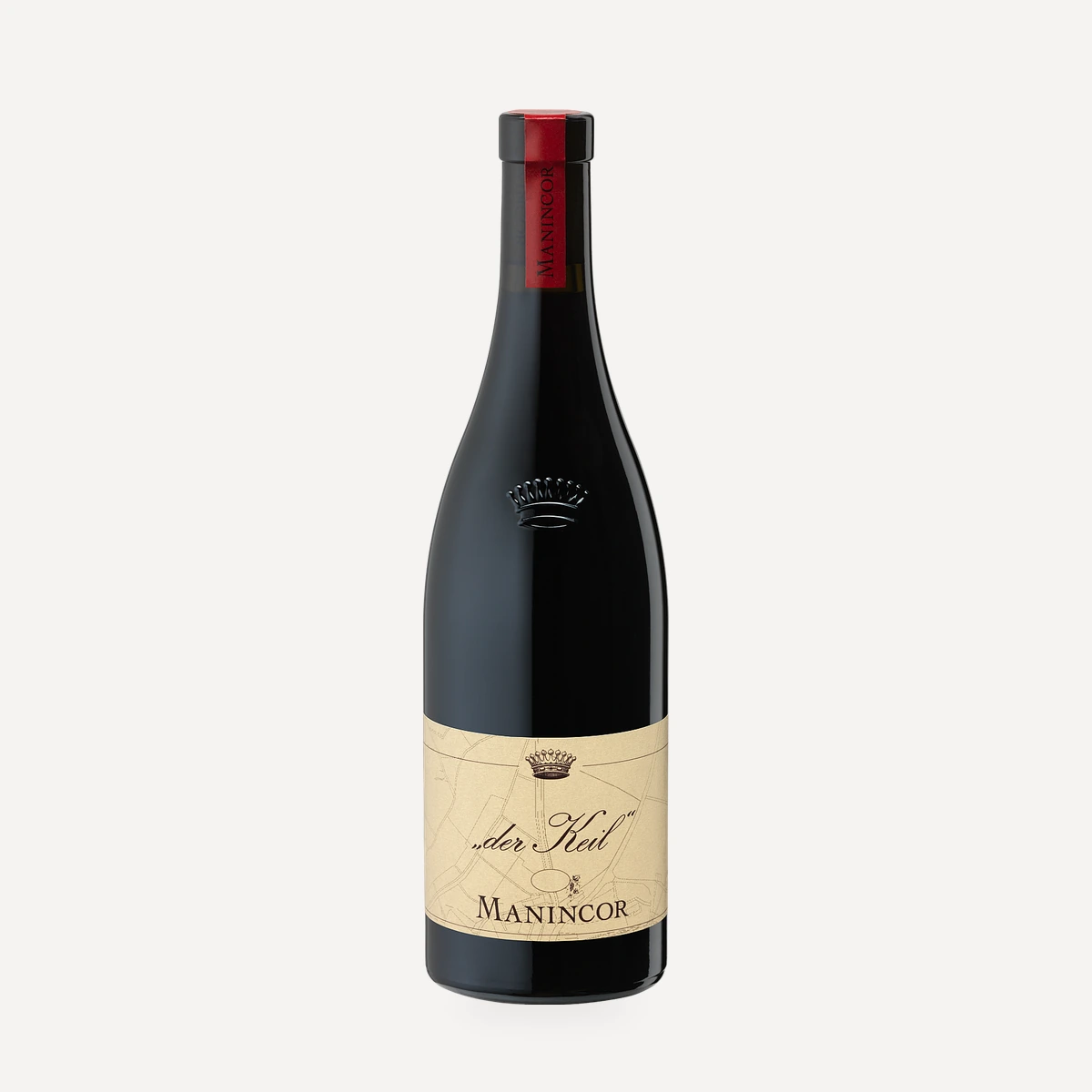
Questo vino
Vineyard and terroir
Vigna “der Keil” is a monopole at 250 m, on warm, south-facing slopes overlooking Lake Kaltern. Its old, pergola-trained vines grow in sandy-clay soils rich in calcium carbonate.
Grapes
Various members of the Vernatsch family, sourced from old vines.
Vinification
The grapes were destemmed and crushed, then fermented in open wooden vats, partly with indigenous yeasts. Skin contact lasted one week at a relatively low temperature of approximately 24 °C, with the cap gently punched down once per day.
Ageing
Five months on the fine lees in large oak barrels refined the aroma and flavour.
Technical data
The 2025 wine has 12% alcohol, 5.2 g/l total acidity after malolactic fermentation and 0.9 g/l residual sugar. Yield was 35 hl/ha, and 15,300 standard bottles were produced. The wine is biodynamic, Respekt-BIODYN certified and vegan.
Tasting profile
Bright, pale ruby in colour. Delicate aromas evoke cherries and toasted almonds. The palate is juicy, smooth and easy-drinking, retaining nuance and elegance through the finish.
Serving and pairing
Serve cool but not chilled, at 12–14 °C. Optimum maturity runs from early summer 2027 through the end of 2030. Pair with South Tyrolean cold-cut platters such as speck, a large bowl of pasta, dishes based on tomato, garlic and olive oil, white meats or fried fish. Its accessible style also suits informal social drinking.
Vintage notes
The 2025 season began with early budbreak and a warm spring, bringing flowering forward to mid-May. July and August supplied abundant sunshine and moderate rainfall. Rain in September introduced additional challenges, but careful vineyard work and hand harvesting preserved freshness, balance and character. The Vernatsch was picked in mid-September.