Storia
Early estate history
The historical Manincor buildings date to 1608 and were built by Hieronymus Manincor. In recognition of his service to Austria, the Emperor granted him a title of nobility and land on the shores of Lake Kaltern. Hieronymus adapted the family coat of arms to represent “Man-in-cor”—a hand holding or placed upon a heart. The emblem remains visible on the manor façade.
In 1662, Hieronymus Manincor’s granddaughter married an ancestor of the Counts Enzenberg. The Enzenberg name had first appeared in South Tyrolean history in 1236, and the family had been resident in the region since approximately 1500. Its involvement in winegrowing was documented by 1689, with Enzenberg cellars in Caldaro, Terlano and Schwaz in Tyrol.
Kassian Ignaz Enzenberg became known in the eighteenth century as an Enlightenment reformer and thinker. In 1764 he entered the Tyrolean nobility with the title of count. Castel Campan, now the family’s ancestral seat, entered the ownership of the Counts Enzenberg in 1850. Manincor itself finally passed to the Counts Enzenberg in 1978.
Michael and Sophie Goëss-Enzenberg
Michael Count Goëss-Enzenberg knew from an early age that, as his uncle’s adopted son, he would move to South Tyrol and assume responsibility for Manincor. He arrived in 1987 after studying winemaking theory at Geisenheim. His preparation also included a year-long internship on Lake Constance, experience in California, work at the agricultural college in San Michele and Italian study in Florence.
When Michael arrived, Manincor grew grapes but did not make a commercial estate wine; the crop went to the cooperatives in Caldaro and Terlano. He stopped delivering the entire harvest, acquired barriques and began experimental production while studying the individual sites, soils, climate, history and people of the estate.
Sophie Countess Goëss-Enzenberg moved from Vienna to South Tyrol four years later, in 1991, when the couple married and settled in the historic Manincor residence. They restored rooms in the nearly four-hundred-year-old house for family life while developing a shared vision for the estate.
Foundation of the modern winery
In 1991 Michael formally took over Manincor from his uncle. Work initially concentrated on the vineyards: yields were strictly restricted, near-natural husbandry was introduced and new vines were planted. In 1996 Michael and Sophie established commercial estate production. The difficult 1996 vintage yielded six inaugural wines: Schiava (Kalterersee), Moscato Giallo, Pinot Bianco, Sophie, Mason and Cassiano. Investments in cellar equipment and the first employees created the basis for professional operations.
The 1997 vintage was substantially stronger and brought wider recognition. Manincor bottled 30,000 bottles and Michael and Sophie attended their first Vinitaly in Verona, presenting at the South Tyrol stand and building relationships with wine shops, distributors and restaurateurs. Production subsequently expanded alongside vineyard renewal and rising quality; by 2008, 155,000 bottles were being produced and sold, and by 2014 the winery had reached its planned capacity of approximately 300,000 bottles.
The cellar in the vineyard
Soon after estate bottling began, it became clear that a larger cellar was required. Michael, Walter Angonese, Rainer Köberl and collaborator Silvia Boday began considering the project in 2000–2001. The challenge was to provide adequate working capacity while protecting the historically and scenically sensitive ensemble.
Excavation began in 2002. After approximately eighteen months of construction, the “Cellar in the Vineyard” opened on 4 April 2004. The roughly 3,000 m² structure was built on three levels entirely below the vineyard beside the manor. Its design followed the site’s slopes and left the cultivated surface available for vines. Gravity movement, natural ventilation, humidity drawn from the surrounding soil, geothermal temperature control and a biomass heating plant made the building an operational expression of the estate’s ecological principles.
Biodynamic conversion
Concern about vine vitality and fruit health led Michael and Sophie to consult Dr Andrew C. Lorand, who diagnosed insufficient biological life in the soil. The estate began converting its winegrowing to biodynamics in 2005. The 2006 vintage was the first produced entirely under biodynamic principles.
In 2007 Manincor joined like-minded estates in founding the group now called respekt-BIODYN, seeking authentic wine quality through holistic and sustainable agriculture. The conversion initially met internal skepticism and required substantial persuasion, but by 2009—after a three-year transition—all Manincor wines were certified.
In 2008, while conversion was nearing completion, local oenologist Helmuth Zozin joined as estate manager after a search originally conceived on an international scale. He professionalized operations, supported natural processes and concentrated attention on the estate’s strongest attributes. He now serves as Director and Winemaker.
Estate development and succession
Manincor leased the approximately 10-hectare Panholzer Hof on Lake Caldaro from 2000. In 2015, after fifteen years of cultivation, the family purchased its vineyards and intact four-hundred-year-old ensemble of house, barn and vaulted cellars. Most vines had been renewed, while the historic 2.5-hectare Keil parcel retained old Schiava vines.
The 2015 harvest marked another milestone when Manincor received Gambero Rosso’s special award as Sustainable Winery of the Year. The following year celebrated twenty years of commercial estate production.
Kassian Goëss-Enzenberg began gaining practical experience through a harvest internship at a biodynamic Tuscan estate and customer visits in the United States with Michael. He is now named alongside Michael and Sophie as an owner. In the twentieth-anniversary reflections on the underground cellar, Kassian described his intention to take over the business two years later and to continue refining grape handling, water use and the cellar’s capabilities. Michael and Sophie moved from Manincor to Castel Campan around the cellar’s twentieth anniversary, creating further space for generational transition.
Terroir
Manincor’s vineyards extend through Caldaro and Terlano, from warm lakeside sites at approximately 220–250 m to elevated vineyards around 500 m. The portfolio therefore encompasses major differences in temperature, exposure, slope and geology.
Around the Manincor manor, gently sloping, south-facing vineyards occupy Ice Age morainal deposits. Their mineral matrix includes dolomitic limestone and gravel with weathered granite, porphyry, quartzite and basalt; sand and clay provide vigour. Twelve hectares lie within historical walls at 230–300 m, forming a clos-like unit around the manor and underground cellar.
The warm lakeside vineyards face southeast over Lake Kaltern. At Panholzer, vigorous loam overlies calcium-carbonate-rich gravel. These lower sites are among the warmest in South Tyrol. Keil shares this warm setting, while its historic pergola-trained vines retain an unusually old Schiava population.
At Mazzon, a lightly sloping terrace receives sun from morning to evening. A northerly morning wind and the southerly Ora in the afternoon keep Pinot Noir dry and healthy. Ice Age moraine soils support an even growing cycle. Nearby Leiten is an extreme south-to-southwest-facing slope with a gradient of 45° and prolonged solar exposure.
Campan lies around 500 m, making it Manincor’s highest vineyard area in Caldaro. Strong day-night temperature differences prolong late-summer and autumn ripening and preserve pronounced fruit character.
Lieben Aich is dominated by weathered volcanic porphyry mixed with quartzite sand and clay. Vine roots penetrate deeply through this mixture. The combination is associated with aromatic definition, savoury tension, finesse and longevity in the estate’s white varieties.
Across the estate, the placement of each variety is treated as the first prerequisite of terroir expression. Red sites range from the warm lake shore to ventilated Pinot Noir terraces and cool elevated parcels; white sites combine porphyry-derived soils with higher-altitude fruit sources.
Vinificazione
Manincor’s conversion to biodynamics began in 2005 after declining soil vitality was identified as the underlying weakness in the vineyards. The 2006 vintage was the first entirely biodynamic year, and all wines were certified by 2009 after a three-year transition. The wider agricultural unit—vineyards, orchards, woodland and meadows—is certified under EU organic requirements as well as biodynamic standards. Manincor was a co-founder of respekt-BIODYN in 2007.
The system is built first on healthy soil and biodiversity. Varied cover crops, annual compost applications and gentle tillage build humus and encourage microorganisms, worms and other soil life. The improved humus layer helps vines remain resilient through prolonged drought and heavy rainfall. Every second vine row is tilled and sown with a mixture including grains, flowers, clover and rape. Other vineyard plants include mallows, vetches, mugwort, ribwort and broadleaf plantain, sorrel, amaranth, toadflax, lamb’s lettuce, violets, millet, yarrow, campion, phacelia, mullein, thistles and wild sage. At least one rose grows in every vineyard as an indicator plant.
Hedges and groups of trees interrupt vineyard monoculture, while surrounding bushes and woods provide further habitat. Hardy Breton Quessant sheep graze among the vines, contribute natural manure and restore an animal element to the agricultural cycle. Bees—including visiting colonies—feed among the diverse flowering plants, numerous bird species use nesting boxes around Lake Kaltern, and hens also form part of estate life.
Horn manure preparation 500 and horn silica preparation 501 are used as field sprays once a healthy underlying system has been established. Stinging-nettle, camomile and horsetail teas are also routine tools. Following hail, the vines may first receive camomile tea and then dynamized preparations to encourage rapid recovery and restore their seasonal rhythm.
Approximately 270,000 vines are distributed across about 50 ha in Caldaro and Terlano. Work is meticulous and overwhelmingly manual. Each vine is individually pruned with manual rather than electric shears. About two thirds of young shoots are removed by hand during suckering. Remaining shoots are carefully inserted between wires; leaves around the inflorescences are selectively removed to improve light and ventilation, and lateral shoots are clipped to open the canopy and reduce fungal pressure. Pruning, tying, shoot selection, canopy work, training and thinning together accounted for approximately 350 labour hours per hectare annually in the estate’s 2018 report.
Yield regulation is central to quality. A vine averages about nine to ten bunches, generally one to two kilograms of fruit depending on variety and quality level. In Mazzon, small Pinot Noir clusters and berries naturally restrict the crop, eliminating the need for thinning. The Keil vineyard is renewed slowly to preserve its old-vine population.
Harvest is manual and selective. An estate report described an average team of around 25 harvest workers, each picking, inspecting and carefully placing approximately 100,000 bunches over a season running from late August to late October. Recent seasonal practice includes selective passes and rapid decisions when rain or disease pressure threatens fruit health. Once harvest ends, the annual cycle begins again with compost spreading, sowing, pruning, compost-building, preparation of biodynamic treatments, tying, shoot thinning, canopy work and plant protection.
The 2004 Cellar in the Vineyard was conceived to let natural processes proceed with minimal disturbance. Following manual harvest and rigorous selection, grapes enter on the uppermost level. Grapes, must, juice and wine then move downward through three underground floors by gravity, largely eliminating pumps and reducing damage to skins and seeds.
Fermentation is spontaneous, driven by indigenous yeasts brought from the vineyards. Open vats form the centre of red-wine fermentation, permitting gentle management of skin extraction. A recent description of red-wine handling explains that fermentation and maceration are followed by racking the free-run wine from the skins. Approximately 5–7% of the wine remains in the pomace, which is loaded manually into a vertical basket press so the skins remain intact and are pressed gently. The more tannic press fraction can then be blended with the free-run wine to increase complexity and ageing capacity.
White wines are fermented and matured in oval oak casks of 12–30 hl. The wider cellar inventory includes large wooden casks, barriques, open fermenters, stainless-steel tanks, presses, a bottling line and bottle storage. Individual wine lots may also use cement, but the estate-wide principles are spontaneous fermentation, gentle handling and vessels selected to support rather than dominate the fruit.
Racking and bottling are timed according to lunar cycles. This practice is intended to let the wines settle more calmly, develop harmoniously and gain ageing capacity.
The underground building provides approximately 3,000 m² across three floors. Heavy, site-cast concrete produced a monolithic structure; organic additions changed its colour and surface so that it gradually weathers toward the appearance of old vineyard walls. No prefabricated concrete elements were used.
Natural ventilation regulates the cellar climate. Controlled air exchange and humidity drawn from the surrounding soil maintain appropriate moisture in the barrique cellar while keeping bottle storage dry. Heat-exchange pumps use geothermal energy from roughly 79 m below ground and reverse in summer to dissipate heat, maintaining stable temperatures in different work areas. Vineyard soil covers and insulates the building, while a biomass plant burns chips from estate woodland and apple- and vine-prunings. A small water-treatment facility further reduces resource use.
Filosofia
Manincor treats wine as a sensuous expression of agriculture: a record of soil, sky, rain, vintage and the hands that cared for the vines. Individual wines should retain their own language while sharing elegance, finesse and a firm structural backbone.
The estate’s guiding principles are biodynamics, uncompromising detail in vineyard and cellar, and respect for people, animals and plants. Its goal is to restore and protect natural cycles while remaining open to contemporary technology where it supports ecological balance and wine quality. Orchards, vineyards, woods and meadows are understood as one agricultural organism rather than separate production units.
Tradition is regarded as a responsibility rather than a constraint. Michael and Sophie’s credo is to preserve what remains valuable while creating something new for future generations. The underground cellar follows the same logic: a durable extension of a four-century-old ensemble that accommodates change rather than freezing the estate in the past.
Helmuth Zozin’s approach begins with perfectly mature, healthy, aromatic fruit, resilient skins and a balanced relationship between sugar and acidity. Soil, climate, vintage and the grower should shape a wine’s agricultural individuality. Organic cultivation of strong sites and exacting manual work form the foundation; biodynamic preparations connect the positive forces of an already healthy system rather than replacing basic agronomy.
Moderation—or the “right measure”—is a recurring estate principle. Traditional knowledge, modern findings and technology are not treated as opposites: quality emerges when they are kept in balance. Intervention should therefore create favourable conditions for natural processes, not force them.
The hand, heart and crown in the family emblem also express the estate’s working hierarchy. The hand represents honest craft and everyday manual labour; the heart represents passion, origin and attention to detail; the crown represents uncompromising selection from the oldest vines and best sites in years worthy of such wines.
Vini
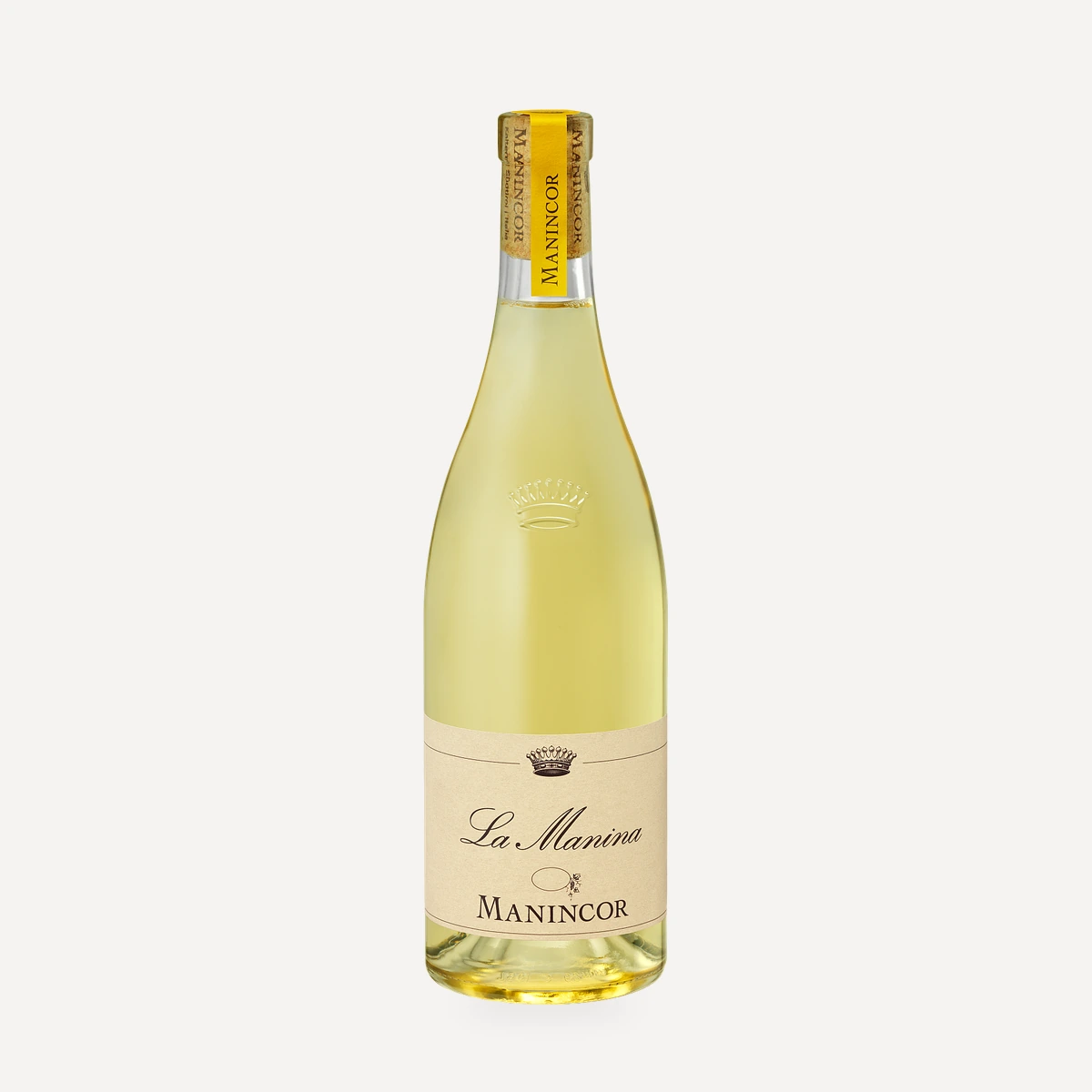
La Manina
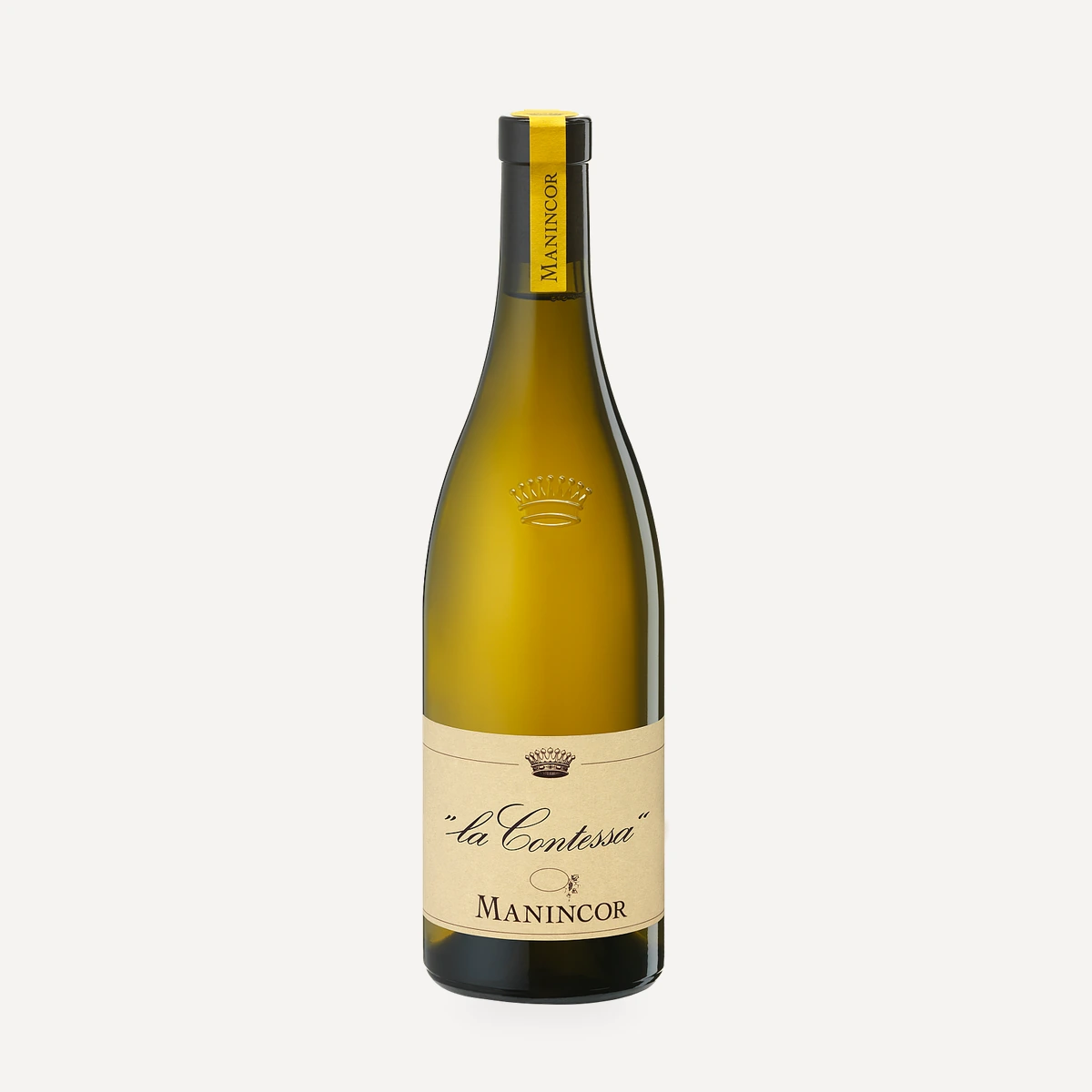
La Contessa
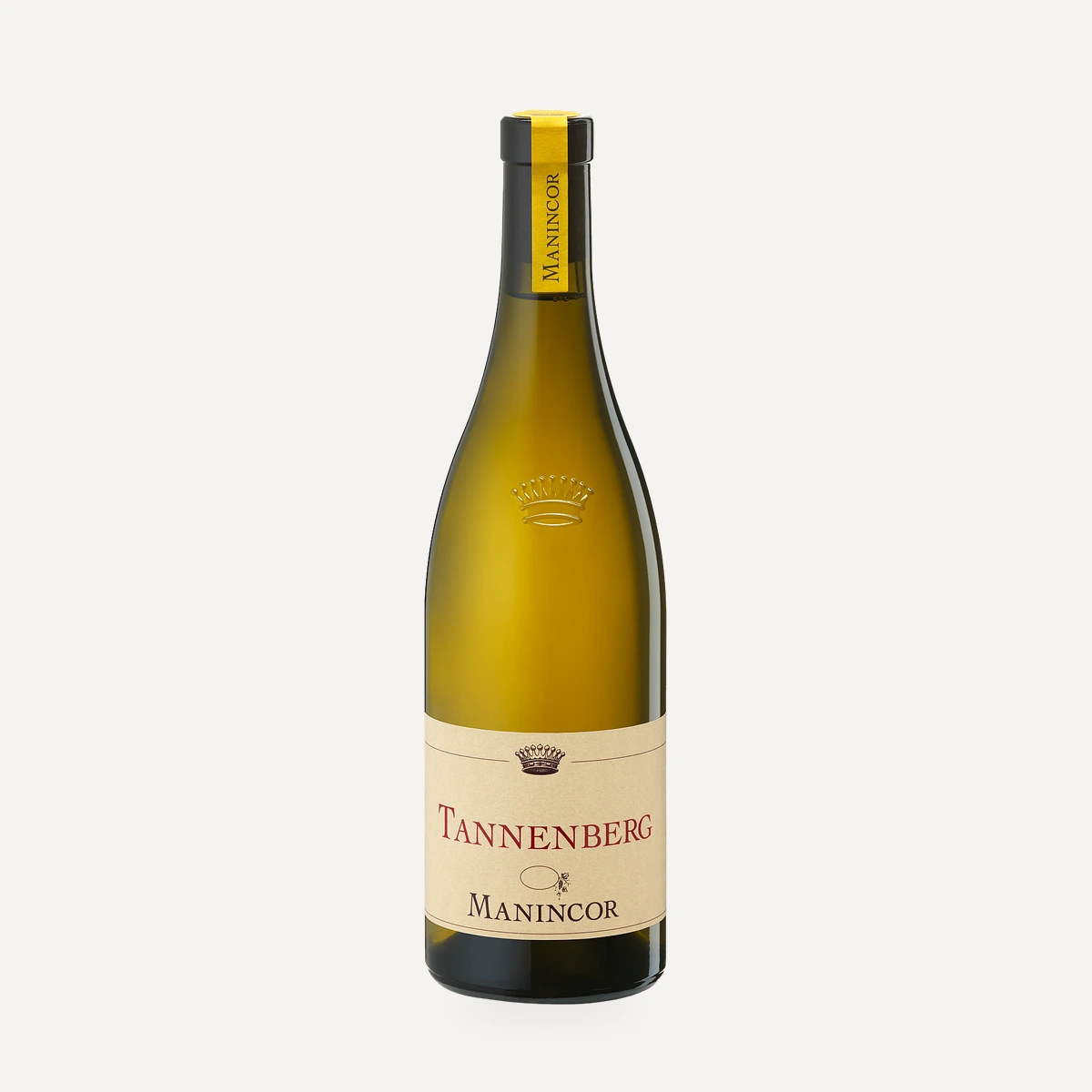
Tannenberg
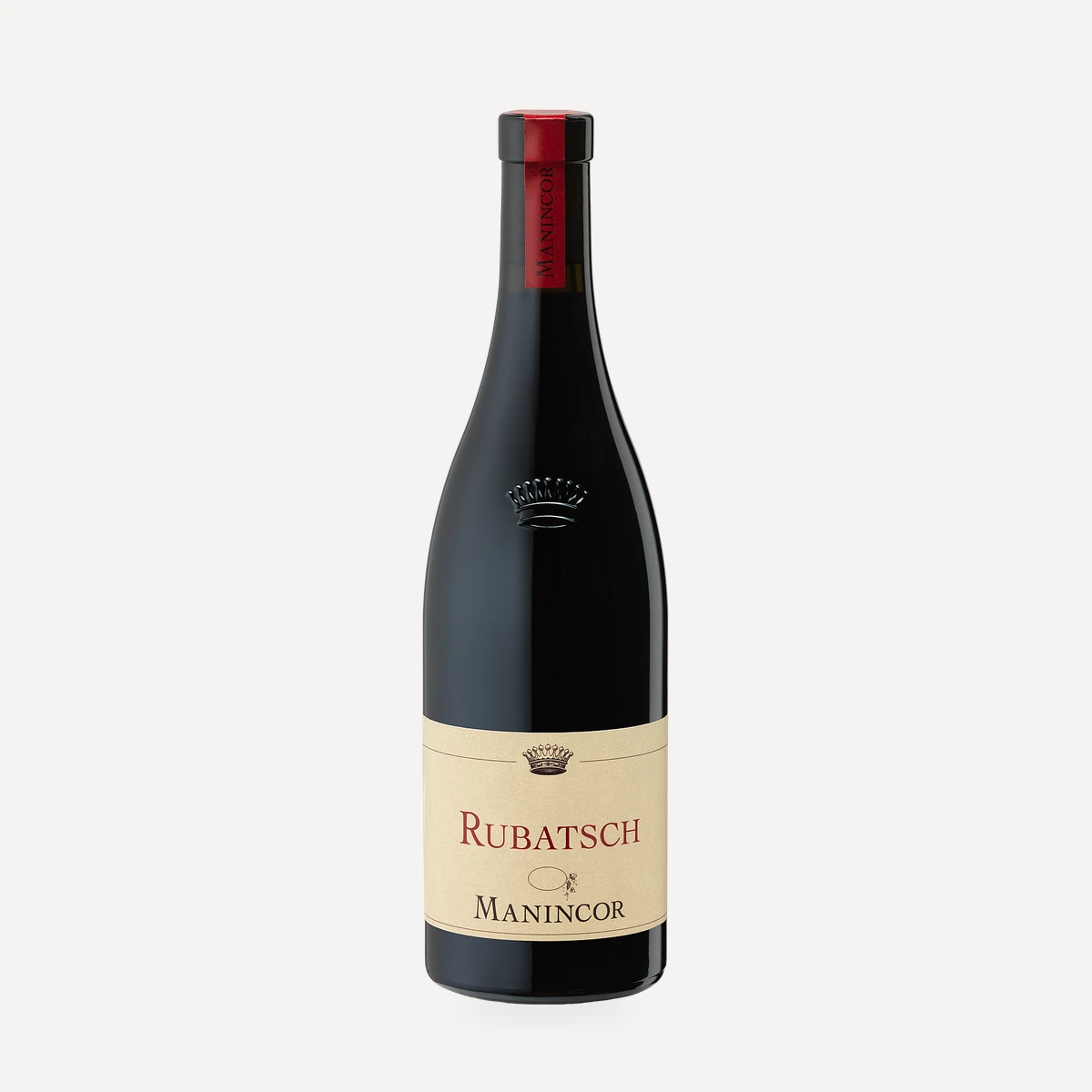
Lagrein Rubatsch
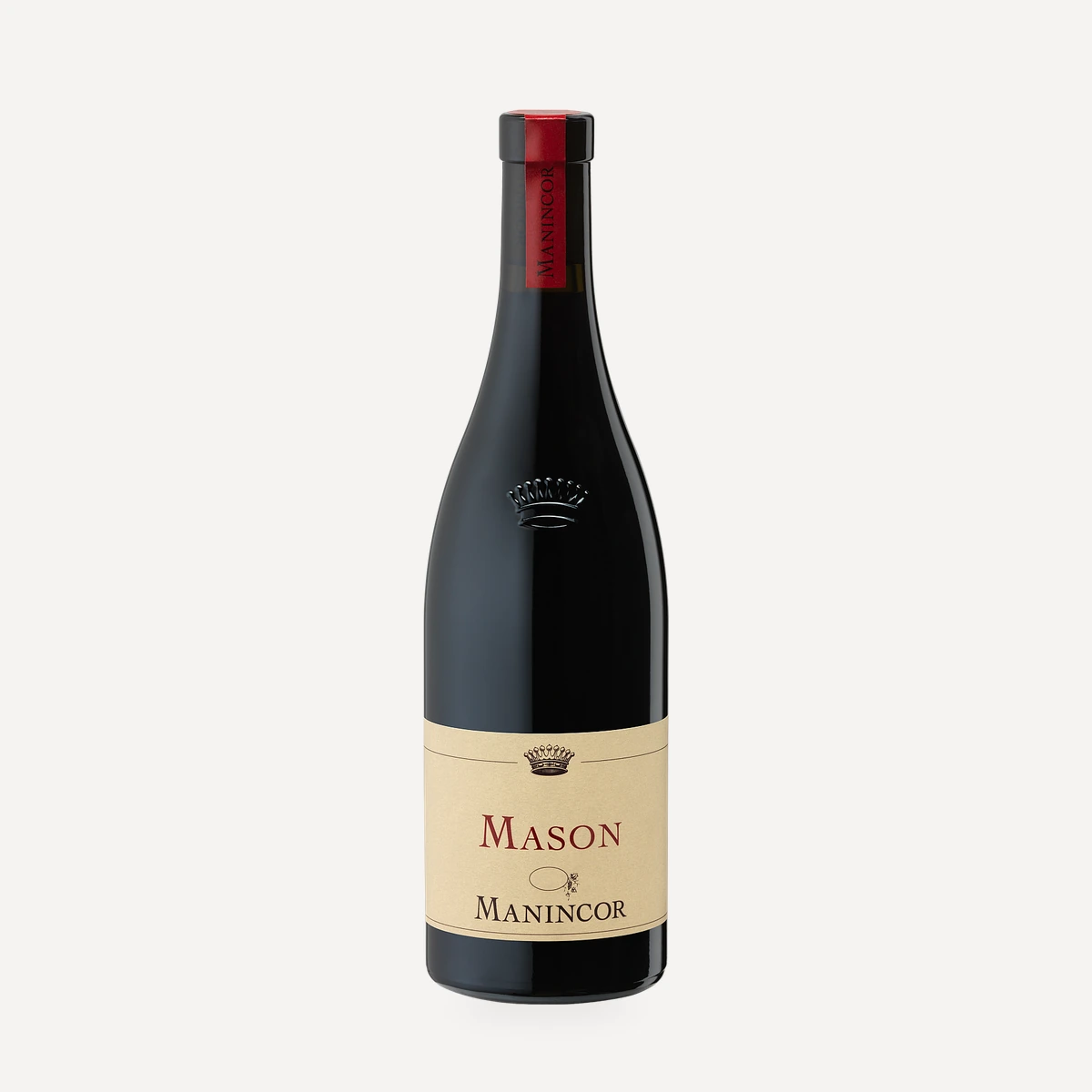
Mason
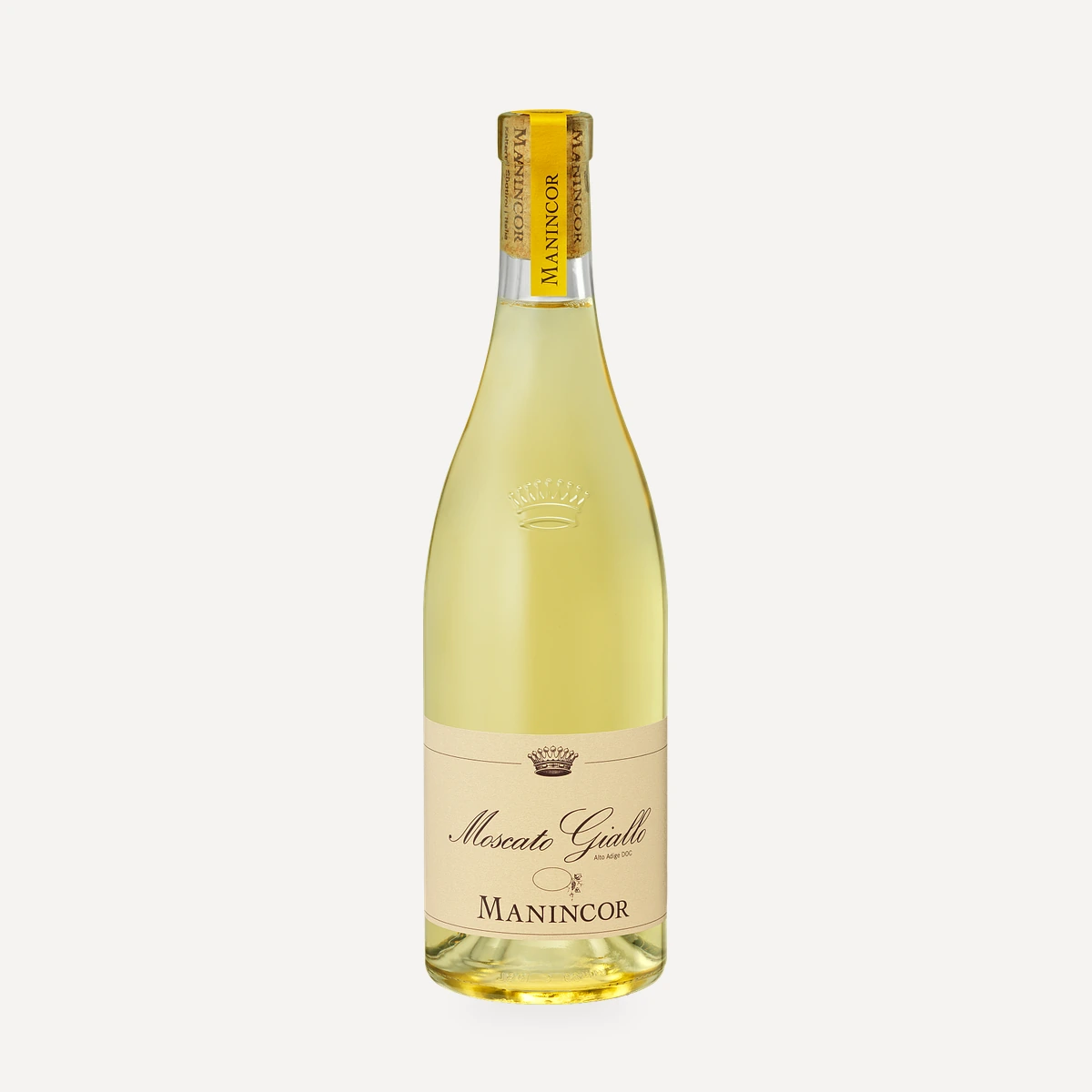
Moscato Giallo
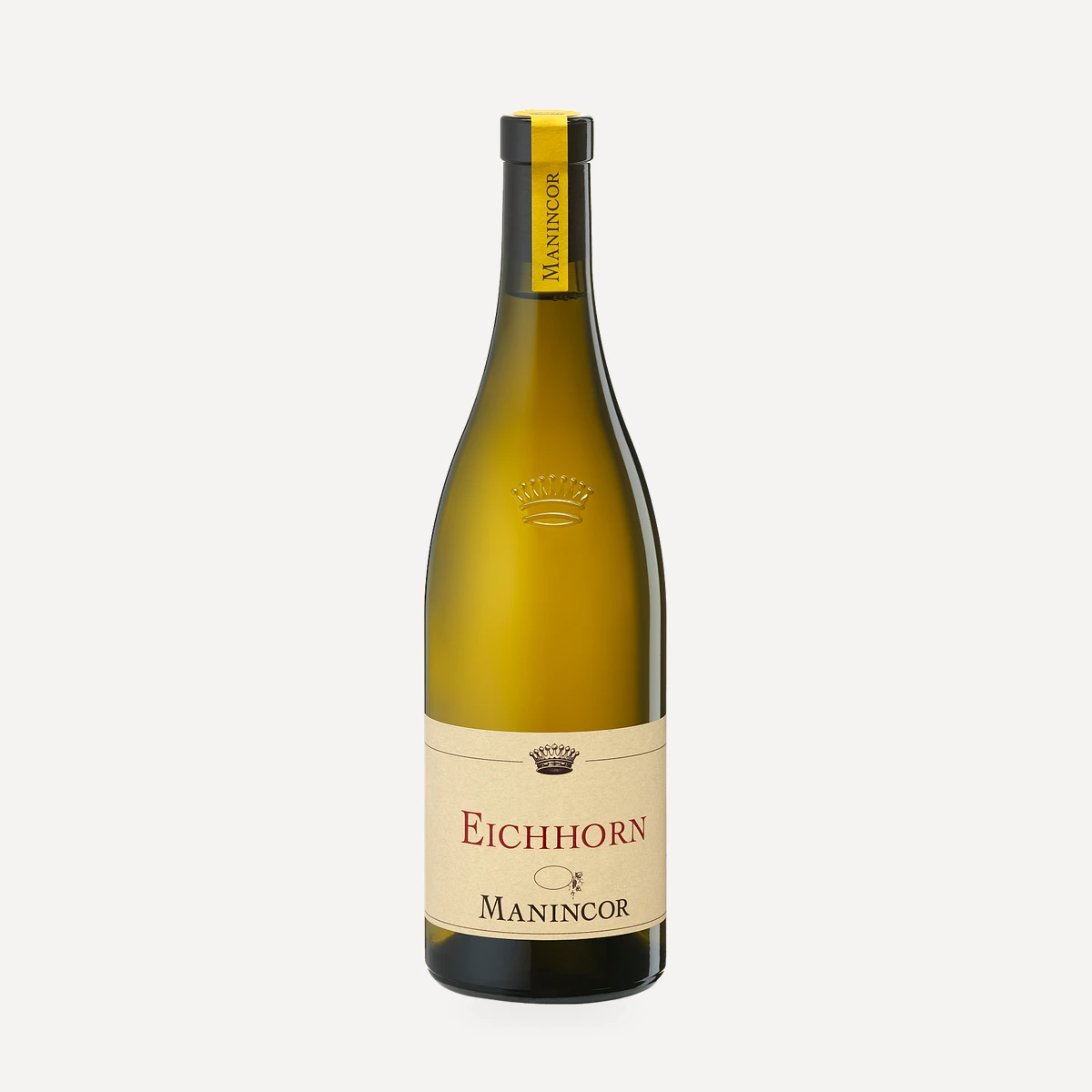
Eichhorn
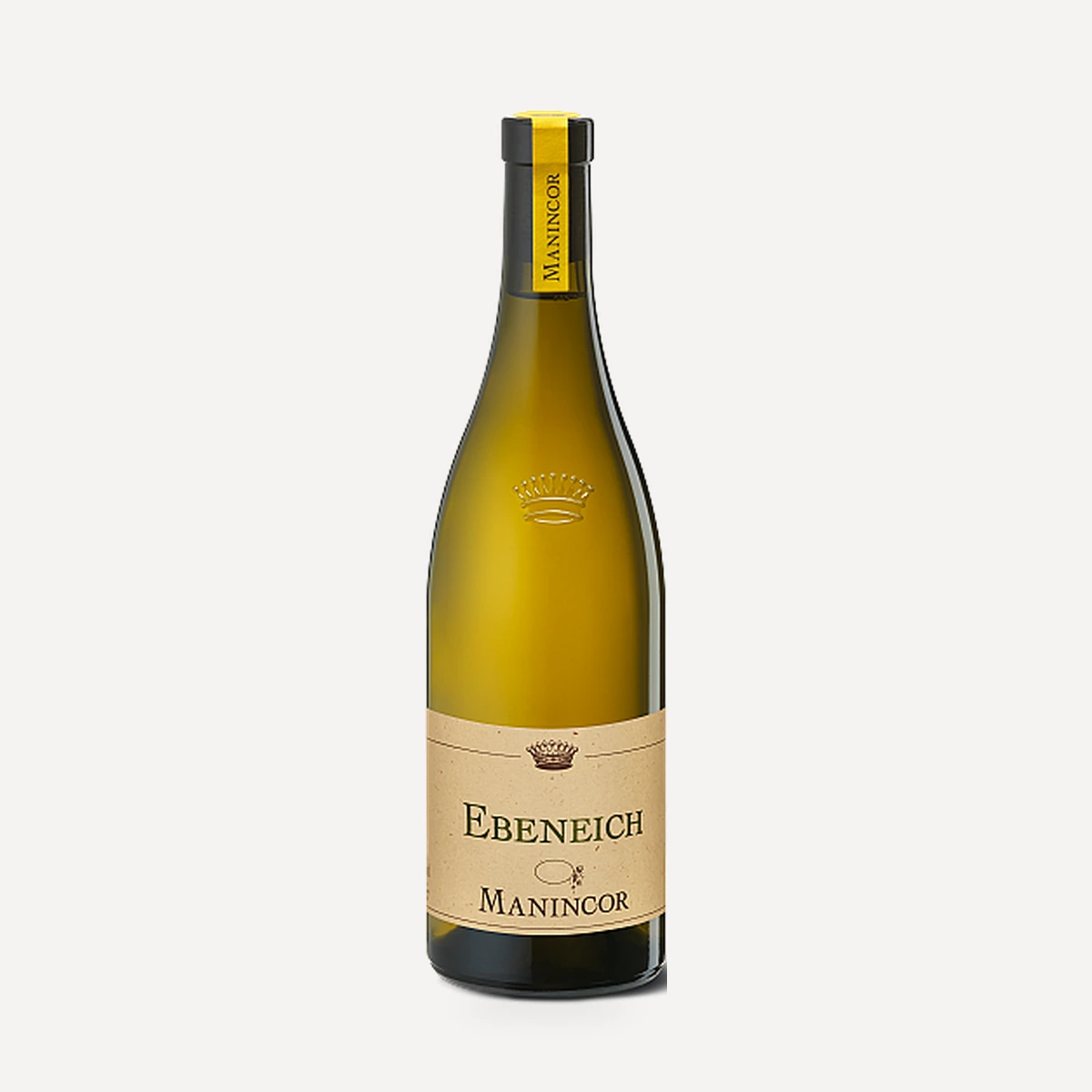
Ebeneich
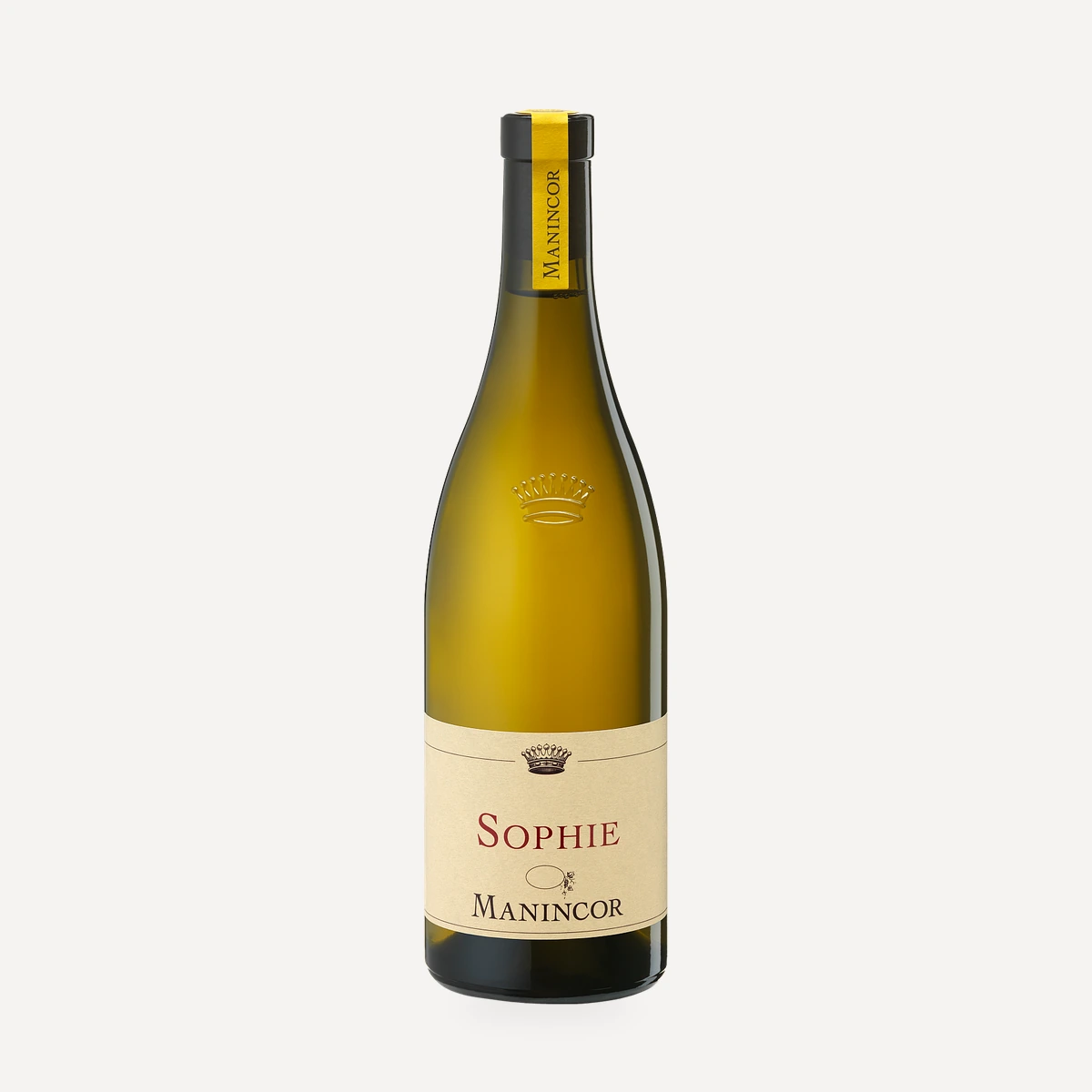
Sophie
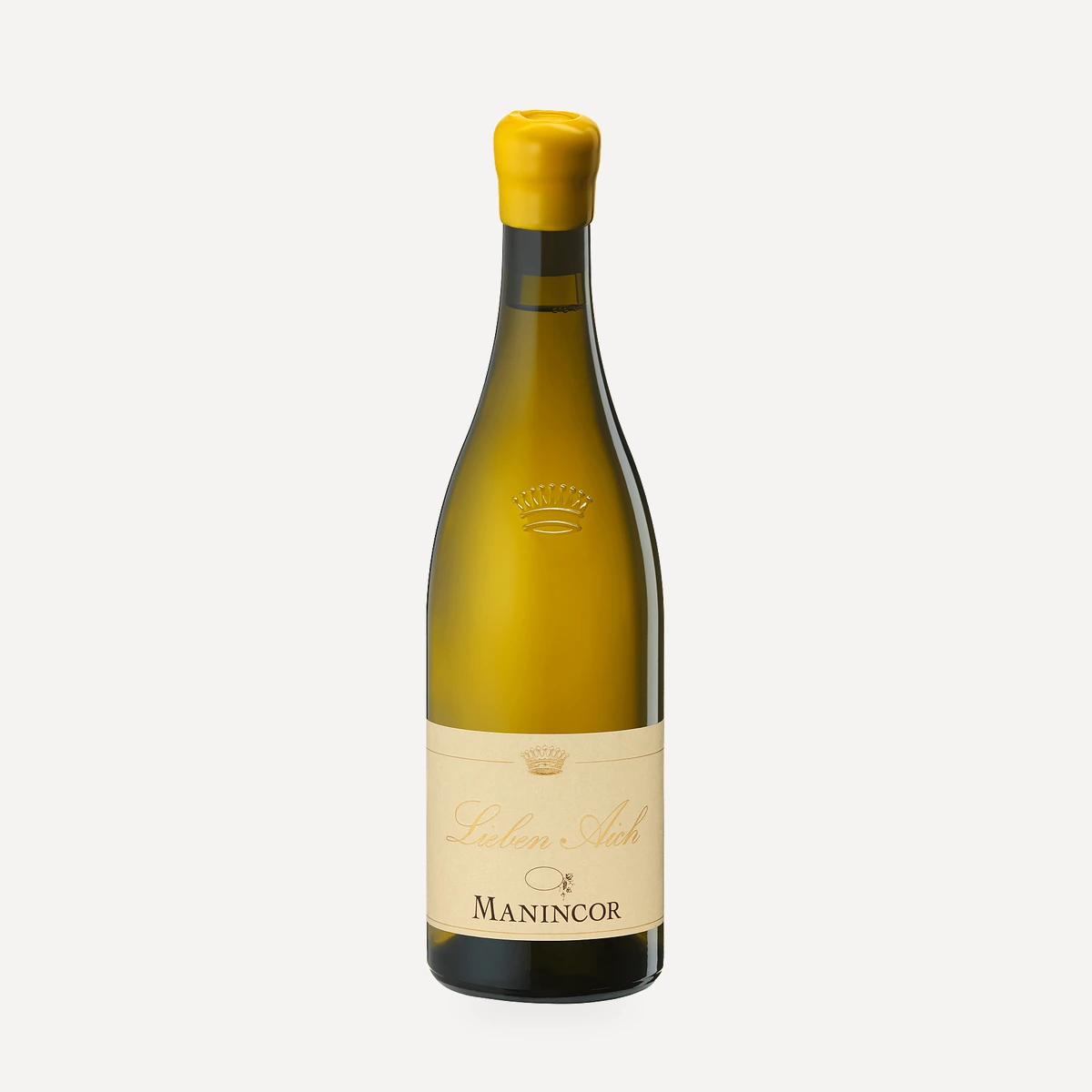
Lieben Aich
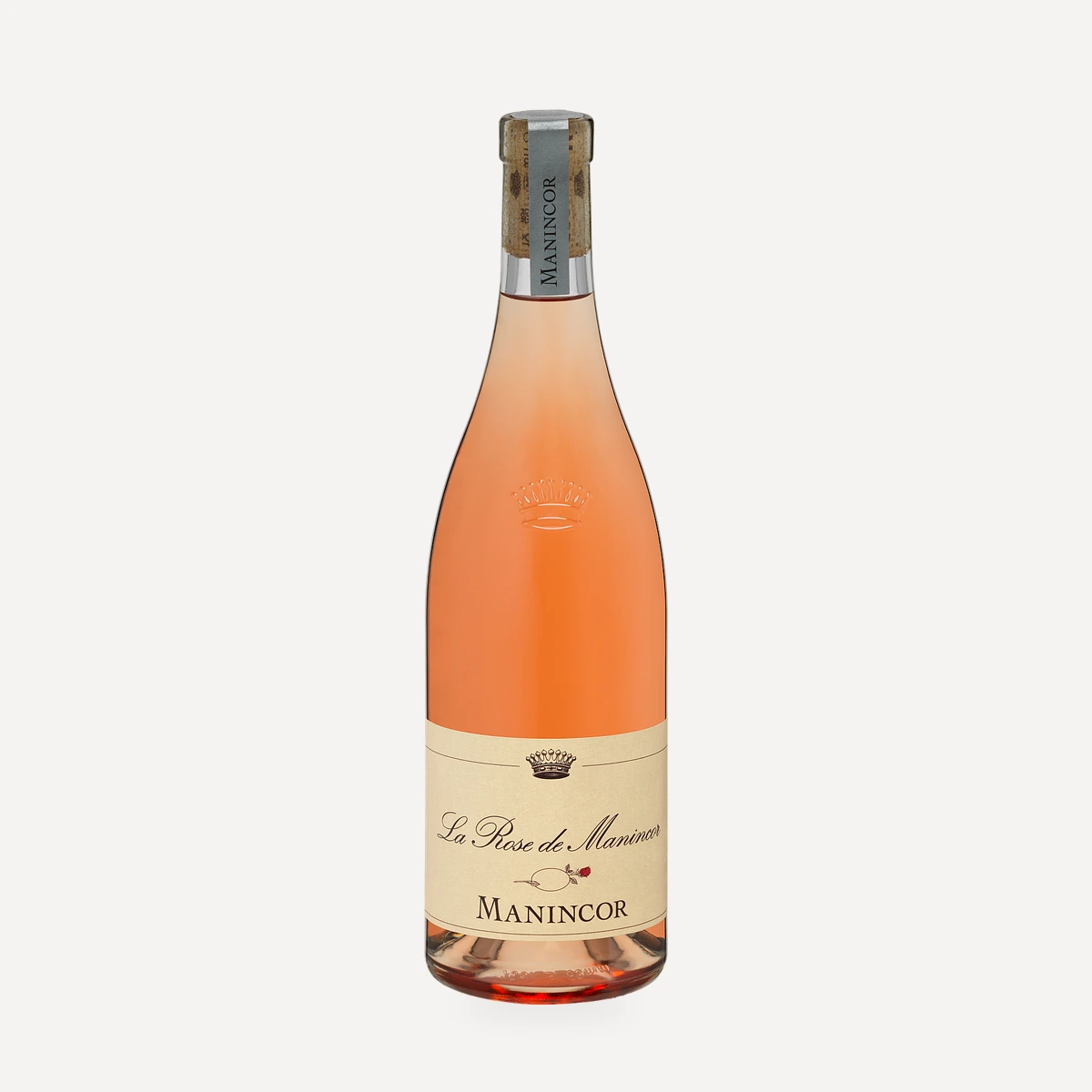
La Rose de Manincor
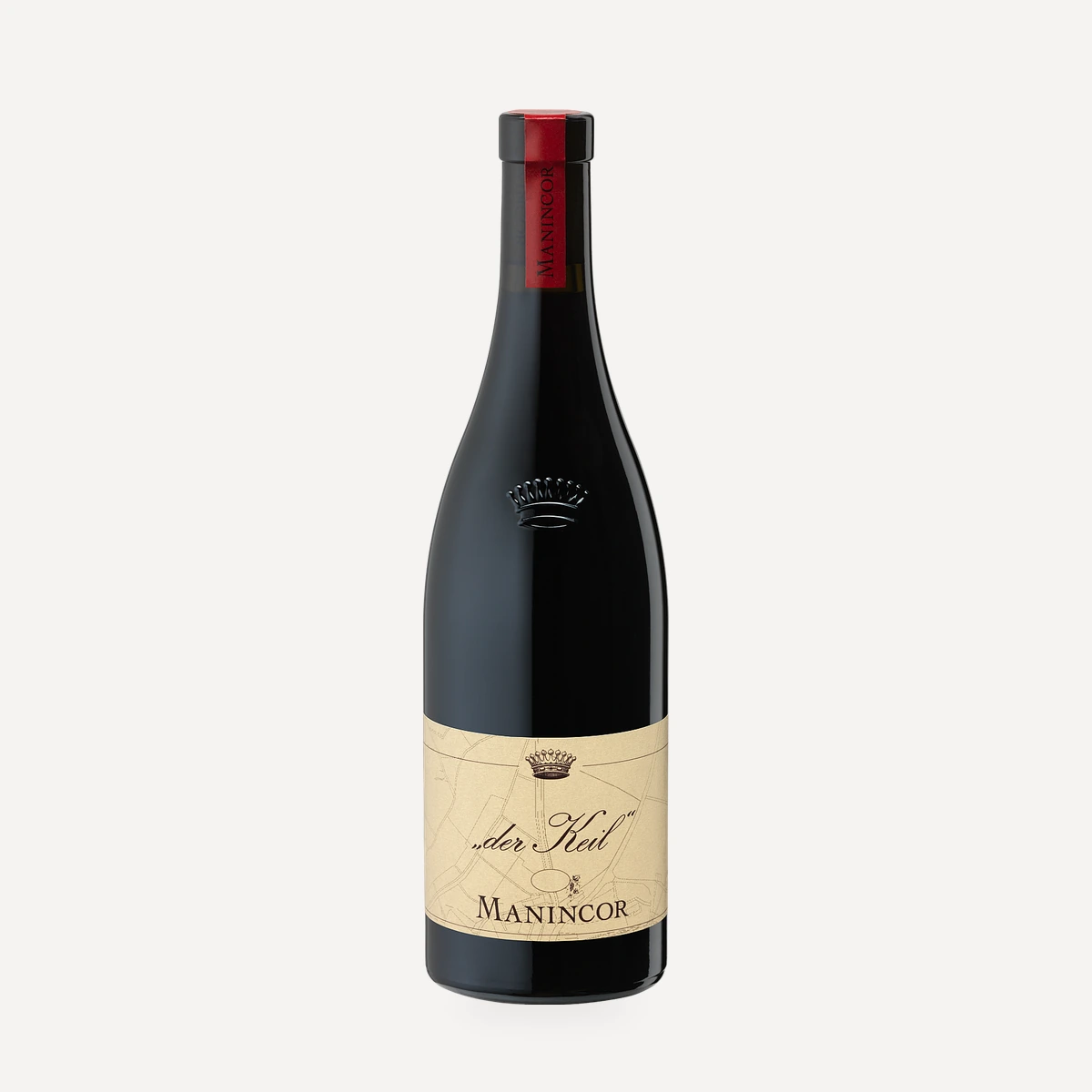
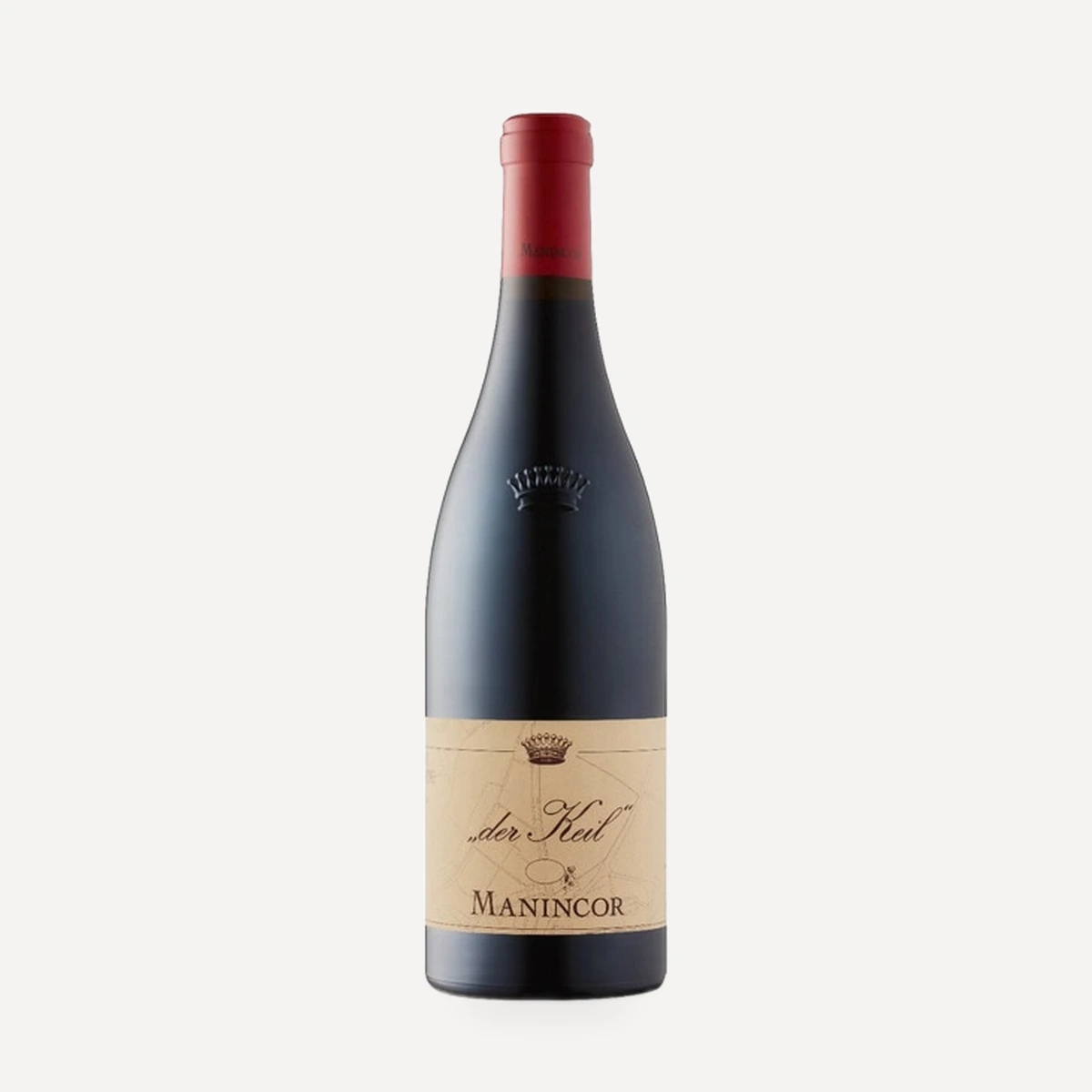
Kalterersee Keil
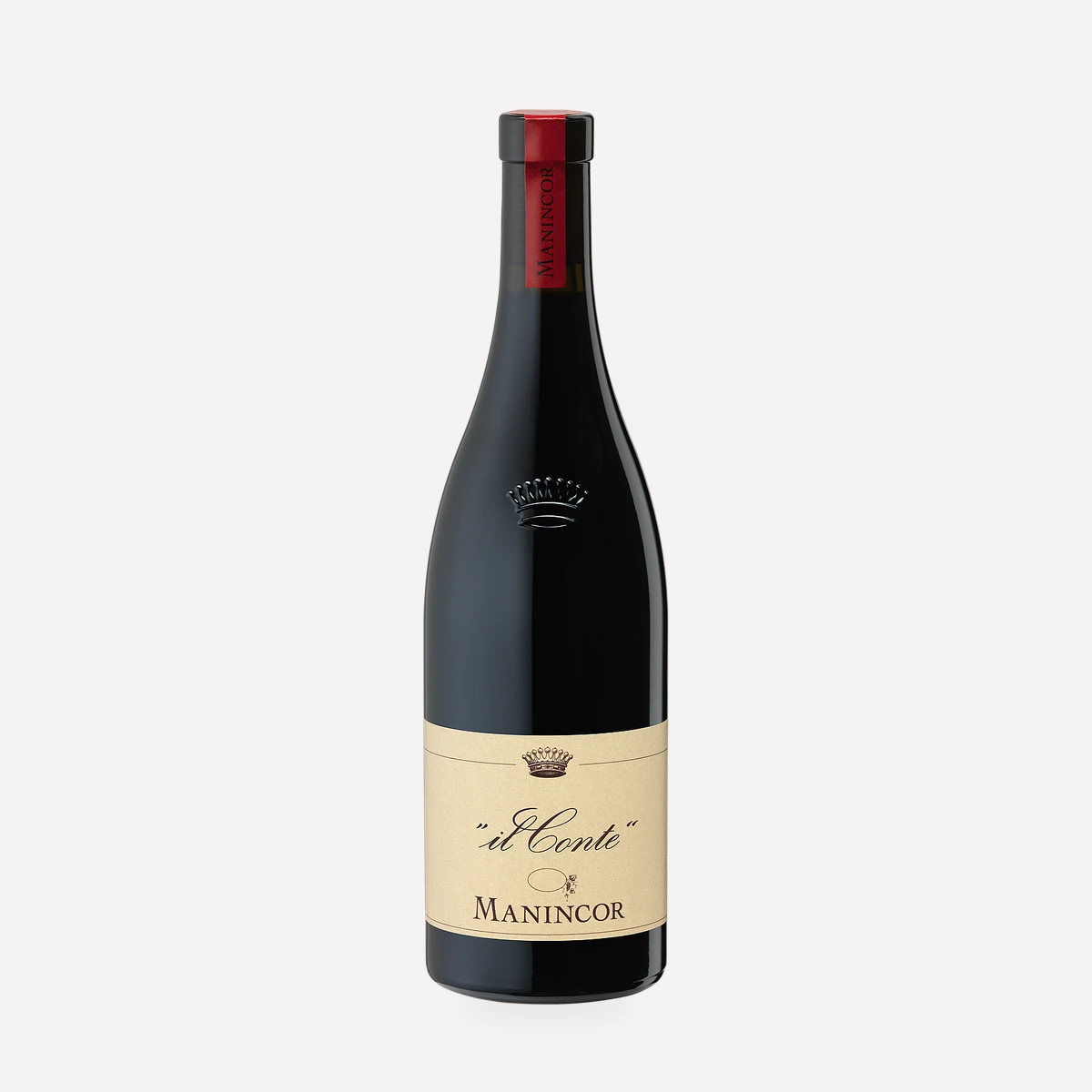
Il Conte
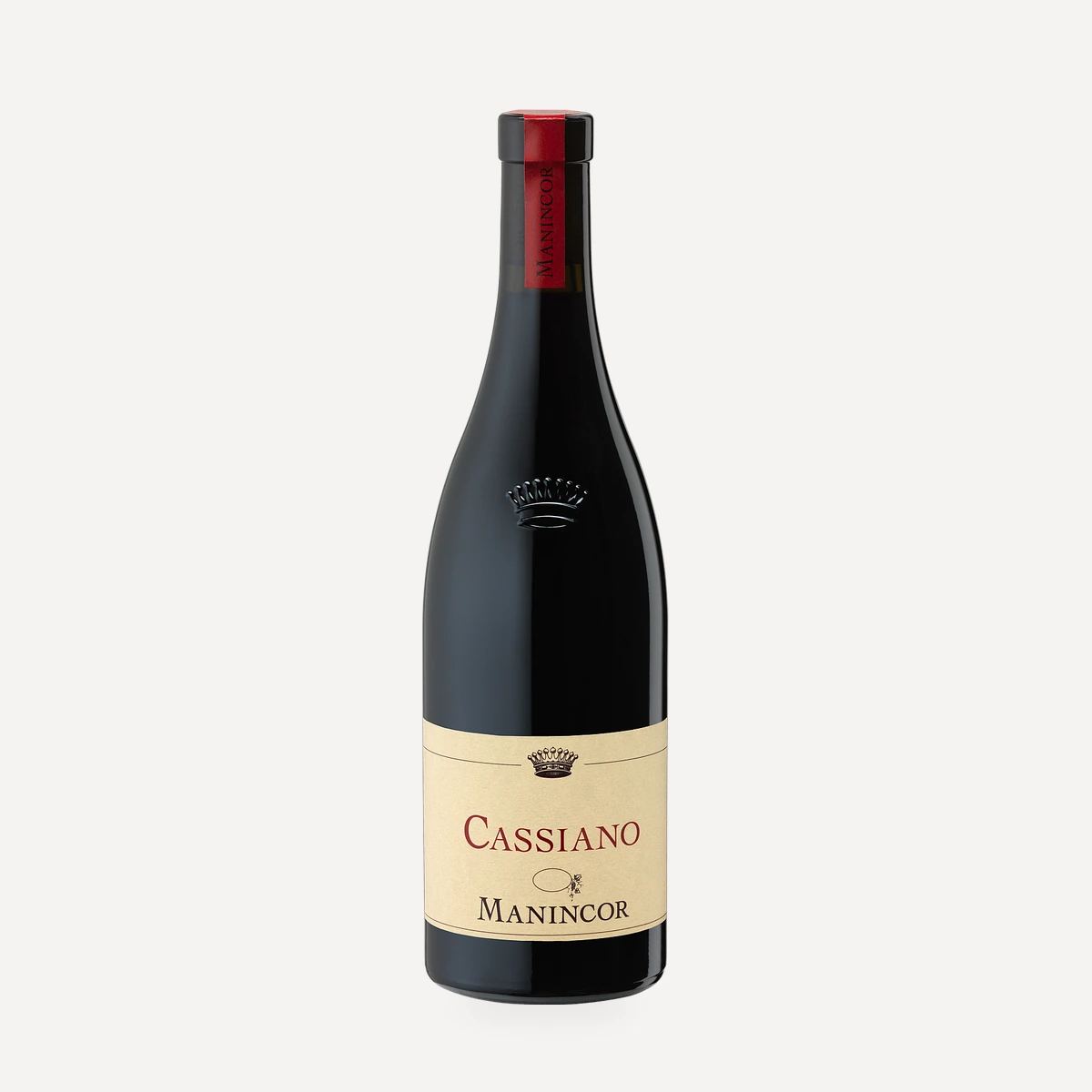
Cassiano
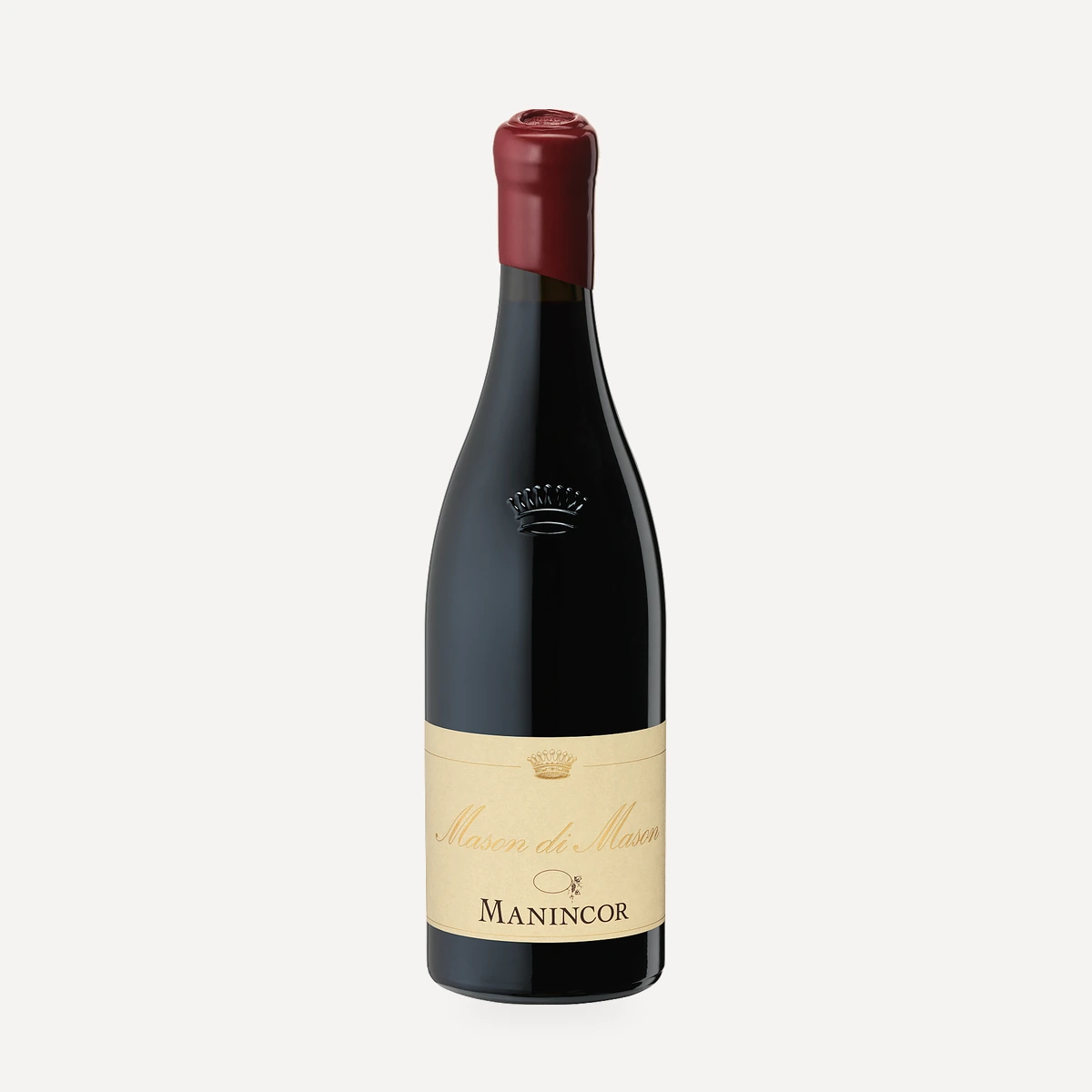
Mason di Mason
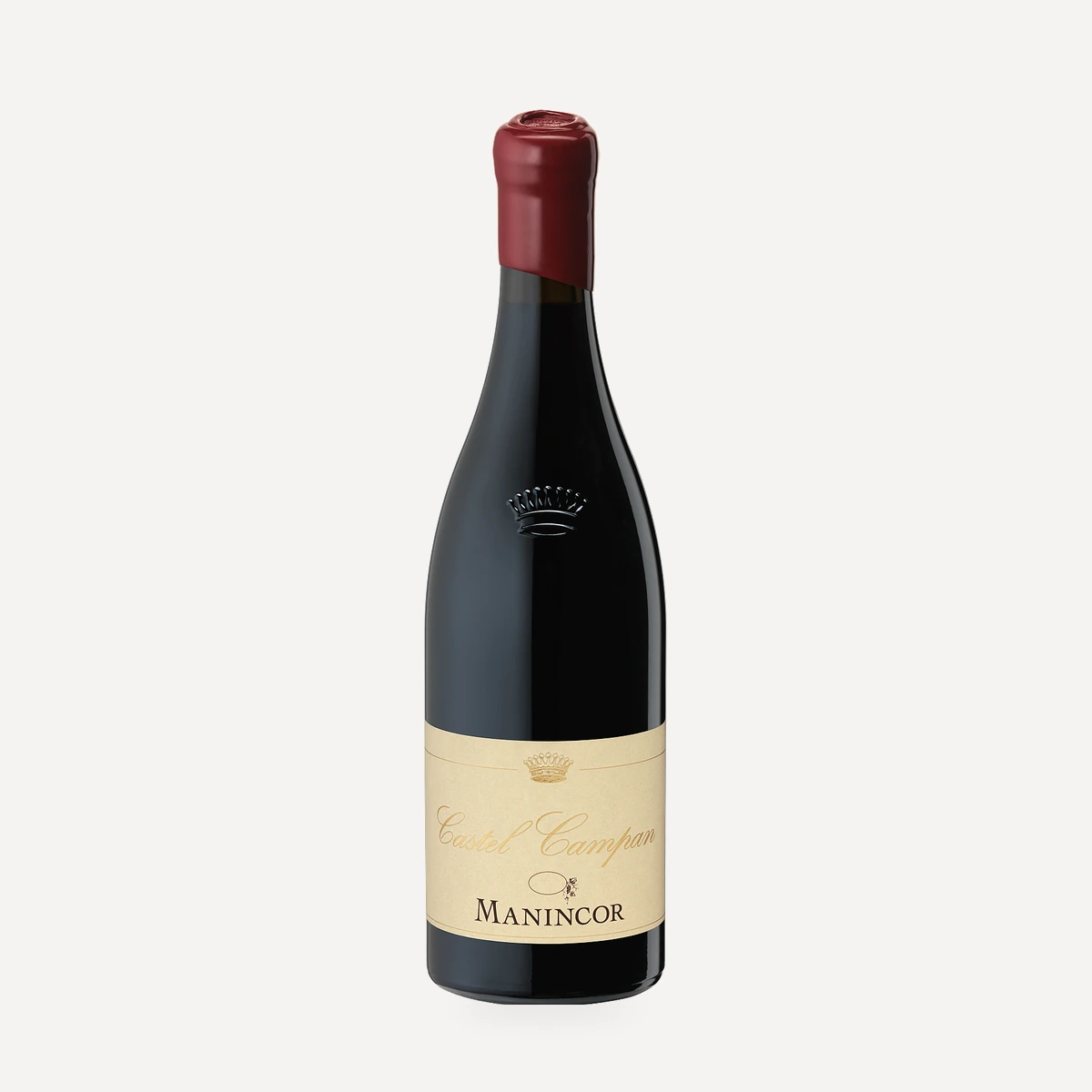
Castel Campan
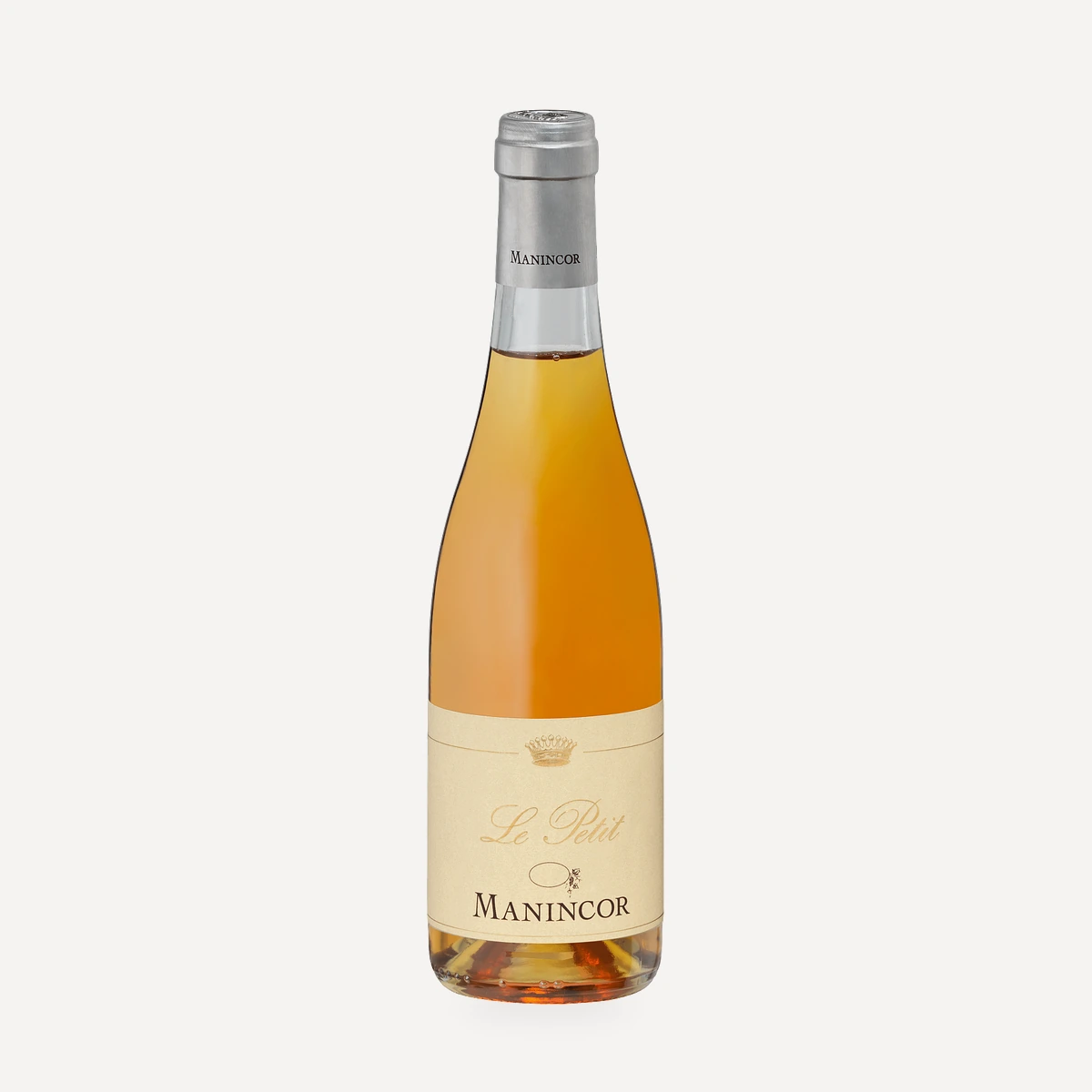
Le Petit