Questo vino
Vineyard and terroir
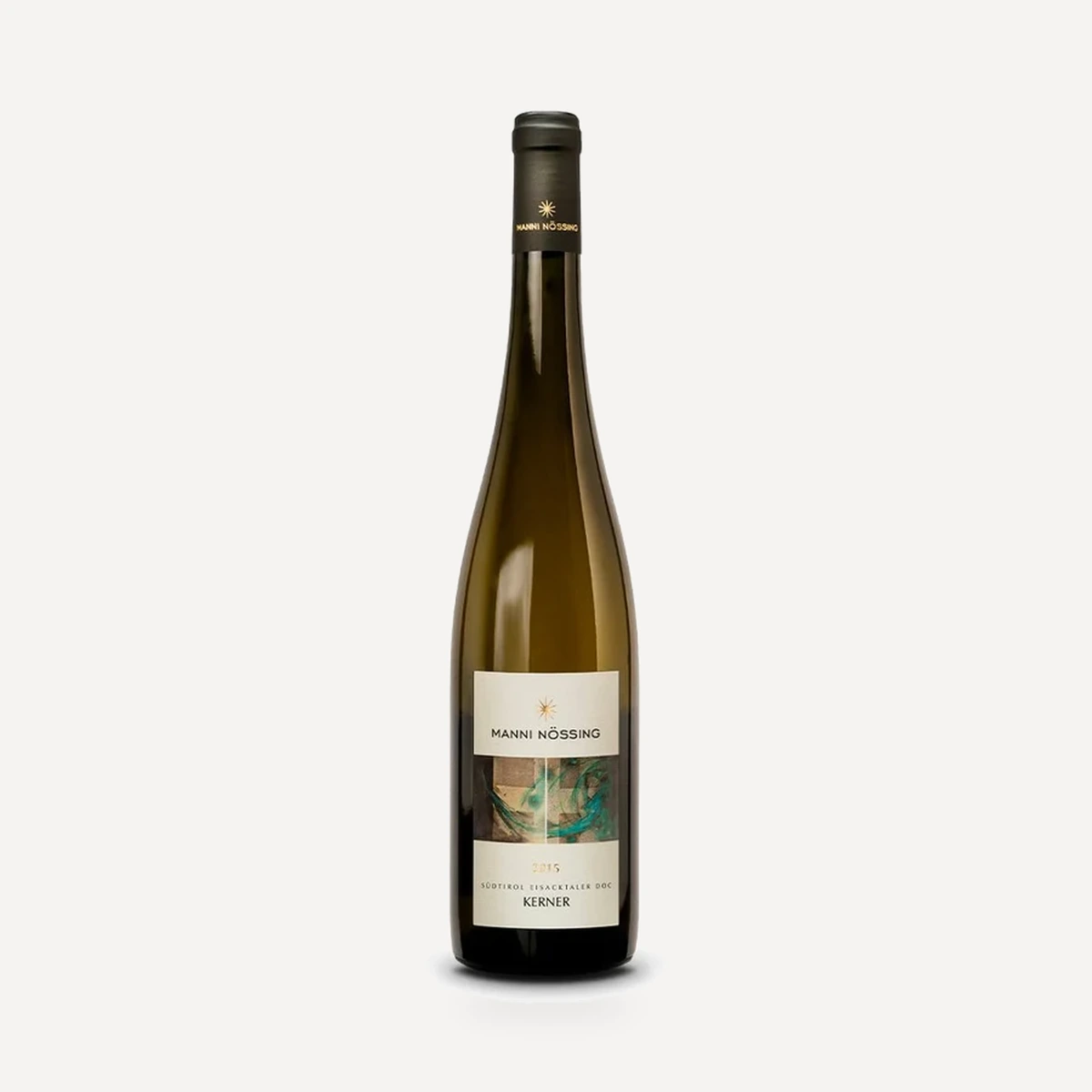
The estate grows its white varieties in the Eisack Valley. Vineyards across the valley are generally steep and situated between 500 and 900 m, with warm days, cold nights, and predominantly sandy, mineral soils; individual microclimates vary from site to site. Kerner is suited to cool, sunny positions from 600 m to almost 900 m. Regional experience links successful cultivation and vinification to restrained yields and harvesting that is not excessively late.
Grapes
Kerner, a crossing created in 1929 at the Weinsberg research station in Württemberg from Blauer Trollinger—identical to Großvernatsch—and Weißer Riesling.
Tasting profile
In the Brixen area, the variety combines strong sugar accumulation with perceptible acidity and an exotic aromatic spectrum.
Label / history
Kerner takes its name from the poet Justinus Kerner, who lived in Weinsberg. Trials began in South Tyrol in 1961, and the first plant material reached the Eisack Valley in 1967. Small vineyards were established around Neustift in 1973. Its resistance to winter frost encouraged further planting, though until 1993 it could only be marketed as table wine; it was subsequently admitted under the “Eisacktaler” DOC designation. The estate released its first Kerner in 2003, immediately receiving a Three Glasses award from a leading Italian wine guide. Kerner later became the most widely planted variety in the Eisack Valley, with three quarters of the valley's plantings concentrated around Brixen.