Storia
A family idea in Monterotondo — 2001
La Mesma began in 2001 through the initiative of three sisters, Paola, Francesca and Anna Rosina. Their mother encouraged the project: the family already had a house in Monterotondo, regarded within the Gavi area as a prestigious cru, and she wanted the property to have a vineyard of its own.
The sisters entered winegrowing from three different professional and educational backgrounds. Paola was an art historian, Francesca a biologist and Anna a lawyer. What began almost as a game became a shared change of life. They eventually left their respective city occupations and committed themselves to the vineyards and cellar.
The project started with five hectares in Monterotondo. A further ten hectares were added soon afterwards, bringing the Monterotondo holding to 15 hectares. These vineyards included vines of widely differing ages, planted on predominantly calcareous, medium-textured soils exposed to maritime air.
From vineyards to an operating winery — 2004
In 2004 the sisters acquired La Bella Alleanza, an estate in Tassarolo with an operating winery and a further ten hectares of vineyards. This purchase transformed the project from a vineyard holding into an integrated wine estate. The cellar and tasting facilities remain at La Bella Alleanza, in a small wooded valley between Novi Ligure and Tassarolo.
The combined vineyard area reached 25 hectares: 15 hectares at Monterotondo di Gavi and ten hectares across Tassarolo and Novi Ligure. The wider property covers 100 hectares, with vineyards occupying only one quarter of the estate and woodland retained as the dominant land use.
Research, organic farming and a growing team
As their involvement deepened, the sisters developed La Mesma around continuous experimentation in both vineyard and cellar. New practices and technologies were assessed for their ability to reduce pressure on the ecosystem. The estate became certified organic and adopted vineyard management tailored to soil, exposure and vine age.
A specialist team formed around the family. Agronomist Davide Ferrarese became the reference point for vineyard work. Oenologist Massimo Azzolini supported the project from its beginning, while cellar manager Ivano Rossi assumed responsibility for applying its production philosophy. Rosanna Giangrandi took charge of administration and additional operational responsibilities. Enrico, Monica, Mario, Giovanni, Garofita and Mihai became the core vineyard team.
Indigenous-yeast research — 2015
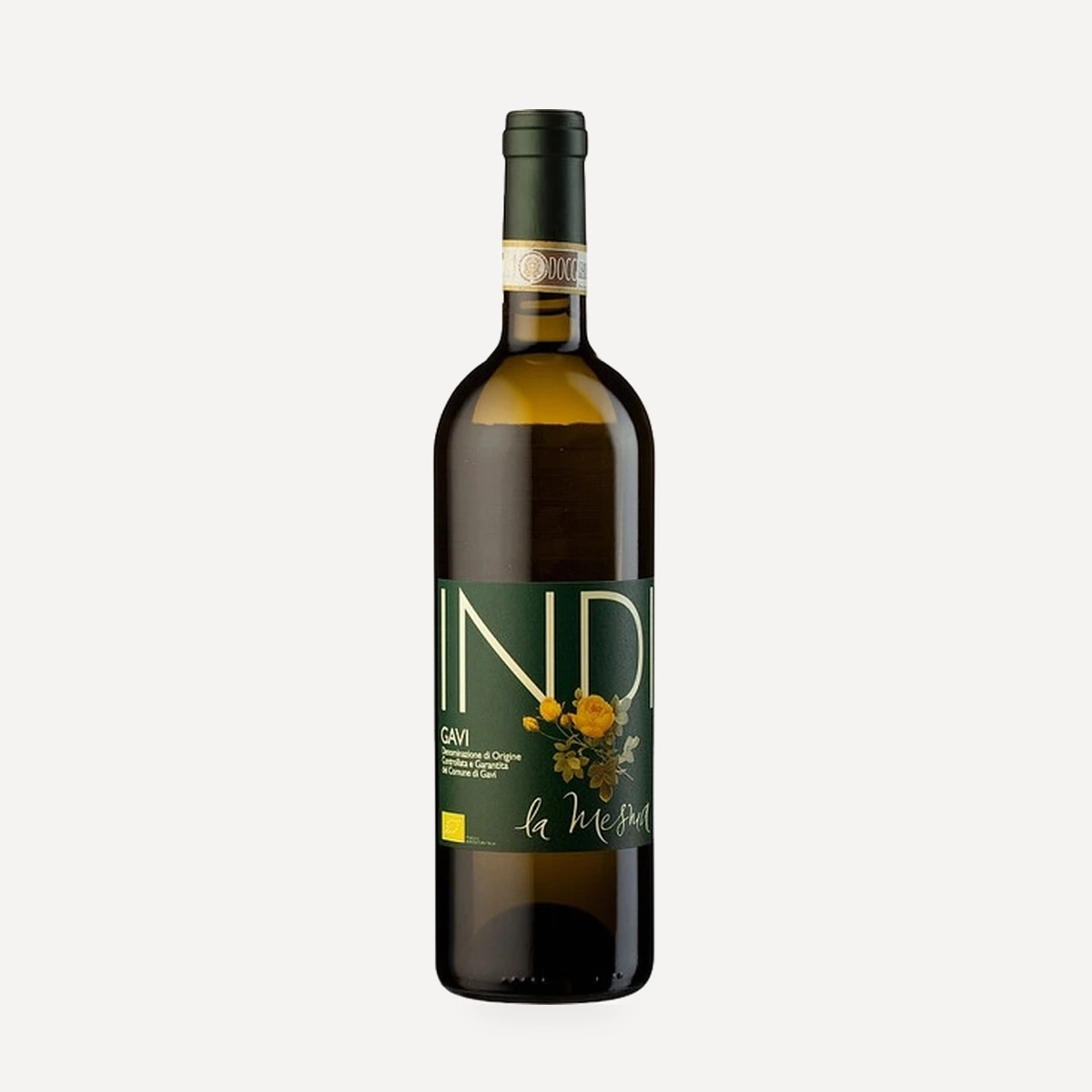
More than three years of trials explored spontaneous fermentation. Initial experiments that macerated the full mass on its skins produced oxidative musts lacking the desired typicity. In 2015 Francesca selected a pied de cuve approach instead. A small batch is allowed to ferment with indigenous yeasts and is then used to start the remaining must, providing greater control without resorting to selected yeasts. The work became the basis of the INDI identity, whose name refers both to indigenous yeasts and to independent music.
Biodiversity experiments — 2021
The estate also developed non-lethal ways of limiting wildlife damage. Skeins of sheep’s wool had already been hung in frequently visited vineyards because their smell discourages roe deer. In 2021 the team observed that a vineyard adjoining an alfalfa field had largely escaped deer damage. La Mesma subsequently sowed a large field of alfalfa as an alternative feeding area; the neighbouring vineyards experienced less damage.
The next family generation
Nicolò Garrone, Francesca’s son, later joined La Mesma, extending active family participation into a second generation. The business continues to be led by the three sisters together with its agronomic, cellar, administrative and vineyard teams.
Terroir
The southern Piedmont frontier
La Mesma’s vineyards lie at the extreme southern edge of Piedmont, where the plain meets the mountains and alluvial deposits meet geological outcrops from much older eras. The Gavi landscape is divided into three broad geological belts: red soils formed from gravel mixed with clay in ancient alluvial deposits; a central belt alternating marl and sandstone; and a southern belt of white, marine-origin clay marl.
Tassarolo and Novi Ligure
North of Gavi, towards Tassarolo and Novi Ligure, red soils dominate. They originated from ancient alluvial gravel mixed with clay. The hills are comparatively gentle, and the vineyards alternate with oak and chestnut woods.
La Mesma’s Tassarolo vineyards stand on slopes at approximately 300 m above sea level. Their vines range from 18 to 55 years old. The red, clay-rich terroir is associated with structure and minerality.
The oldest vineyard lies beneath the monumental Rovere Verde di Tassarolo. This rare evergreen Quercia crenata is more than 400 years old, protected by woodland and entered in Italy’s National Register of Monumental Trees. Its hilltop setting opens towards a broad landscape extending as far as the Alps.
Monterotondo di Gavi
The Monterotondo vineyards belong to the Marne Serravalliane formation, which emerges in a nearly continuous belt from the Langhe to Val Borbera. They lie at approximately 350 m above sea level and contain calcareous and tuffaceous patches. The soils are moderately deep and calcareous, with loam textures and good internal drainage.
The vineyards look towards the Forte di Gavi. The Ligurian Sea is 45 km away, and maritime breezes pass through the vines. The combination of limestone, elevation, drainage and sea air is associated with marked minerality, finesse and a savoury counterpoint to floral aromas.
Woodland and microclimate
The estate extends across 100 hectares, of which 25 hectares are planted to vines. Woodland surrounds the vineyards and consists principally of oak and chestnut. Retaining this wooded landscape supports a favourable vineyard microclimate, protects air quality and provides extensive habitat for wild plants and animals.
Vinificazione
Certified organic, site-specific management
La Mesma is certified organic under control code IT-BIO-015. Vineyard management changes according to soil, exposure and vine age rather than following a single uniform prescription. The objective is to obtain healthy, ripe fruit while protecting vine longevity, soil life and surrounding biodiversity.
No herbicides or chemical fertilisers are used. Green manure contributes to soil management, while seaweed is applied as a foliar fertiliser. Young vines receive symbiotic-agriculture treatments based on mycorrhizae: fungi that colonise the roots and improve the soil’s microbiological life.
Organic disease protection combines sulphur and copper with natural treatments. Propolis is used as a natural, vegan anti-mould and anti-botrytis material, while orange-blossom oil supports the conventional organic treatments. During heat waves, exposed vines are sprayed with kaolin, an inert white clay that shields plant tissue from sunburn. The vineyards are dry-farmed and receive no irrigation.
Simonit & Sirch pruning
Soft pruning follows the Simonit & Sirch method. Branching is encouraged through small, carefully positioned cuts on young wood. Large back-cuts are avoided so that the vine’s sap-flow system remains intact.
Maintaining continuous sap flow supports even plant development and more consistent fruit quality. It also helps prevent wood diseases, identified as a principal cause of premature vine decline. Over time, vines are allowed to branch and develop their natural morphology, with cutting zones kept separate from the path of the sap. The principle can be applied across different training systems.
Woodland, wildlife and biodiversity
Woodland is preserved around the vineyards to sustain biodiversity and a favourable microclimate. Roe deer and wild boar inhabit the forested Gavi hills, so La Mesma experiments with non-lethal measures that allow wildlife and viticulture to coexist.
Skeins of sheep’s wool are hung from posts in vineyards frequently visited by roe deer; the smell acts as a deterrent. After observing in 2021 that deer avoided a vineyard beside an alfalfa field, the estate planted a larger alfalfa area as an alternative food source. Damage in neighbouring vineyards subsequently declined.
A large wildflower field at the winery entrance is dedicated to bees. Beyond their broader ecological role, bees are valued for transporting yeasts and beneficial bacteria that may help maintain healthy berries.
La Bella Alleanza has served as La Mesma’s operating winery since its acquisition in 2004. The cellar is equipped for temperature-controlled vinification in stainless-steel and concrete tanks and for the complete production of Traditional Method sparkling wine.
Across the range, grapes may be harvested by hand, pressed gently and fermented at controlled temperatures. Whole-cluster soft pressing is used for selected Cortese lots. Depending on the intended expression, wines can remain on fine lees in tank, mature in concrete or steel, and complete their development in bottle.
La Mesma’s indigenous-yeast work followed more than three years of trials. Early whole-mass skin macerations produced oxidative musts with insufficient typicity. In 2015 Francesca introduced a pied de cuve: a small Cortese batch begins fermenting with its native yeasts and is then used to inoculate the remaining must. This preserves spontaneous fermentation while providing greater control.
Traditional Method wines are produced entirely in-house. The process includes primary vinification, tirage and secondary fermentation in bottle, ageing on the lees, manual remuage and disgorgement. Extended releases have remained on their lees for more than 100 months.
A photovoltaic installation supplies clean solar energy to the winery.
Filosofia
La Mesma’s philosophy links wine quality to environmental responsibility. Healthy, fully ripe grapes are treated as the foundation of good wine, but not as justification for damaging the surrounding ecosystem. Vineyard work is intended to protect the vine beyond a single harvest, with particular attention to longevity, intact sap flow, living soils and biodiversity.
The estate describes its approach as both gentle and precise. Management is adjusted to each vineyard’s soil, exposure and vine age, and continuing research is used to reduce impacts on the land. Organic practices, dry farming, woodland conservation, renewable energy and non-lethal wildlife management are parts of the same programme.
In the cellar, the guiding principle is minimal intervention sufficient to preserve precision and a sense of place. The sisters combine traditional techniques with research and appropriate technology: indigenous-yeast fermentation is controlled through pied de cuve, while temperature-controlled vessels support clean vinification. Their differing backgrounds in art history, biology and law are presented as a productive diversity that shapes the estate’s identity.
La Mesma is devoted principally to Cortese and to exploring the variety through the different soils, vinifications and ageing regimes available within Gavi. The phrase “360° Gavi” encapsulates this focus.
Vini
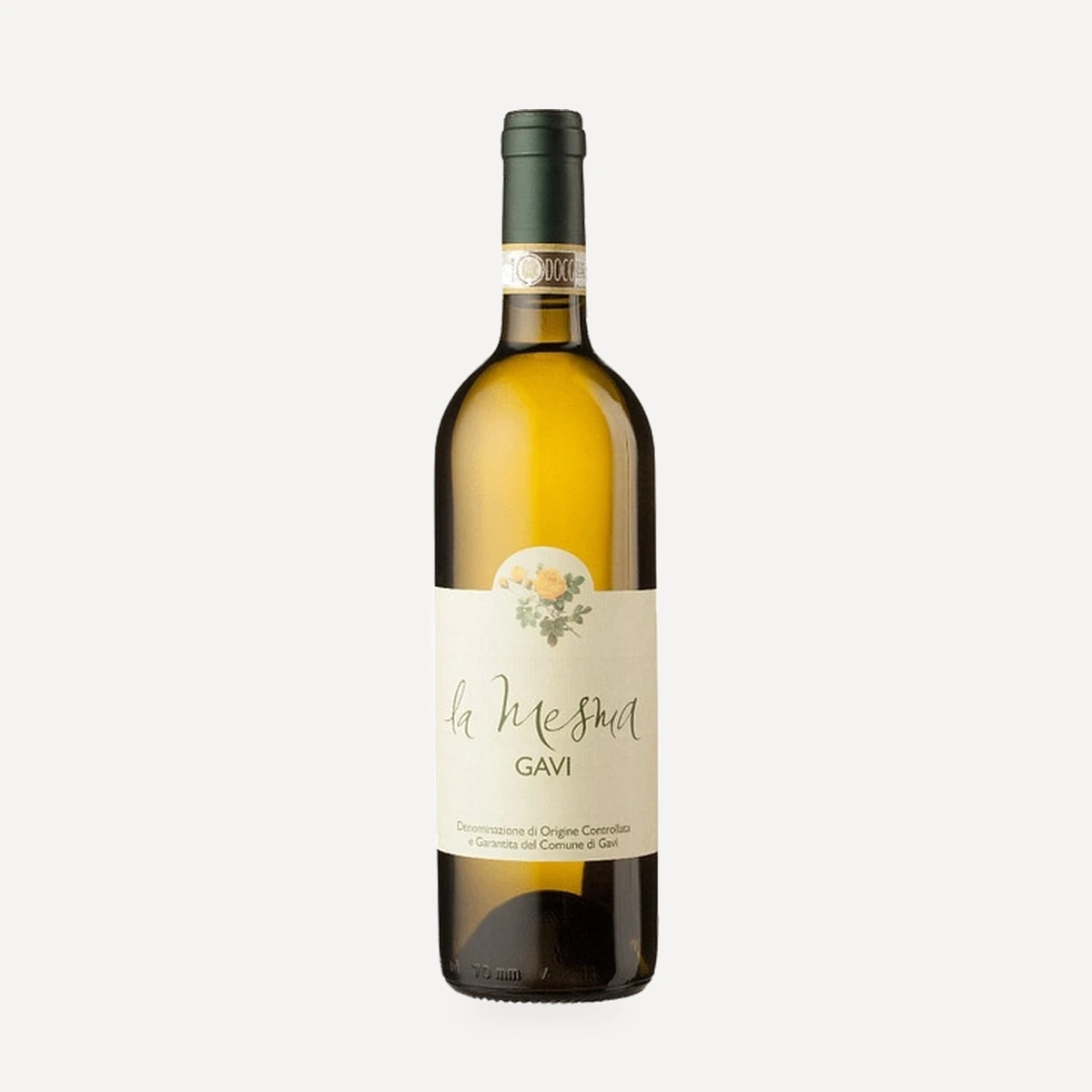
Etichetta Gialla Gavi del Comune di Gavi DOCG
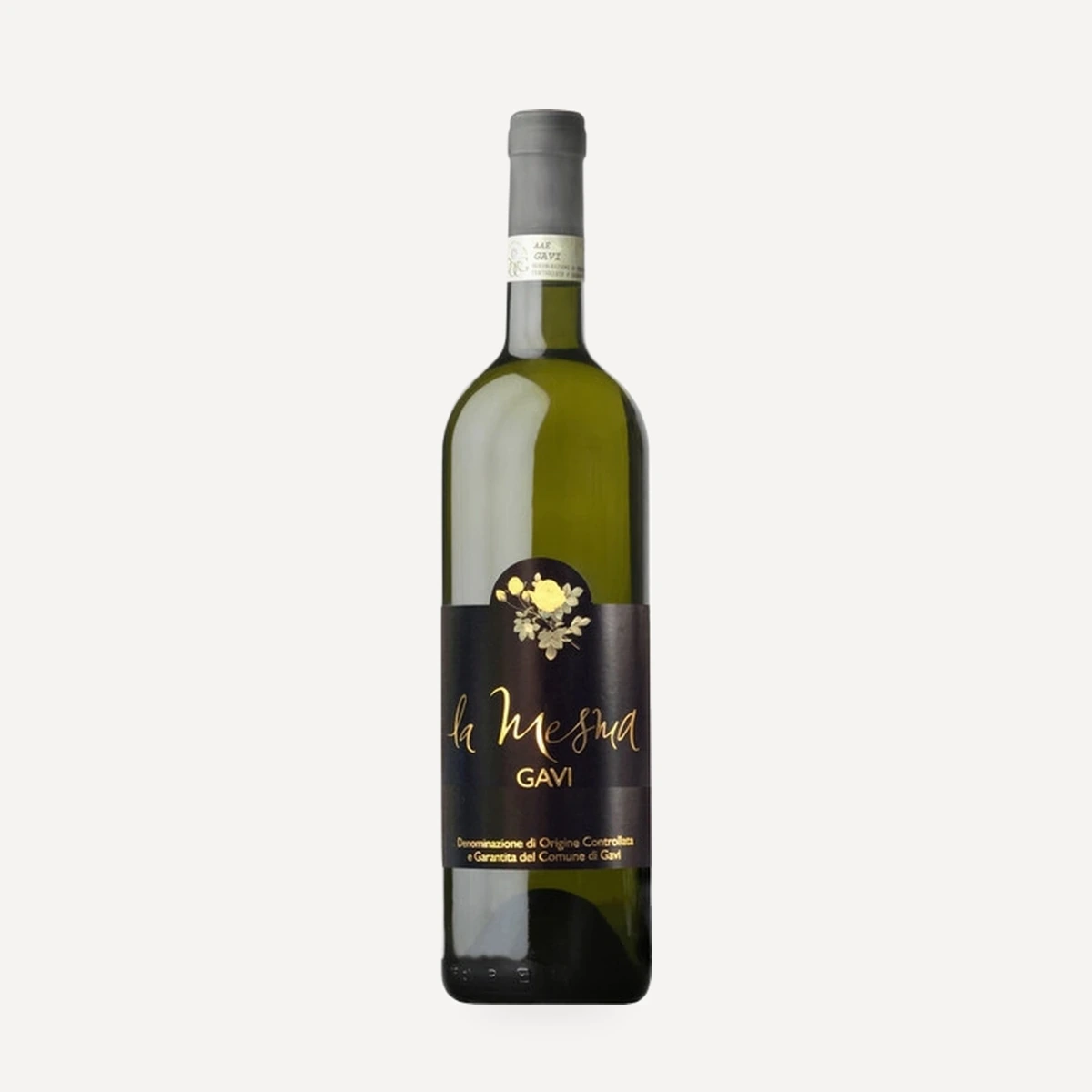
Etichetta Nera Gavi del Comune di Gavi Monterotondo DOCG
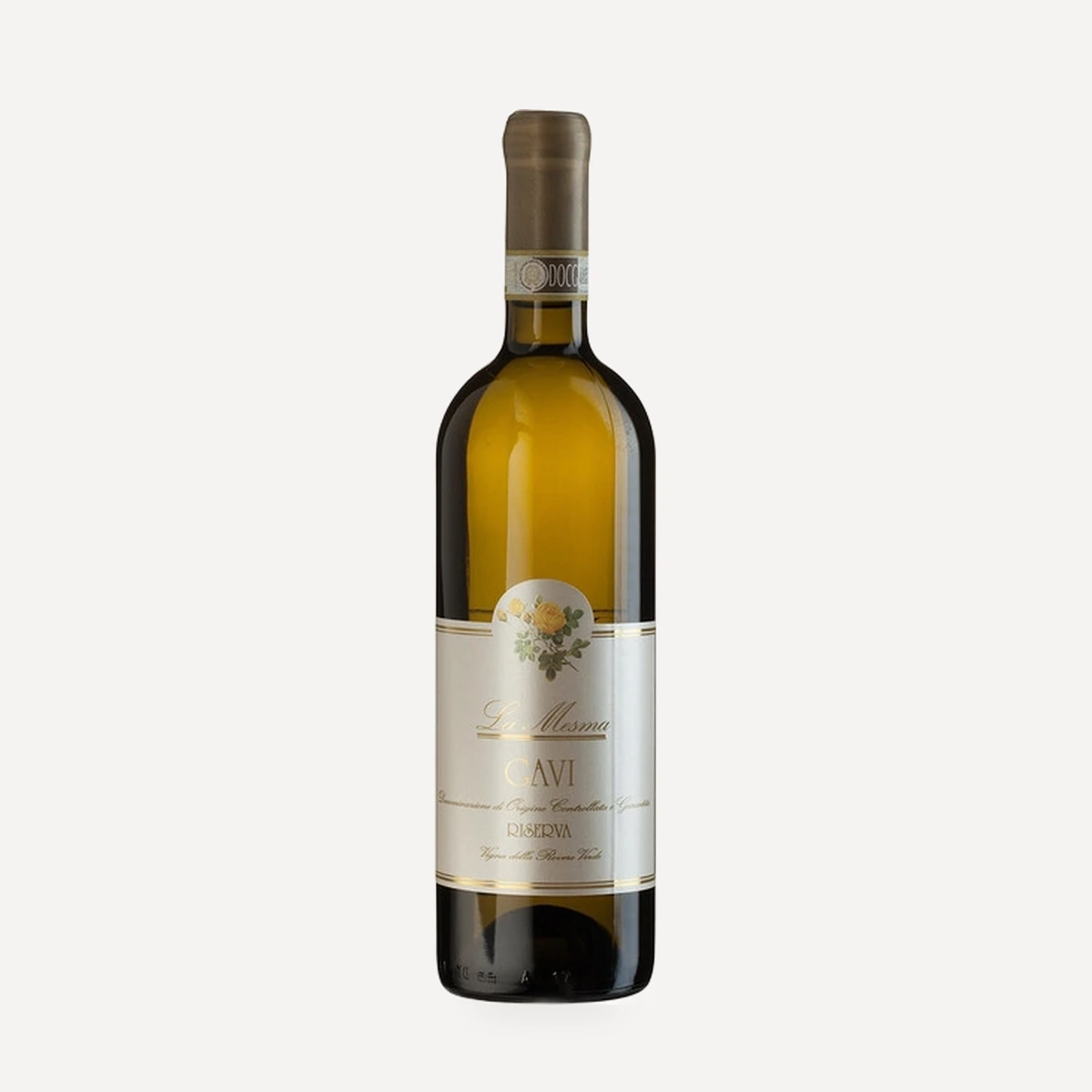
Vigna della Rovere Verde Gavi Riserva DOCG