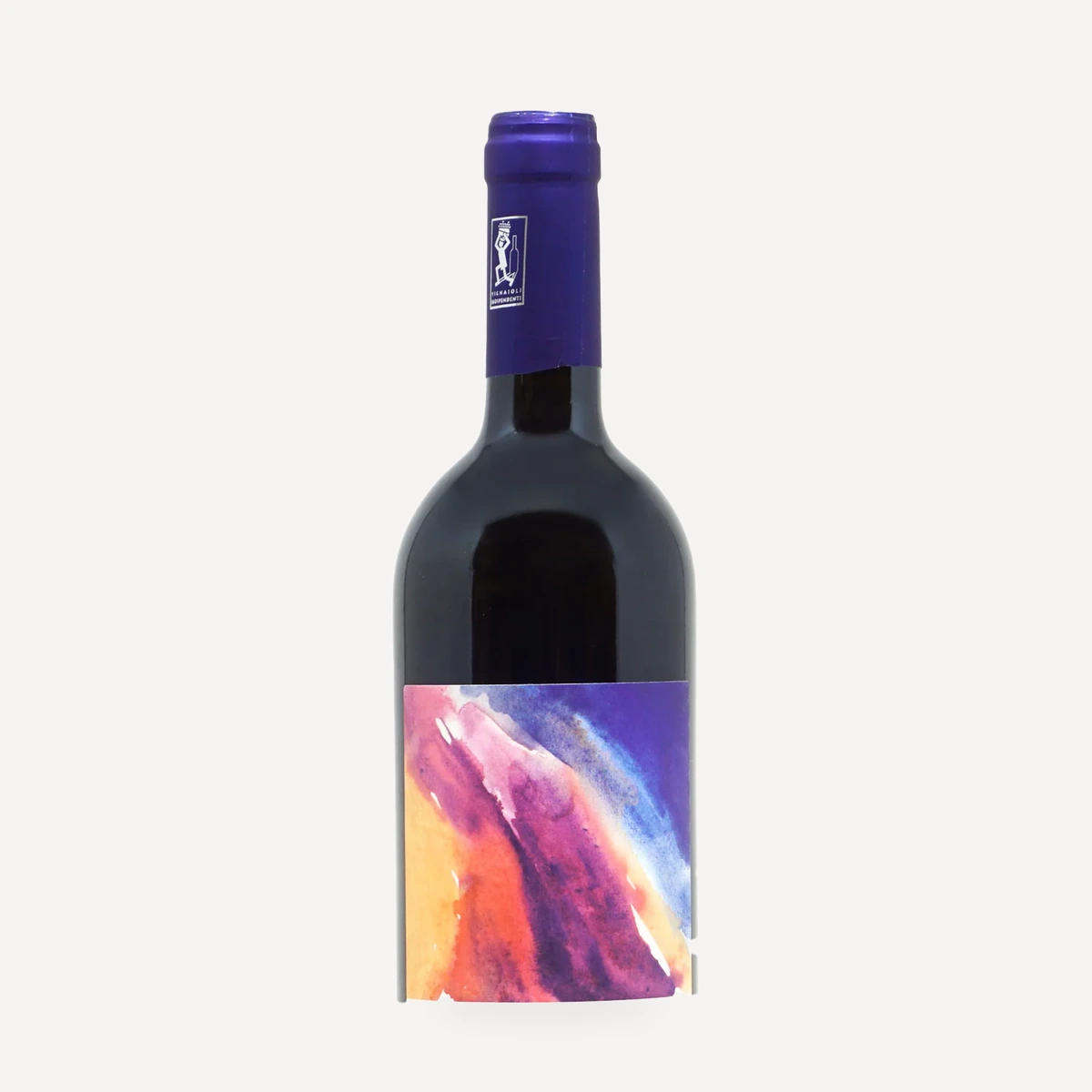
Questo vino
Vineyard and terroir
The grapes come from estate vineyards at Felciaino 115a in Castagneto Carducci, at 90–120 metres above sea level. The heterogeneous soils are predominantly clay-loam. The vines occupy a broad hilly area beside a stream, creating a temperate, ventilated microclimate with pronounced day-to-night temperature variation.
The spur-cordon-trained rows follow the natural slope, crossing the hill and running north–south for sunlight exposure. Vines are planted 80 cm apart in rows spaced 220 cm apart, equivalent to 5,680 vines per hectare. The 2021 technical sheet records a yield of approximately 50 quintals per hectare.
The vineyards are certified organic by ICEA and biodynamic by Demeter. They receive no chemical fertilisers or systemic products. Green manure and mycorrhizal symbiosis support soil fertility; copper use is limited to 3 kg/ha, alongside sulphur. The vines are not topped in June and are treated with estate-made decoctions of nettle, Inula viscosa and horsetail.
Grapes
Blend proportions vary by vintage. The latest published vintage, 2021, comprises 51% Merlot, 36% Cabernet Sauvignon, 10% Syrah, 2% Cabernet Franc and 1% Ciliegiolo.
Vinification
Harvest ran from early September until after mid-October, following the ripeness of each variety. Picking was manual, carried out by zones in multiple passes with the aid of a drone-generated vigour map, and the fruit travelled to the cellar in small crates.
The grapes were destemmed and crushed while retaining almost one-third whole berries. Fermentation and approximately 15 days of maceration took place in stainless-steel fermenters with indigenous vineyard yeasts. Pump-overs and délestage distributed the fermenting must over the cap, allowing extraction to be adjusted to fermentation vigour.
Ageing
The 2021 wine matured in a 10-hectolitre oak cask, followed by several months in bottle. The wine page specifies more than 12 months in oak, whereas the 2021 technical sheet specifies more than 15 months.
Technical data
The 2021 vintage has 14% alcohol and total SO₂ of 60 mg/L. Production was 3,100 bottles.
Vintage notes
The 2021 winter brought plentiful rain, replenishing groundwater. Spring frost slightly reduced the potential crop, while a warm, dry summer without extremes supported healthy vine growth. Rain and cooler temperatures before the September harvest aided phenolic maturity, producing grapes marked by aromatic richness, depth, structure and concentration.