Storia
The old mills
The property occupies a gentle valley near the sea, where abandoned land, ruined buildings and a small, water-rich stream formed the setting for the estate’s development. Its buildings include former eighteenth-century mills associated with the Castello di Segalari. The mills subsequently gave the estate its identity and were restored for winery and hospitality use.
2002: recovery of the property
Recovery began in 2002. The neglected land was brought back into cultivation, vineyards were planted and the ruined eighteenth-century mills were restored, returning agricultural activity to the valley. The vineyard layout followed the natural contours of the hills rather than imposing a level or uniform geometry on the site.
Organic and biodynamic development
The estate obtained ICEA organic certification in 2010. Its affiliation with Vignaioli Indipendenti dates to 2016, and Demeter biodynamic certification followed in 2017. These milestones formalised an agricultural approach based on green manure, mycorrhizal symbiosis, the exclusion of chemical fertilisers and systemic treatments, and vinification without chemical additives.
Terroir
The vineyards occupy the first coastal hills near Castagneto Carducci, in a gentle valley close to the sea. Their elevations range from 90 to 120 metres above sea level. The wider vineyard layout follows the land’s natural slopes, running over the hill contours with north–south rows to optimise sunlight; the 2.5-hectare DOC Bolgheri vineyard is also described as having a south-westerly exposure.
The setting remains wooded and comparatively wild. A watercourse runs along the property, contributing a dynamic element to the landscape. The estate begins just beyond the Fossa di Bolgheri, where the stream is still small because it lies close to its source. The property is approximately 3 km from the centre of Castagneto Carducci and 5 km from Bolgheri in a straight line.
Vinificazione
The vineyards are farmed under ICEA organic and Demeter biodynamic certification. Chemical fertilisers and systemic products are excluded. Soil fertility is encouraged through green manure and symbiosis with mycorrhizae.
The vines receive no organic fertiliser; the objective is to let their roots search independently for water and nutrients and to avoid forcing vegetative growth. Spurred cordon, Guyot and alberello are all used as training systems. Yields are kept at approximately 50 quintals per hectare, or 5,000 kg/ha.
Harvest normally extends from mid-September to mid-October. Each variety is picked separately when it reaches the desired maturity. Grapes are harvested by hand, with the best bunches selected in the vineyard and carried to the cellar in small boxes.
The historic eighteenth-century mills were restored and incorporated into the estate’s winery facilities. Harvested bunches arrive from the vineyard in small boxes after selection by hand.
The grapes are destemmed, and the resulting crushed fruit ferments naturally with indigenous vineyard yeasts; selected yeasts are not added. Maceration lasts approximately 15 days in stainless-steel fermenters. Pump-overs are combined with délestage to distribute the fermenting must over the cap, allowing maceration intensity to be adjusted according to fermentation vigour.
Vinification is conducted without chemical additives. Maturation takes place in cement and terracotta vessels and in oak casks of 10 and 23 hectolitres.
Filosofia
The estate presents its work as a small contribution to a larger natural system. Its declared approach is to observe nature before acting, follow seasonal timing and work within natural rhythms.
In the vineyard, this means not forcing the vines or supplying fertilisers, but allowing roots to seek water and nutrients independently. The intended result is fruit shaped by the vines and their immediate environment rather than by added inputs.
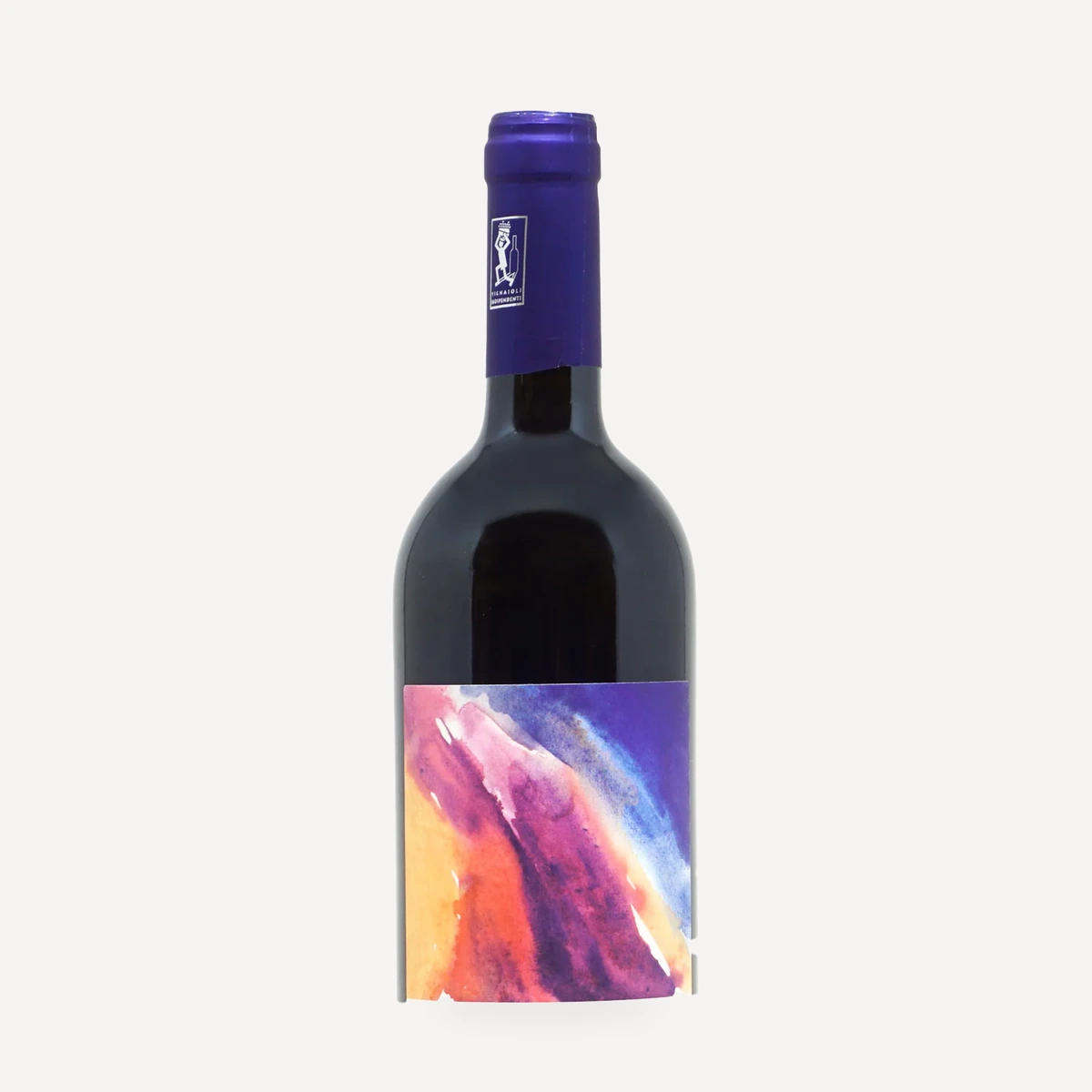
In the cellar, the same principle is expressed through indigenous fermentation and the exclusion of extraneous chemical additives. The stated aim is to accompany natural energies and obtain a wine that remains sincere and intact, without demanding more than the site and season can provide. Vintage individuality is also reflected visually: each harvest receives a different watercolour label inspired by the emotions and sensations associated with the vineyards.
Vini
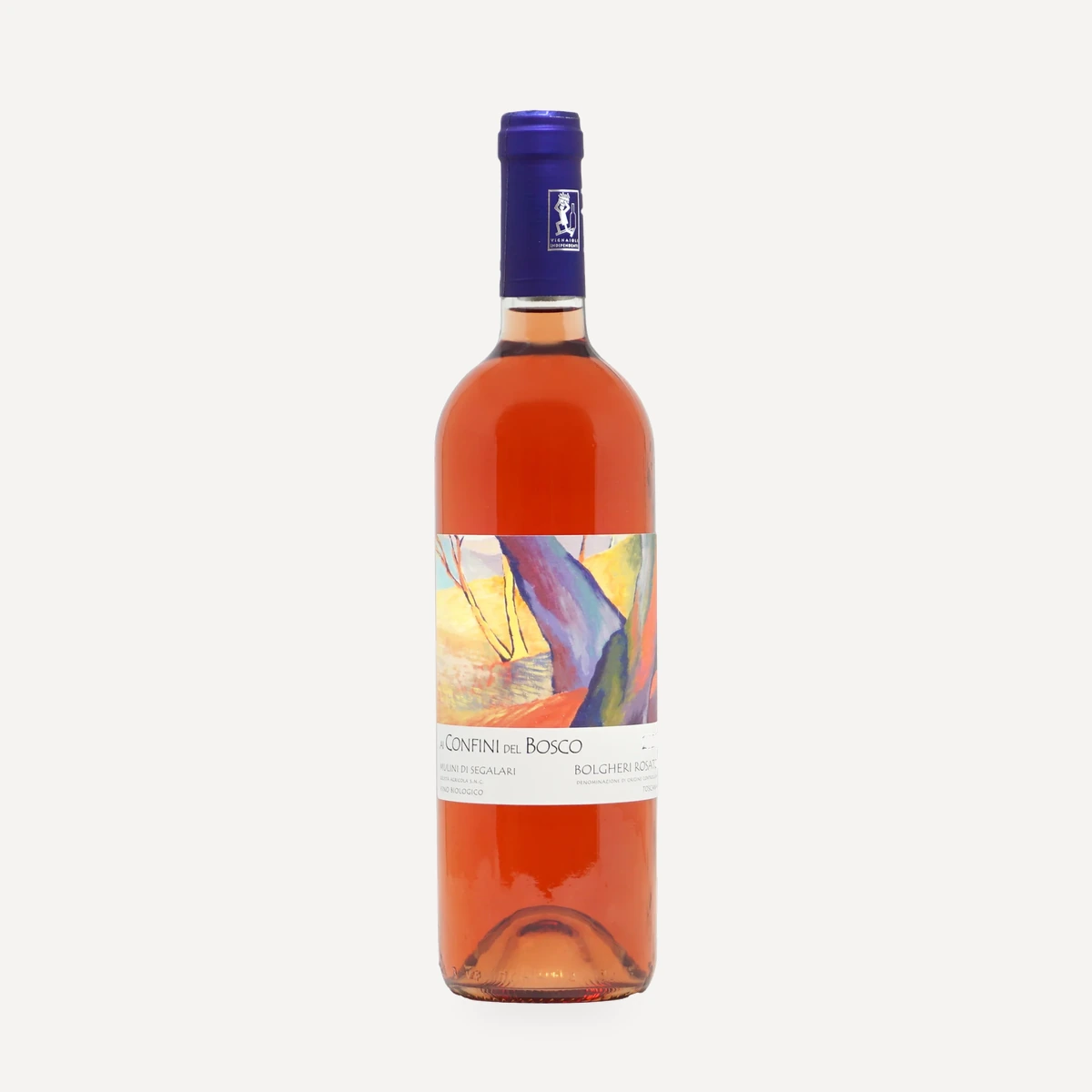
Ai Confini del Bosco Rosato