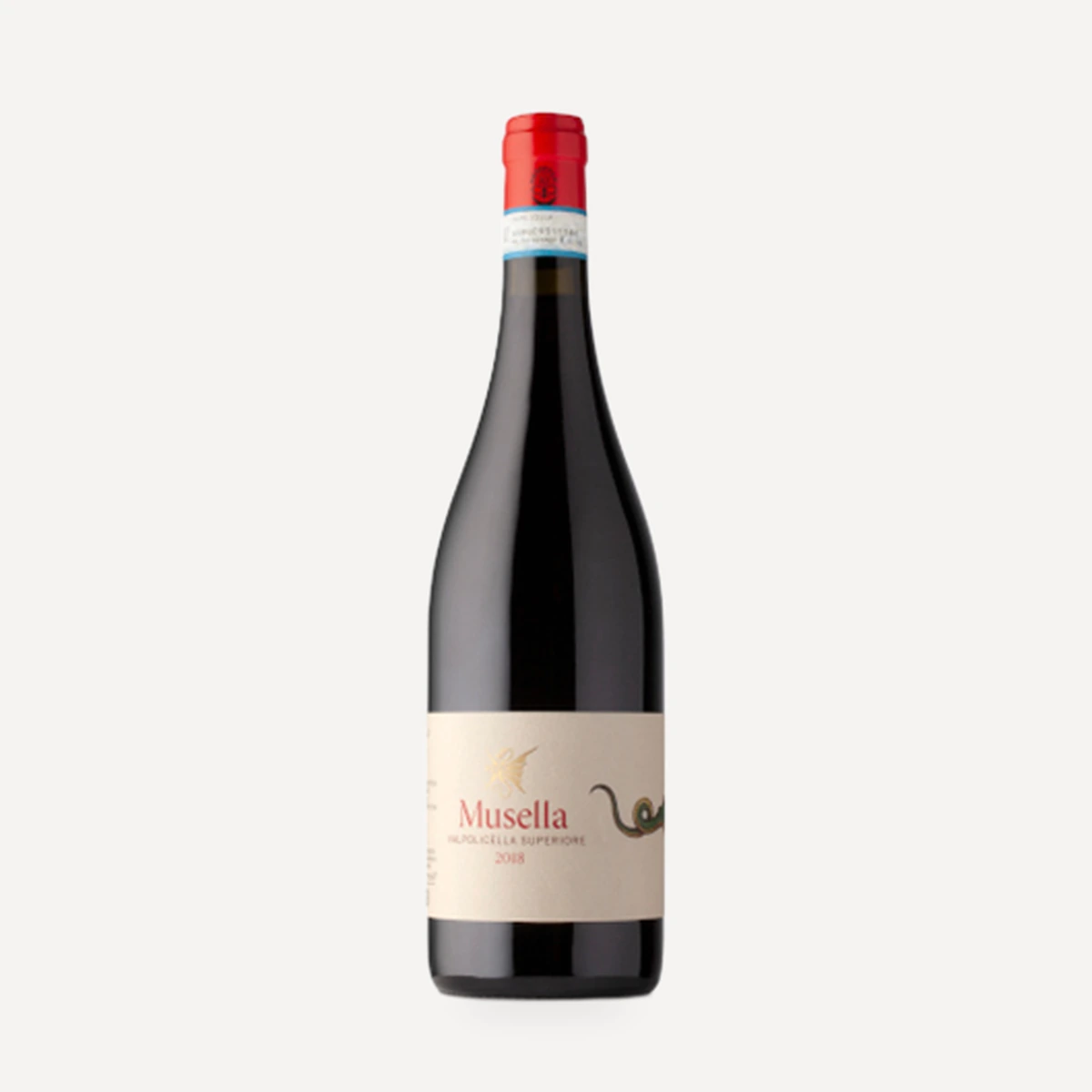
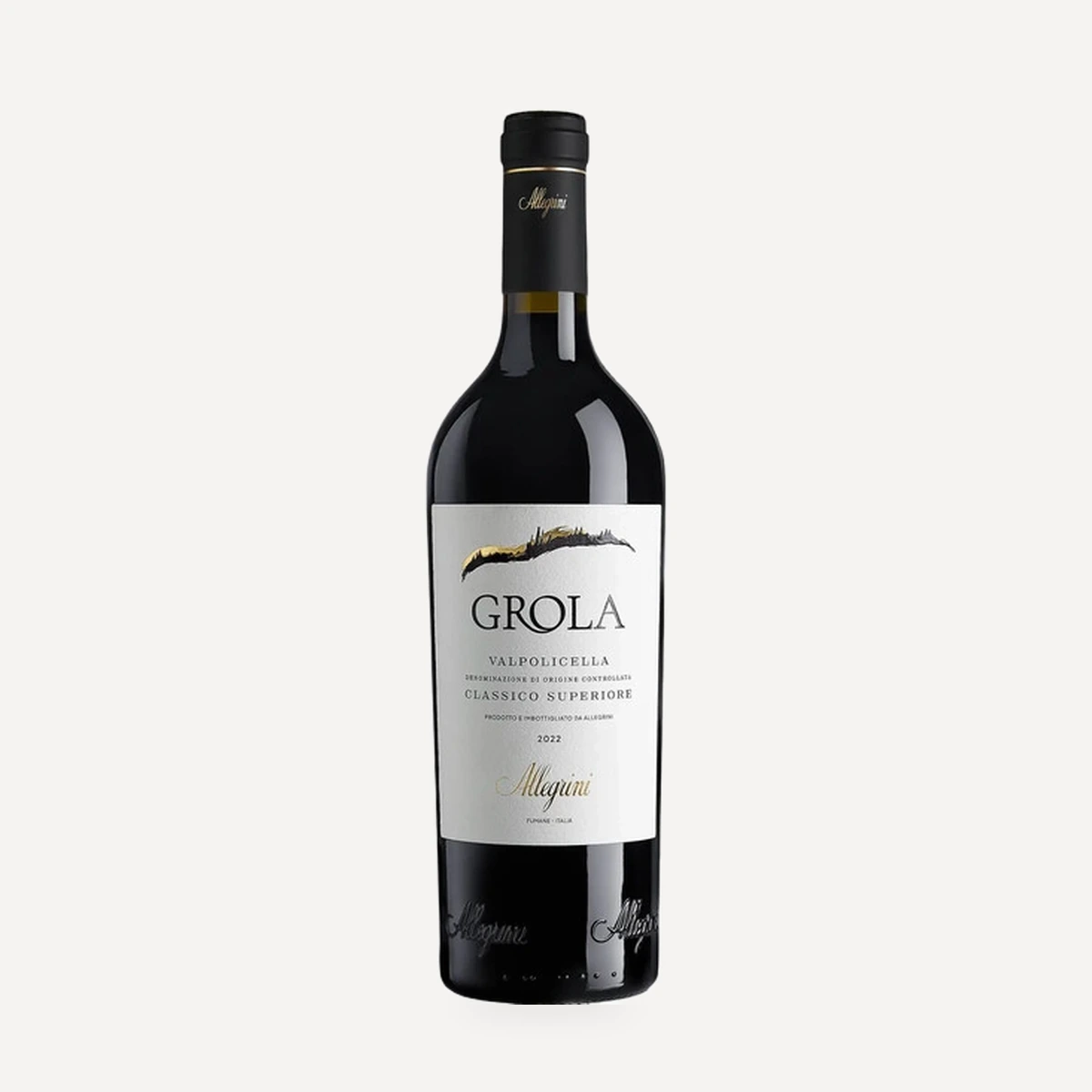
Questo vino
Vineyard and terroir
The vineyards lie on the hill separating Montorio from Valle d’Illasi, northeast of Verona in Veneto. The estate has 20 hectares trained to Guyot and 5 hectares under traditional Pergola Veronese. Plantings date from 1995 to 2022. Il Perlar and Palazzina have limestone soils dominated by iron-rich red clay, while Monte del Drago has medium-textured clay and tuff. Planting density is 6,000 vines per hectare under Guyot and 4,500 vines per hectare under Pergola Veronese. Yield is 2 kg per vine.
Grapes
Corvina and Corvinone 85%, Rondinella 10%, Barbera 5%.
Vinification
The 2022 fruit was harvested from 3 September to 5 October. Valpolicella Superiore is refermented on incompletely pressed Amarone skins. Skin-and-must maceration lasts 12–15 days at a natural, uncontrolled temperature, with periodic pump-overs. Racking and malolactic fermentation follow. The process does not include appassimento of the Ripasso grapes.
Ageing
The wine matures for 12 months in French oak vessels of 350 L, 500 L, 3,500 L and 5,000 L.
Technical data
Alcohol: 13.60% vol. Total acidity: 6.00 g/L. pH: 3.39. Residual sugar: 2.90 g/L.
Tasting profile
Ruby red. The nose is elegant, with red fruit, spices and a delicate wood aroma. The palate is full-bodied and balanced between tannins and acidity.
Vintage notes
The 2022 season experienced pronounced drought beginning in winter. Winter and early spring passed without rain; limited precipitation arrived in May, followed by almost completely dry conditions from late June. A dry harvest yielded high-quality grapes but unusually small quantities because of water stress and damage caused by hail in preceding years. October and November remained exceptionally dry, and the rain returning around the turn of the year did not compensate for the annual deficit.