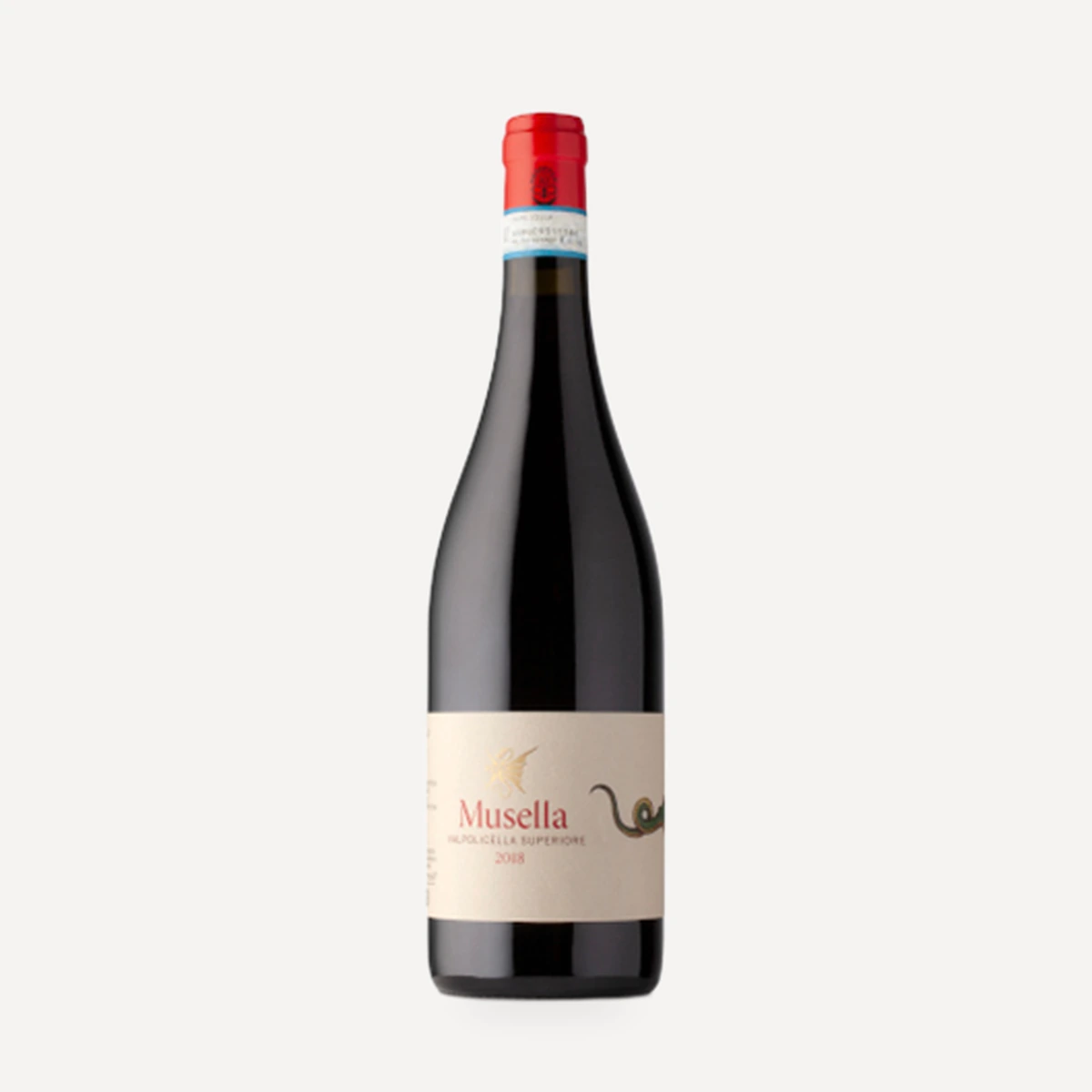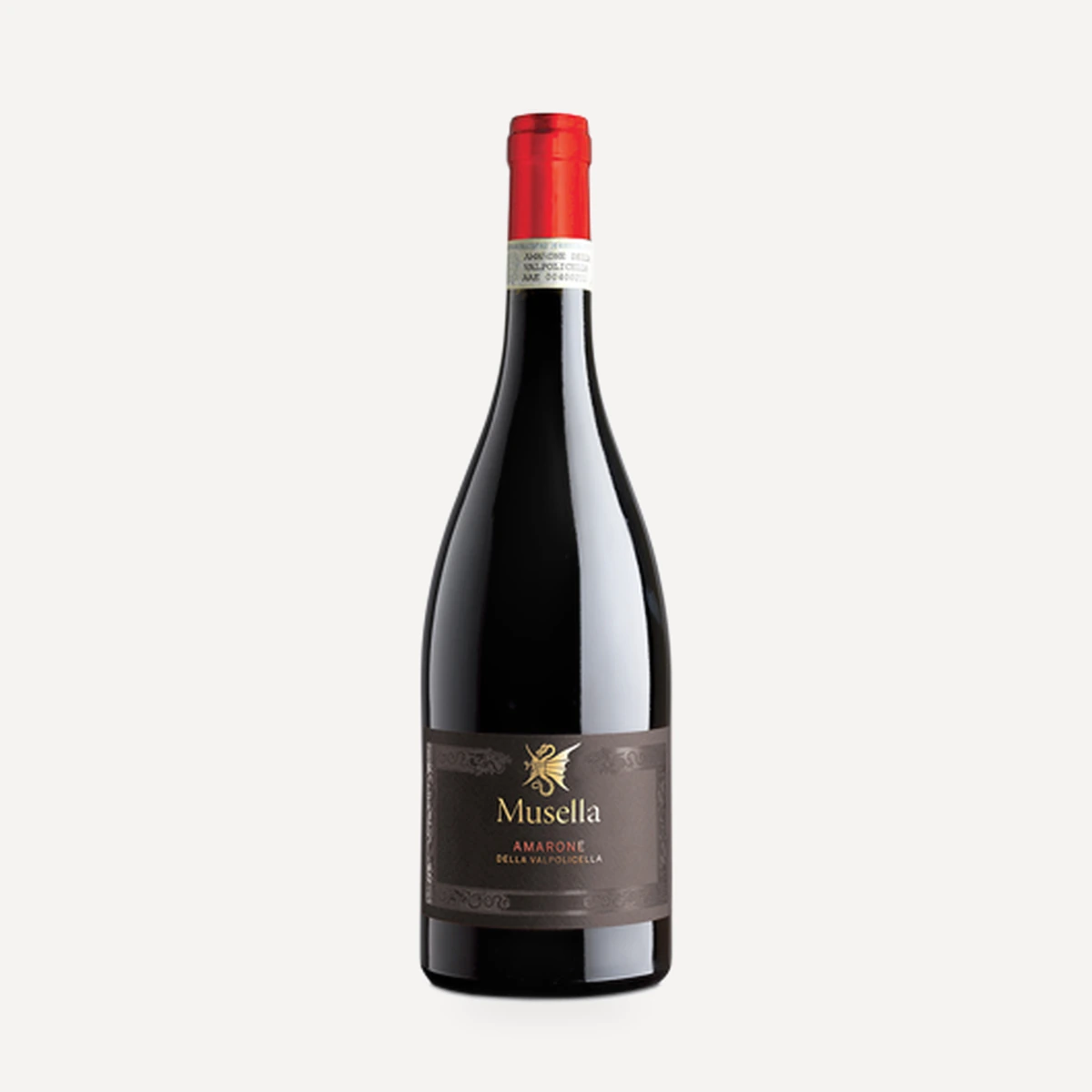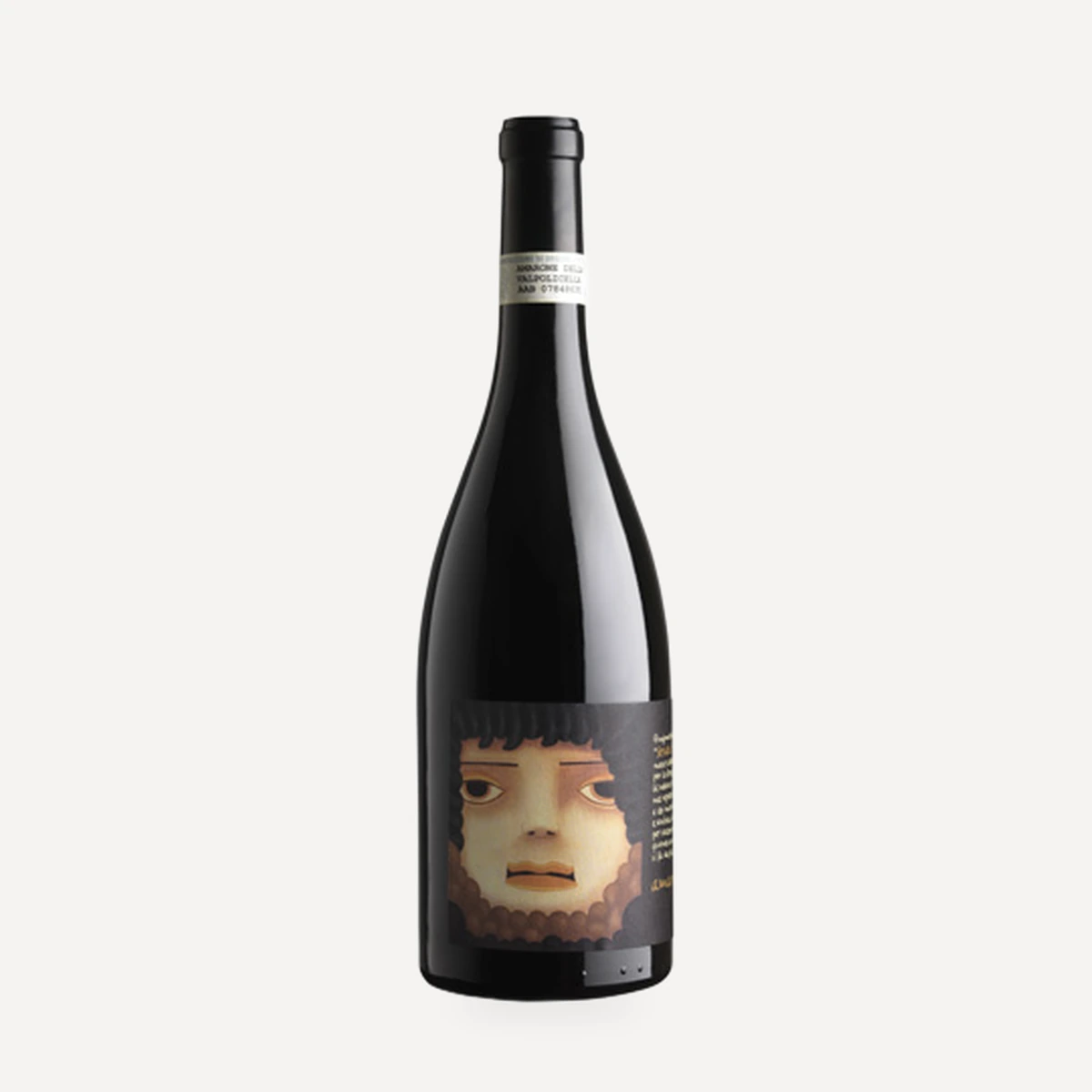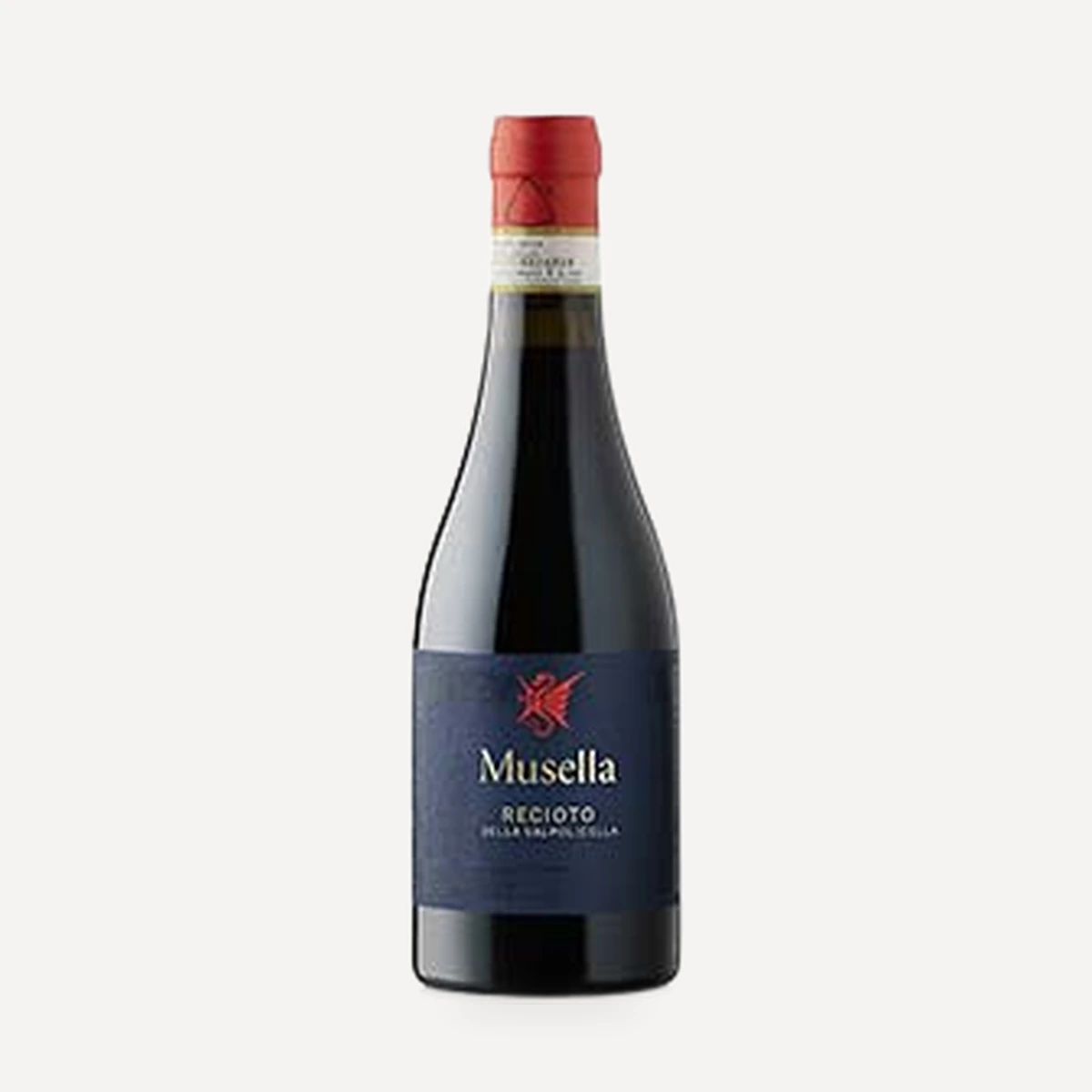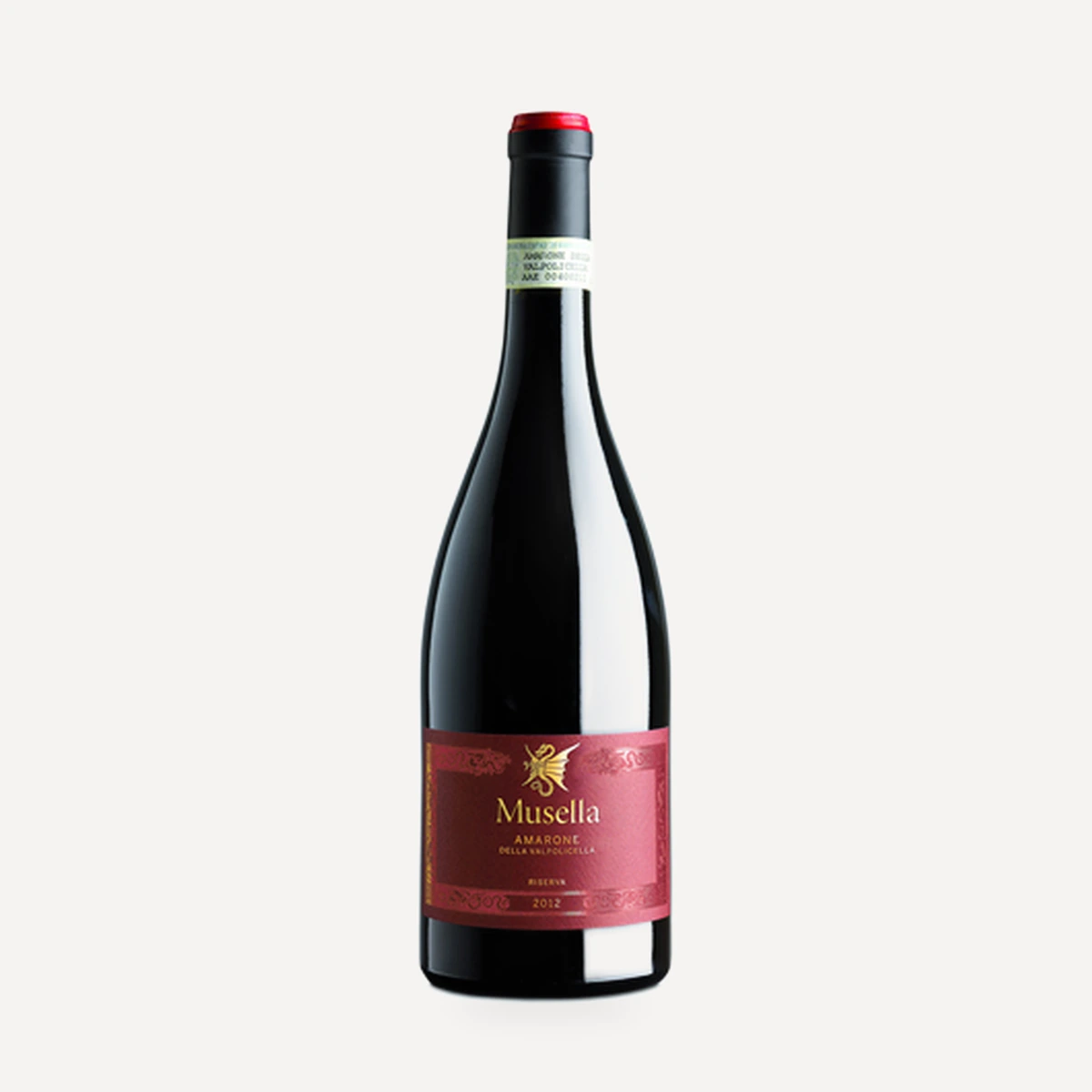
Questo vino
Vineyard and terroir
The vineyards are situated on the hill dividing Montorio from Valle d’Illasi, northeast of Verona in Veneto. The estate includes 20 hectares trained to Guyot and 5 hectares under traditional Pergola Veronese. Plantings date from 1995 to 2022. Il Perlar and Palazzina have limestone soils dominated by iron-rich red clay, while Monte del Drago has medium-textured clay and tuff. Planting density is 6,000 vines per hectare under Guyot and 4,500 vines per hectare under Pergola Veronese. Yield is 1 kg per vine.
Grapes
Corvina 50%, Corvinone 35%, Rondinella 5%, Oseleta 10%.
Vinification
Harvest ran from late August to mid-September. Selected bunches were placed in crates and transferred to a dedicated ventilated room for appassimento. The grapes lost at least 35% of their original weight, concentrating sugars, aromatic components and noble tannins. Soft pressing took place in January, followed by fermentation at 13–17°C. A long maceration promoted extensive extraction from the fruit.
Ageing
The wine remained for 24 months in French oak tonneaux and larger barrels of 3,500 L and 5,000 L. After bottling, it matured for at least another year before release.
Technical data
Alcohol: 16% vol. Total acidity: 6.50 g/L. pH: 3.43. Residual sugar: 4.90 g/L. Dry extract: 39.80 g/L.
Vintage notes
The 2018 season was generally regular in rainfall and temperature, although summer continued the dry, hot pattern of the preceding four years. A very wet May did not hinder vine or fruit development. Following a small prior harvest, the crop was abundant, while intermittent rain sustained the soils into early September. Heavy precipitation at the beginning of September accelerated ripening and the harvest schedule. For the first time, the picking team was enlarged so the grapes could be collected at their optimal point of ripeness.