Storia
Historical viticulture on Sant’Erasmo
Sant’Erasmo supplied Venice with fresh vegetables for centuries and became particularly associated with its castraure and violet artichokes. By the 16th century, much of the island was occupied by vineyards. These vineyards were neglected over the centuries that followed.
Wine was still being made on the present vineyard land around 1700. This was described as the wine of the “Nobil Uomo” or nobleman and was appreciated by the Doges of Venice and Casanova.
Revival by the Thoulouze family
Michel Thoulouze and his family set out to restore viticulture and wine production on Sant’Erasmo. Their project combined the traditional knowledge and methods of the island’s farmers with the technical expertise of agricultural engineers Lydia and Claude Bourguignon and wine producer Alain Graillot.
Before the new vineyard was planted, the land was prepared through successive plantings of barley, radish, oats and a Chinese root crop. This followed the duro su duro method advocated by Claude Bourguignon: direct planting without ploughing, fertilisers or herbicides.
The family also restored the island’s ancestral drainage system. Rainwater is collected by canals running through the vineyard and discharged into the lagoon through sluice gates at low tide.
The vines were planted directly in the soil rather than grafted onto American rootstocks. This own-rooted approach was intended to recover something of the character associated with European wine before the late-19th-century phylloxera epidemic. Ancient Italian varieties were selected, with Malvasia Istriana taking the leading role in the blend.
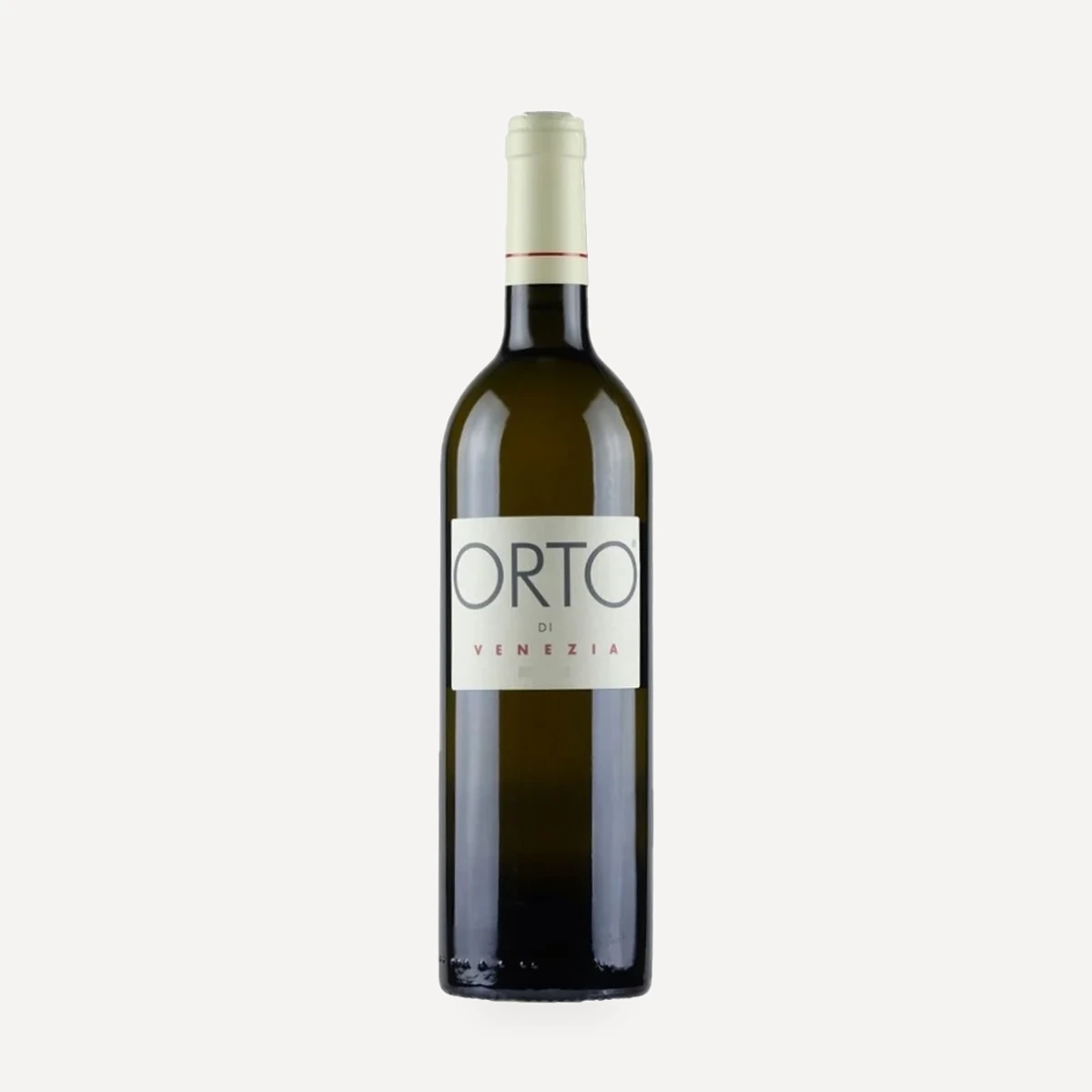
The resulting wine was named ORTO. It became the estate’s sole wine and was presented as the only wine cultivated within the territorial boundaries of Venice and the Venetian lagoon.
Casa Rossa and lagoon-aged magnums
In 2013, Casa Rossa opened beside the winery as a holiday house. The restored traditional lagoon dwelling stands in the middle of the vineyard.
A limited edition of 360 magnums from the 2011 vintage was matured underwater on the bottom of the lagoon. The bottles were loaded into a sandolo, a traditional Venetian boat, which was then sunk. The lagoon provided a dark environment with stable temperatures.
Restaurant placements and later visibility
ORTO entered the wine lists of Alain Ducasse’s restaurant at the Plaza Athénée in Paris and Anne-Sophie Pic’s Maison Pic in Valence. In January 2018, Alain Ducasse purchased 100 Orto di Venezia magnums to serve by the glass in his Paris restaurants.
On 5 November 2020, Orto di Venezia appeared in the lunchtime news broadcast of France 2.
Terroir
Orto di Venezia lies on Sant’Erasmo, an island within the Venetian lagoon and part of the City of Venice. The vineyard occupies a narrow tract of land where the waters and maritime influence of the sea meet the quieter lagoon environment.
The setting is shaped by fresh winds arriving from the mountains and by marine breezes. This meeting of air and water is central to the estate’s understanding of ORTO as a mineral white wine that expresses its island environment.
Water management is a defining physical feature. Canals pass between the vineyard rows and collect rainwater. At low tide, sluice gates are opened so that the accumulated water can flow into the lagoon. This is a restored form of the island’s ancestral drainage system.
Vinificazione
The vineyard was established according to principles developed with Claude Bourguignon. Before the vines went into the ground, successive plant crops—barley, radish, oats and a Chinese root crop—were used to prepare the soil. This method is identified as duro su duro and avoids ploughing.
The vines were planted directly into the soil and remain ungrafted, or franc de pied, rather than being grafted onto American rootstocks. The purpose was to recover the character associated with wine before the late-19th-century phylloxera epidemic.
No fertilisers or herbicides are used. The approach combines traditional Sant’Erasmo farming knowledge with plant-based soil preparation and an earth-friendly cultivation philosophy.
The restored drainage system manages the island’s rainwater through canals between the rows. Water is discharged into the lagoon by opening hydraulic sluice gates when the tide is low.
ORTO is assembled from ancient Italian grape varieties, with Malvasia Istriana as the dominant component. The blend was conceived to evoke the flavours of wines made before the phylloxera era and to convey the character of Sant’Erasmo.
The regular wine is not matured in barrels. Avoiding barrel ageing prevents an overtly woody character and supports the intended profile of a refreshing, mineral white wine.
A special edition of 360 magnums from the 2011 vintage underwent underwater maturation on the bottom of the Venetian lagoon. The bottles were placed aboard a traditional Venetian sandolo, which was sunk to create a dark, thermally stable ageing environment.
Filosofia
The project seeks to restore winegrowing to Sant’Erasmo by joining the inherited knowledge of local farmers with specialist agricultural and winemaking expertise. Its approach is rooted in respect for the island’s natural dynamics, including tidal water management, plant-based preparation of the land and cultivation without ploughing, fertilisers or herbicides.
Planting the vineyard on its own roots was intended to reconnect the wine with flavours associated with the period before phylloxera. Ancient Italian varieties, led by Malvasia Istriana, were chosen in place of a conventional international-variety model.
The estate presents ORTO as an expression of its lagoon environment: mineral, refreshing and particularly suited to the fish, shellfish, artichokes, asparagus and other fresh produce of Venice. Avoiding barrel ageing is part of that objective, preserving the wine from an overtly woody character.
Vini