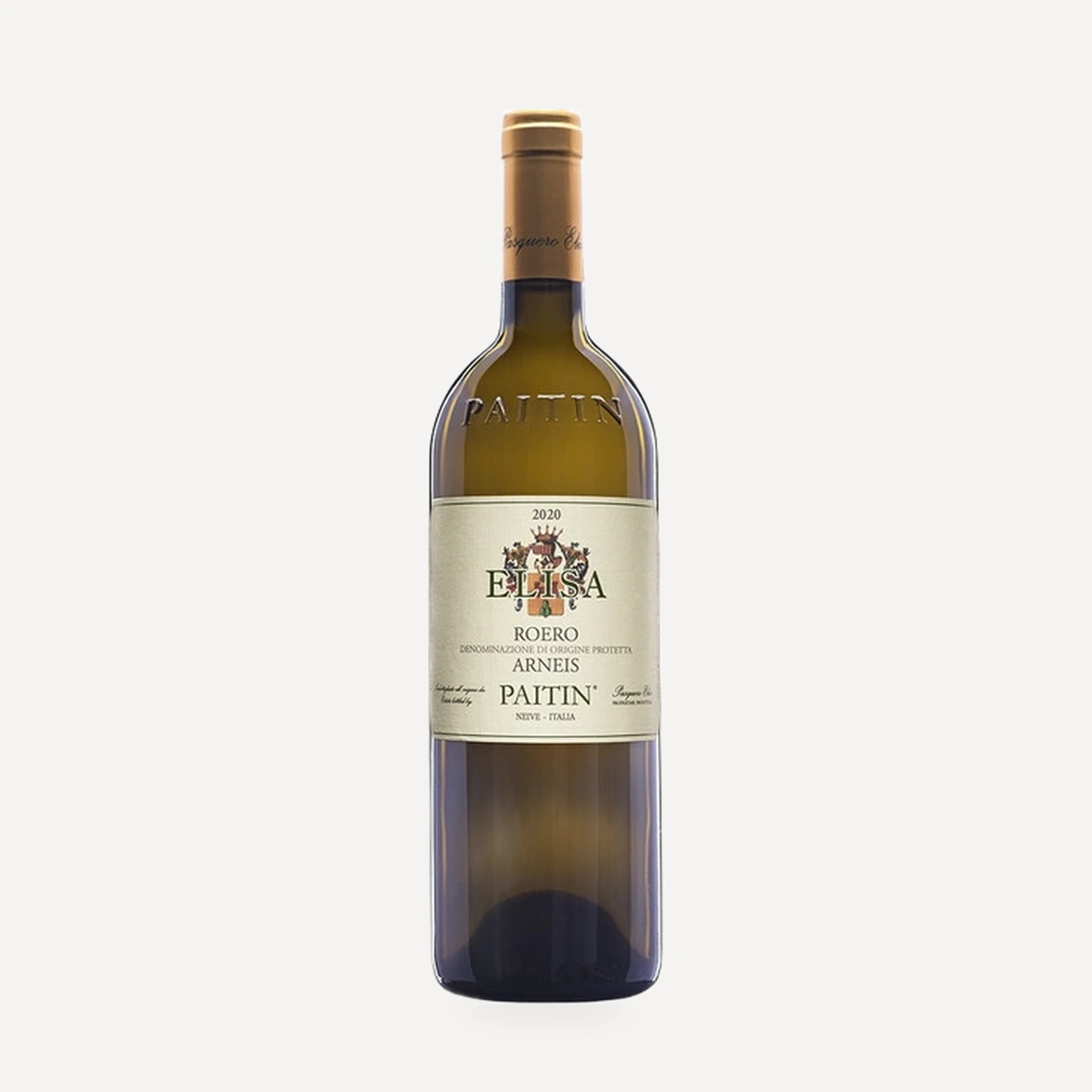
Questo vino
Vineyard and terroir
The Arneis grows in Paitin's "Elisa" vineyard in Roero, in the hills of Piedmont. The vines were planted relatively recently, between 1991 and 1994, in soils of mainly sandstone and clay. The vineyard lies at 200–240 m above sea level and faces southwest. Only organic growing methods are used.
Vinification
The grapes are harvested by hand in mid-September. After crushing, they spend a day in steel tanks for cold maceration at 12 °C. Fermentation takes place in stainless steel tanks at a low temperature of 14 °C, using selected yeasts.
Ageing
The wine ages on its lees for 6 months in steel tanks before bottling.
Tasting profile
Elegant and refreshing. The aroma is complex, fruity and floral. The palate is harmonious and rounded, with pleasant acidity.
Vintage notes
The 2020 winter in Piedmont was mild, with moderate temperatures and little rainfall. The first part of spring was relatively dry and sunny, which suggested an early harvest. Heavy rains began in May and continued until the end of June. They slowed the vines' growth and let the soil build up substantial water reserves. A sharp drop in temperature in early September temporarily slowed ripening, which then accelerated rapidly in the second half of the month.
Label / history
The vineyard is named after Elisa Elia, who ran the winery through the years of World War II. The first vintage of "Elisa" Arneis was released in 1973, the year she died, in tribute to her memory.
Arneis is one of Piedmont's oldest white varieties and has been valued by the region's winemakers for centuries. Thirty to forty years ago it was close to disappearing, partly because red wines were more popular than whites and partly because the variety is difficult to grow. It is now enjoying a revival. The name means "little rascal" in Italian. The variety prefers light, sandy soils and plenty of sunshine, gives low yields and is susceptible to powdery mildew. It yields highly aromatic, elegant and balanced wines.