Storia
1979 — Podere Santa Margherita
Panizzi began in 1979, when Giovanni Panizzi bought Podere Santa Margherita immediately outside the medieval walls of San Gimignano. The property initially included only about 2 ha of vineyard. Giovanni moved to the Sienese countryside at the age of 50, regarding the move as an opportunity to reinvent his life.
Wine began almost as a personal experiment, but Giovanni progressively defined an approach based on close observation of the land, agronomic care, research and contemporary winemaking. Vigna Santa Margherita became the estate's experimental ground. Giovanni worked with it for ten years before releasing a commercial wine.
1989 — The first Panizzi Vernaccia and the first red wine
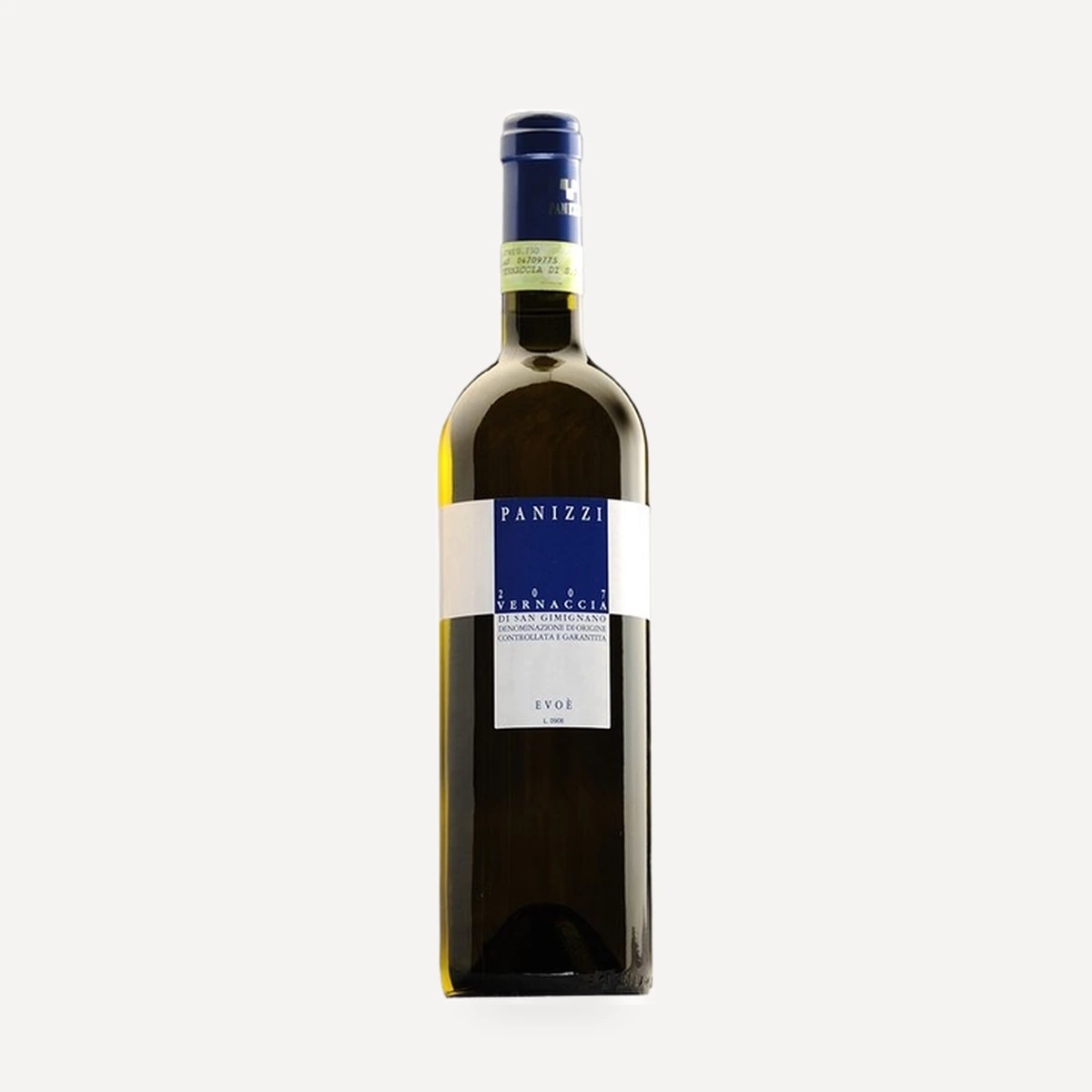
The first Panizzi Vernaccia di San Gimignano reached the market in 1989. Its deliberately modern green label and its break with the conventions of the period established an identity centred on a contemporary interpretation of Vernaccia. The label remains the estate's foundational wine.
The 1990s also brought the exploration of Sangiovese grown around San Gimignano. Vertunno Chianti Colli Senesi Riserva, identified as Panizzi's first red wine and elsewhere dated to 1989, expressed this work through a recognizably Sangiovese-led, agile style tied to the Chianti Colli Senesi appellation.
A long-serving technical team developed around Technical Director Walter Sovran. The core staff has shared work, decisions and milestones since 1989.
1990–1995 — Demonstrating Vernaccia's capacity to age
During the 1990s, Panizzi investigated the evolutionary potential of Vernaccia di San Gimignano. The first stated vintage of Vernaccia di San Gimignano Riserva was 1990. It was held for five years before release, giving concrete form to Giovanni Panizzi's conviction that Vernaccia could develop as a long-lived white wine. Its reception renewed attention around both the estate and the appellation.
1999–2001 — Montagnana plantings
The vineyards at Montagnana were planted between 1999 and 2001. The 5.65 ha holding was divided among Vernaccia di San Gimignano, Cabernet Sauvignon, Sangiovese and Merlot, all trained to spurred cordon at 5,000 vines per hectare.
2003 — The Santa Margherita single-vineyard wine
The first vintage bearing Vigna Santa Margherita as a distinct single-vineyard designation was 2003. It focused attention on the historic vineyard nucleus from which the Panizzi project had developed.
2005 — Transfer to the Niccolai family
In 2005, Giovanni Panizzi transferred ownership to the Niccolai family while remaining at the helm. The parties shared the ambition of positioning Vernaccia di San Gimignano DOCG among Italy's leading white wines. The transaction united the original Podere Santa Margherita nucleus with the Niccolai family's land around the village of Larniano.
Simone Niccolai subsequently assumed leadership. His tenure continued the emphasis on experimentation, territorial identity and the ageing potential of Vernaccia.
2006 onward — Pinot Nero at Larniano
On Simone Niccolai's initiative, Panizzi planted Pinot Nero clone 777 in the Larniano area in 2006. The experiment had no local production model to follow and was intended to test the variety's response to San Gimignano's tuffaceous soils. La Ventola later became the source of two estate interpretations: San Gimignano Pinot Nero DOC and the selected Ermius bottling.
2008 — Expansion of Santa Margherita
In 2008, 3.20 ha on the northern side of the Santa Margherita hill were acquired and incorporated into the property. Identified as the lower, middle and upper new vineyards, these plots expanded the Santa Margherita area to 7.20 ha. Their soils contain more clay and have greater water availability than the historic southern slopes.
2011–2021 — Building the Riserva Storica library
In 2011, Simone Niccolai decided to retain a significant quantity of Vernaccia Riserva. The estate began setting aside 10% of the label's production to create a library of mature vintages reserved for restaurants. The project was conceived both as proof of Vernaccia's durability and as a long-term source of knowledge about bottle evolution.
The first public realization came in 2021 with Riserva Storica 2011, released under the concept Ten Years After. Panizzi presented Riserva Storica 2014 in 2024 and developed the release into an annual event. The 2026 event, dedicated to Riserva Storica 2016, was described as the sixth edition.
2018 — Collaboration with Alessandro Cellai
In 2018, Panizzi began working with Tuscan oenologist Alessandro Cellai on Pinot Nero. The collaboration extended the research initiated with the 2006 planting and contributed to the estate's selected Pinot Nero project.
2025 — A selective and difficult harvest
The 2025 growing season began with a mild, frost-free winter, followed by a warm, rainy spring. June was extremely hot, July returned to more normal temperatures and August was favourable. Spring rainfall had replenished soil-water reserves, and the vines did not experience drought stress.
Pinot Nero was harvested from late August with very good fruit, followed by Merlot and Cabernet Sauvignon. Persistent rain arrived in early September, increased moth pressure and required extensive thinning, vineyard cleaning and grape selection. The resulting Vernaccia crop remained satisfactory in quality but was smaller, reducing the quantities available for Riserva and Vigna Santa Margherita. Sangiovese was affected most severely: fruit intended for Folgóre did not meet the required standard, so no Folgóre 2025 was produced. By contrast, Vernaccia was again assigned to the long-maceration Evoè project after several years without production, and a larger quantity of rosato was made.
Terroir
Panizzi's vineyards occupy several distinct sectors around San Gimignano, with an additional holding at Seggiano on the slopes of Monte Amiata. The documented elevations range from 165 m at Montagnana to approximately 400–410 m in parts of Larniano; Seggiano lies between 310 and 375 m.
Tuffaceous sands and yellow clays recur across the San Gimignano holdings, but their balance varies substantially. Santa Margherita combines tuffaceous sand with yellow clay; its northern side is more clay-rich and retains more water. Larniano includes clay-sandy soils with stones and, in some sectors, sandstone. La Ventola has yellow clay over a tuffaceous matrix with a noticeable stony component. Montagnana is dominated by yellow clay with tuff, while Lazzeretto also combines yellow clay and tuff. Seggiano differs through marly clay, rock, marl and galestro.
Topography creates varied exposures. Santa Margherita descends from a 310 m summit toward all four cardinal directions. Historic plots lie mainly on south, southwest and southeast slopes, while the newer sector occupies the north side. Rows on the northern sector form a herringbone arrangement, facing north-northwest on one side and north-northeast on the other. Montagnana is predominantly southeast-facing, apart from small Merlot and Vernaccia plots facing northwest. La Ventola and Villa delle Rose are described with easterly exposure.
Woodland surrounds the vineyards and olive groves. Trees moderate both heat and cold, help stabilize humidity and provide habitat that supports biological balance. The estate also connects San Gimignano's soils with the area's ancient marine origins and regards salinity and mineral expression as central territorial signatures.
Vinificazione
Panizzi farms organically and describes its approach as conservation agriculture. Vineyard work is intended to reduce water and energy use and minimize environmental impact. Chemical fertilizers are excluded. Soil fertility is supported through green manure, reuse of residual harvest biomass and, where further nutrition is required, properly matured animal manure.
Human intervention is deliberately manual. Vines are tended by hand, mechanical tools are used sparingly, and each operation is assessed plot by plot by an experienced permanent team. Production is not forced. The estate aims to respect the vine's natural cycle, extend plant life and allow roots to penetrate deeply. Mature vines are valued for their stronger connection with the site and their resilience under changing climatic conditions.
Woodland is treated as an active viticultural asset. It buffers heat and cold, moderates humidity and maintains biodiversity around vineyards and olive groves. Sustainability also encompasses stable working conditions and quality of life for long-serving employees.
Harvest decisions are selective and quality-led. Grapes for top selections may be chosen by hand during picking. The difficult September conditions of 2025 illustrate the approach: thinning, cleaning and intensive selection were used to remove damaged fruit, resulting in lower quantities rather than accepting unsuitable grapes. Fruit intended for Folgóre was rejected entirely that year. Moth pressure is identified as a particular challenge for delicate Vernaccia bunches.
Panizzi's production philosophy combines experimentation with techniques adapted to individual grapes and sites. White-wine work includes gentle pressing of whole bunches, fermentation in stainless steel or French barriques, maturation on fine lees and extended bottle ageing. Vernaccia research spans youthful steel-aged expressions, barrel-fermented Riserva, single-vineyard interpretation and prolonged skin maceration with very ripe, selectively harvested fruit.
Red and rosato production uses several forms of pre-fermentation cold maceration. Rosato fruit is handled through slow, gentle pressing, static settling and cool stainless-steel fermentation. Red wines may complete alcoholic fermentation on skins, malolactic fermentation in steel and maturation either in stainless steel or French barriques. The most selective Pinot Nero protocol adds prolonged post-fermentation maceration in a truncated-conical wooden vat before barrel and bottle maturation.
The Riserva Storica programme adds a further production dimension. Ten percent of Vernaccia Riserva production has been retained for long-term maturation since 2011. These library wines combine whole-bunch soft pressing, fermentation and maturation in new French barriques, further fine-lees ageing in steel and prolonged bottle storage before re-release ten years after harvest.
For the dried-grape project from Seggiano, fruit is softly pressed and cold-settled before a slow fermentation and maturation in tonneaux, followed by bottle ageing. Across the portfolio, stainless steel, French barriques, tonneaux and wooden vats are therefore used according to the intended expression rather than through a single standardized protocol.
Filosofia
Panizzi defines its work through identity and quality. Territorial understanding is treated as the starting point, but not as a substitute for agronomic precision, research or contemporary cellar practice. Tradition is therefore approached as something to study and renew rather than reproduce mechanically.
Vernaccia is central to this outlook. The estate seeks both a contemporary, immediately recognizable expression and evidence of the variety's ability to evolve over long periods. The Riserva and Riserva Storica projects embody a conviction inherited from Giovanni Panizzi and developed by Simone Niccolai: Vernaccia can stand beside other age-worthy white varieties, while old bottles can become a body of knowledge for future work and a legacy for the wider San Gimignano community.
Experimentation extends beyond Vernaccia. Pinot Nero clone 777 and Merlot clone 181 were introduced as site-specific research projects, while long skin maceration explores an older production idea through a contemporary framework. Vintage differences are accepted rather than concealed: production can be reduced or cancelled when fruit does not meet the intended standard.
Environmental care is inseparable from territorial identity. Organic farming, conservation of resources, woodland biodiversity, long-lived vines and the well-being of employees form part of a single conception of sustainability. The objective is to preserve the character of the place and its ecosystem while producing wines capable of expressing both origin and time.
Vini
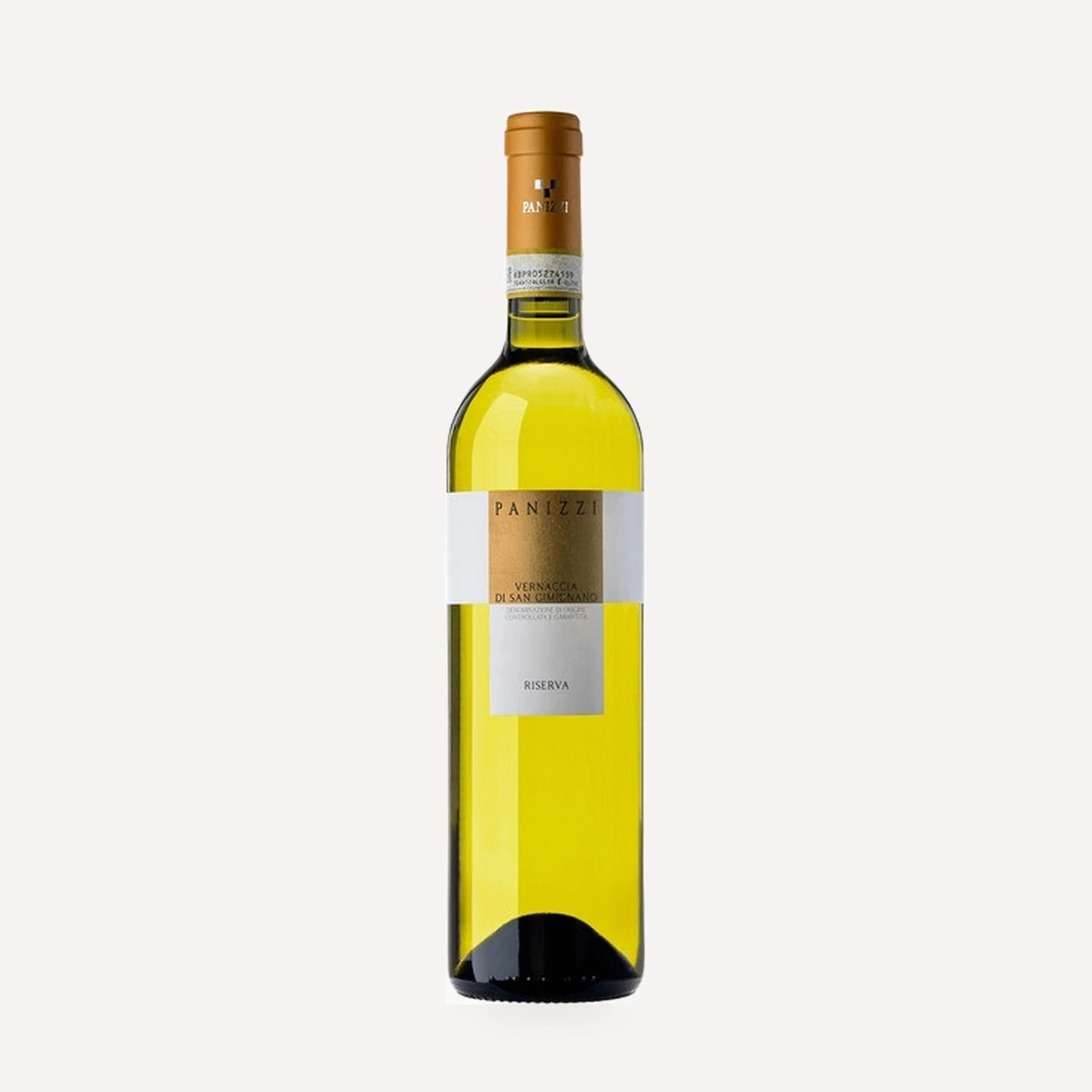
Vernaccia di San Gimignano Riserva DOCG
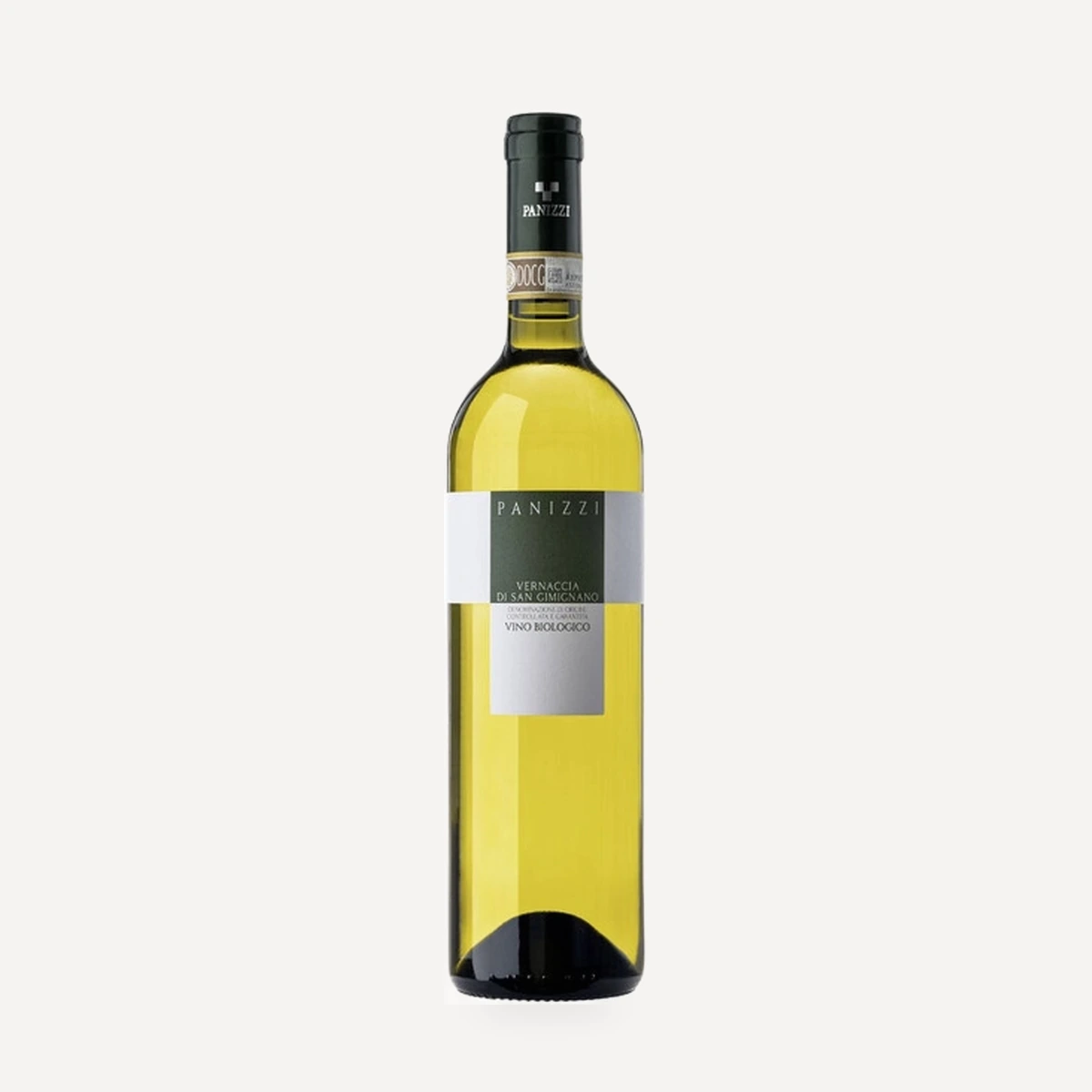
Vernaccia di San Gimignano DOCG
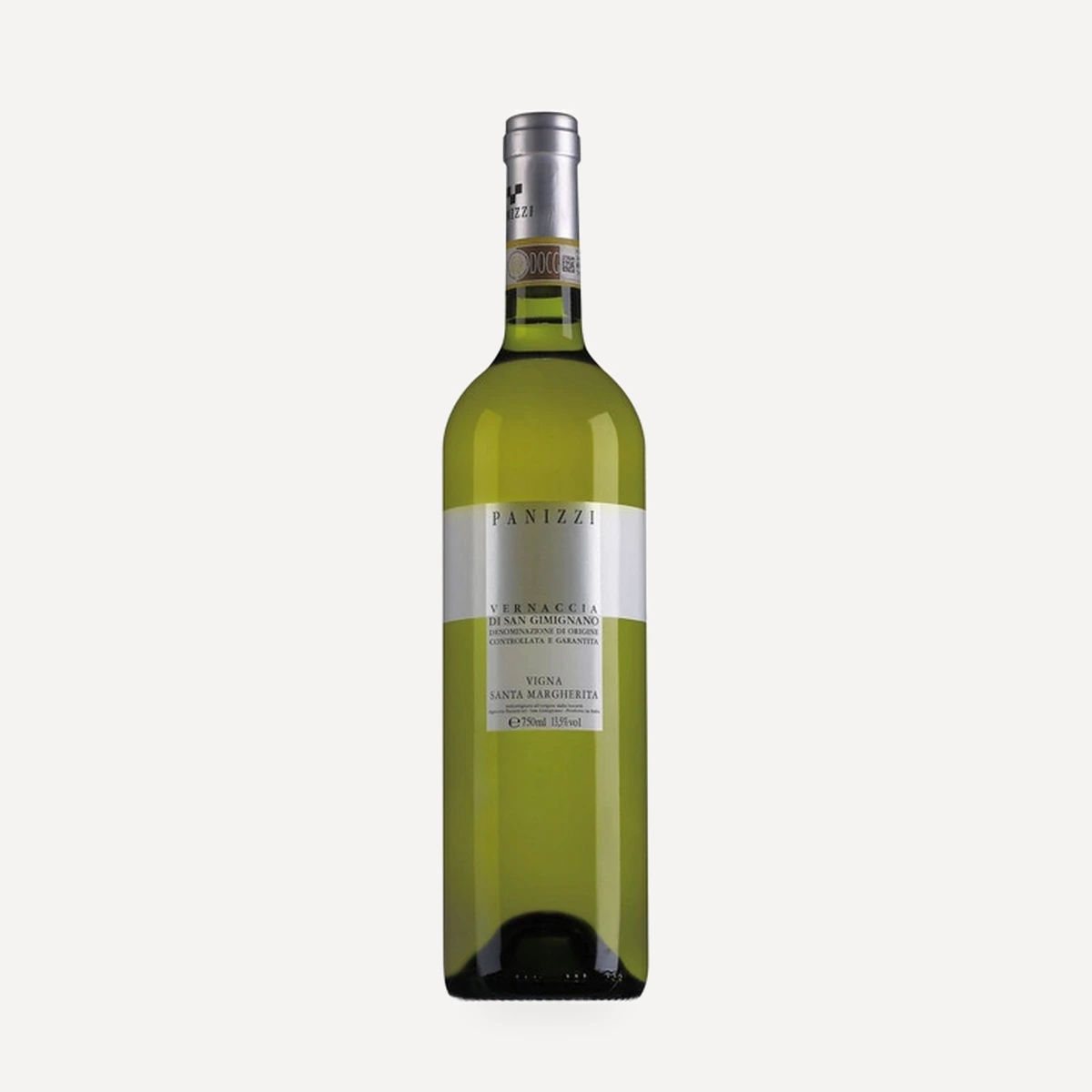
Vernaccia di San Gimignano Vigna Santa Margherita DOCG