Storia
From the legal profession to Abruzzo wine
Francesca D’Adda and Giuliano Pettinella worked as lawyers for years between Lombardy and the Marche before changing direction and becoming winegrowers in Abruzzo. They returned to land they already owned in the region, intending to make traditional Abruzzo wines solely from estate-grown grapes and to retain the agricultural approach inherited from earlier generations.
Giuliano was born in Macerata to Abruzzo parents. His connection to wine began in childhood, when he accompanied his uncle Giovanni in the vineyard and cellar. That early experience remained central to the couple’s eventual return to Abruzzo.
2010: the first wine
In 2010 Pettinella produced its first—and at that time only—wine, the rosé Tauma. The decision placed Montepulciano at the centre of the estate’s work from the beginning.
2018: organic certification
The approximately three hectares of vineyards are farmed according to organic principles and have been certified organic since 2018.
2019: expansion beyond the original rosé
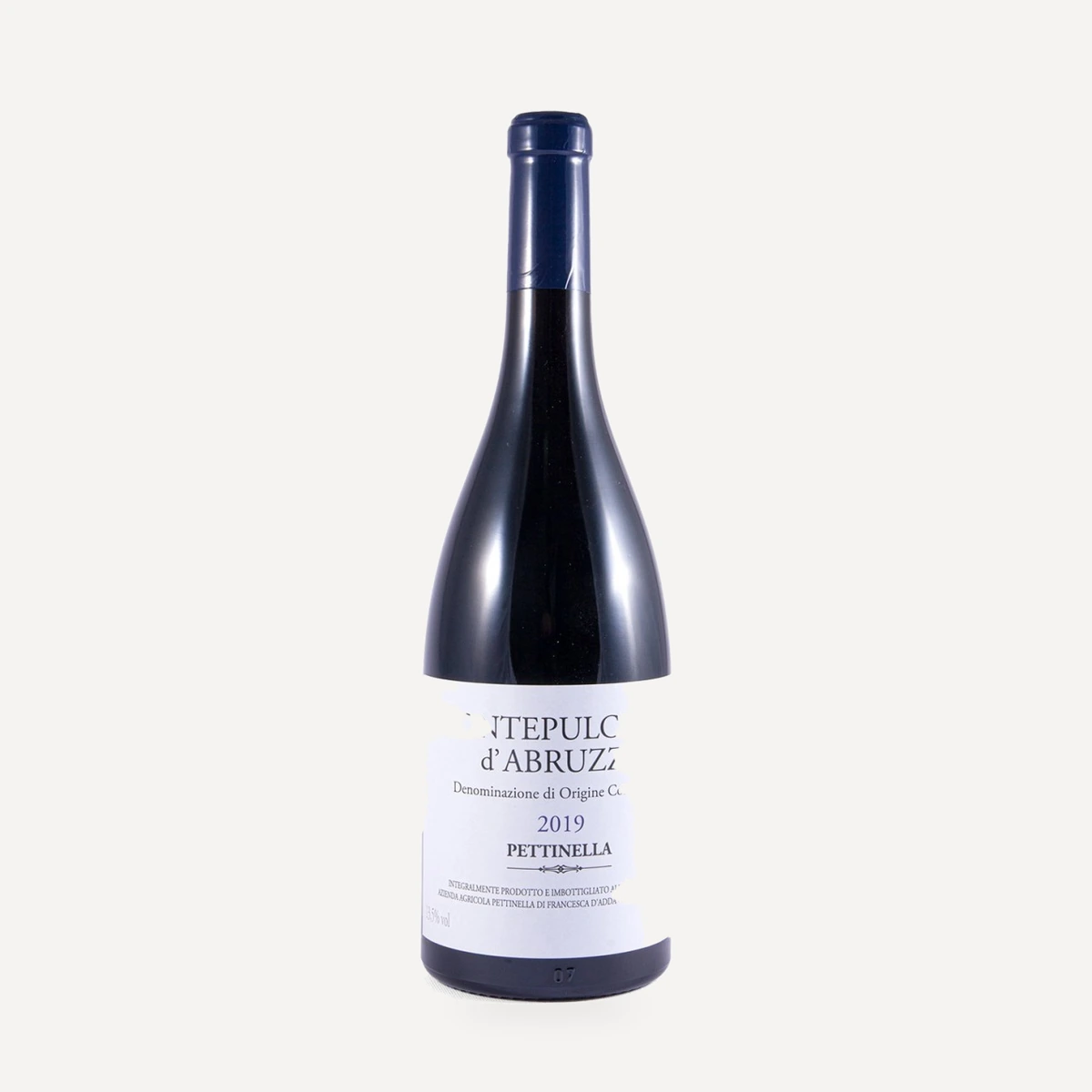
A second label, Montepulciano d’Abruzzo, entered the market in 2019. It joined Tauma, which had meanwhile taken the Cerasuolo d’Abruzzo designation.
The present estate
Pettinella now works across two Abruzzo provinces: its mountain-influenced vineyards and historic cellar are in Tocco da Casauria, in the province of Pescara, while a sea-facing vineyard and the registered office are in Silvi, in the province of Teramo. The current range presents three expressions of Montepulciano: Tauma Cerasuolo d’Abruzzo, Montepulciano d’Abruzzo, and the Casauria cru. Francesca oversees administration, organization, and cellar work; Giuliano’s work draws on the viticultural connection formed with his uncle Giovanni; and Professor Leonardo Seghetti provides discreet technical supervision in the cellar.
Terroir
Pettinella’s vineyards are divided between two contrasting Abruzzo settings. The bush-trained vineyards at Tocco da Casauria, in the province of Pescara, lie at approximately 350 metres above sea level near Monte Morrone and the Majella massif. The surrounding mountains create cool, well-ventilated conditions.
The mountain-zone soils at Tocco da Casauria contain limestone, marl, flint, and pelagic material dating to the Jurassic period. Pettinella associates this geological setting and mountain influence with the character of its Montepulciano.
A further 0.5-hectare vineyard lies among the hills of Silvi, in the province of Teramo. Its trellised vines face the Adriatic Sea, providing a coastal counterpart to the foothill vineyards at Tocco da Casauria.
The estate also places its work within a longer local history of Montepulciano. Some researchers locate the variety’s origins in the Abruzzo foothills between Torre de’ Passeri and Tocco da Casauria, where monks from the nearby Abbey of San Clemente a Casauria are credited with an important role in cultivating and spreading the black-berried grape around the ninth century.
Vinificazione
All wines are made solely from estate-grown Montepulciano. The vineyards cover approximately three hectares across Tocco da Casauria and Silvi and are cultivated according to organic principles; certification has been in place since 2018.
Training responds to the two vineyard settings. Tocco da Casauria uses the alberello system, while the sea-facing Silvi vineyard is trellised and spur-cordon trained. The couple describes its agricultural approach as careful, grounded in sound farming, and mindful of methods practised by earlier generations. The farming choices made during each season are intended to remain perceptible in the finished wines.
Winemaking takes place in two adjoining premises in the historic centre of Tocco da Casauria, beside the family home. An underground stone cellar, built several centuries ago, maintains stable temperature and humidity and has long been used for fermentation and maturation. A second space at street level receives the harvest and accommodates destemming, crushing, and pressing.
The proximity and difference in level between the two rooms allow must to move by gravity into barrels in the stone cellar below. Cellar intervention is kept to the essentials so that place, vintage, and agronomic decisions remain legible. Observation and careful manual work guide the process, with Professor Leonardo Seghetti providing discreet supervision. Sulfur dioxide is the only stated addition.
Filosofia
Pettinella’s approach is built around estate-grown fruit, careful agriculture, and minimal cellar intervention. Francesca D’Adda and Giuliano Pettinella frame their work as a continuation of Abruzzo’s wine traditions, informed both by earlier family farming practices and by the example of the region’s established wine masters.
In the cellar, the objective is to preserve fruit purity and allow the vineyards’ origin, the conditions of each vintage, and the season’s agronomic decisions to remain visible. Technology is used practically—most notably through the two-level winery and gravity movement—while interventions and additions are deliberately limited. The range remains focused on a single grape, Montepulciano, interpreted through the estate’s foothill and coastal sites.
Vini