Storia
Family roots in Solicchiata
Pietradolce grew out of historical and family traditions rooted in Solicchiata, a hamlet near Castiglione di Sicilia on Mount Etna’s northern slope. Attachment to the land became a defining element of the estate’s identity and its approach to winegrowing.
Recovery of old vineyards
The estate assembled vineyards across the northern contrade of Rampante, Zottorinoto, Santo Spirito and Feudo di Mezzo, subsequently adding land in Contrada Caselle at Milo on the eastern slope. Much of the surviving vine stock is pre-phylloxera, with plants ranging principally from 90 to 150 years old. In the highest part of Contrada Santo Spirito, reclamation work brought an old pre-phylloxera vineyard back to light and returned it to cultivation.
The new cellar
A new cellar was conceived as a meeting point between winemaking, contemporary art and local craftsmanship. Volcanic rock, iron, wood and soil from the vineyards were incorporated into the vat cellar, underground barrel room and tasting room. Thick lava-stone walls provide natural insulation for the fermentation area, while the subterranean barrel room accommodates the maturation of red wines and an adjoining caveau preserves old vintages.
Terroir
Two slopes of Mount Etna
Pietradolce farms 30 ha on Mount Etna’s northern slope, distributed among Contrada Rampante, Contrada Zottorinoto, Contrada Santo Spirito and Contrada Feudo di Mezzo at elevations between 650 and 950 m. Another 2 ha lie on the eastern slope in Contrada Caselle, within the municipality of Milo, at 850 m.
The vineyards coexist with broom, birches and lava stone. Their soils are generally sandy to sandy-loam, with abundant volcanic rock and mineral elements. Soil composition varies between plots, giving the individual sites distinct characteristics.
Northern contrade
Contrada Rampante contains several old-vine plots. At 850 m, some occupy sandy-loam ground rich in volcanic rock; one is associated with a cool microclimate, while another benefits from direct sunlight. The very small Barbagalli area reaches 900 m and experiences strong temperature variation. Its sandy soil contains abundant volcanic rock.
Contrada Feudo di Mezzo descends to approximately 650 m. Its soils are described as generous, and its climate has significant temperature variation. The oldest portion is planted to pre-phylloxera Nerello Mascalese.
The recovered Santo Spirito vineyard lies on a windy promontory in the highest part of its contrada at 900 m. It experiences marked temperature variation and has sandy soil with abundant volcanic rock.
Contrada Zottorinoto includes a single Nerello Mascalese vineyard at 750 m with its own particular microclimate and sandy-loam soil containing abundant rock.
Eastern slope
Contrada Caselle at Milo stands at 850 m and has deep sandy soils with volcanic rock. Direct exposure toward the sea and the influence of the Valle del Bove shape its microclimate. The site is devoted to Carricante, including pre-phylloxera vines as old as 130–150 years.
Vinificazione
Environmental sustainability, organic cultivation and practices rooted in Etna’s winegrowing traditions form the basis of Pietradolce’s viticulture. The estate grows only two native varieties, Carricante and Nerello Mascalese.
Most of the old vineyards comprise pre-phylloxera vines between approximately 90 and 150 years of age. They retain the traditional alberello training system characteristic of Etna’s vineyard landscape. Cultivation is described as meticulous and artisanal, with quality taking precedence over quantity.
Harvesting is performed by hand. Timing changes with site and variety: northern-slope Carricante may be picked between late September and early October; Nerello Mascalese harvesting spans the beginning through the end of October according to elevation and contrada; the old Carricante vineyards at Milo are harvested in October. Grapes are also selected manually on a sorting table before vinification.
Grape reception
Grapes are harvested by hand and selected manually on a sorting table. This selection initiates the cellar process.
Vat cellar and fermentation
The vat cellar is insulated by thick lava-stone walls. Fermentation takes place in small, tulip-shaped tanks made from unlined concrete, each with a capacity of 40 hl.
Red-wine vinification generally includes crushing and destemming followed by approximately 18 days of skin maceration in the concrete tulips and gentle pressing. Natural malolactic fermentation is used for red wines. Maturation ranges from a short three-month passage in oak to 14 or 20 months for individual old-vine and contrada selections. The oak vessels are described as fine-grained and lightly toasted, and bottle maturation follows barrel ageing.
White-wine production includes hand harvesting and gentle pressing, followed by maturation in steel. Depending on the selection, steel ageing may last four to six months and may be followed by extended bottle maturation. A separate skin-contact approach is used for selected old-vine Carricante: prolonged maceration takes place in a 20 hl oak vat, followed by maturation in oak and an extended period in bottle.
Rosato production uses gentle pressing and a short maturation in steel.
Barrel room and archive
Red wines mature in oak barrels in an underground barrel room. The adjacent caveau preserves the estate’s old vintages.
Filosofia
Pietradolce’s identity is built around attachment to Mount Etna, respect for its ecosystem and continuity with local agricultural traditions. The annual vineyard cycle—from spring growth to harvest—is understood as a recurring relationship with the land and with gestures inherited from the past.
Environmental sustainability, organic cultivation and native grapes are central to this approach. Only Carricante and Nerello Mascalese are cultivated, while the survival and recovery of old alberello-trained, pre-phylloxera vines embody the priority given to place and quality over volume.
The winemaking philosophy combines authentic tradition with measured use of advanced viticultural and cellar techniques. Differences in soil composition and microclimate are treated as meaningful distinctions between plots.
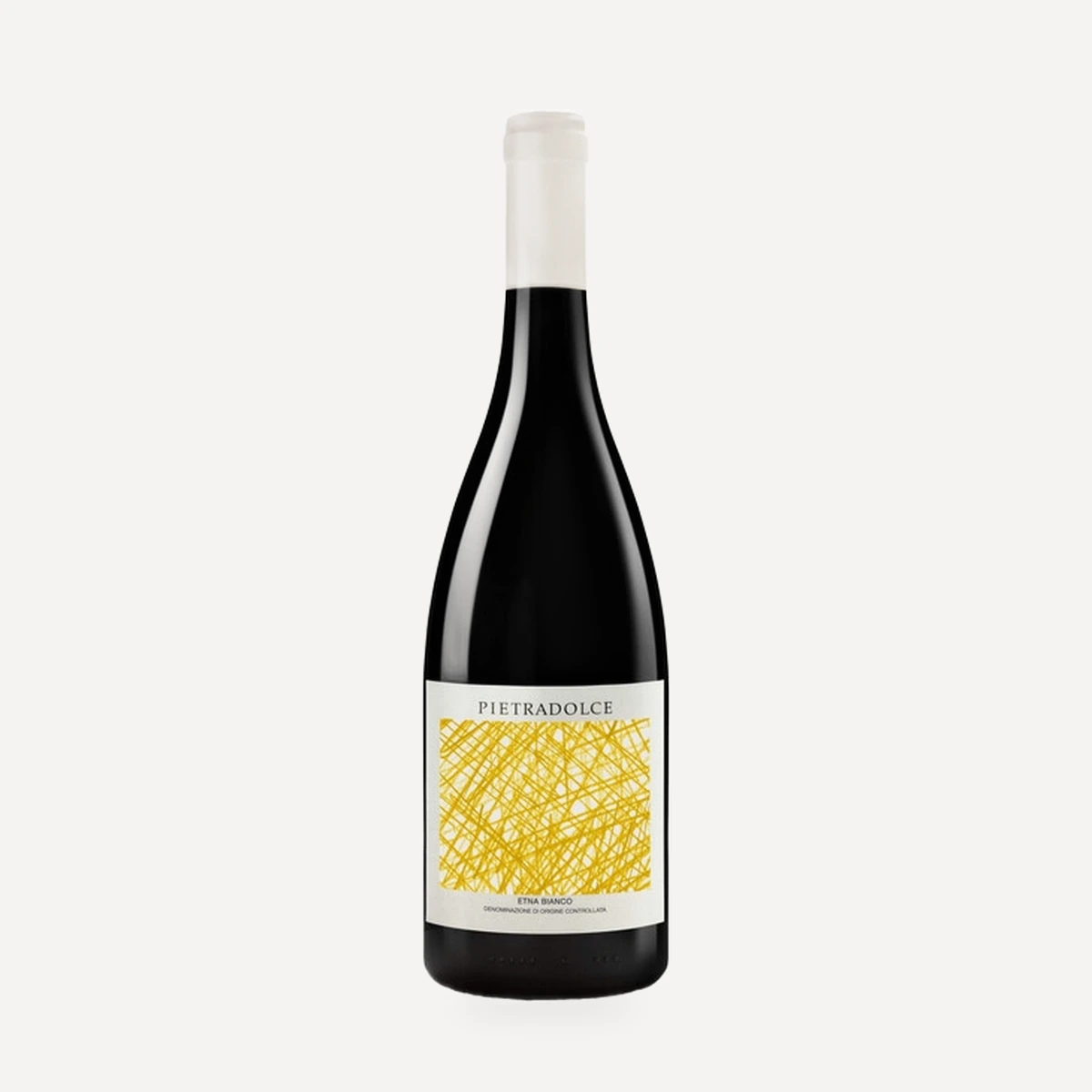
The name Pietradolce pays homage to the lava stone that characterizes Etna. Although the stones make vineyard work more demanding, their composition is viewed as fundamental to the personality of the wines. The triangular logo evokes the archetypal outline of the volcano. Labels feature the “Volcano Woman,” an image joining power and elegance with Etna’s explosive energy, rendered through deliberately restless hand-drawn marks.
Vini
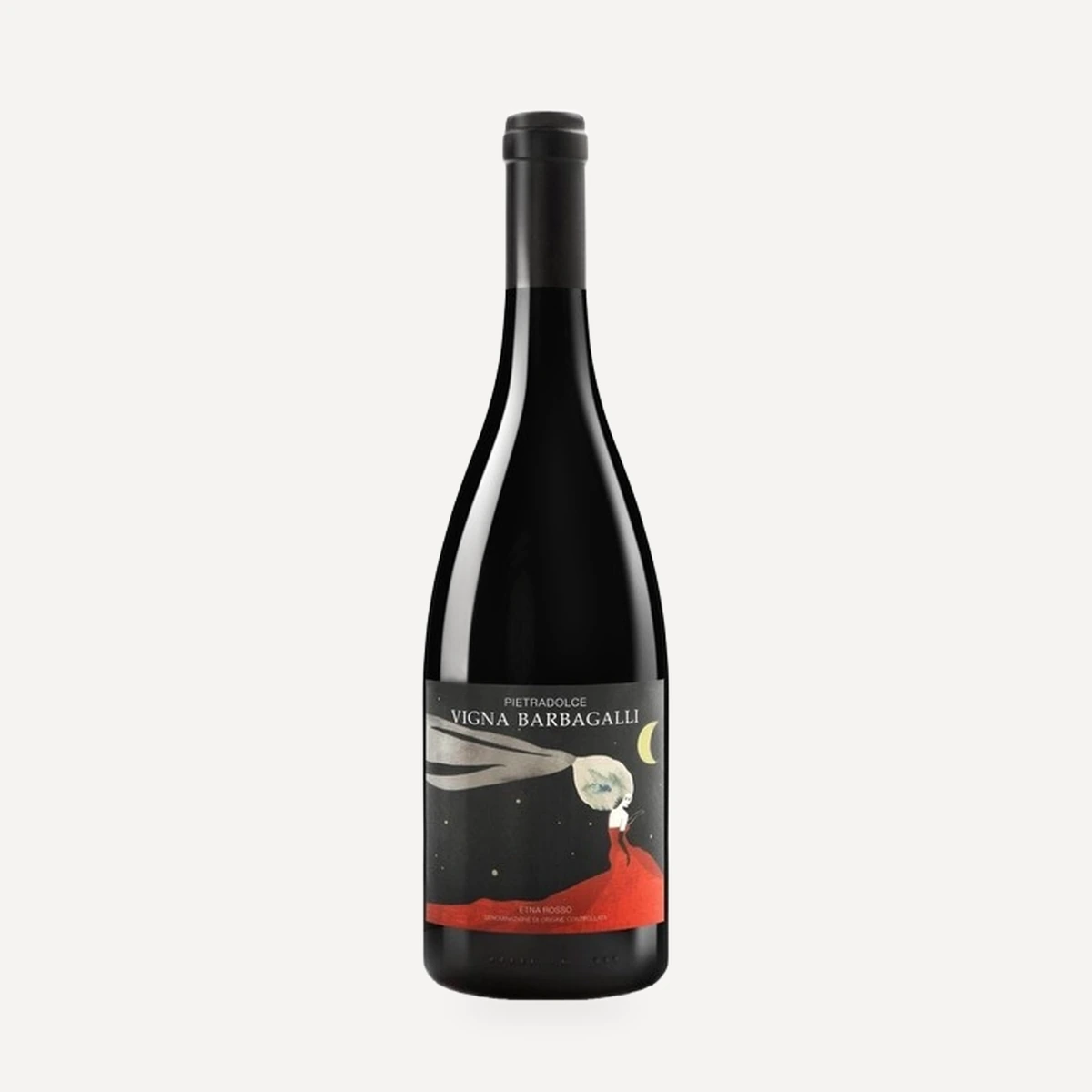
BARBAGALLI Etna Rosso DOC
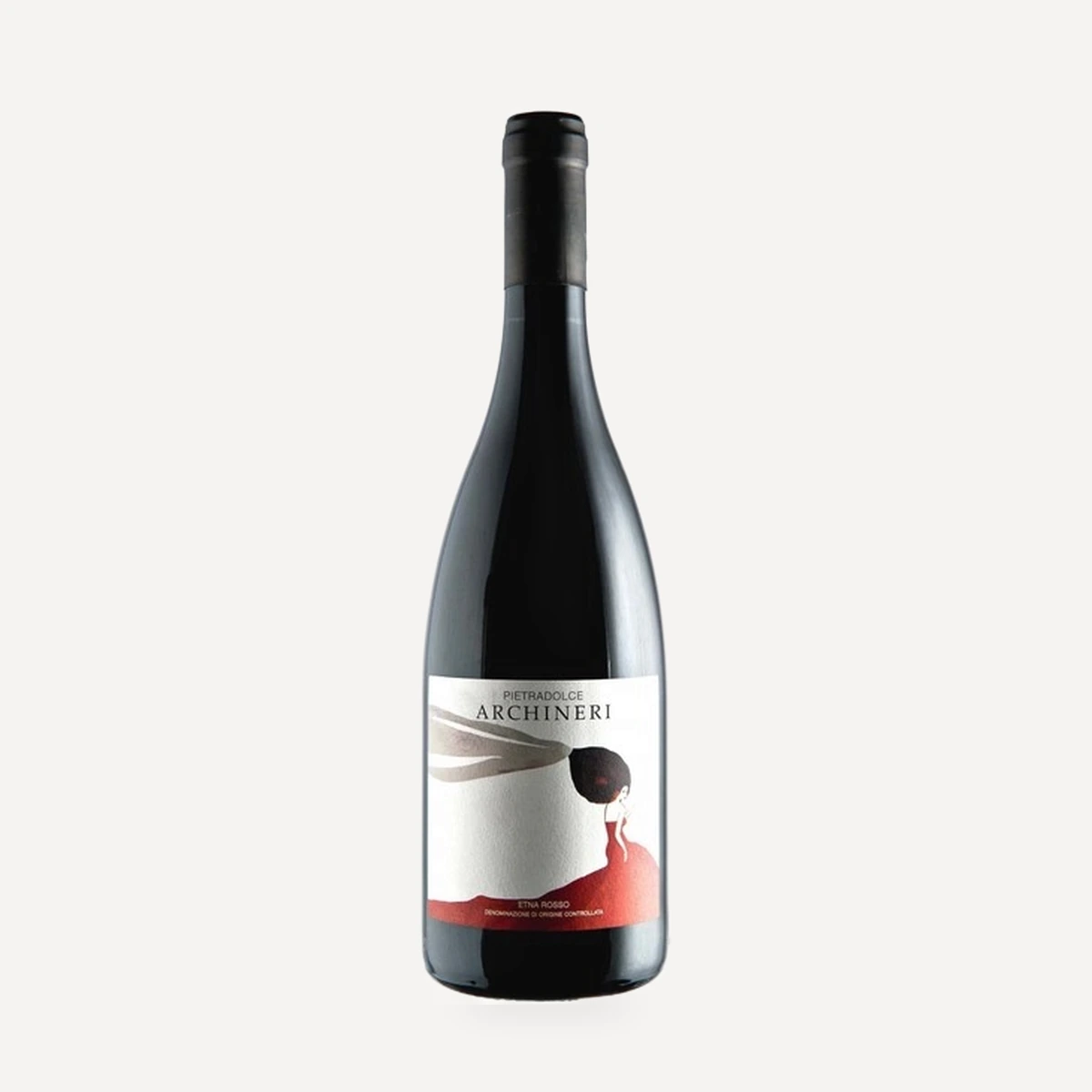
ARCHINERI Etna Rosso DOC
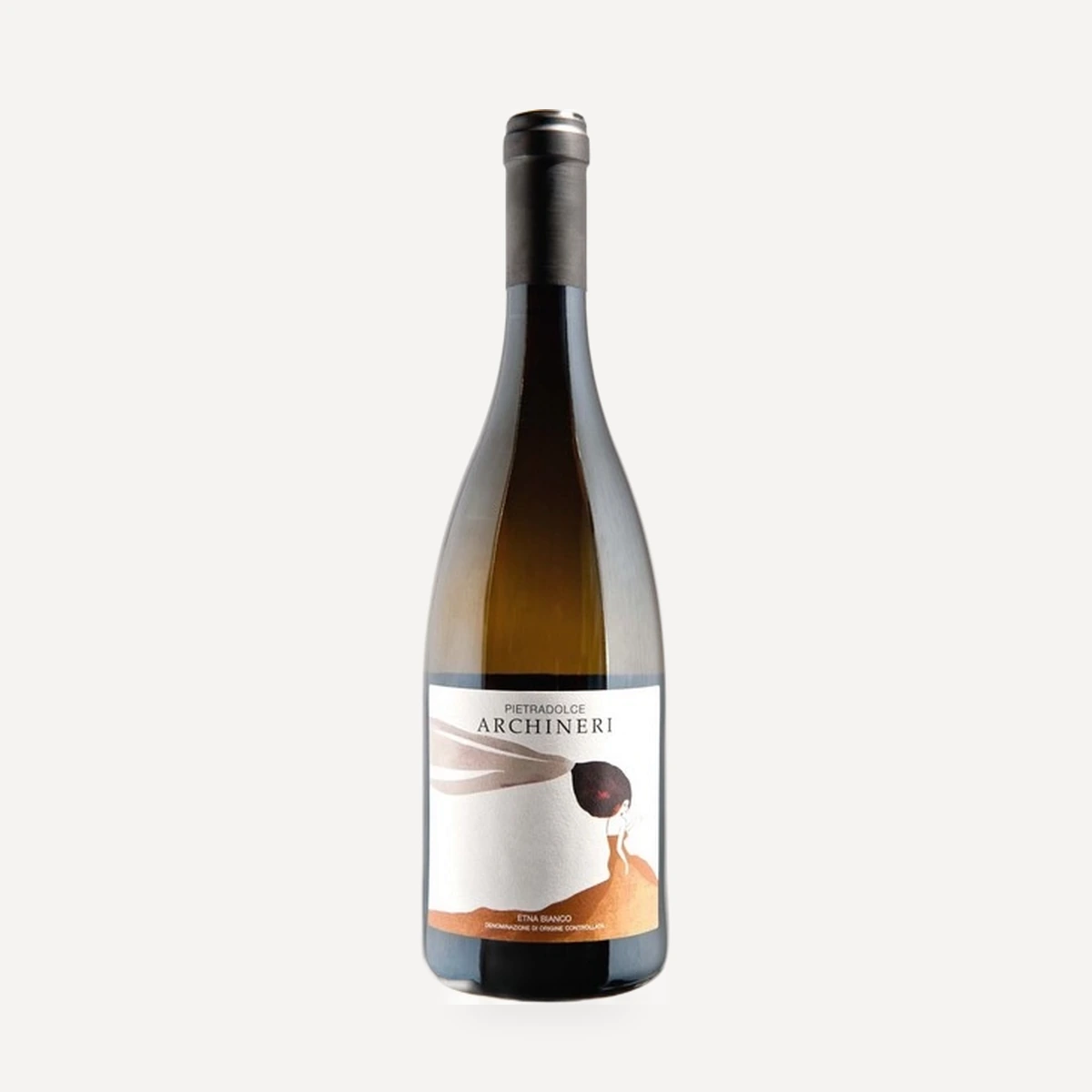
ARCHINERI Etna Bianco DOC
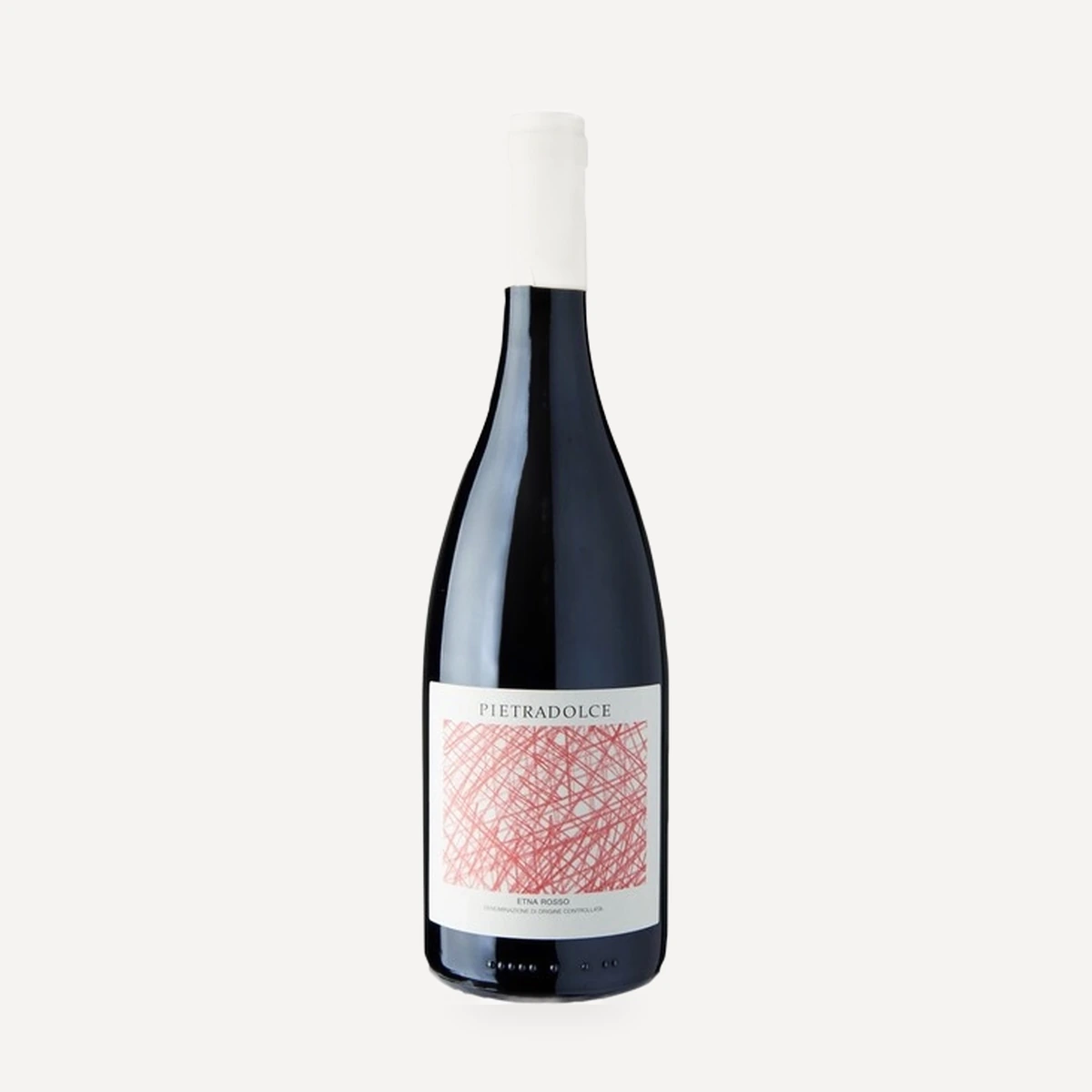
PIETRADOLCE Etna Rosso DOC
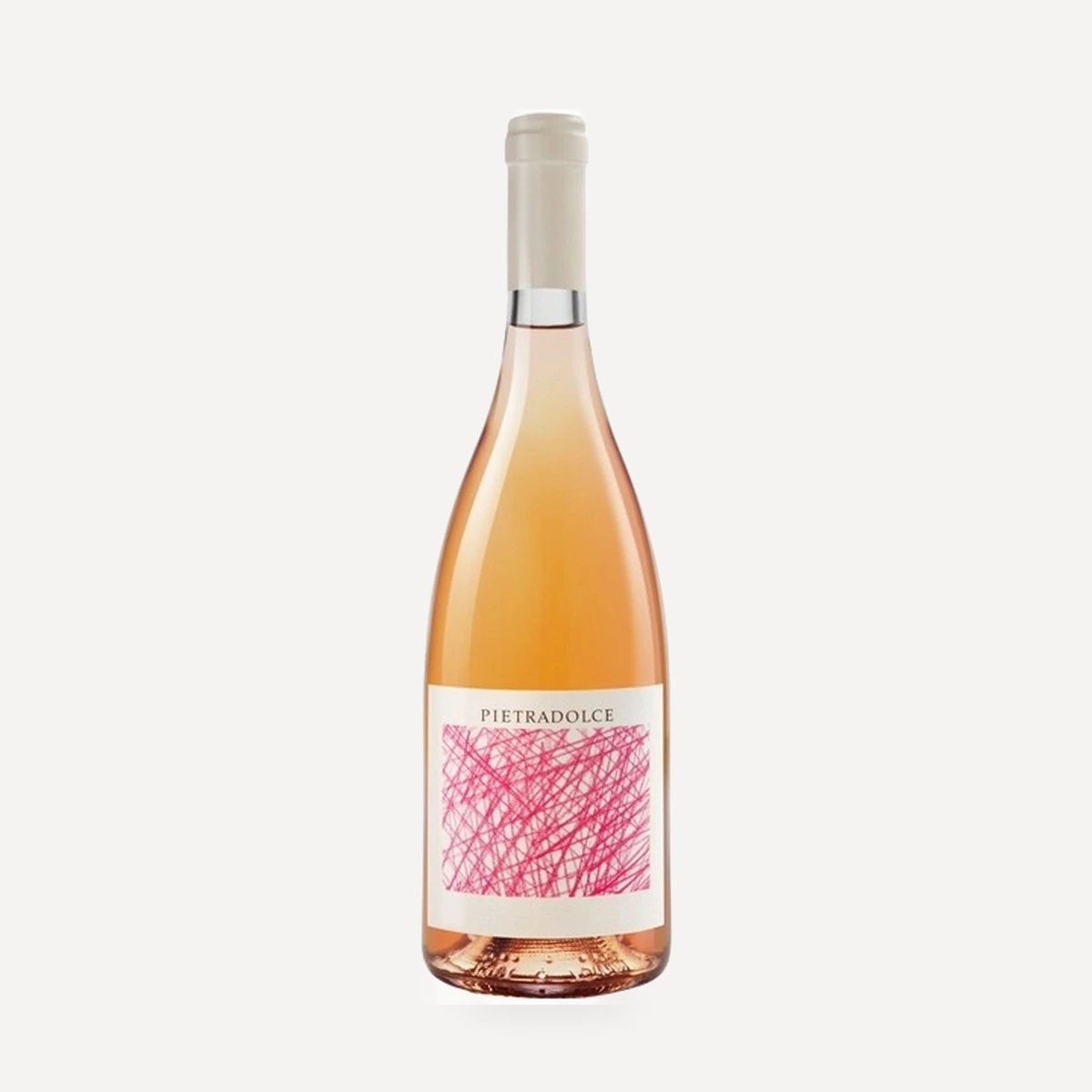
PIETRADOLCE Etna Rosato DOC