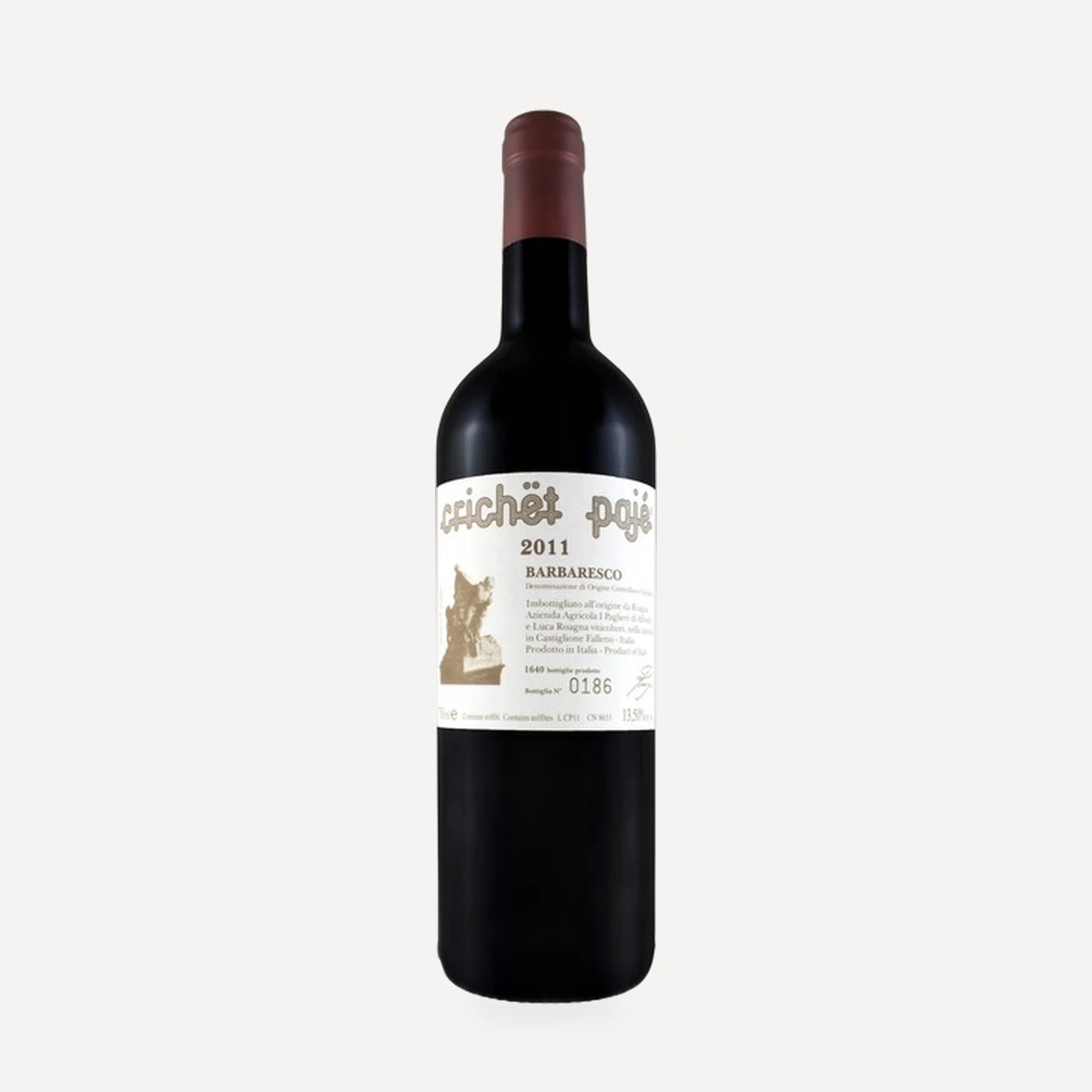
Questo vino
Vineyard and terroir
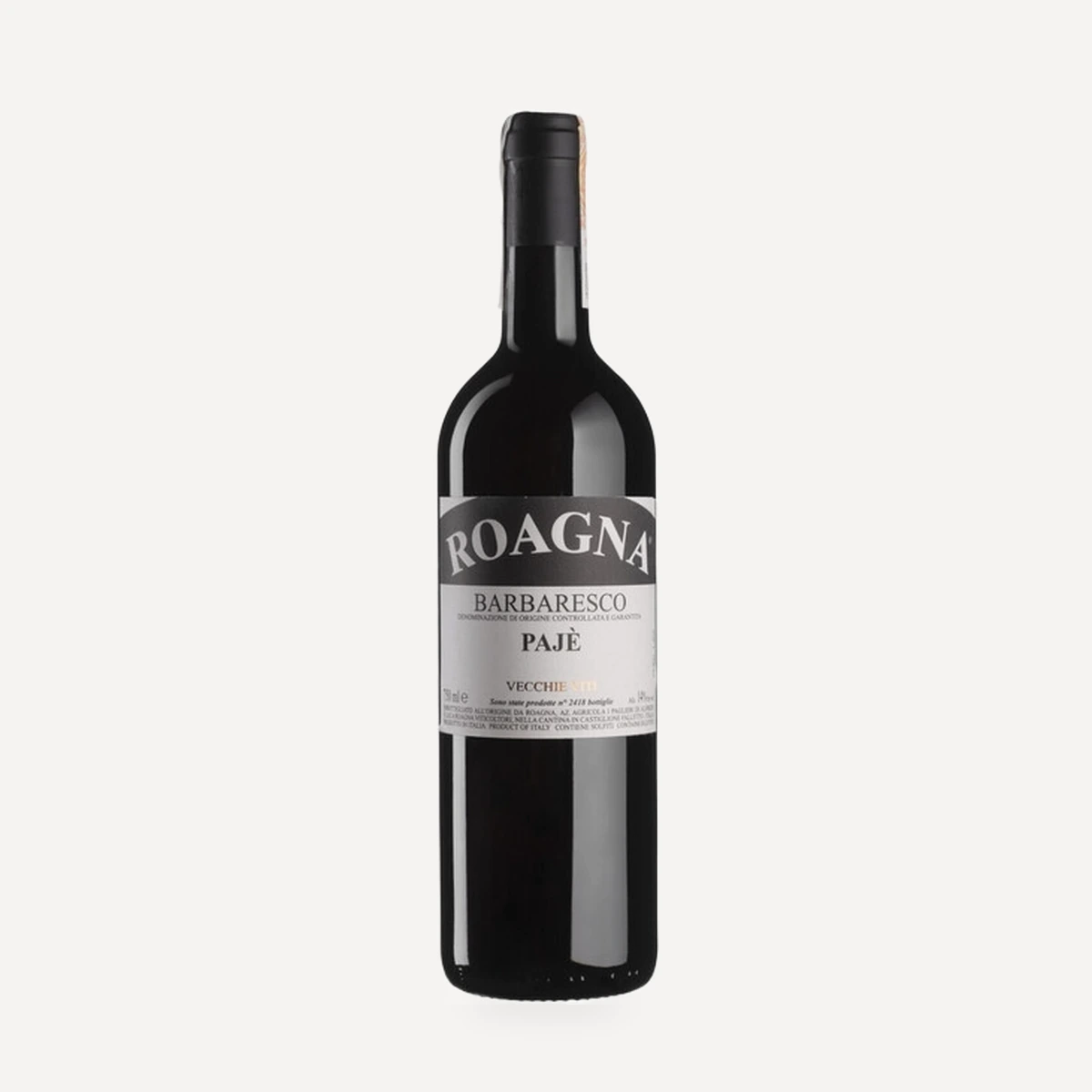
Crichët Pajé occupies the high part of the small Pajé hill, regarded as the most favourable position for Nebbiolo. Pajé is a historic Roagna property in the centre of Barbaresco, owned by the family since 1953. The natural amphitheatre lies at an average elevation of 230 m, faces south and south-west, and is sheltered from the wind by surrounding hills while remaining open to the Tanaro valley.
The Tertiary soils were formed by marine sedimentation around 70 million years ago. Calcareous marl and abundant active limestone define the site, with the limestone concentration particularly pronounced in the Crichët Pajé parcel. The wine belongs to a selection drawn from massal-origin vines more than 50–60 years old; Pajé's average vine age exceeds 50 years.
Grapes
Nebbiolo.
Ageing
The wines in this collection spend an average of five years in wood and concrete. Crichët Pajé may require between 4–5 years and more than 10 years to reach maturity, depending on the vintage. Ageing takes place in large handmade oak casks whose staves are steam-bent without toasting; the wood is seasoned for as long as ten years. Bottling takes place in summer once the wine has matured. The long maturation leaves the wine naturally clear, eliminating the need for filtration or fining.
Technical data
Production is extremely limited, with the exact bottle count printed on the label.
Tasting profile
Purity, structure and complexity are the defining stylistic traits. The wine was historically retained as the family's private reserve because it required prolonged maturation, and longevity remains central to its identity.
Label / history
“Crichet” means the high part of a small hill, while Pajé identifies the geographical mention. Giovanni Roagna developed the wine after years of parcel selection and experimentation. The parcel was vinified separately as early as 1958. Alfredo Roagna introduced it commercially in 1978, making that the first vintage released to the market.