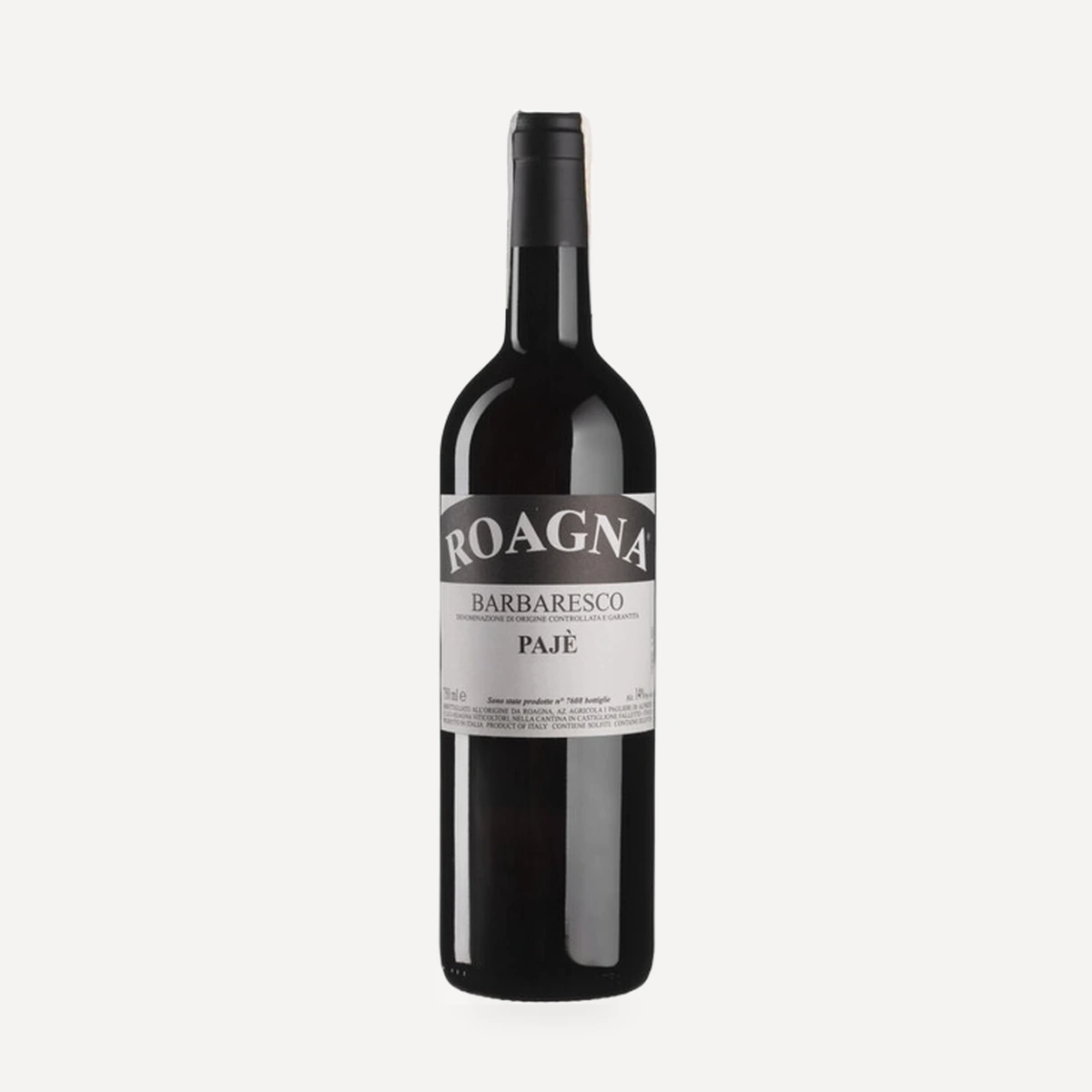
Questo vino
Vineyard and terroir
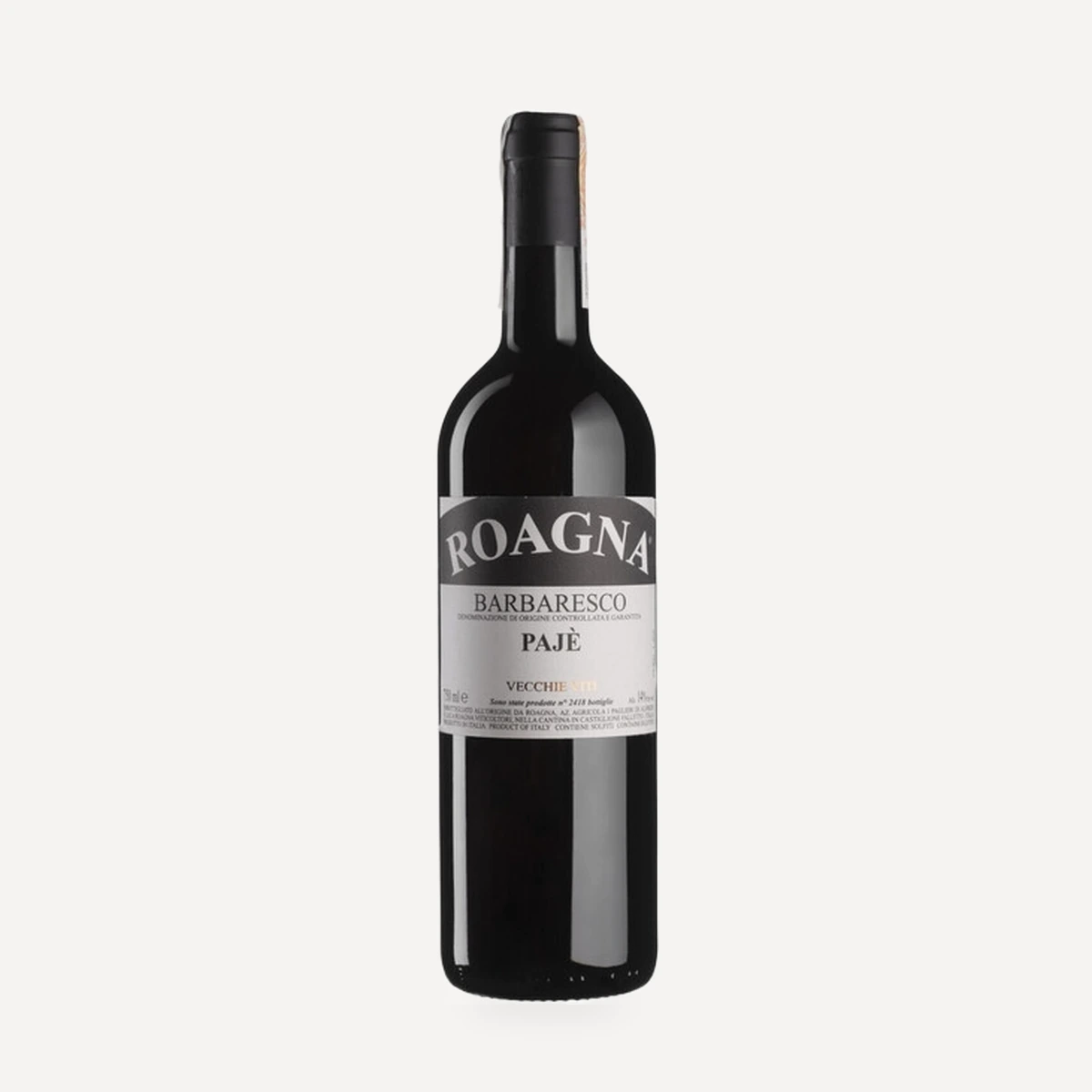
Pajé is a historic vineyard in the centre of the municipality of Barbaresco and has belonged to the Roagna family since 1953. It forms a natural amphitheatre at an average elevation of 230 metres, facing south and south-west. The gently sloping site is protected from wind by the surrounding hills and opens towards the Tanaro valley, which moderates winter cold and summer heat.
Its Tertiary soils were formed by marine sedimentation around 70 million years ago. Calcareous marl and an especially high concentration of active limestone distinguish Pajé within the estate.
Grapes
Nebbiolo. It occupies 1.83 hectares of Pajé, where the vines have an average age exceeding 50 years. Dolcetto is also cultivated in the vineyard’s lower section, but it is not identified as a component of this wine.
Vinification
Each vineyard is picked by hand into small crates when the seeds indicate full physiological maturity. The fruit passes through two manual selections before vinification. Fermentation takes place exclusively in wooden vats with a pied de cuve prepared from indigenous yeasts and lasts about ten days. Traditional submerged-cap maceration follows for approximately 60–70 days.
Ageing
The wine matures for about five years in neutral oak and concrete vats.
Technical data
Production is fewer than 7,000 bottles per vintage.
Tasting profile
The vineyard’s high level of active limestone gives the wine substantial structure and pronounced capacity for long ageing.
Label / history
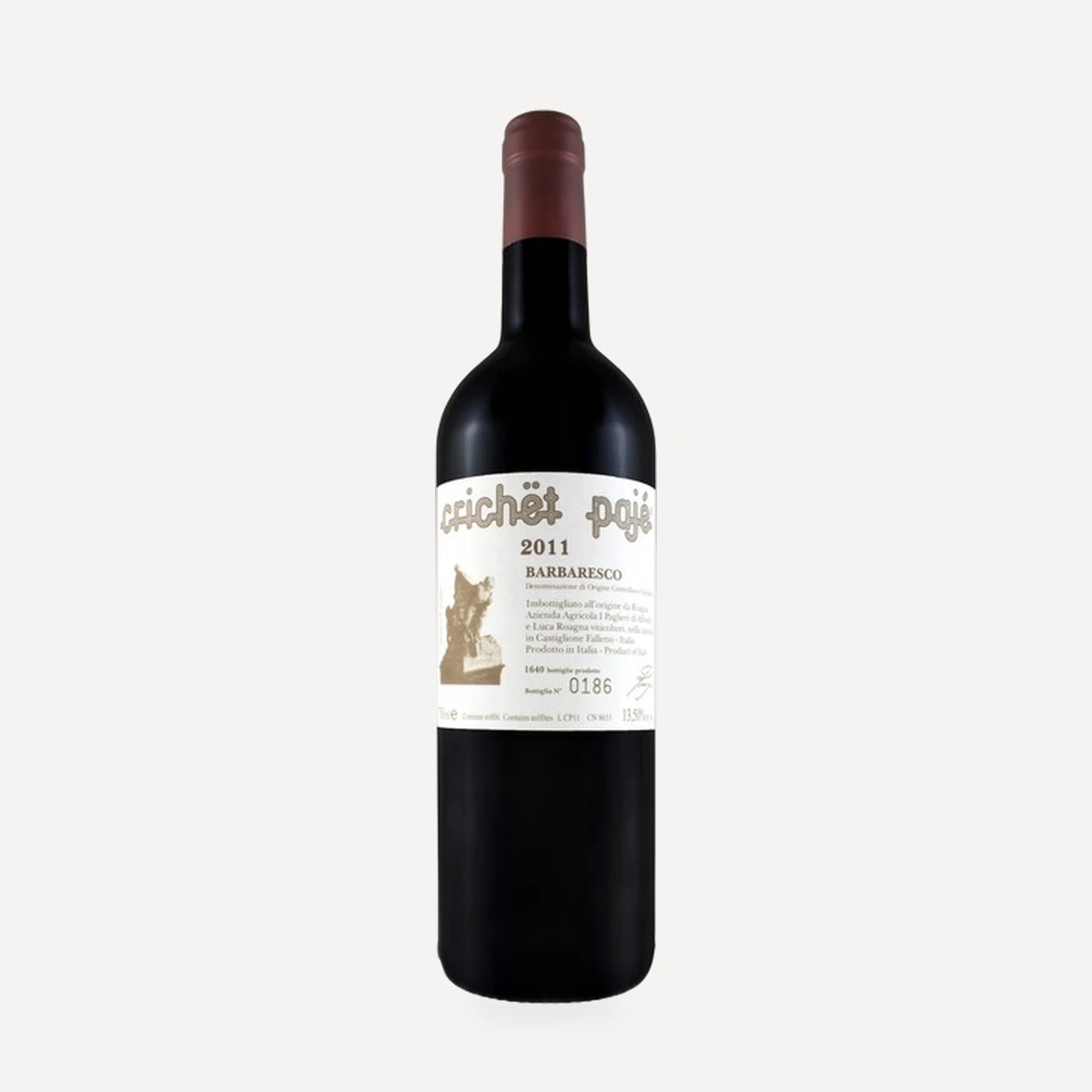
The name Pajé derives from Piedmontese dialect and was historically used for the area’s different vineyards. The vintages represented are 1971, 1974, 1978, 1995–2001, 2003–2005 and 2007–2019.