Storia
Two agricultural family histories
Stefania Pepe grew up in the Pepe winegrowing family. Her great-grandfather Emidio Pepe was selling Montepulciano d’Abruzzo in bulk in 1899. Her father, also named Emidio Pepe, began selling the family’s wine in bottle in 1964. He subsequently selected Montepulciano d’Abruzzo clones for grafting onto American rootstocks, used very short winter pruning and green pruning to restrict production, and selected the bunches intended for wine by hand.
A second strand of the estate’s history comes through the Del Negro family. In 1923, agricultural expert Adone Nicola Del Negro planted 5 ha of Montepulciano and Montonico. Individual low-trained vines were protected with canes and olive trees and yielded two or three small bunches, approximately 1.2 kg per vine. He used horses for transport and field work, manure for fertilization, surrounding woodland as protection and lunar phases to guide winemaking—practices later presented as forerunners of the family’s biodynamic approach.
In 1961, Giovanni Del Negro planted approximately 15 additional hectares as pergola abruzzese. The objective had shifted toward the volume needed to sustain a commercial agricultural business, and the technical advice of the period encouraged the use of agricultural products that the subsequent generation would reject.
Stefania Pepe’s formation
Stefania Pepe was born in Teramo on 19 May 1965. Her practical education began in childhood: she trod grapes at four, presented Torano Nuovo wines on television with her father at six and drove a tractor while applying copper solution to pergola-trained vineyards at fourteen. She later acquired her first personal vineyard and made her first wine following work experience at Château Margaux. Her academic training included a degree in Economics and Commerce, completed with a score of 110/110, and a two-year international OIV master’s programme in wine economics, management and marketing.
Adone Del Negro left the Faculty of Agriculture at Piacenza in 1993 and returned to the family land. He rejected synthetic chemistry and pursued a self-sufficient organic and biodynamic farm intended to produce wine, olive oil, grain and vegetables while also raising poultry, rabbits and horses. His stated aim was to leave his daughters uncontaminated land and create a place where visitors could reconnect with the landscape.
Establishment of the independent estate
Stefania invested in land in the place where she was born, planted new vineyards and created a winery devoted to organic and biodynamic production. The cellar was designed around manual work and gravity, with separate processing lines for organic and biodynamic lots. The estate’s winery, packaging area, direct-sales point and agricultural centre occupy Via Grande per Controguerra 33 in Torano Nuovo.
The estate covers 8 ha, of which 5.5 ha were recorded as vineyards. At that stage, 4 ha of the vineyard surface was pergola-trained at 3 × 3 m spacing, while the remainder included counter-espalier trained to spur-pruned cordon; 2 ha of pergola were awaiting conversion to counter-espalier during the winter described.
Organic production framework
A variation to the estate’s organic-activity notification was signed on 30 April 2011. The August 2012 precautionary production plan identified Stefania Pepe as proprietor, legal representative and the person responsible for relations with the control body, production documentation, sampling and traceability. It recorded that only estate-grown grapes and olives were being used and that the cellar handled organic and biodynamic production under separate lines. Bottled vintages through 2004 were categorized as wine made from organic grapes, while production from the 2005 vintage onward was categorized as organic wine.
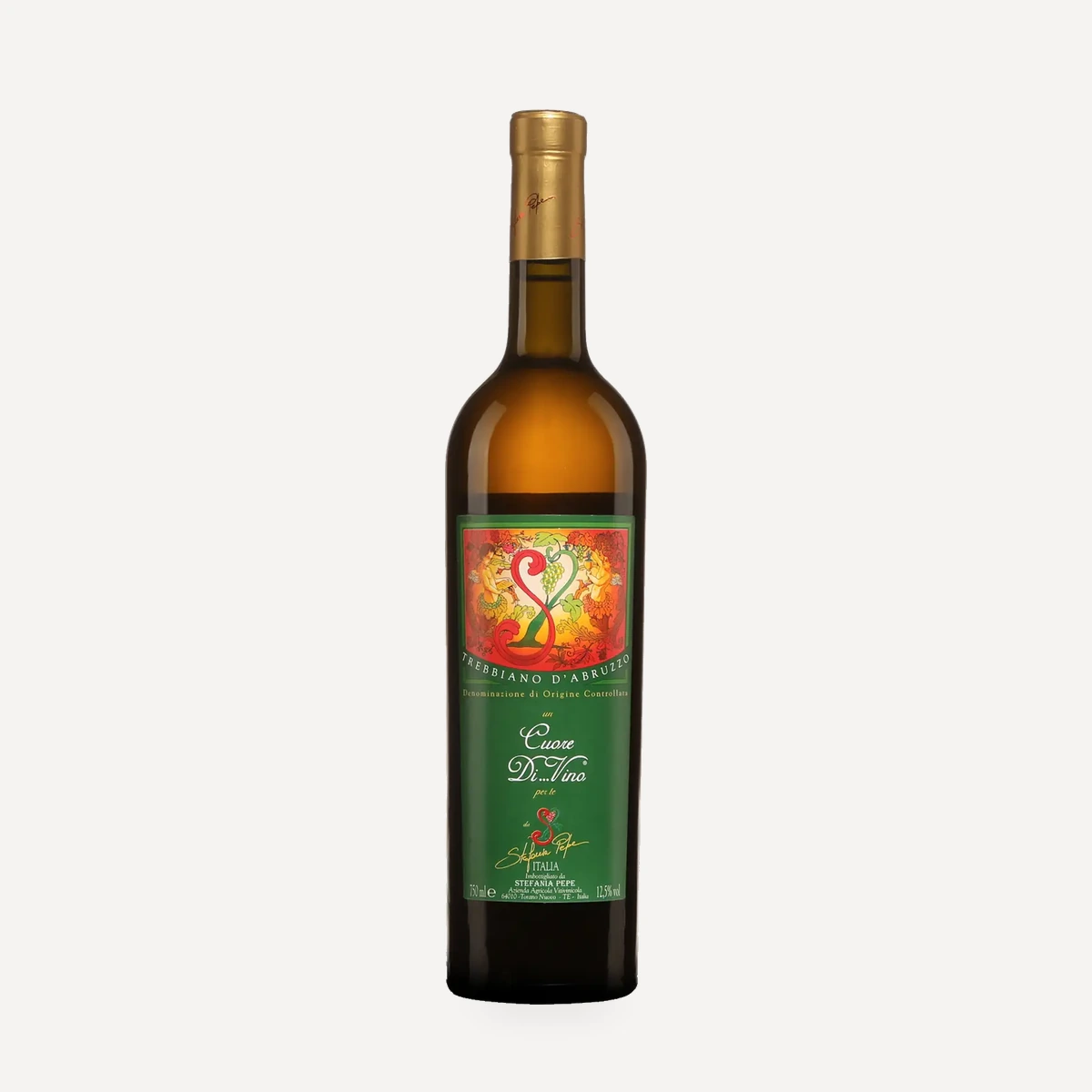
From the 2012 harvest, the planned organic portfolio comprised Pepe Nero, Pepe Rosso, Cuore Di..Vino, ControLaGuerra, Pepe Bianco and Pepe Rosa. The cellar documented every treatment and operation on production worksheets and maintained lot identification and separation in shared storage areas.
Terroir
Torano Nuovo
The estate lies in Torano Nuovo in the province of Teramo, one of the five communes of Controguerra DOC and within the Montepulciano d’Abruzzo Colline Teramane DOCG subzone. The vineyards occupy sunny slopes from which the Maiella, Gran Sasso d’Italia, Monti Sibillini and Adriatic Sea are visible.
Estate technical descriptions place vineyards at approximately 240–300 m above sea level and around 15 km from the sea. Most of the described sites face south-east; a white-grape site above a lake faces west.
Soils
Local estate soils range from silt loam to silty clay loam. Their pH varies from slightly alkaline to alkaline, and the overall limestone content is high enough to reduce the availability of phosphorus, potassium and iron. The hills above Alba Adriatica, including the Torano area, also have elevated sodium levels, making salt-tolerant rootstocks useful. Individual vineyard descriptions consistently identify clay-limestone soils.
Wider landscape and climate
Abruzzo’s eastern Apennine limestone formations give way to rounded Pliocene clay hills that descend toward the Adriatic within a band approximately 20–25 km wide. Torrent erosion has strongly shaped this cultivated landscape. The calcareous substrate absorbs rainfall and redistributes it through underground routes to springs and watercourses.
The climate is Mediterranean. The shallow Adriatic provides limited moderation, while the mountain chains shelter the area from cold northern currents and help create distinct local microclimates. The 128 km Adriatic frontage and the nearby Apennine ridge generate air movement that delays vine diseases and maintains clear atmospheric conditions. Light and heat are considered favourable for vines, rainfall is generally sufficient, late frosts are uncommon and winds are usually weak, though they can exceed 50 km/h.
Vinificazione
The vineyards are cultivated using organic and biodynamic methods. The estate works with permanent or seasonal ground cover, including vetch and field bean, and uses horse manure, compost and biodynamic preparations to restore soil energy and fertility. Green manures are selected for roots capable of opening and loosening the soil naturally, reducing tractor intervention. Crop rotation, minimal or absent tillage and other gentle soil operations are intended to preserve structure, organic matter and biological vitality.
The biodynamic programme includes personally dynamized horn manure, buried at the autumn equinox and recovered in spring for application to moist evening soil. Preparations derived from medicinal plants may be sprayed on the vine canopy, while diluted manure compost is used to strengthen roots. Lunar phases guide soil work, cellar operations, racking, bottling and tasting.
Disease prevention relies on sulphur and copper-water treatments against oidium and downy mildew. Pheromone traps are used against grape moth. Mechanical weed control replaces herbicides on the specifically described sites.
Winter pruning is kept very short to limit the number of buds and concentrate quality. Green pruning and shoot removal open the canopy to air and sunlight. Bunches are thinned when necessary—technical descriptions specify approximately 10% in some vineyards and August thinning in pergola-trained Montepulciano.
Harvesting is manual. Grapes are selected in the vineyard, placed in open crates and moved promptly to the cellar. Biodynamic red grapes undergo a further selection before manual destemming. The estate’s organic plan records that grapes and olives are of estate origin and that separate processing lines are maintained for organic and biodynamic lots.
Cellar and reception
The winery and direct-sales point are located at the agricultural centre on Via Grande per Controguerra 33, Torano Nuovo. The cellar is equipped with small, medium and large vitrified concrete vessels; stainless-steel tanks, including temperature-controlled tanks; a fully insulated tank used for cold tartaric stabilization; and large wooden vats for fermentation and maturation.
Estate grapes arrive in open crates. Biodynamic red grapes are carried into the cellar by hand, selected again and poured over a mesh for manual destemming. Organic red grapes are hand-harvested, moved by harvest carts and manually fed into a crusher-destemmer. White biodynamic grapes are foot-trodden in a wooden vat, avoiding contact with iron. White organic grapes are pressed with a membrane press.
Fermentation
Biodynamic red wines ferment either in large wooden vats or large concrete vessels. The white biodynamic must ferments in small concrete vessels, while organic white must ferments in temperature-controlled stainless steel. Some technical materials record red fermentations of 5–8 days in temperature-controlled stainless steel with pump-overs and délestage; manually processed Montepulciano may remain in large wooden vats for 6, 9 or 13 days with hand punch-downs. The general harvest description gives 8–15 days for vigorous red fermentation, depending on the intended result.
No cultured yeast is added. The estate’s 2012 protocol also excludes sulphur dioxide and other additives during fermentation when the fruit is perfectly healthy. White must alone may receive static cold settling.
Pressing, racking and maturation
After red fermentation, the skins are separated from the wine. Foot-trodden grapes are pressed to recover the press fraction beyond the free-run must. The wine continues fermenting before being racked into clean vessels. Certain wines are decanted and racked twice between concrete vessels; others pass briefly through large wooden casks before returning to stainless steel. Large wooden vats are used for both fermentation and maturation of the principal biodynamic red.
The wines are clarified through settling and racking rather than fining. Filtration aids, centrifugation, micro-oxygenation, added gases and cultured yeasts were recorded as unused in the 2012 cellar protocol. The estate did not use isothiocyanate in vessel headspaces.
Bottling and bottle ageing
Decanting and bottling are performed by gravity and timed with lunar phases. Wines are bottled without filtration or added sulphur dioxide. One white bottling protocol uses two or three days below 0°C in a fully insulated tank before bottling on a mobile line at atmospheric pressure. Bottles are stored horizontally in the cellar. Extended maturation in vessel and bottle is preferred, with some wines held for years or decades before or after release.
Filosofia
Stefania Pepe’s stated objective is to produce wine by organic and biodynamic methods without chemical additives, placing environmental protection, human health and product integrity ahead of higher yields or faster commercial returns.
The estate treats nature as a gift and accepts vintage variation and agricultural risk rather than correcting weak fruit through intensive cellar intervention. Hail, excessive rain and drought are understood as limits that a farmer cannot fully control; the response is meticulous vineyard work followed by reliance on healthy fruit and restrained processing.
Biodynamics is understood as a search for balance among the farmer, nature, soil and wider cosmic forces. Its practical objective is to reawaken the soil and restore vitality to plants through green manure, compost, horn manure, plant preparations, reduced tillage and lunar timing.
The cellar combines inherited manual practices—foot treading, hand destemming, wooden and concrete vessels—with temperature-controlled steel and gravity handling. Maturation follows the time required by the wine rather than a fixed commercial schedule. The family frames each bottle as an expression of the land, the people who work it and a broader commitment to leave uncontaminated soil and water to future generations.
Vini
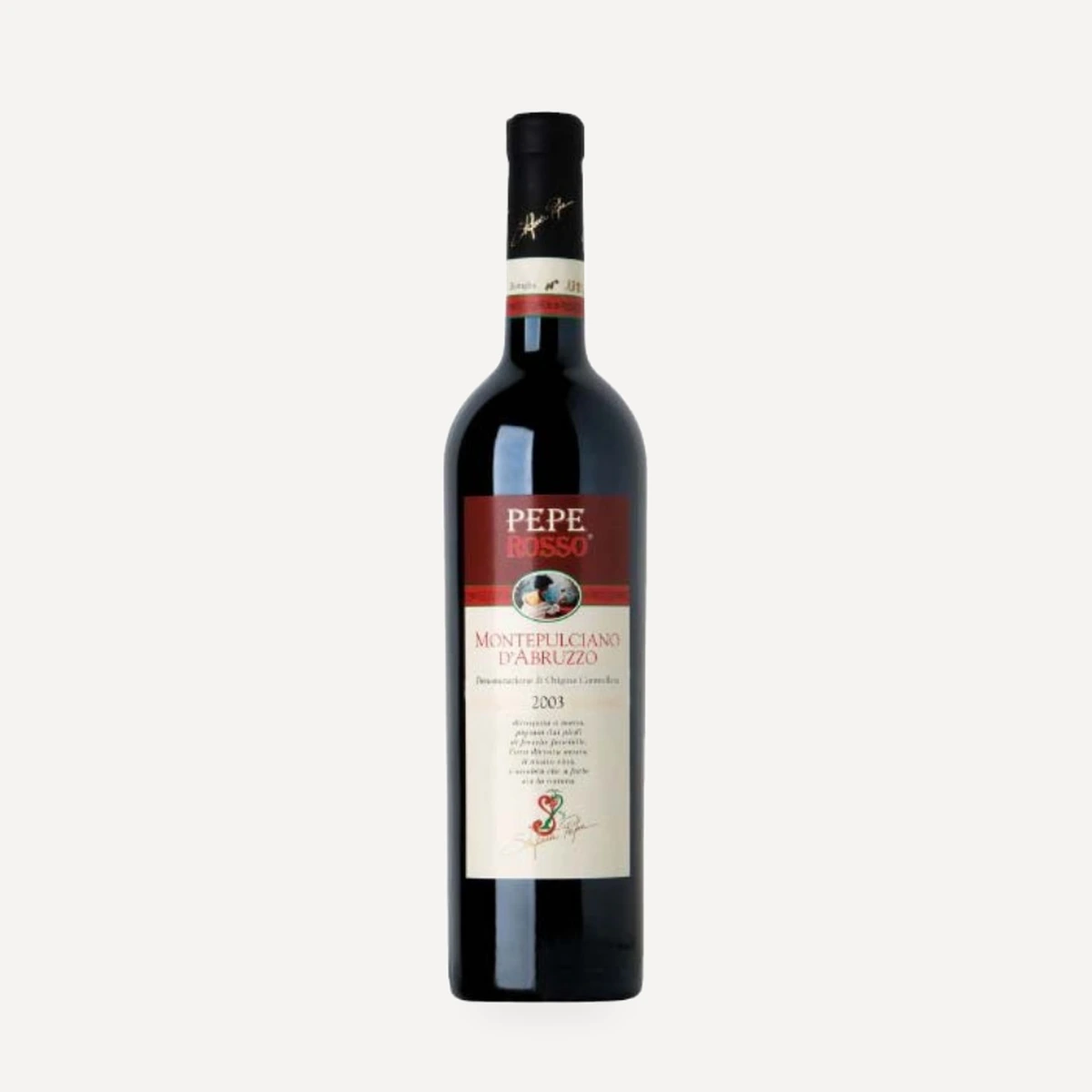
Pepe Rosso — Montepulciano d’Abruzzo DOC