Storia
Establishing the estate range
Tenuta Campo al Mare is the Folonari family’s estate in Bolgheri, within the municipality of Castagneto Carducci. The property is organised into six production parcels distributed through the Bolgheri area. Each parcel is assigned to a single variety selected for the conditions of the site, creating a vineyard structure that extends from the sandy coastal zone to the denomination’s highest growing area.
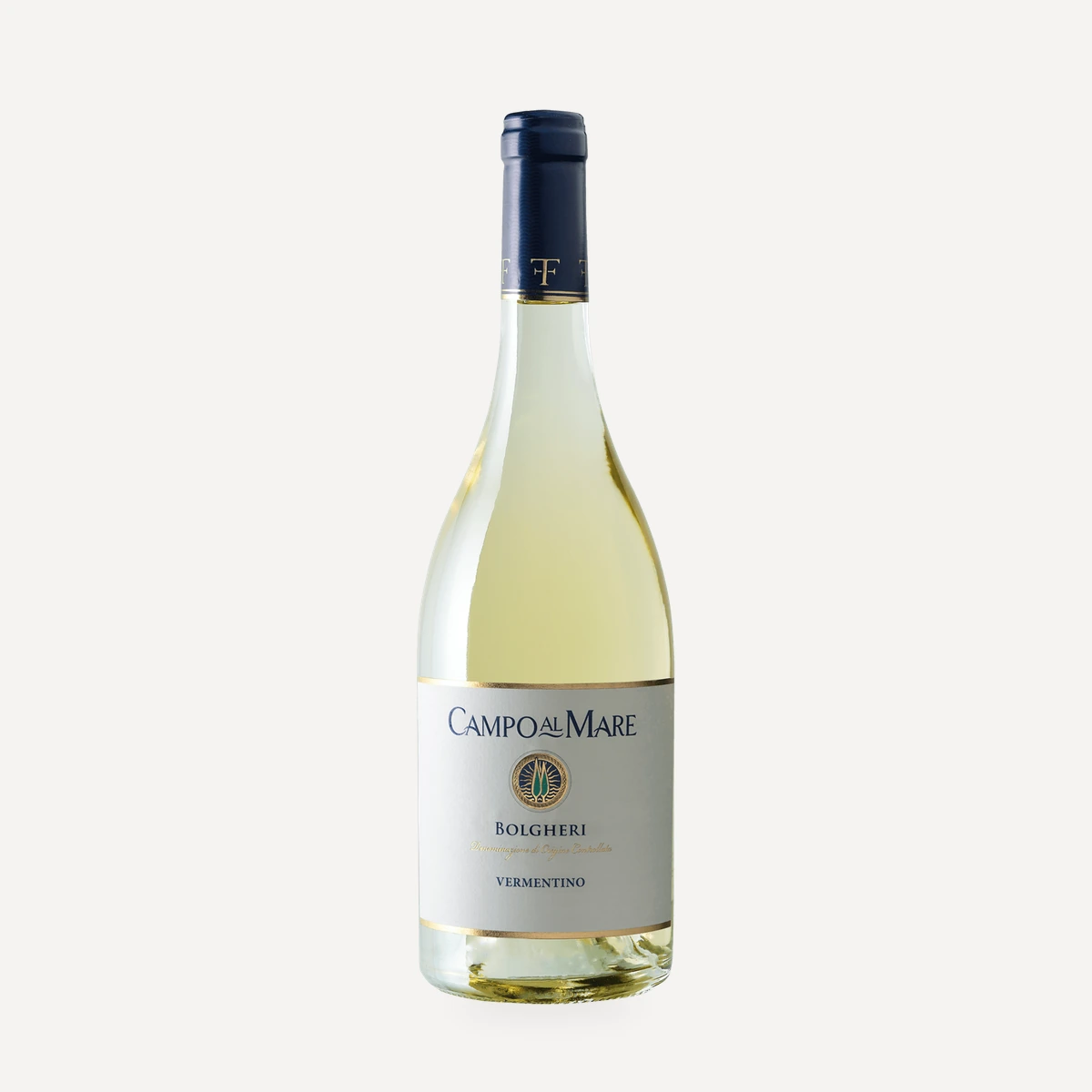
The first vintage of Campo al Mare Rosso was produced in 2003, establishing the estate’s Bolgheri red blend based on Merlot, Cabernet Sauvignon, Cabernet Franc and Petit Verdot. The first estate Vermentino followed in 2005, sourced from sandy vineyards lying only a few hundred metres from the Tyrrhenian coast.
Expansion into site-specific expressions
The first vintage of Baia al Vento was produced in 2007. Its source is Vallone dei Messi, a roughly seven-hectare Merlot vineyard along the Bolgherese provincial road. The parcel’s sandy-clay soils contain abundant mineral matter and iron.
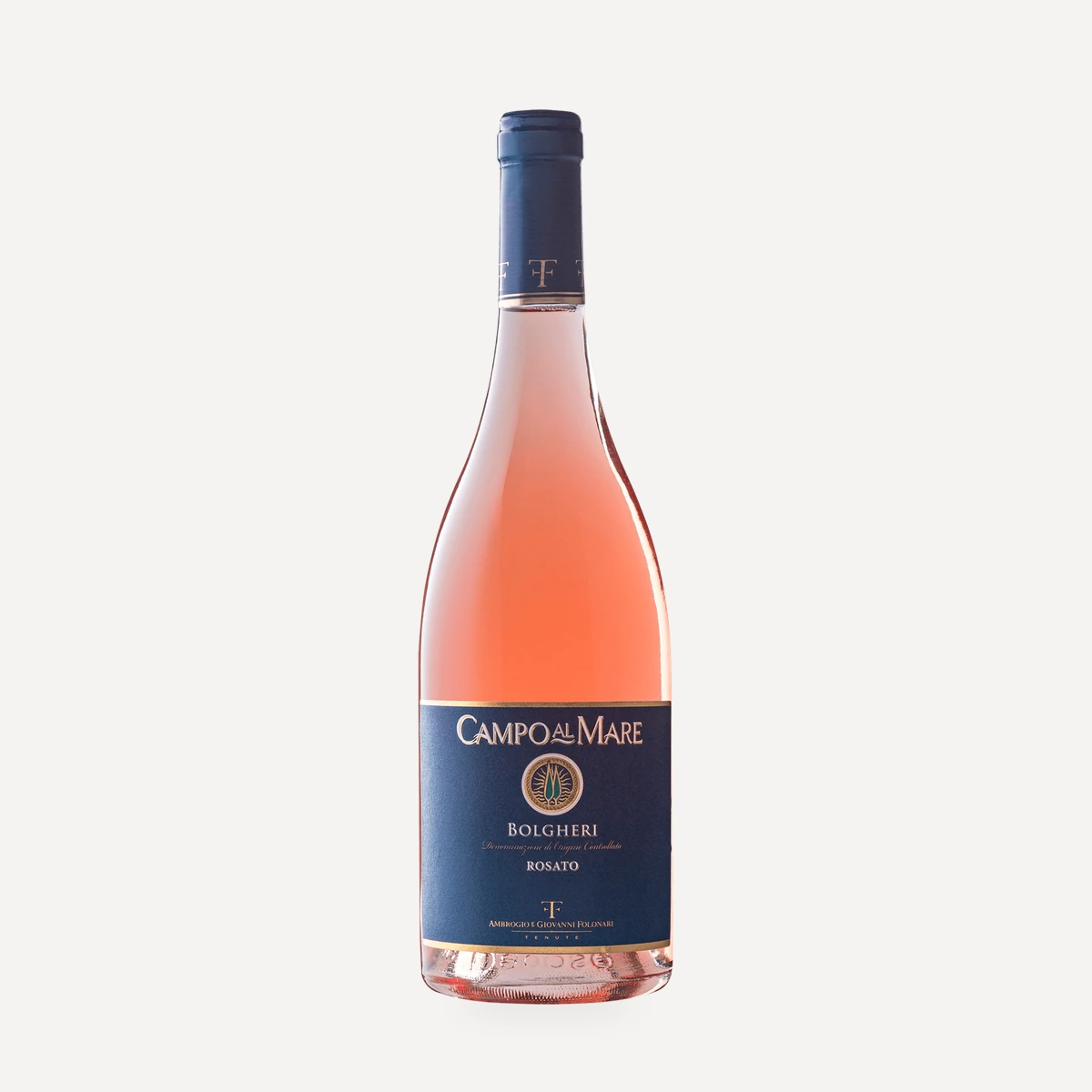
The estate added its Bolgheri DOC Rosato in 2013. It is produced by white-wine vinification of Merlot harvested earlier than the grapes destined for red wine, preserving the freshness of the fruit.
The monovarietal project
In 2019, the estate produced the inaugural vintages of two monovarietal projects. Gallico placed Petit Verdot—normally used as a supporting component in blends—at the centre of a varietal wine. Selvante was conceived by Ambrogio and Giovanni Folonari as a pure Cabernet Franc from Segalari, an estate-owned parcel reserved for the project.
Segalari lies in the hills above the Bolgherese provincial road and occupies the highest production area in Bolgheri. Its clay soil contains abundant skeletal material, including flaky stones. The development of Selvante, Gallico and Baia al Vento formalised an estate strategy based on connecting each monovarietal expression to a specific vineyard parcel.
Terroir
Tenuta Campo al Mare occupies part of the Bolgheri landscape between the Metalliferous Hills and the Tyrrhenian Sea. The hills protect the area to the east and descend toward the coast, forming a natural amphitheatre. Summers are hot, but continuous maritime winds channelled through the Tuscan Archipelago cool the vineyards.
Soil texture changes toward the shoreline, passing from clay loam to progressively looser ground. The estate’s parcels reflect this transition. Fornacelle lies close to the Tyrrhenian Sea on sandy soil suited to Vermentino. The coastal Vermentino vineyards are only a few hundred metres from the water and stand on completely sandy ground.
At the opposite end of the estate’s geographical range, Segalari occupies hilly terrain above the Bolgherese provincial road in the denomination’s highest production area. Its clay soil is rich in skeletal material and flaky stones, conditions associated with the estate’s Cabernet Franc.
Vallone dei Messi lies along the Bolgherese provincial road, a few metres above sea level and upstream from the coastal zone. Its sandy-clay soils are rich in mineral matter and iron. Other estate parcels include sandy or sandy-clay soils used for Petit Verdot, Merlot and the estate’s red blend.
This combination of maritime cooling, changing soil texture and elevation underpins the division of the property into single-variety parcels.
Vinificazione
The property is divided into six production parcels distributed among Bolgheri’s most suitable growing areas. Each parcel is devoted to one variety selected for the site: Vermentino occupies the sandy coastal ground at Fornacelle, Cabernet Franc the elevated clay-and-stone soils of Segalari, Merlot the sandy-clay Vallone dei Messi vineyard, and Petit Verdot a predominantly sandy estate parcel.
Low spur-pruned cordon is used for Cabernet Franc, Petit Verdot and the Vallone dei Messi Merlot. The estate red blend is sourced principally from vines trained in the same manner. Double Guyot is used for the coastal Vermentino and for Merlot destined for rosé. Published planting densities are generally 6,200 vines/ha, while a technical specification for the red blend gives 6,250 vines/ha.
Harvest timing is adjusted to the intended expression. Merlot used for rosé is picked earlier than the fruit destined for red wine. During the 2021 harvest, grape maturity at Tenuta Campo al Mare was checked daily to identify the optimal picking date for Baia al Vento. Production per hectare in its source vineyards is deliberately balanced to favour expression of the terroir.
Red wines are fermented in stainless steel. The current protocols for the estate’s principal red and monovarietal bottlings employ approximately four weeks of maceration; an earlier detailed specification for Campo al Mare Rosso gives 20–30 days at 26–28°C.
Wood maturation varies with the vineyard project. The monovarietal reds use barriques, tonneaux or small toasted barrels. Published protocols include 225- and 500-litre vessels followed by bottle refinement. The barrel room is temperature controlled, and the extended wood phase described for Baia al Vento is interrupted by very few rackings.
Vermentino undergoes temperature-controlled fermentation in stainless steel and remains in stainless steel for maturation. The rosé is made by white-wine vinification of early-harvested Merlot; it also ferments under temperature control and matures in stainless steel.
The estate’s approach therefore separates the fresh, stainless-steel handling of Vermentino and rosé from the longer maceration and wood maturation used for its structured reds.
Filosofia
The estate presents parcel suitability as the basis of its viticultural model. Its six production units are each assigned to one variety, linking Vermentino to the coastal sands, Cabernet Franc to elevated clay-and-stone terrain, Merlot to the mineral- and iron-rich sandy-clay soil of Vallone dei Messi, and Petit Verdot to predominantly sandy ground.
Its monovarietal project seeks to give individual varieties an independent expression rather than using them only as blending components. Selvante, Baia al Vento and Gallico connect Cabernet Franc, Merlot and Petit Verdot respectively to specific estate parcels. This strategy combines varietal identity with the characteristics of each site and places quality before maximum yield.
Gallico embodies the estate’s willingness to reconsider a grape traditionally treated as a supporting variety. Selvante similarly reflects the conviction of Ambrogio and Giovanni Folonari that Cabernet Franc achieves its intended character in the environmental conditions of Segalari.
Vini
Bolgheri Rosato DOC