Storia
Early recorded vintages
The historical-vintage collection identifies La Fuga Brunello di Montalcino bottles from 1983, 1985, 1986 and 1987. Current Brunello material identifies 1996 as the first vintage of La Fuga Brunello di Montalcino, while the first Le Due Sorelle Brunello di Montalcino Riserva followed in 1997.
Formation of the present family company
In 2000, Ambrogio Folonari and his son Giovanni founded Ambrogio e Giovanni Folonari Tenute to enhance their individually owned estates and concentrate on high-quality, estate-linked wines. The Folonari family acquired Tenuta La Fuga in 2001. It became the smallest wine estate in the family group, with 9.8 hectares of vineyards and approximately 2 hectares of olive groves.
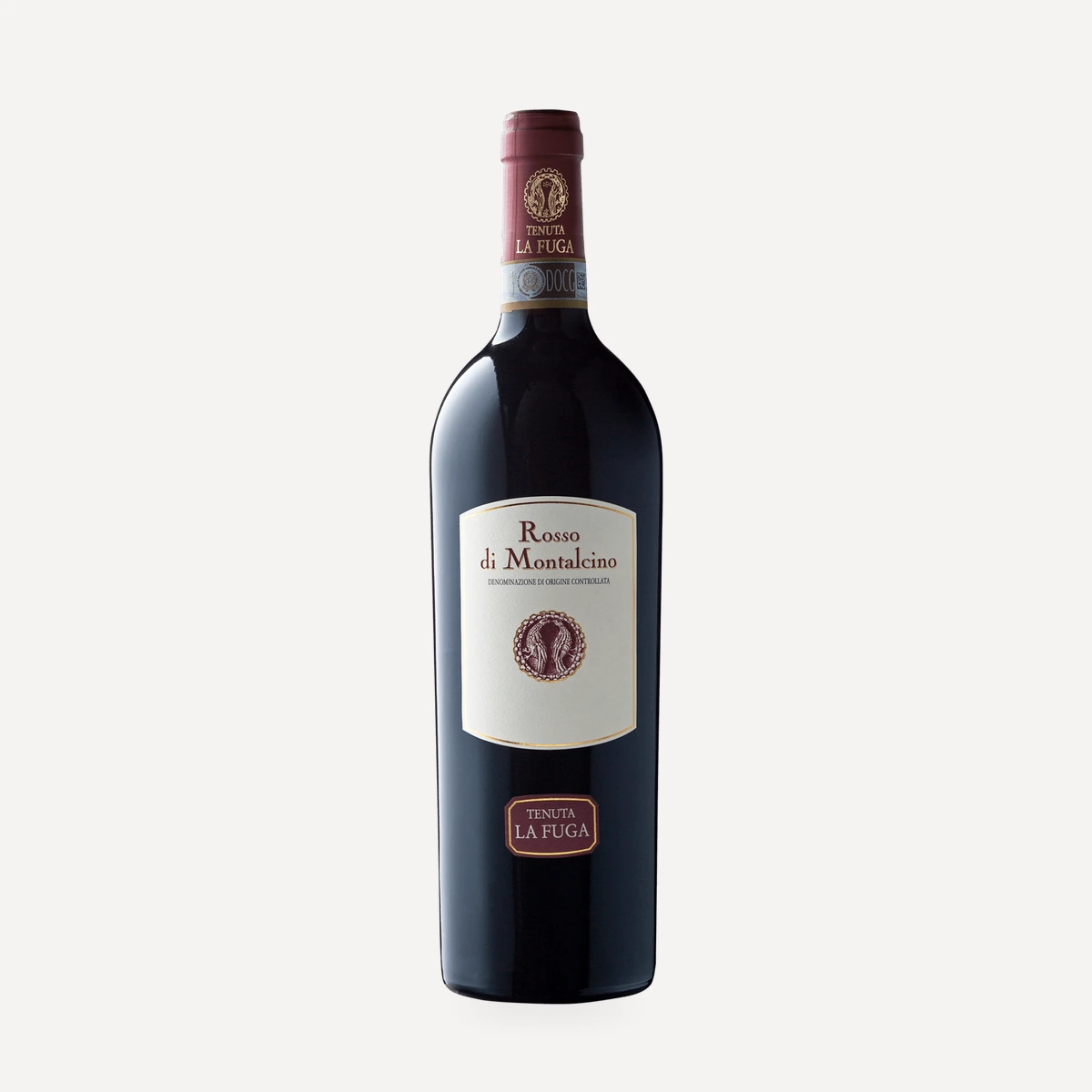
The first vintage of La Fuga Rosso di Montalcino was 2002. Its fruit comes from approximately one hectare in the estate’s youngest vineyard parcel.
Ownership, redevelopment and management
Giovanna Cornaro, Ambrogio Folonari’s wife, oversaw the redevelopment of Tenuta La Fuga. The Le Due Sorelle Riserva is dedicated to Giovanna and her sister Fabia Cornaro dell’Acqua, both identified with the estate’s ownership.
In May 2017, Giovanni Folonari succeeded Ambrogio as president of the family company, continuing the process of investment and innovation begun by his father. Ambrogio remains honorary president. Francesca and Angelica Folonari, Giovanni’s sisters, participate in the company, particularly in the management and development of its accommodation properties.
The estate farmhouse now combines production and hospitality across three levels: the vinification cellar occupies the basement, the barrel cellar the intermediate level, and the agriturismo the first floor.
Terroir
Tenuta La Fuga lies in the historic area of Camigliano, southwest of Montalcino, on a slope facing southwest toward the Tyrrhenian Sea. The vineyards stand at approximately 350 metres above sea level and overlook the Val d’Orcia.
The soils are medium-textured clay with abundant coarse mineral material. They also contain fossils associated with land that emerged during the Pliocene and sediments connected with the extinct volcano Monte Amiata. The proximity of the Tyrrhenian Sea, the southwest exposure, these fossil-bearing soils and the volcanic sediments collectively shape the estate’s Sangiovese.
The estate associates this setting with softness, power, depth and elegance in its Brunello. The sediment-rich soils and southwest exposure are also linked to the grapes’ polyphenolic potential, while the combined soil and climatic conditions are associated with minerality, harmony and length.
Vinificazione
The estate cultivates Sangiovese Grosso, the Sangiovese clone locally called Brunello. Its bunches are medium-sized, winged and compact, with medium-sized, compact berries.
Vines are trained to low spur-pruned cordon. Planting densities range from 4,000 to 5,500 vines per hectare in the Brunello vineyards and are commonly stated as 5,000 vines per hectare for the Rosso and current Riserva parcels. Brunello production averages approximately 4.5 tonnes of grapes per hectare with a grape-to-wine yield of 65%; a Riserva technical specification records approximately 4 tonnes per hectare and the same 65% yield.
Harvesting is performed by hand. A rigorous selection of individual berries follows before the fruit enters the underground vinification area. No particular organic, biodynamic or other certified farming regime is identified.
Cellar layout and fruit reception
The production facility is arranged over two working levels within a three-level farmhouse. The underground level contains the vinification cellar, while the intermediate level houses the historic barrel room. The accommodation area occupies the upper floor.
Grapes are harvested manually and subjected to rigorous berry selection. Vertical wooden and stainless-steel vats receive the must in the underground vinification area. After fermentation, wines move to the historic barrel cellar, whose brick vaults and terracotta surfaces frame the ageing space.
Oak and maturation
Large seasoned oak barrels are central to the cellar. The estate works with seasoned, untoasted wood associated with Italian cooperage traditions; the wood is seasoned for more than one year per centimetre of stave thickness. Estate wines mature in Italian oak, including 25-hectolitre Italian-made Slavonian oak barrels used for La Fuga Brunello.
Brunello regime
La Fuga Brunello undergoes fermentation in stainless-steel vessels at a controlled 28 °C, followed by approximately 20 days of skin maceration. The 2019 specification gives about four years in large seasoned-oak barrels and at least six months of bottle ageing. Plant material and wine yields are managed at an average 4.5 tonnes of grapes per hectare and a 65% grape-to-wine yield.
Riserva regime
Le Due Sorelle is produced only in selected vintages. Current production information describes stainless-steel fermentation, approximately four weeks of maceration and at least 48 months in large oak barrels before bottle refinement. The 2016 specification described fermentation at 28 °C, about 20 days on the skins, five years in 25–30-hectolitre Slavonian oak and 12 months in bottle.
Rosso regime
La Fuga Rosso di Montalcino ferments in stainless steel and remains on the skins for approximately four weeks. It then spends at least five months in barriques before bottle refinement. Its oak is described as seasoned rather than new.
Filosofia
Tenuta La Fuga’s approach centres on Sangiovese as an expression of the Camigliano slope, with long maturation used to develop harmony, depth and aromatic evolution rather than simply to amplify power.
Roberto Potentini frames the estate’s Brunello as a wine rooted in tradition and resistant to passing fashions. In his view, continual improvement should remain faithful to that tradition, while the oenologist acts principally as an assistant to time. Harmony, rather than force, is the intended result.
This outlook is reflected in the use of large vessels made from long-seasoned, untoasted oak, including Italian-made Slavonian barrels. The wider family philosophy emphasises innovation, creativity, research, respect for differences among territories and investment in wines with a clear connection to their place of origin.
Vini
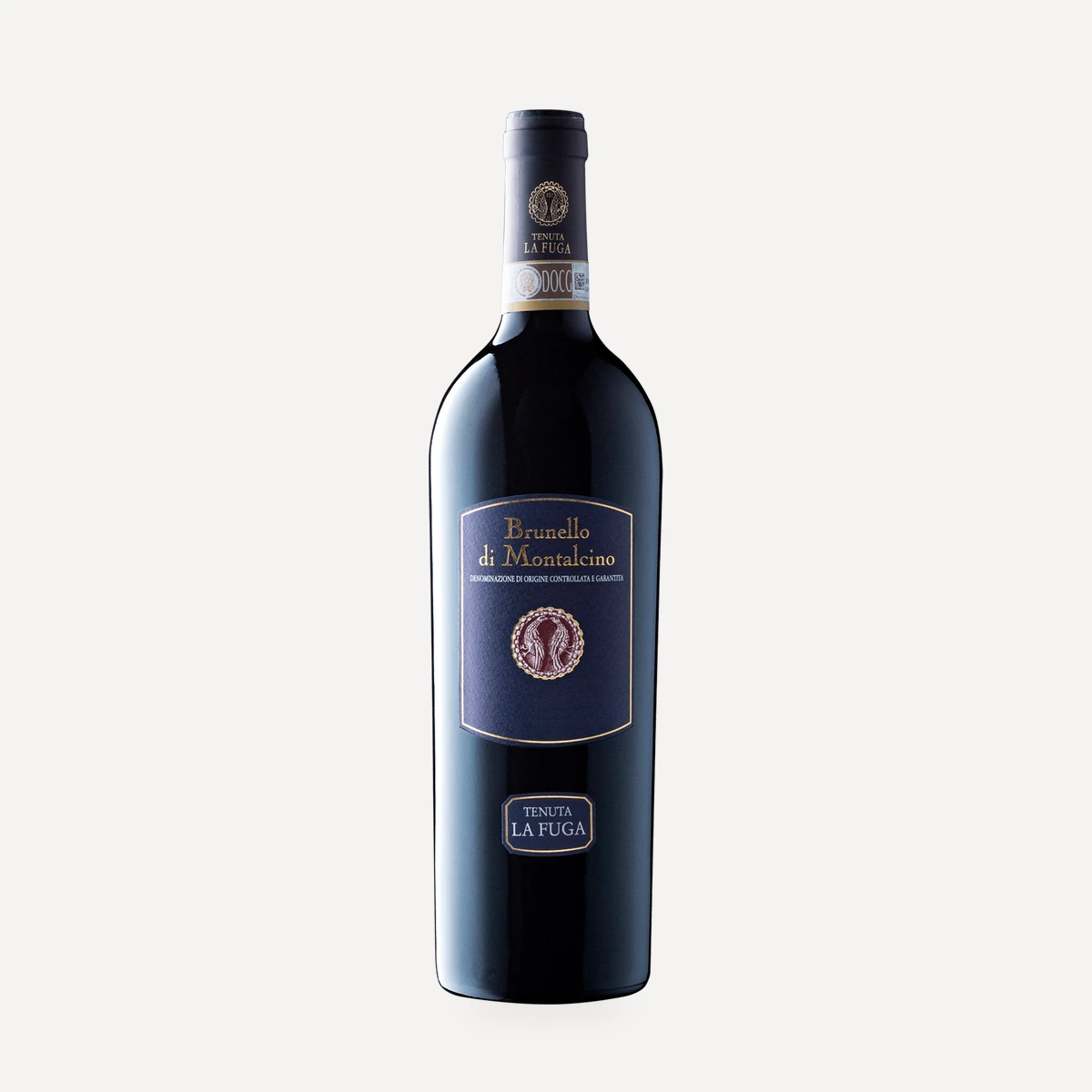
La Fuga Brunello di Montalcino DOCG
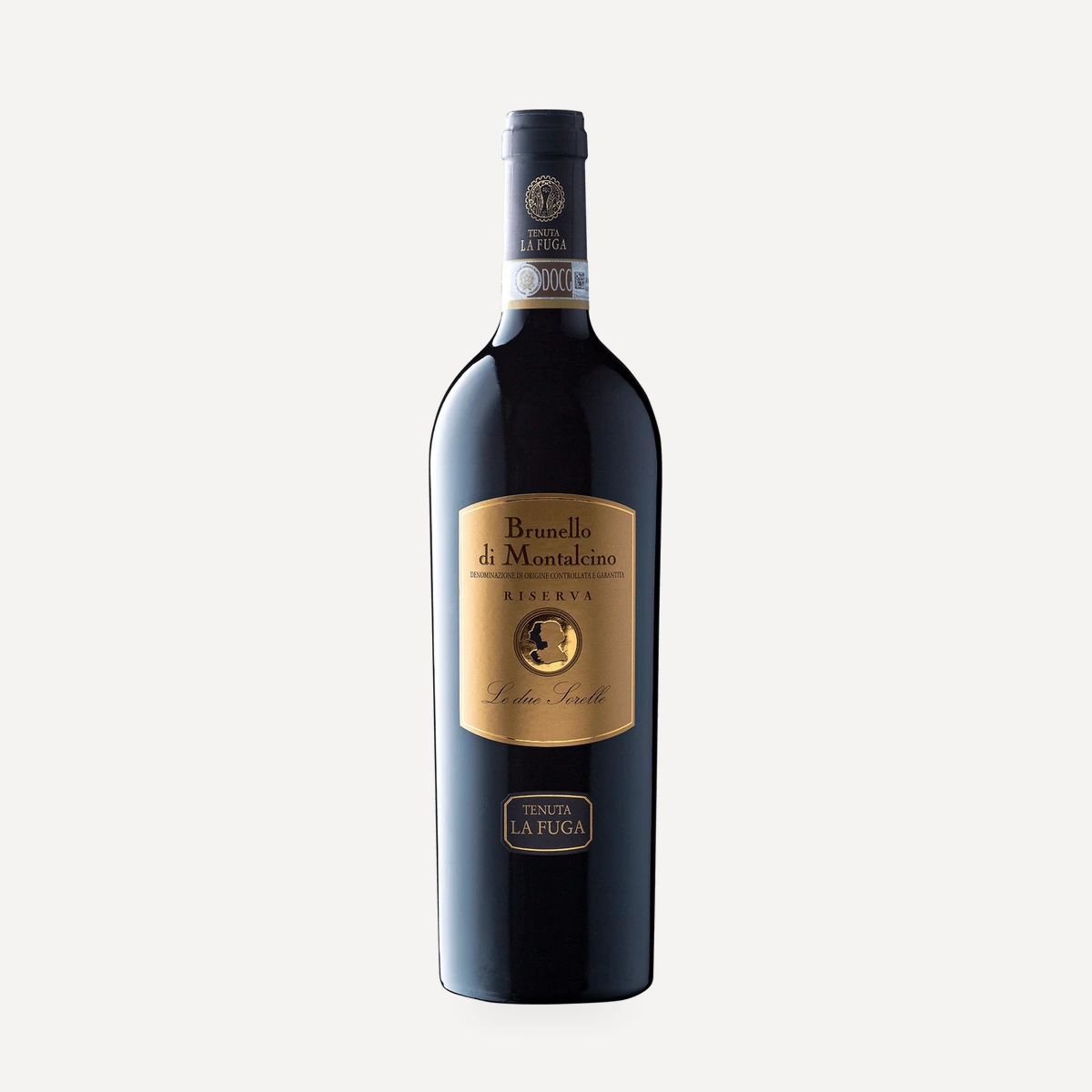
Le Due Sorelle Brunello di Montalcino Riserva DOCG