Storia
Viticultural background
Nero d’Avola has been cultivated for centuries around Riesi. The variety occupies the largest documented share of Tenuta di Suor Marchesa and became the foundation for several distinct estate expressions.
1984: Duca Enrico
In 1984, Duca di Salaparuta vinified Nero d’Avola as a varietal wine for the first time, creating Duca Enrico. This initiated the estate’s documented development of multiple interpretations of Nero d’Avola. Duca Enrico’s first vintage was 1984.
1997–1998: the Triskelè vineyard
The vineyard associated with Triskelè was planted in 1997 at 340–350 metres above sea level. Its first documented vintage was 1998. The block is trained to espalier with Guyot pruning, contrasting with the bush-trained Nero d’Avola reserved for Duca Enrico.
1998: renewal of the Duca Enrico block
The current technical description of the 4.9-hectare Duca Enrico block gives 1998 as its planting year. It is bush-trained at an average density of 6,400 vines per hectare. The broader estate allocation is described as approximately 5–5.5 hectares.
2002: Passo delle Mule
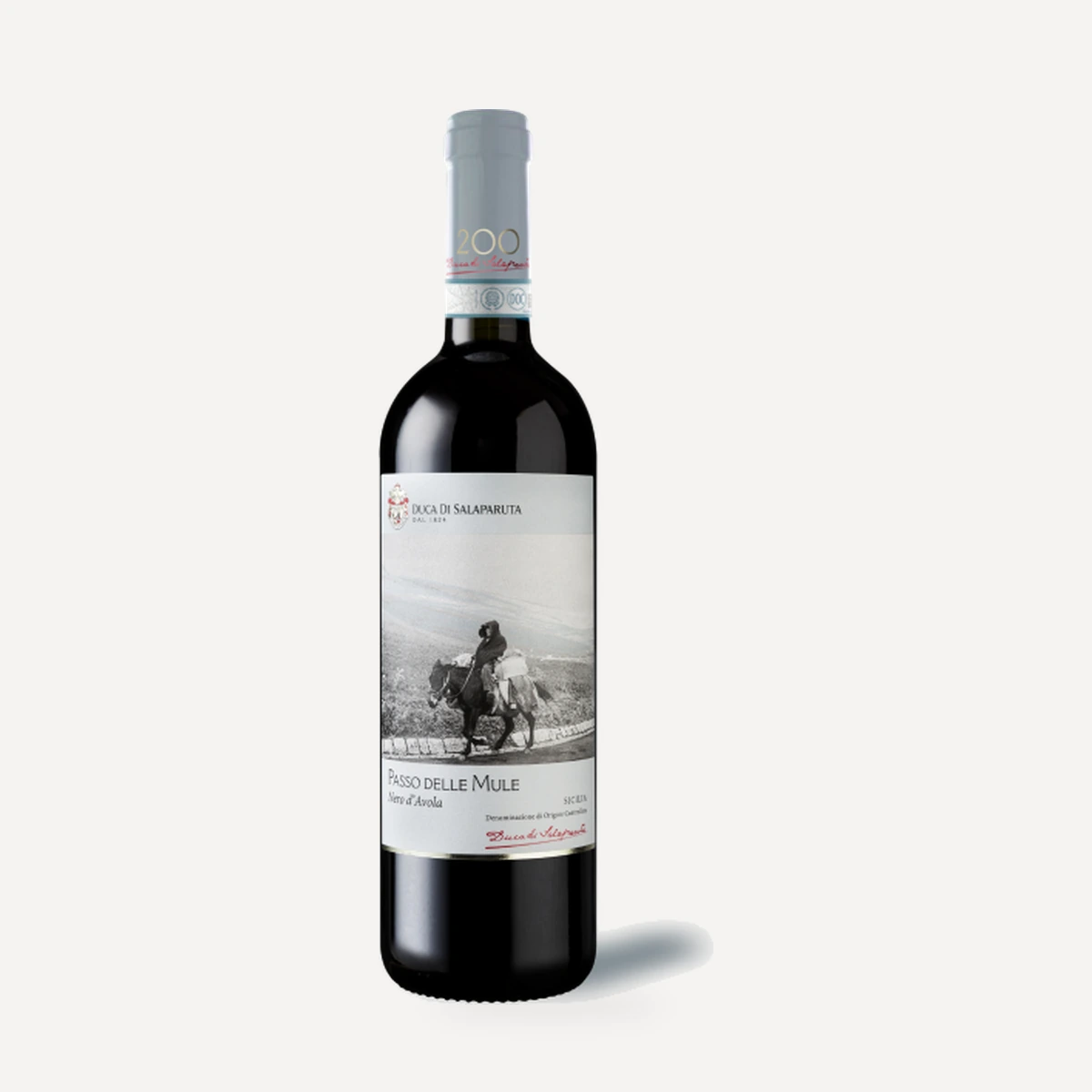
Passo delle Mule was first produced in 2002. Its fruit comes from a 26-hectare, espalier-trained Nero d’Avola sector at 299–334 metres above sea level.
2017–2020: zoning and Suolo 3
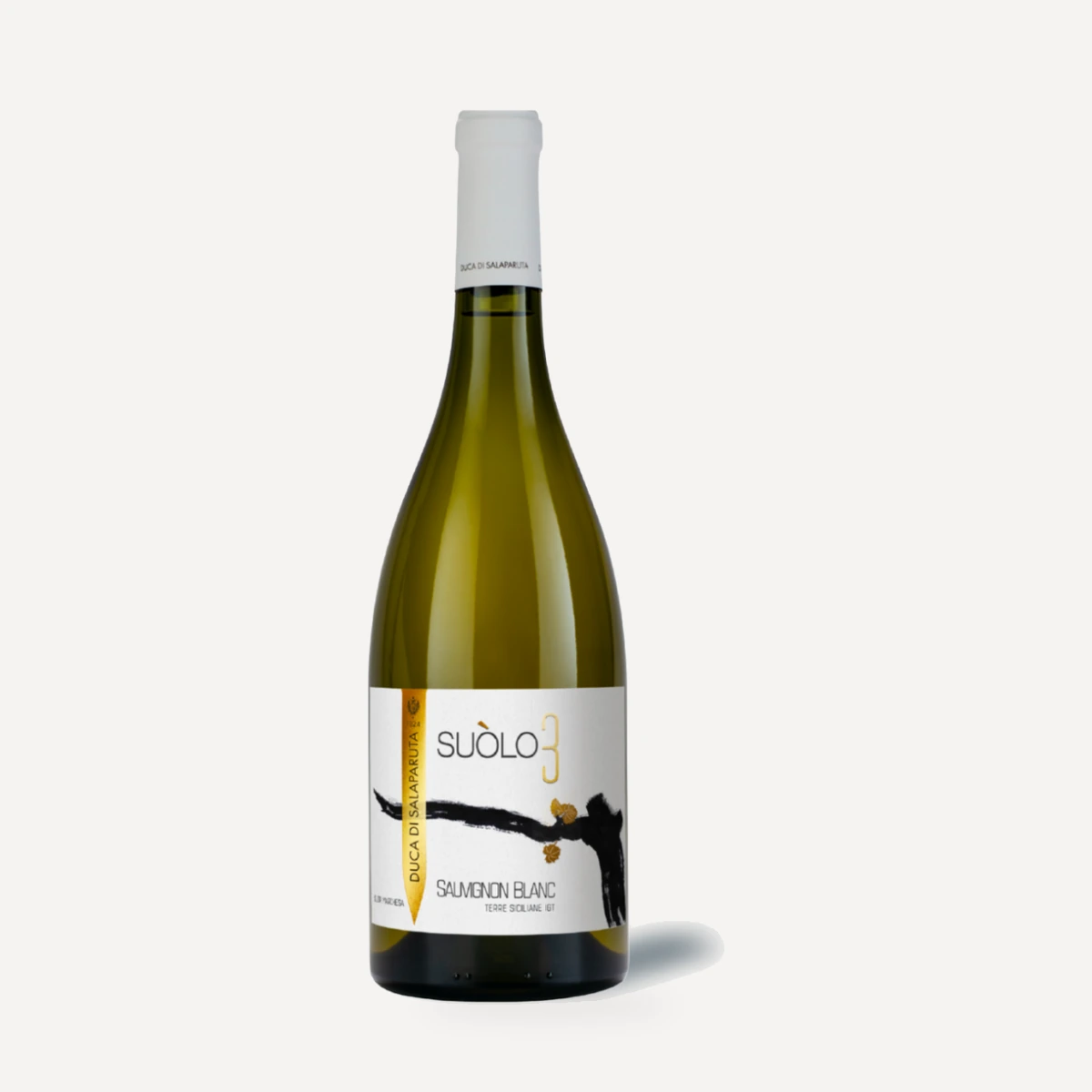
The Suolo project grew from detailed zoning intended to match particular varieties with selected agronomic areas. Around 10% of the 127-hectare estate was assigned to international varieties. Suolo 3, a 2.9-hectare Sauvignon Blanc parcel, was planted in 2017; its first wine was produced in 2020. Cabernet Franc was assigned to another selected area, Suolo 7, within an overall 2.5-hectare Cabernet Franc allocation.
2019: Sentiero del Vento
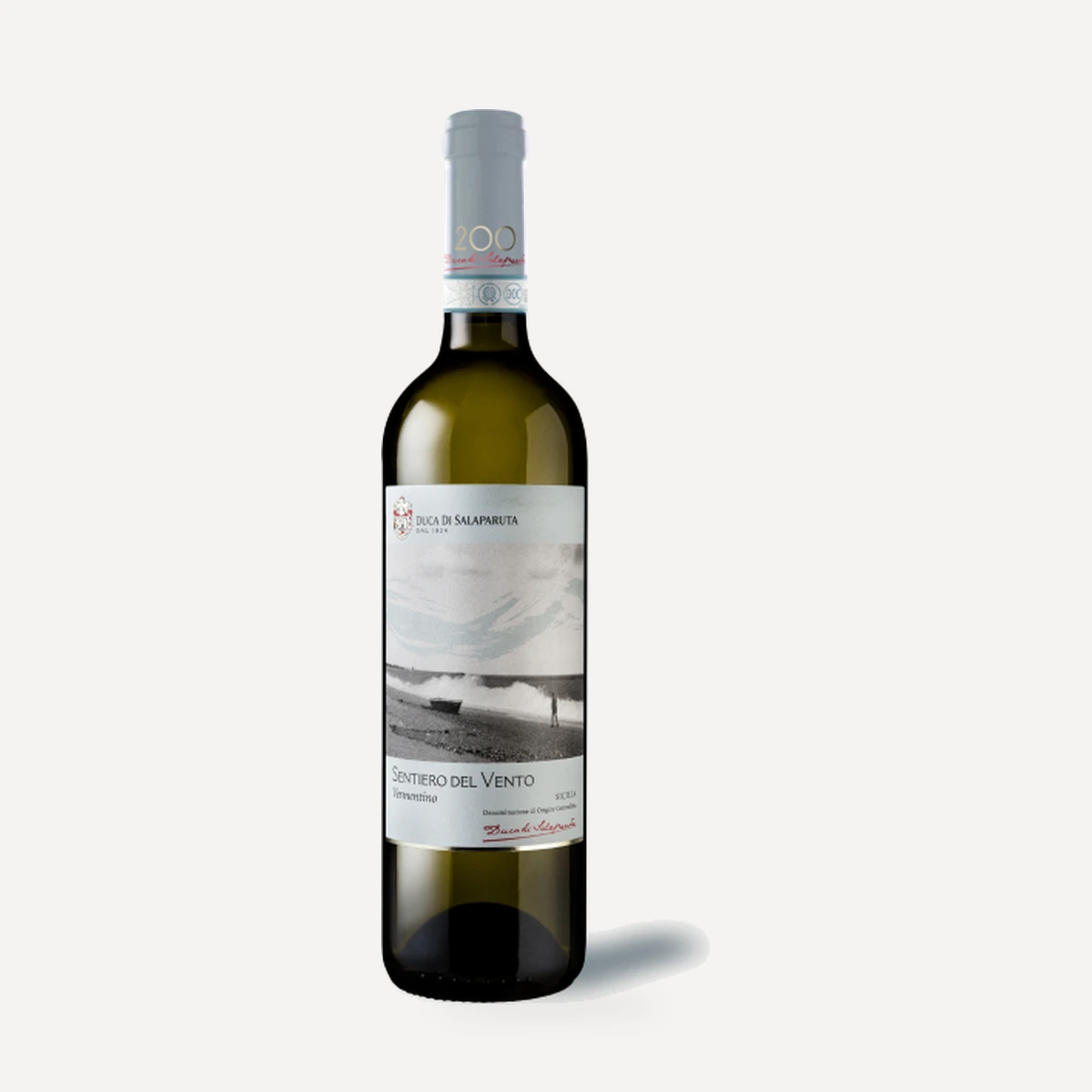
The first vintage of Sentiero del Vento was produced in 2019, establishing an estate expression of Vermentino. Ten hectares of the estate are planted to Vermentino; the documented Sentiero del Vento sector covers 8.73 hectares.
2024: Triskelè and the bicentenary art project
For Duca di Salaparuta’s 2024 bicentenary, Triskelè was presented as a renewed Nero d’Avola expression linked to Emilio Murdolo’s 1965 painting Villa Valguarnera. The work depicts the Alliata family’s summer residence, where Giuseppe Alliata, Duca di Salaparuta, undertook his first vinification.
Terroir
Tenuta di Suor Marchesa lies at Riesi in central, south-central Sicily, within the territory of Butera. Its vineyards occupy a gently contoured hill exposed to the winds. Some sectors have slight slopes while others are nearly level; because vines extend around the whole hill, the estate encompasses a broad range of exposures.
Winters are mild and short, while summers are hot, very dry and ventilated. The estate presentation associates the climate with figures of 14 °C and 24 °C. Individual vineyard descriptions also emphasize pronounced differences between daytime and nighttime temperatures.
The estate’s terrain is hilly and its soils are principally clay, with a sub-alkaline reaction, very high active-limestone content and little organic matter. The selected blocks show meaningful variation within that framework. The Duca Enrico and Triskelè sectors, at 340–350 metres, have clay-rich, sub-alkaline soils with abundant active limestone. Passo delle Mule lies at 299–334 metres on clay soil with a sub-alkaline reaction and medium limestone content. Sentiero del Vento occupies 290–320 metres on similarly sub-alkaline, moderately calcareous clay. Suolo 3, at 290–320 metres, has predominantly clay soil, a sub-alkaline reaction, medium limestone and little organic matter; its selection is also characterized as predominantly calcareous and north-facing.
Vinificazione
Training is adapted by sector. Nero d’Avola destined for Duca Enrico is bush-trained with 3–4 spurs, while the wider estate is principally trellised. The estate overview describes Guyot pruning with an average of 12 buds per plant; the more detailed parcel records distinguish Guyot in the Triskelè vineyard from spur-pruned cordons in the Passo delle Mule, Suolo 3 and Sentiero del Vento blocks.
Documented densities range from approximately 4,800 to 6,400 vines per hectare. Passo delle Mule and Sentiero del Vento yield around 60–70 quintals per hectare; Suolo 3, Triskelè and the current Duca Enrico block yield around 50–60 quintals per hectare. The broader Duca Enrico allocation is described at an average of 50 quintals per hectare.
Harvest protocols vary by selected block and vintage. Duca Enrico and Triskelè are picked into small 3–5 kg crates, while the Suolo selections use approximately 4 kg crates. Manual picking is expressly documented for Duca Enrico, Triskelè, Suolo 3 and Suolo 7. Refrigerated-lorry transport is used for the most selectively handled lots, including documented harvests from Duca Enrico, Suolo 3, Suolo 7 and Triskelè. The grapes are subsequently selected at the winery, including conveyor-belt sorting for the more rigorously selected parcels.
The available production descriptions are tied to individual wines rather than a single estate-wide protocol. Across the selected estate lots, documented operations include small-crate reception, conveyor-belt sorting, destemming, gentle pressing for white grapes, controlled-temperature fermentation in steel or oak, skin maceration for reds, délestage, malolactic fermentation in concrete, maturation in concrete and oak barriques, ageing on fine lees, and final bottle maturation. The precise sequence, vessel and duration depend on the parcel and wine.
Filosofia
The Suolo project expresses the clearest estate-specific philosophy. Its objective is a precise interpretation of the estates through the relationship among soil, vine and people. Agronomic areas are selected through zoning and matched with the varieties considered appropriate to them. Attention to the agricultural seasons and carefully accompanying the fruit to maturity are presented as the connection between vineyard and cellar.
More broadly, Tenuta di Suor Marchesa treats Nero d’Avola as the principal expression of the Riesi area while also using zoning to explore Sauvignon Blanc and Cabernet Franc in selected sectors. Vermentino represents a further effort to interpret an established variety through the conditions of inland Sicily.
Vini
Passo delle Mule
Sentiero del Vento