Storia
1987 — Bianca di Valguarnera
The first vintage of Bianca di Valguarnera, the estate’s Insolia expression, was produced in 1987.
1988 — Planting of the Insolia vineyard
The 3.43-hectare vineyard associated with Bianca di Valguarnera was planted in 1988. It occupies a hillside site at 270 metres above sea level, with east–west rows and an eastern exposure.
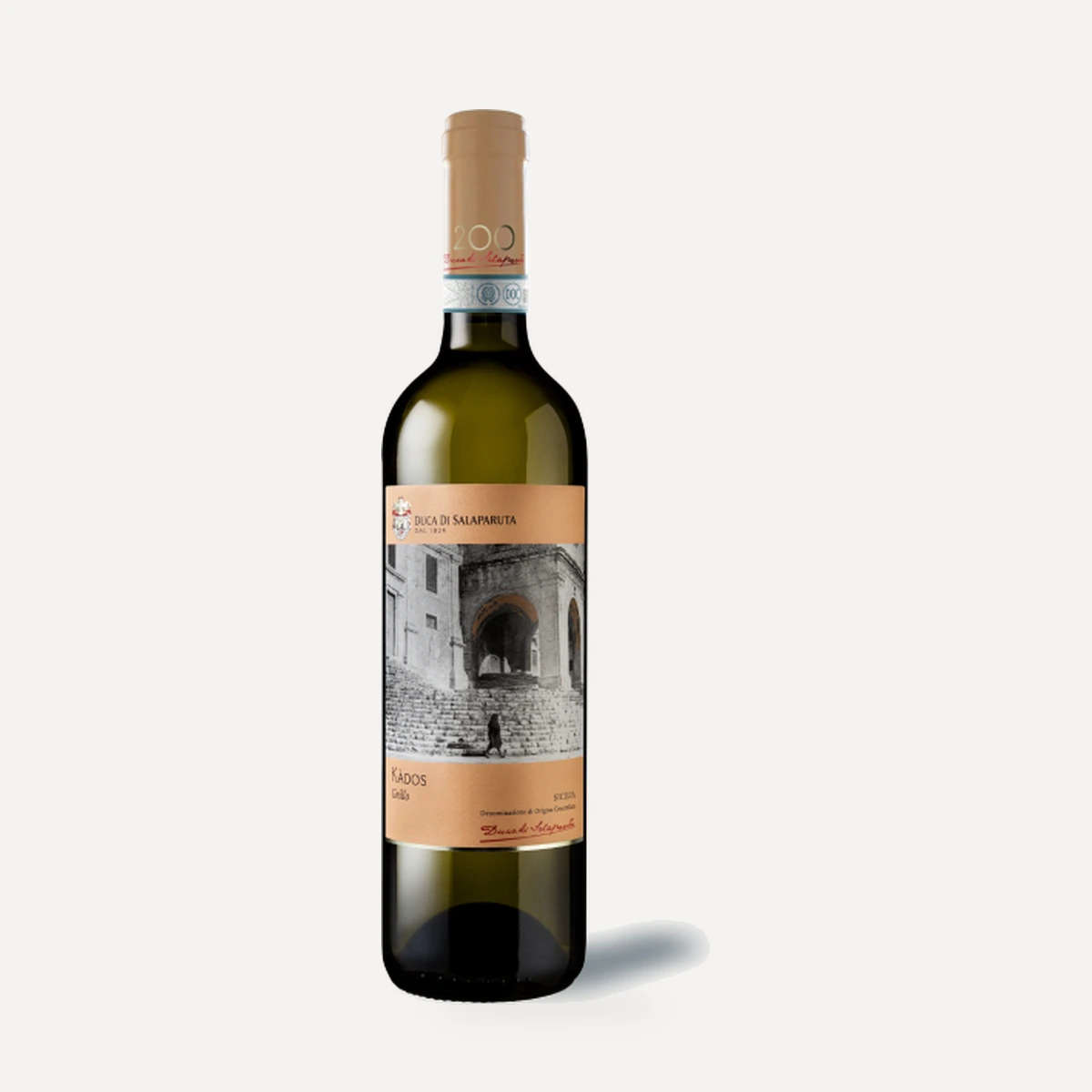
2001 — First vintage of Kàdos
Kàdos, the Grillo produced from Risignolo fruit, was first made in 2001. Its present vineyard base comprises 12 hectares on the estate’s clay-and-limestone hills.
The Suòlo zoning project
A 2.5-hectare area already proven suitable for white varieties was selected and planted with Zibibbo as part of the Suòlo zoning project. The resulting Suòlo 5 identifies a specific soil unit within the vineyard and is presented as the outcome of coordinated agronomic and oenological selection.
Terroir
Tenuta di Risignolo occupies approximately 35 hectares around Salemi in the Province of Trapani, in western Sicily. The estate was selected for its hillside position: the elevation promotes ventilation and allows the vineyards to benefit from proximity to the sea without excessive heat exposure.
The estate’s general elevation is 220–250 metres above sea level, although the separately documented Insolia parcel reaches 270 metres. The terrain is hilly. Soils are clay-based, sub-alkaline and moderately calcareous; Suòlo 5 is likewise characterized by abundant clay and limestone.
The climate is temperate, with mild winters, very dry springs and summers, and substantial temperature variation. The estate’s climate panel presents reference temperatures of 15 °C and 24 °C. More detailed parcel information describes summers as dry and windy, with strong day–night temperature differences.
Vineyard orientation and exposure vary with the planting zone, ranging from north-west to east–west. The 12-hectare Grillo vineyard has rows oriented 45° north-west and a north-western exposure. The 3.43-hectare Insolia vineyard has east–west rows and faces east.
Vinificazione
The principal training system is espalier with spur-pruned cordons. The standard configuration retains four spurs per vine and two buds per spur. Average estate density is 5,758 vines per hectare, and the general yield is approximately 40–50 q/ha. The 12-hectare Grillo vineyard differs, with about 4,000 vines per hectare and yields of 60–70 q/ha.
The Suòlo project uses zoning to match a precisely selected agronomic area with a chosen variety. At Risignolo, 2.5 hectares of land already suited to white grapes were planted with Zibibbo. The approach emphasizes observing the agricultural seasons and guiding the fruit toward maturity through attentive vineyard work.
The documented 2021 harvest protocols for the Zibibbo and Insolia parcels used manual picking into approximately 4 kg crates followed by refrigerated transport. Zibibbo harvesting began on 25 August; the Insolia parcel was harvested on 30 August. The 2024 Grillo harvest took place from late August through the first week of September.
Grillo protocol
Risignolo-grown Grillo is destemmed and pressed on arrival. Fermentation begins under temperature control at 16–18 °C. At approximately 3% alcohol, around 20% of the fermenting must is transferred to oak barriques to complete fermentation, while the balance continues in stainless-steel tanks. The two portions mature separately in tank and barrel for several months in contact with lysed lees. They are then blended and receive at least one month of bottle ageing before release.
Zibibbo protocol
Crates are unloaded and the Zibibbo is selected on a conveyor belt. The bunches are destemmed and lightly crushed, followed by gentle pressing and approximately four hours of skin maceration. The must settles in stainless steel for 16–20 hours at 14 °C. Clear must begins fermenting until it reaches approximately 3% alcohol, after which it is transferred to finely grained, lightly toasted oak barriques to complete fermentation. It remains in barrique on lysed lees for at least seven months, followed by a minimum of six months in bottle.
Insolia protocol
The Insolia is destemmed and gently pressed to obtain free-run must. Following static settling, fermentation begins at 16–18 °C. After the must reaches approximately 3% alcohol, it is moved to finely grained, lightly toasted oak barriques to finish fermenting. Maturation continues for several months in barrique on lysed lees, followed by at least six months of bottle ageing before release.
Filosofia
Wine is positioned as the supporting structure of the area’s cultural tradition, with particular emphasis on native Sicilian white varieties.
Within the Suòlo project, the stated aim is to create a precise oenological expression of each estate and to articulate the relationship among soil, vine and human work. The project begins by matching a carefully chosen agronomic area with the variety planted there. Observing the agricultural seasons and guiding the fruit toward maturity form the connection between vineyard and cellar.
Vini