Questo vino
Vineyard and terroir
The grapes come entirely from the estate's organically certified vineyards at 300 m above sea level. The rows face from midday toward evening and grow in clay-limestone soil containing abundant stones. The vines range from 3 to 40 years old, are trained on the Pergola Veronese system and are planted at 3,500–4,000 vines per hectare. Rootstocks include K5BB, SO4, 41B and 140RU.
Production is 2–2.5 kg per vine and 80–100 quintals per hectare. Vineyard treatments comprise copper, sulfur and mating disruption, while manure is applied every three to five years when needed. The vineyard is organically certified, and no purchased grapes are used.
Grapes
The blend is 90% Corvinone with Corvina and Rondinella.
Vinification
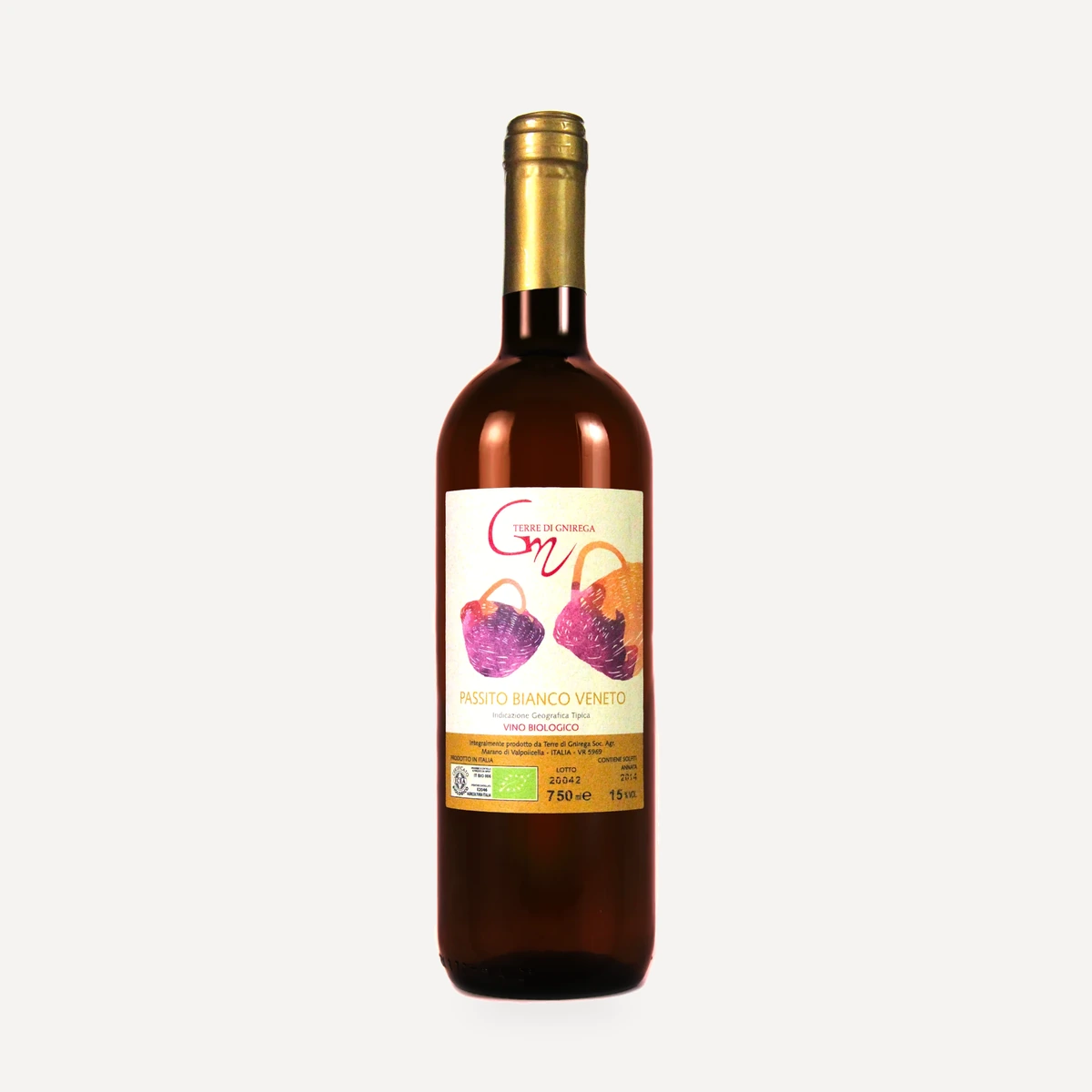
Ostrega began as an experimental wine in the rainy 2014 vintage. Grapes originally harvested and placed in crates to dry for Amarone began developing botrytis after a substantial rainfall in the middle of harvest. The crates were sorted again, and the rejected botrytis-affected grapes were pressed immediately to form the basis of Ostrega.
Fermentation took place very slowly in stainless steel, beginning in November and continuing until the following spring. There was no maceration and no use of selected yeasts. Sulfur dioxide was added to the must at 5 g/hl, without ascorbic acid. Stabilization was static and spontaneous. The wine was neither filtered nor clarified, and no corrections, concentrated must, rectified concentrated must, concentrator or bleeding practices were used. The grape-to-wine yield was 64%.
Ageing
The wine matured for four years in stainless steel, without barrel or barrique ageing, followed by two months in bottle.
Technical data
The technical data correspond to grapes harvested manually into crates on 1 October 2016. Alcohol is 16% vol, total acidity 5.20 g/L, volatile acidity 0.88 g/L, dry extract 23 g/L and residual sugar 0.6 g/L. Total sulfur dioxide at bottling was 45 mg/L. Production comprised 600 Bordelaise Expo bottles sealed with one-piece natural corks. The wine is organically certified.
Tasting profile
Ostrega is conceived as a “false white”: a white wine with the body of a red. Its aromatic impression creates an expectation that contrasts with the taste experienced on the palate, providing the surprise reflected in its name.
Serving and pairing
It is intended as an end-of-meal wine, paired with cheese immediately before dessert.
Vintage notes
The original 2014 experiment arose directly from the vintage's weather and the botrytis that developed on grapes drying for Amarone. The embedded technical specifications describe a subsequent lot harvested on 1 October 2016.
Label / history
In Veronese dialect, “Ostrega” can express surprise. The name refers to the unexpected contrast between the wine suggested by its aroma and the fuller, red-wine-like body encountered when tasting it.