Storia
A historic agricultural setting
Vaona is based in Paverno, in the village of Valgatara within the commune of Marano di Valpolicella. Its renovated cellar forms part of a building complex constructed around the middle of the 17th century. The age of the complex does not constitute a documented foundation date for the wine business.
Generations of the Vaona family
The Vaona family has worked as winegrowers for generations, producing wines of Valpolicella and maintaining the traditional values associated with the family estate. The entire family remains involved in its activities, including the demanding selection and placement of grapes for the appassimento used in Recioto and Amarone production.
Alberto Vaona and renewal
Alberto Vaona currently continues the family’s work through a programme of renewal that retains the estate’s inherited values and focus on quality. The business’s full legal name is Az. Ag. Vaona Odino di Vaona Alberto.
Cellar renovation
The historic cellar was renovated around functional production needs. Its layout uses natural gravity to move grapes and wine through the different stages of processing, reducing dependence on pumps and other machinery and helping preserve the integrity of the raw material.
Organic direction
Environmental care developed into a decision to follow an organic-production path. The family connects this decision with conserving its land for future generations and now presents its principal wines as organic.
Terroir
Location and relief
Vaona is situated in Paverno, Valgatara, within the commune of Marano di Valpolicella and the historic Valpolicella Classica area. Its approximately 10 ha of family-owned land are predominantly hilly, with an estate-wide average altitude of about 200 m above sea level and generally strong exposure to the sun.
The hillside vineyards associated with the Valpolicella Classico wines lie at approximately 200–250 m. Some occupy terraces retained by traditional dry-stone walls known locally as marogne. A separate group of vineyards at the foot of the Valpolicella hills averages about 150 m.
Soils
Much of the Valpolicella vineyard area has alluvial soils over calcareous basalt. The lower vineyards at the foot of the hills also contain a substantial stony fraction. The source vineyards associated with Pegrandi have medium-textured alluvial, calcareous soils at 230–250 m, combined with favourable solar exposure.
The family-owned Castelrotto parcel, in the hills of San Pietro in Cariano, is notably heterogeneous in its physical and chemical composition. Ancient lava-flow intrusions occur throughout its calcareous deposits.
The Bianco di Custoza source vineyards occupy morainic hills south of Lake Garda.
Vinificazione
Vaona’s approximately 10 ha of family-owned land are managed under an organic-production programme motivated by the family’s intention to preserve the property for future generations.
The estate combines two training systems. Traditional pergola Veronese is used in the vineyards, while Guyot is employed on flatter ground. Guyot is associated with lower yields and a corresponding emphasis on grape quality. At Castelrotto it also permits an appropriate vine population per hectare while restraining vegetative growth.
Selection is integral to the family’s appassimento work. Grapes intended for Recioto and Amarone are carefully chosen at maturity and arranged for traditional drying. Depending on their origin and intended use, they are placed either in small wooden cases or on bamboo racks. The family gives particular attention to the meticulous placement of these grapes during the drying stage.
Historic gravity-flow cellar
The recently renovated cellar occupies part of a building complex dating from around the middle of the 17th century. Its functional layout uses natural gravity during the different production stages. This reduces the need for pumps and other machinery and is intended to preserve the integrity of the grapes and must.
Appassimento
Traditional appassimento is central to Vaona’s production of Recioto and Amarone. The family carefully selects ripe bunches and arranges them either on bamboo racks or in small wooden cases. The drying period is adapted to the fruit, its vineyard origin and the intended wine. Production pages describe both several-month drying periods and shorter, vintage-dependent periods for particular selections.
Cellar vessels
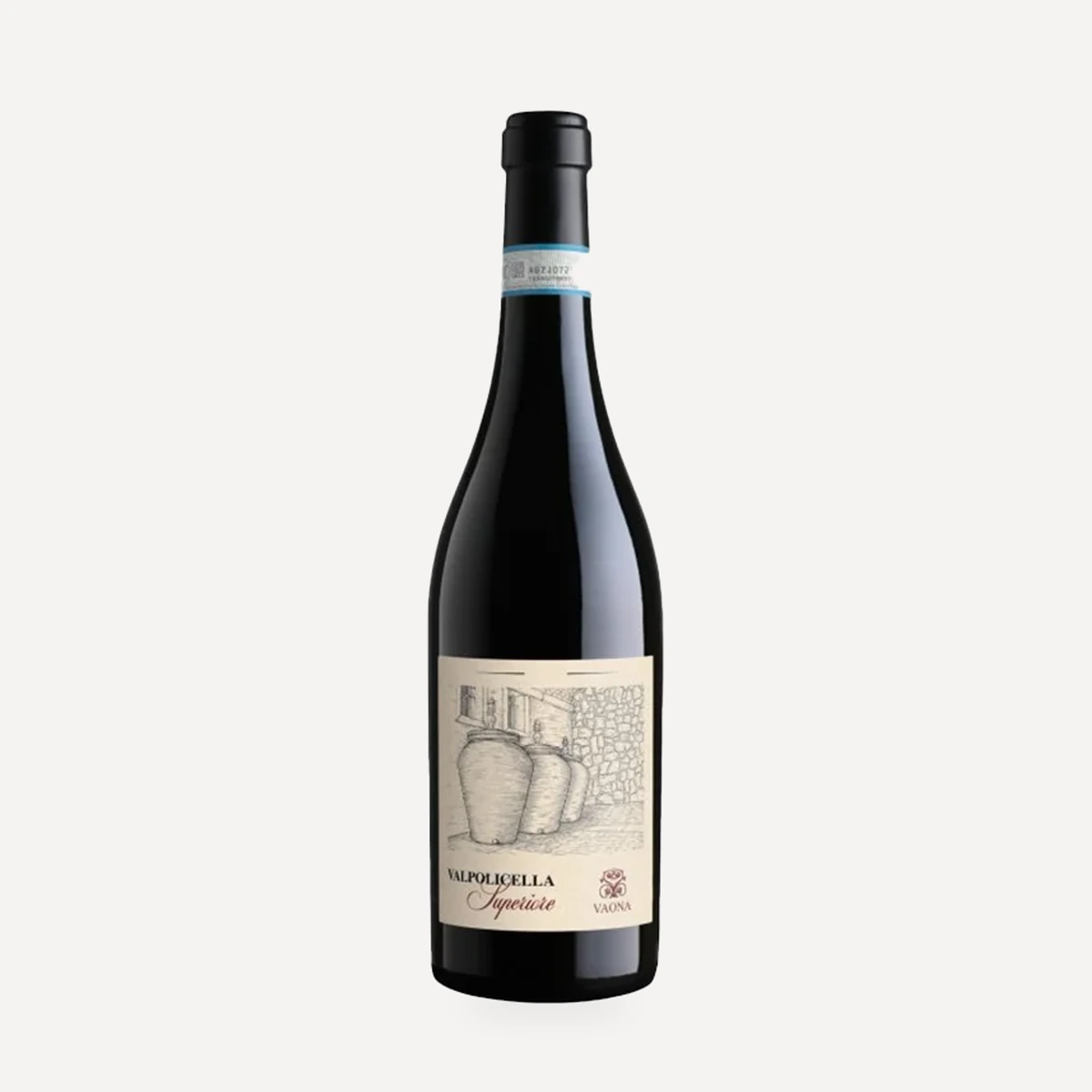
The portfolio demonstrates the use of several types of cellar vessel: stainless-steel tanks, oak barrels of differing capacities, terracotta amphorae and 225-litre cherry-wood casks. These vessels are assigned according to the intended style and maturation needs of each wine rather than through a single standardised process.
Filosofia
Vaona’s philosophy joins continuity with renewal. Alberto Vaona’s work is presented as a continuation of the family’s inherited winegrowing values rather than a departure from them, while the renovation of the cellar reflects a willingness to improve function and precision.
Quality begins with the integrity of the raw material. The gravity-flow cellar, reduced reliance on pumps, low-yielding Guyot-trained sites and careful selection of grapes all support that objective. Traditional practices remain especially important in appassimento, where the family’s direct involvement extends to the detailed placement of bunches for Recioto and Amarone.
The family defines environmental responsibility in generational terms: the land is to be conserved for its children and the future. This principle underpins the move toward organic production.
Vini
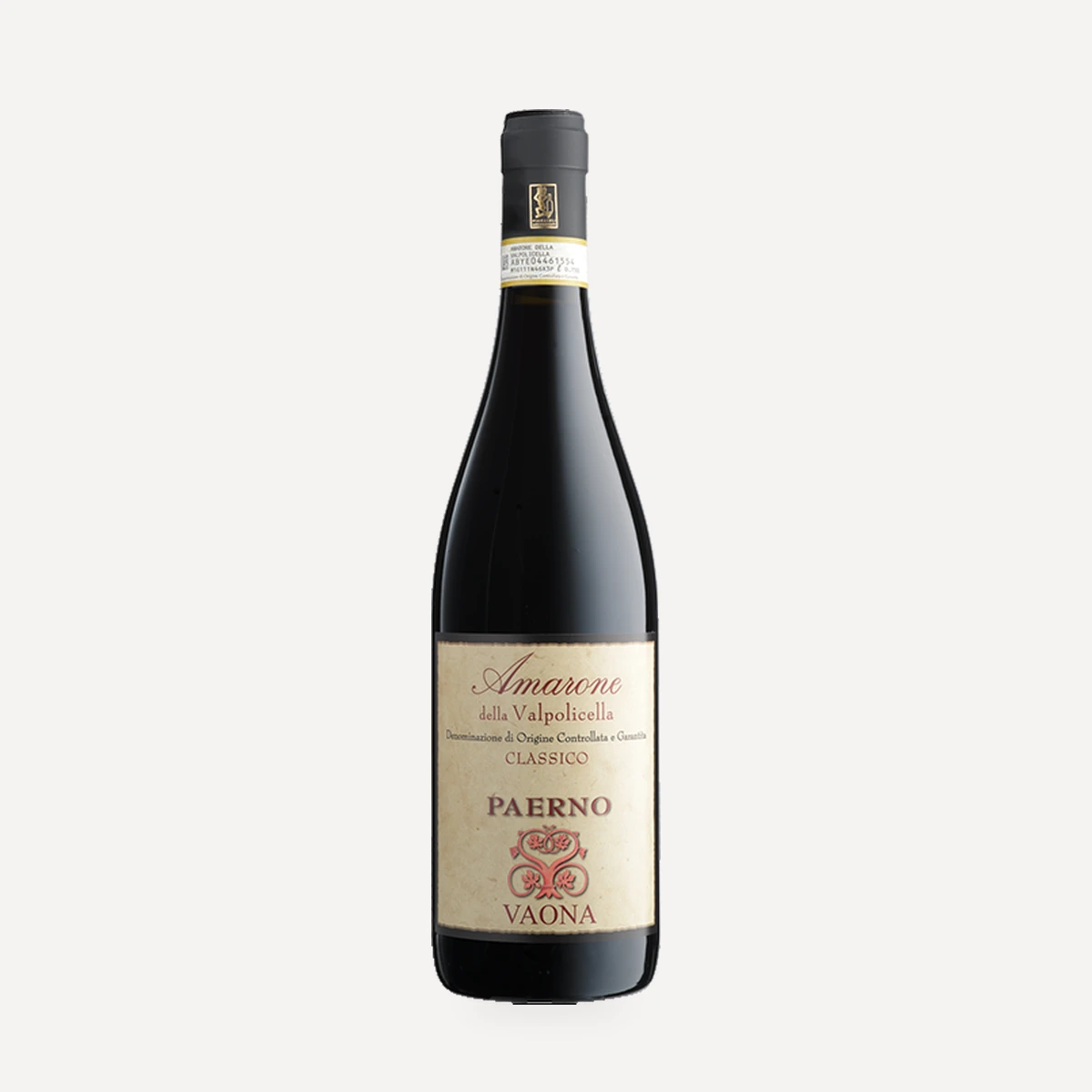
Amarone Classico DOCG Paerno