Storia
The creation of Montepagano 1137 Vigneti
Vinea Maris grew out of Alessandro Marroni’s attachment to the local territory and his desire to unite two personal passions: land and sea. Marroni—a physician, diver and founder of DAN Europe—created the Montepagano 1137 Vigneti project on green hills overlooking the Adriatic Sea. Its vineyards extend over just more than two hectares within the Riserva Naturale del Borsacchio.
Professor Leonardo Seghetti has advised the micro-winery and followed its grapes from the beginning. The vineyards are cultivated organically, with treatments limited to natural products.
Wines of the cellar, earth and sea
Marroni subsequently developed an experimental maturation project in which the same bottled wine evolves in three different environments: the conventional cellar or barrel, underground, and beneath the Adriatic Sea. For every wine and vintage, several dozen bottles are submerged a few miles offshore at approximately 20 m depth for at least six months. An equivalent number are buried 2 m underground for the same period, allowing the three versions—Cantina, Terra and Mare—to be compared.
The project associates the cellar- or barrel-matured version with greater freshness, the underground version with sweeter impressions, and the underwater version with saline tones and higher acidity.
Terroir
The Montepagano 1137 Vigneti project occupies just over two hectares on green hills facing the Adriatic Sea. The vineyards lie within the Riserva Naturale del Borsacchio, a protected area identified with the Fratino, or Kentish plover.
The relationship with the Adriatic extends beyond the vineyard landscape: the bottles selected for underwater maturation are submerged a few miles offshore, opposite the vineyards, at approximately 20 m depth.
Vinificazione
The grapes are cultivated organically within the Riserva Naturale del Borsacchio. Vineyard treatments are limited to natural products, with care and direct attention presented as central elements of the work. Professor Leonardo Seghetti has supervised the grapes as consultant from the beginning of the project.
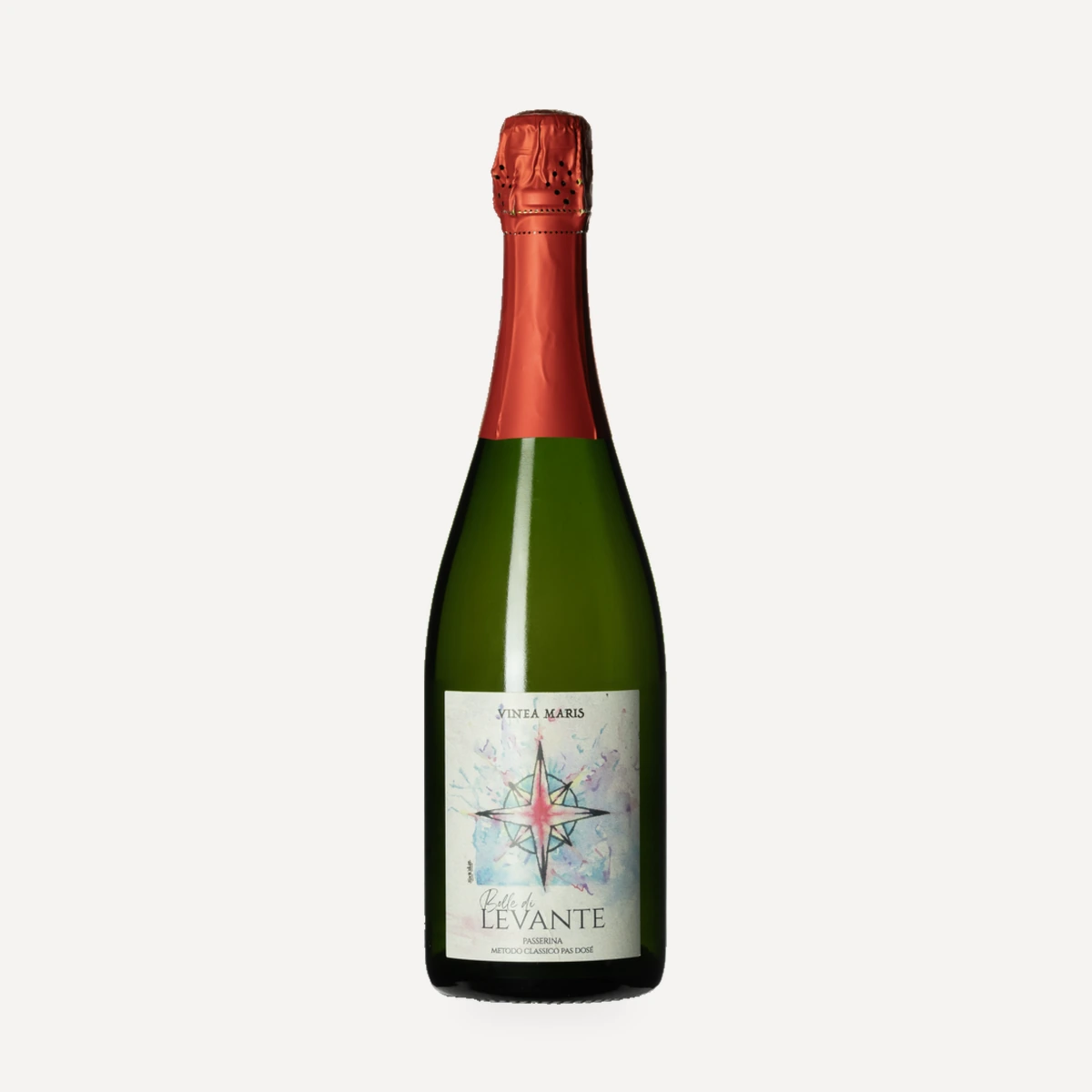
Passerina is explicitly identified among the organically cultivated varieties. Harvesting for Bolle di Levante is performed by hand in August.
Natural-wine approach
Vinea Maris describes its wines as natural and does not use additives intended to alter their flavor. The production philosophy seeks to retain the aromatic identity of each grape variety.
For Bolle di Levante, the harvested Passerina is destemmed and pressed at low pressure in a wooden press. Vinification employs yeasts obtained from the same grapes, with maceration and fermentation under controlled temperature. The wine is produced as a pas dosé traditional-method sparkling wine.
Cantina, Terra and Mare maturation
The defining production experiment compares the evolution of the same bottled wine in three environments. One version matures conventionally in the cellar or barrel. Several dozen bottles of each wine and vintage are submerged in the Adriatic Sea, a few miles offshore from the vineyards, at approximately 20 m depth for at least six months. An equivalent batch is buried 2 m underground for the same length of time.
This controlled three-way comparison is intended to reveal differences created by the maturation environment. The cellar- or barrel-matured wine is associated with fresher notes, the underground version with sweeter impressions, and the underwater version with saline tones and greater acidity.
Filosofia
Vinea Maris presents its work as a union between the land and the Adriatic Sea, reflecting Alessandro Marroni’s personal relationship with both environments. Organic cultivation, natural treatments and the avoidance of flavor-altering additives are intended to preserve the recognizable aromatic character of each grape variety.
The Cantina–Terra–Mare project treats maturation environment as an experimental variable. Equivalent quantities of the same wine rest for the same minimum period in the cellar, underground and beneath the sea, making their different evolutionary paths directly comparable.
Vini
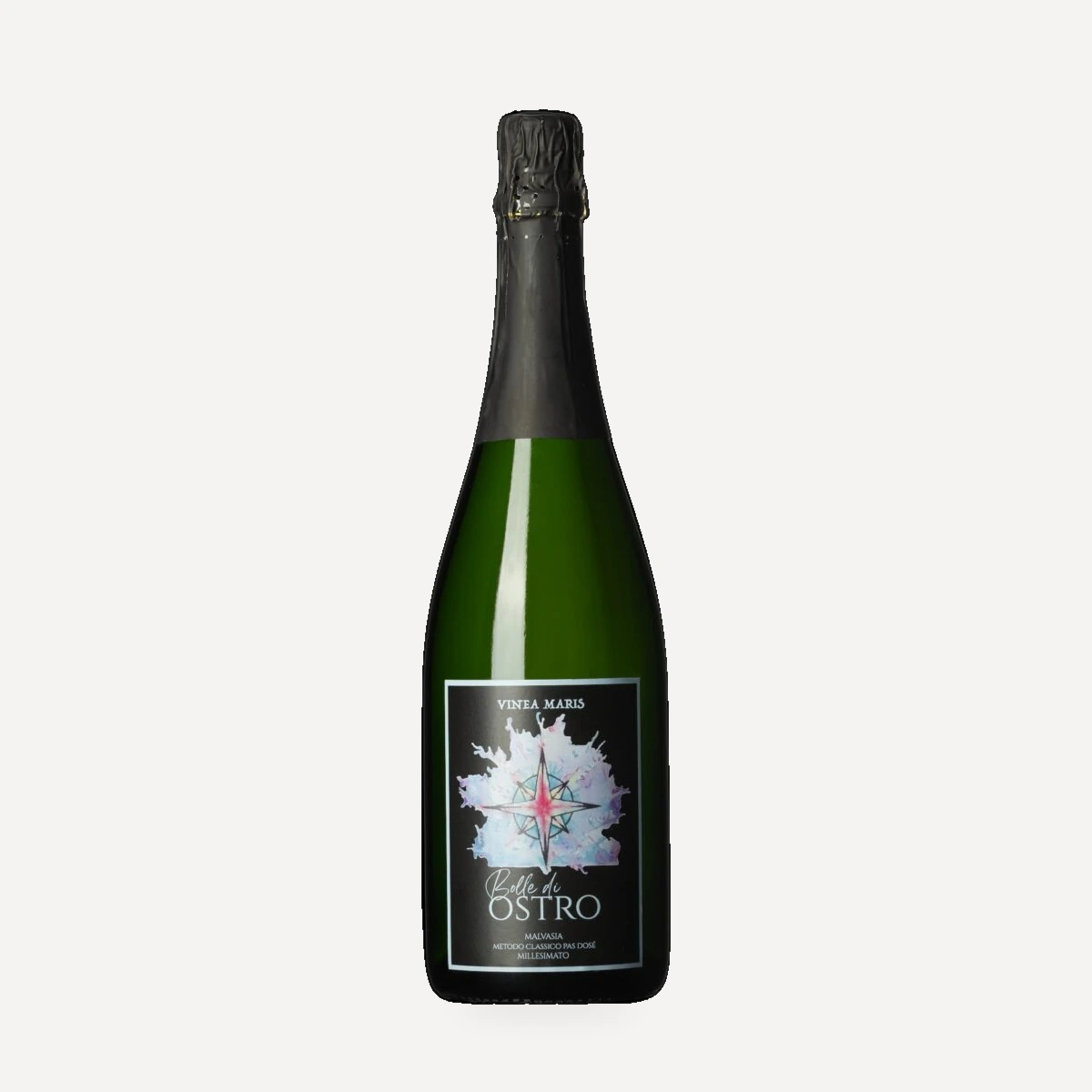
Bolle di Ostro