Storia
A meeting of different backgrounds
MorMaj grew from a chance meeting between Francesco and Andrea, two people raised in contrasting settings. Francesco was born and raised in Tocco da Casauria, where vineyards, olive groves and the natural environment formed part of everyday local culture. Andrea was born in Monza and inherited from his parents an interest in cooking based on wholesome ingredients.
They discovered a shared ambition to produce wine and olive oil that would respect and reflect the local environment while remaining wholesome for their customers and, first of all, their own families. This partnership developed into the MORMAJ wine and olive-oil project operated by Tocco d’Italy Società Agricola S.S.
Agricultural development
The partners acquired land from the historic Toro family. That property includes approximately 1,000 old olive trees spread across 6 hectares in the municipality of Tocco da Casauria. The wine project follows the same organic, low-intervention principles applied across the agricultural business: direct control of production, limited intervention in the field and mechanical rather than chemical intervention during transformation.
Terroir
MorMaj is based in Tocco da Casauria in the province of Pescara, Abruzzo. Its agricultural setting lies between Monte Morrone and the Majella massif, the two geographical names echoed in the MORMAJ brand. The estate presents its wines as expressions of this landscape and manages the vegetation and soils with the aim of preserving the land’s natural character.
Vinificazione
The vineyards are cultivated organically with the stated objective of reducing human intervention. Naturally occurring vegetation is allowed to grow between the rows and is maintained as a source of organic matter and soil structure; its presence also helps counter erosion.
Wooden supports are used in the rows as part of the preference for natural materials with a lower environmental impact. MorMaj describes its approach as going beyond baseline organic practice: treatments permitted under organic cultivation are applied only when environmental conditions make intervention necessary.
Grapes are handled without added chemical substances. Fermentations begin spontaneously and proceed without artificial temperature control. Maturation is followed from day to day, and bottling takes place only when the wine is considered ready.
The broader production philosophy excludes chemical additives, filtration and clarification. Intervention during the transformation of grapes into wine is mechanical rather than chemical, with timing guided by the evolution of the fruit and wine.
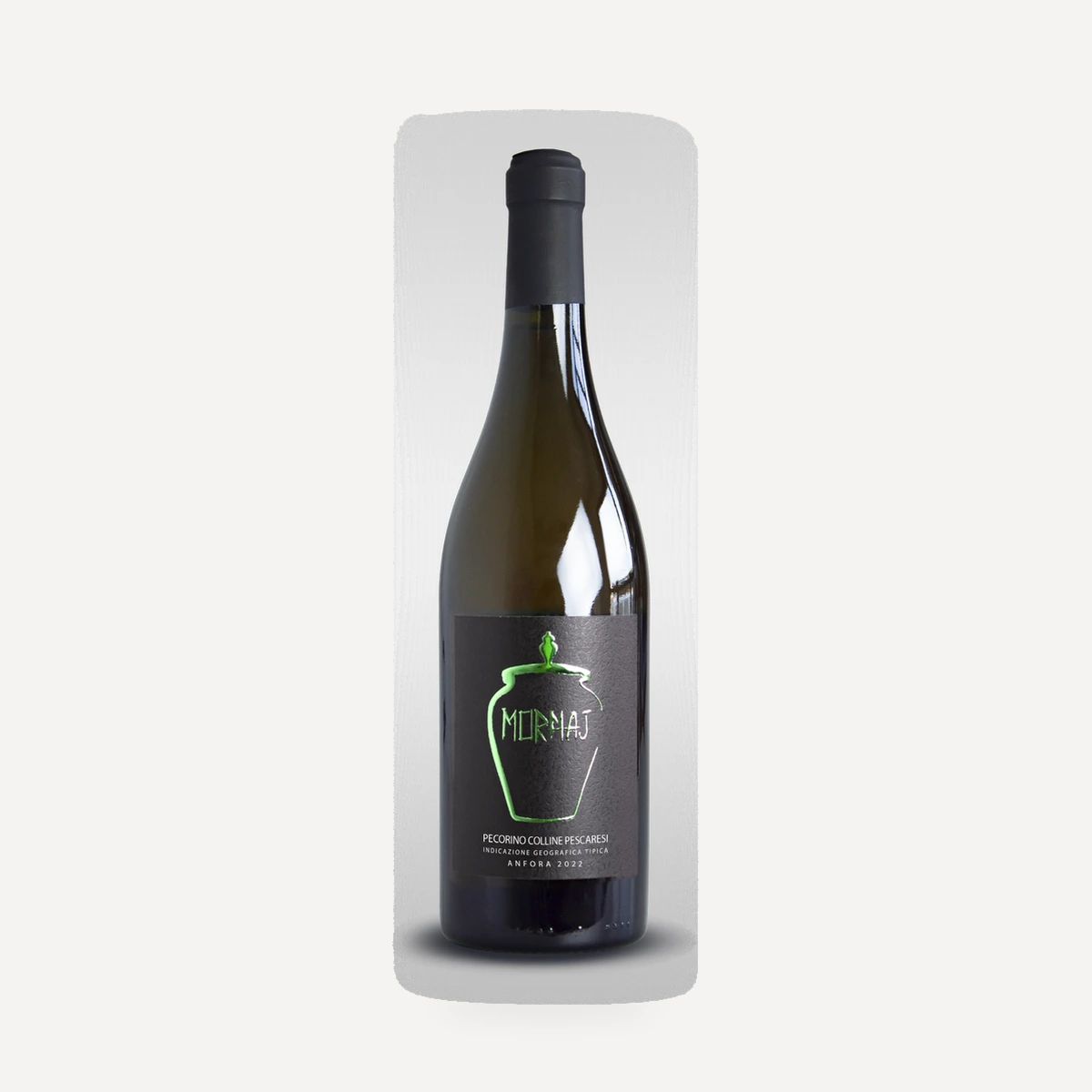
The main MORMAJ wines shown in the official range mature in stainless-steel tanks and are presented as unclarified. For the Anfora line, both spontaneous fermentation and maturation take place in terracotta vessels.
Filosofia
MorMaj’s guiding principle is to pursue the highest possible quality while respecting people, the environment and the local territory. The partners seek direct control over every production stage and aim to preserve the flavours and sensory qualities of their products through organic cultivation and restrained processing.
Their low-intervention outlook is summarized as “more nature, less humanity.” They believe that reducing manipulation of the fruit and finished product allows wine and olive oil to convey more of the territory’s aromas and flavours. In this view, nature determines the appropriate moments for intervention during vinification; human action remains mechanical rather than chemical.
The partners describe their wines as being made solely from grapes. Their original motivation was also personal: the products were intended to be wholesome not only for customers but first for their own families. Customer education forms part of the same philosophy, including advice on storage intended to preserve each product’s sensory character.
Vini