Questo vino
Vineyard and terroir
The fruit comes from the historic, estate-owned San Clemente single vineyard in the Casauria Valley. The medium-textured soils tend toward clay. The valley benefits from constant ventilation throughout the year and marked temperature differences between day and night. The vines are trained to pergola and espalier. Pruning is directed toward low production per plant, integrated pest management is practised, and the vineyard follows the Sustainable Viticulture Project guidelines.
Grapes
Trebbiano d’Abruzzo.
Vinification
The finest grapes are processed in an oxygen-free environment to protect their aromatic character. The must is clarified by cold settling for seven days, followed by ten days of temperature-controlled fermentation.
Ageing
The wine remains in steel on its own fine lees for at least six months.
Technical data
Alcohol: 13% vol, with possible variation between vintages. Available format: 0.75 L. The vines are harvested by hand from late September to early October.
Tasting profile
Intense straw yellow with golden highlights. The broad, fragrant nose is rich in ripe white-fleshed fruit. The palate combines richness and volume with a creamy, dynamic texture; freshness supports its enveloping structure.
Serving and pairing
Serve at 10–12°C in a Burgundy glass. Pair with seafood starters and first courses or with intensely flavoured white meats.
Label / history
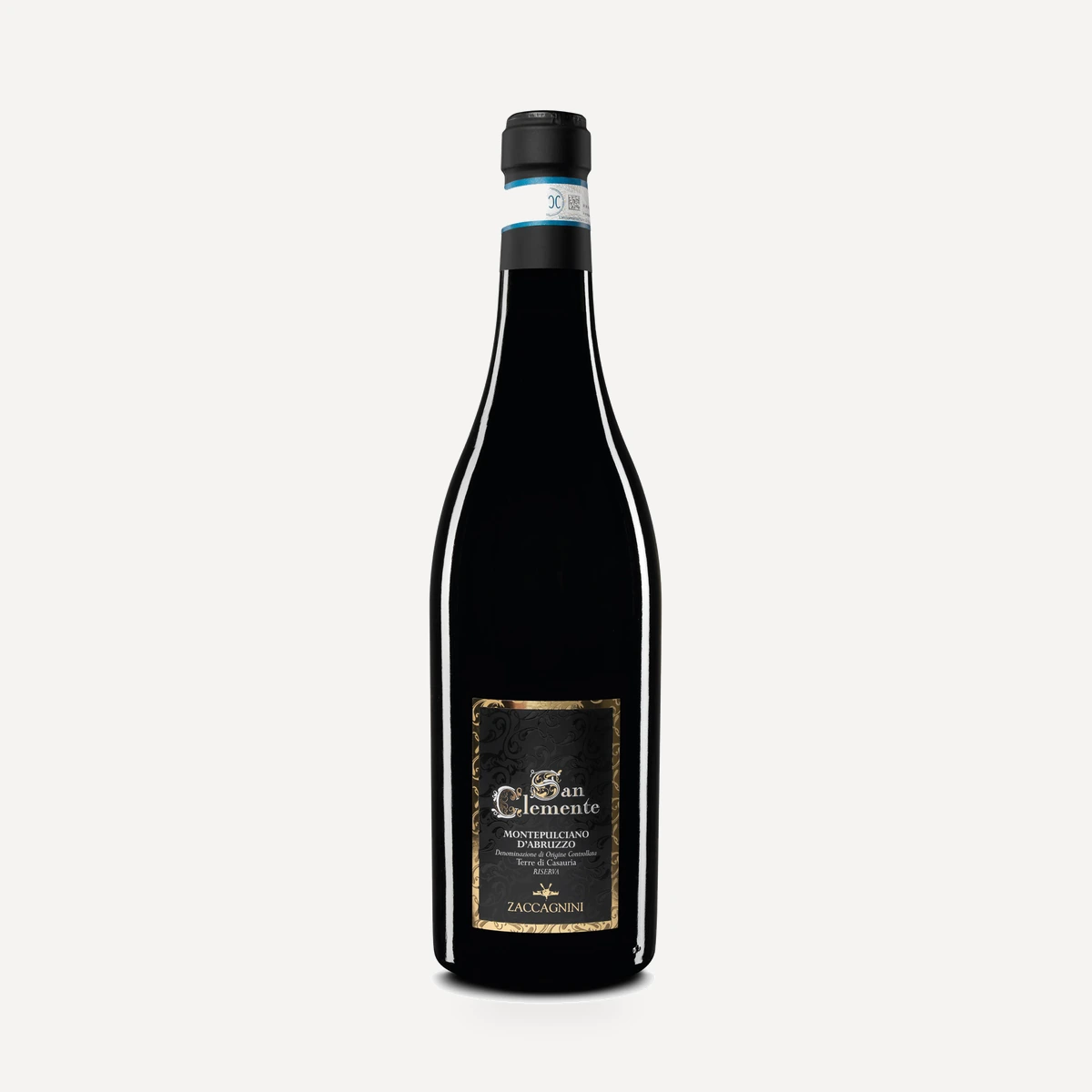
San Clemente takes its name from the Abbey of San Clemente a Casauria, an Italian national monument since 1894. The abbey housed the relics of Pope Clement I in 872, and the fourth pontiff is depicted on the label.