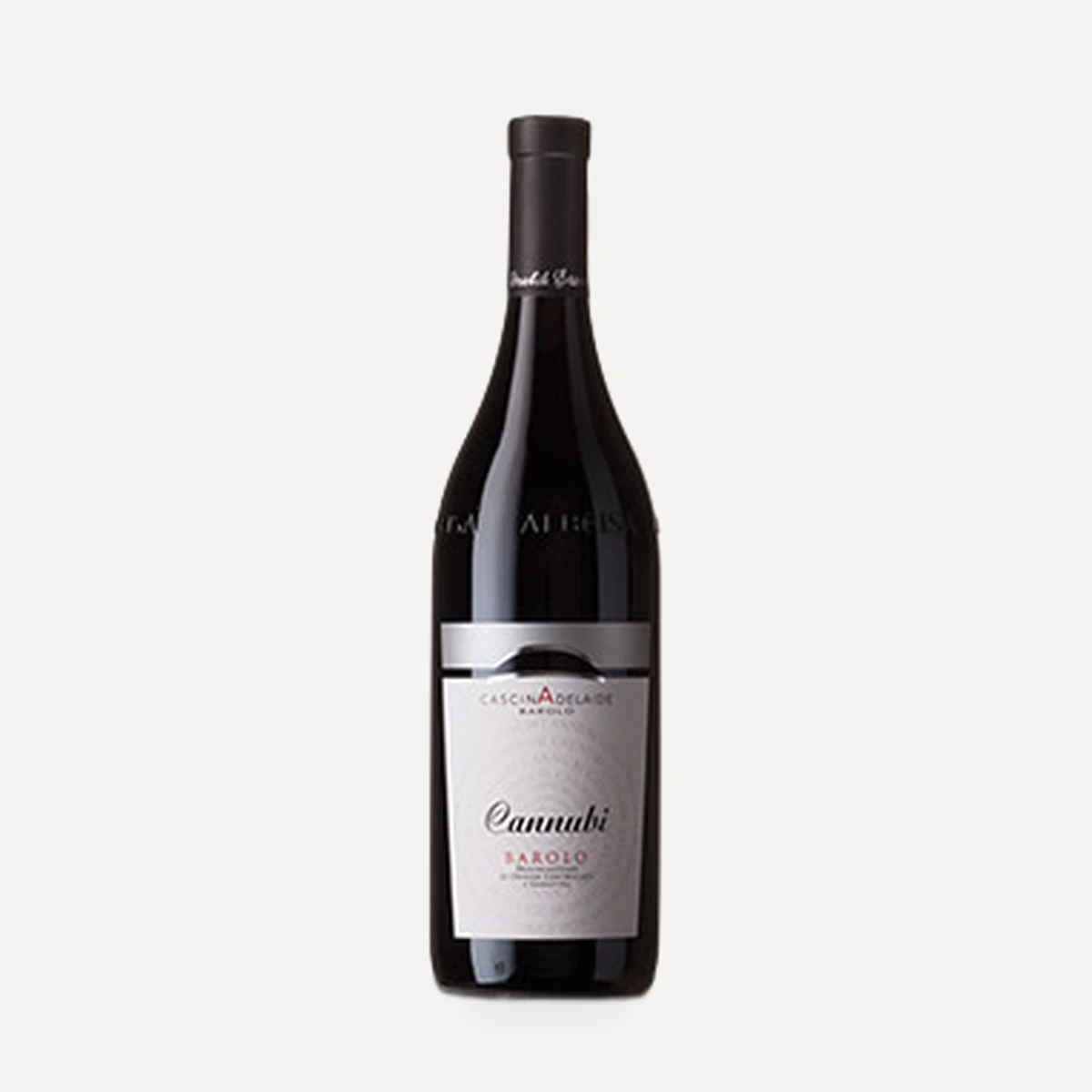
About this wine
Vineyard and terroir
The wine comes from a 0.5 ha estate parcel in Cannubi, in the municipality of Barolo. The site lies at 270 m above sea level and faces south–south-east. Its soils combine Tortoniano and Elveziano formations. The parcel contains 2,500 vines planted in 1980.
The vines are trained on a counter-trellis and pruned medium-short Guyot. Average planting density is 5,000 vines per hectare. Cluster thinning limits production to approximately 1 kg per vine.
Grapes
100% Nebbiolo from massal selection.
Vinification
Fully ripe grapes are collected in small, perforated 20 kg crates and subjected to rigorous bunch selection. They reach the cellar and are crushed within a few hours. Fermentation takes place at a controlled temperature of approximately 30°C, accompanied by repeated, gentle pump-overs. Skin maceration averages 350 hours. The young wine is then transferred to wood, where spontaneous malolactic fermentation occurs.
Ageing
The wine matures for 24 months in oak, followed by approximately 6 months in bottle.
Technical data
Alcohol: 14% vol. Total acidity: 5.4 g/l. Residual sugar: 2 g/l. Net dry extract: 30 g/l.
Tasting profile
Clear garnet with orange reflections. Plum, blackberry and violet lead the aromatic profile, followed by mineral and spicy characters. An underlying tension gives the wine stature and definition.
Serving and pairing
Serve at 18–20°C after storing the bottle horizontally. Pair with red meat, game, truffle-based dishes, blue cheeses or mature cheeses. The stated ageing horizon is 10–15 years from harvest.
Label / history
Cannubi was renowned before the emergence of Barolo as a wine. This bottling is presented as an expression of one of the denomination’s most prestigious crus and as an ambassador for the quality of the territory.