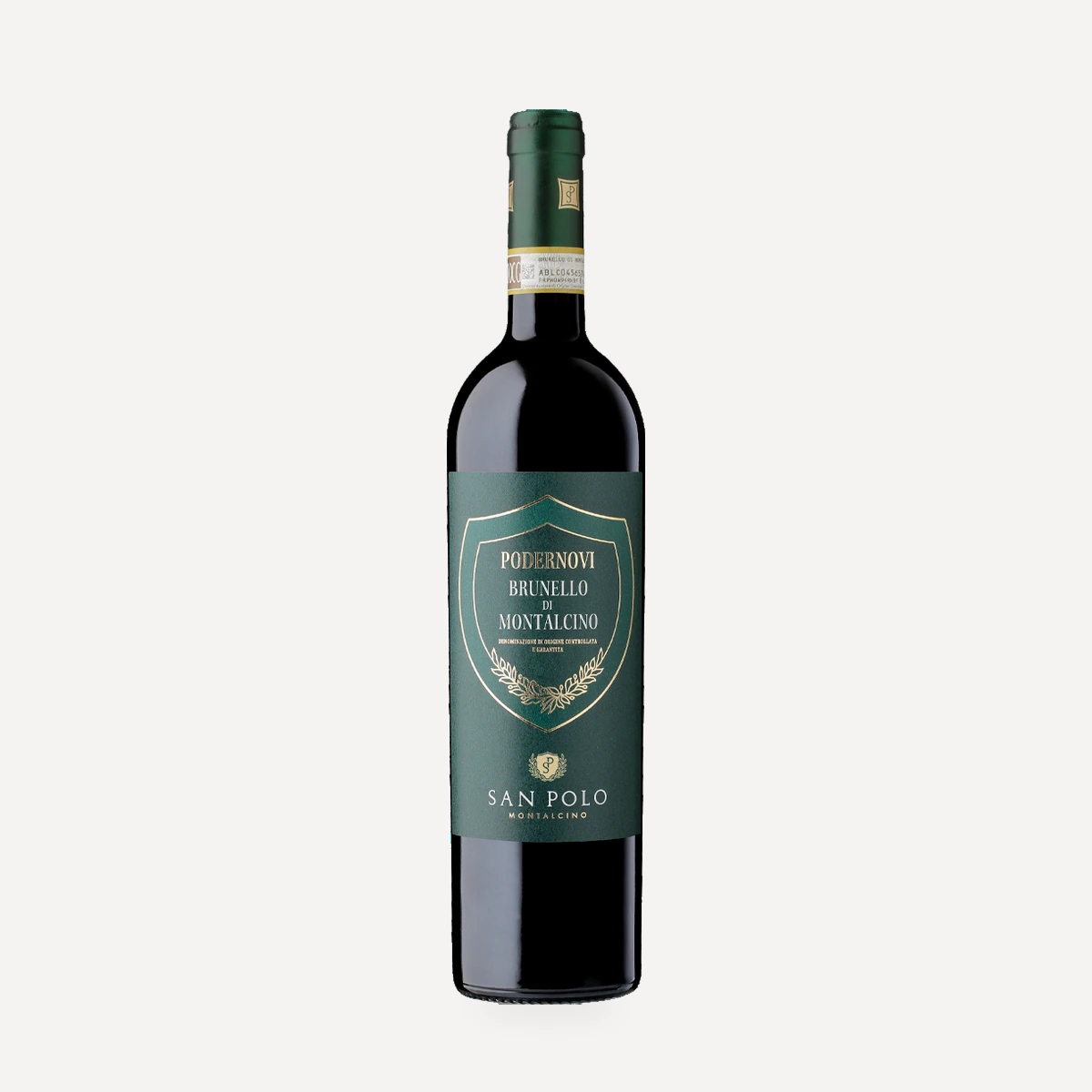
About this wine
Podernovi is a single-vineyard Brunello produced by San Polo in Montalcino. Although the estate belongs to the Marilisa Allegrini Group, this is a San Polo wine rather than an Allegrini-labelled wine. The cru debuted with the 2015 vintage.
Vineyard and terroir
The wine is made exclusively from Sangiovese grown in the approximately 3-hectare Podernovi vineyard. The site lies at about 450 metres above sea level with a southeast exposure. Its geological formation dates to the Cretaceous–Eocene period. Clay and minerals are prominent, limestone content is medium to high, and the proportion of stones is lower than in San Polo’s other parcels. The vineyard was planted in 1990, is trained to spurred cordon and has a density of 4,000 vines per hectare.
Grapes
100% Sangiovese.
Vinification
The grapes are harvested by hand in small 17 kg crates and carefully sorted before gentle crushing. Fermentation takes place at 28–30°C in 25 hl truncated-conical Slavonian oak vats and lasts approximately 28–30 days. Malolactic fermentation is completed in 40 hl wooden casks.
Ageing
The wine matures for 30 months in lightly toasted 40 hl Slavonian oak casks, followed by at least six months of bottle ageing before release.
Tasting profile
Ruby red with light garnet reflections, Podernovi combines floral aromas of violet, cyclamen and jasmine with fresh-fruit and spice notes. The palate balances structure and acidity, with smooth tannins and a persistent finish.
Serving and pairing
Serve at 16–18°C in a large balloon-shaped glass and open the bottle about one hour before serving. Its structure suits red meat, feathered or furred game, mushrooms, truffles and mature cheeses, including Parmigiano Reggiano and Tuscan pecorino.
Vintage notes
The 2020 growing season began with a mild, dry winter and early budding. A return of cold weather and snowfall in April briefly slowed growth, followed by vigorous flowering. A hot, dry summer encouraged restrained development without evident water stress, while late-August temperature variation helped preserve balance between sugars and acidity. The fruit reached harvest with concentration, aromatic precision and finesse, and prolonged maceration contributed depth while retaining elegance.