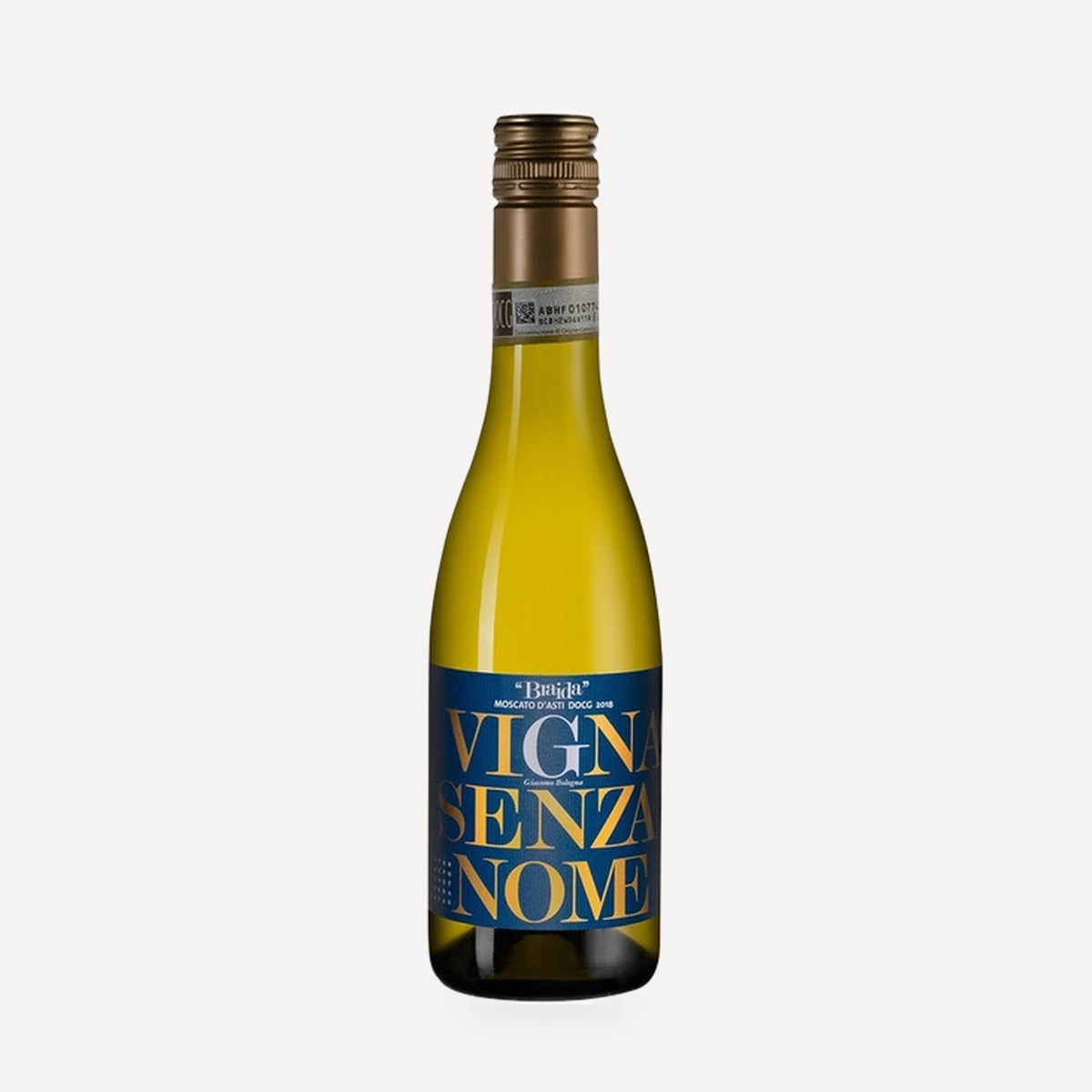
About this wine
Vineyard and terroir
The Moscato comes from an estate-owned hillside vineyard at Mango in the Langhe. The Bologna family acquired the land in 1990.
Grapes
100% Moscato d’Asti.
Vinification
The grapes remain in contact with their skins for several hours in a horizontal press before pressing. White vinification and prise de mousse take place in temperature-controlled pressurised tanks at approximately 4°C for 20 days. Once fermentation is complete, the wine is stabilised by cooling to −4°C, microfiltered and bottled.
Ageing
Several weeks in bottle.
Tasting profile
Bright straw yellow with attractive foam and abundant perlage. The fresh, varied bouquet combines fresh fruit, orange blossom, rose and musk. Gracefully sweet and characteristically aromatic, the palate is appetising and persistent.
Serving and pairing
Serve at 6–8°C. Pair with fresh fruit, fruit desserts, pastries, panettone, hazelnut tart and distinctive cheeses such as Castelmagno. It can also be served as an aperitif or a refreshing drink.
Label / history
The label bears the Latin palindrome “Sator Arepo Tenet Opera Rotas,” interpreted here as “the farmer directs the work of the plough.” It was chosen when the family purchased the Mango vineyard in 1990. The highlighted letter G represents the transmission of vineyard knowledge from Giuseppe to Giacomo and then to Giuseppe again.