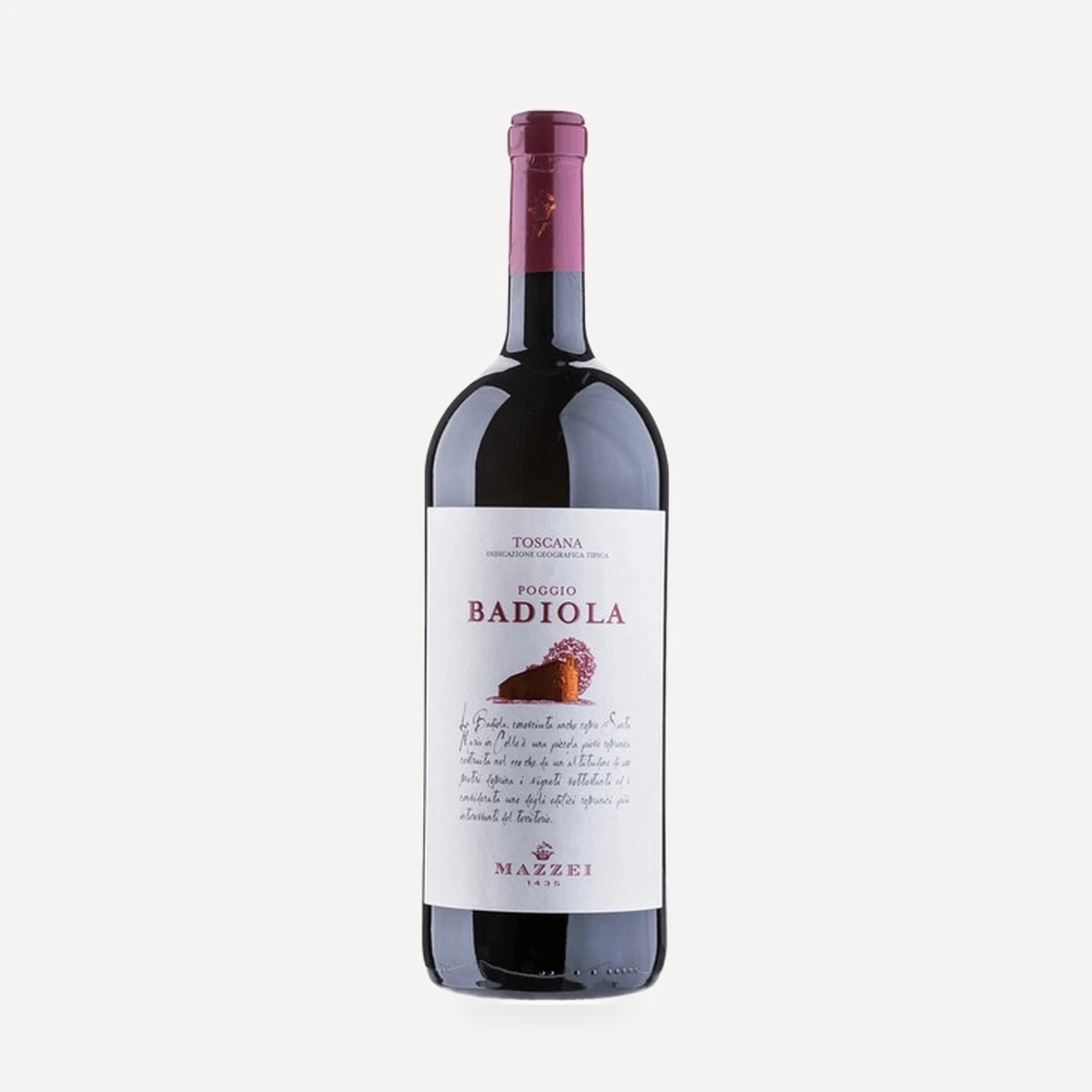
About this wine
Vineyard and terroir
The fruit comes from the high-altitude Le Ripe vineyard at Fonterutoli, in the commune of Castellina in Chianti. The site lies at 450–510 metres above sea level, close to a Romanesque church dating from the 10th century. Its rocky soils originate from decomposed limestone and sandstone. Vines are trained to spur cordon and Guyot at a density of 5,500–7,200 plants per hectare.
Grapes
70% Sangiovese and 30% Merlot. The blend combines Sangiovese’s freshness and elegance with the softer structure of Merlot.
Vinification
The 2022 grapes were harvested by hand from 1 September. Fermentation took place at 26–28 °C, with 12–15 days of maceration.
Ageing
The wine matured for 10 months in 225-litre American oak barrels. It was bottled in May 2024 and released in June 2024.
Technical data
Toscana IGT. Alcohol: 13.50% vol. Total acidity: 5.30‰. Available formats are 750 ml and 1.5 L. The first vintage was 1994.
Tasting profile
Elegant and aromatic, with fresh red-berry flavours, a velvety texture and a supple, fruit-led palate.
Serving and pairing
Pair with cured meats, substantial pasta dishes, pizza, large grilled fish or pot roast.
Vintage notes
The 2022 season began with a mild, dry winter. Spring temperatures were initially average and then rose gradually, supporting steady, even vegetative development. Sangiovese budbreak began around 10 April and varied with the vineyards’ different pedoclimatic conditions. High temperatures and limited rainfall continued through flowering, recorded on 16 May, and fruit set.
Summer was particularly dry. Exposure to heat from the early stages of berry development thickened the skins and helped the grapes withstand the progression of ripening. Low rainfall, high temperatures and normal humidity permitted targeted control of the principal grape diseases. Fruit health at harvest was more than satisfactory, although drought reduced production by lowering bunch weight. Across the estate, harvest ran from 1 September to 6 October. Rainfall from 1 April through 30 September ranged from 440 to 621 mm; the published temperature index was 5,455.39 °C. The vintage was rated “Good.”
Label / history
First produced in 1994, Poggio Badiola is conceived as an everyday Super Tuscan from elevated vineyards in the heart of Chianti Classico.