History
Ancient viticultural tradition
Castelvecchio’s identity is rooted in the agricultural history of the Gorizia Karst. Pliny the Elder described a very dark wine called Pucinum, produced on rocky ground west of the mouth of the Timavo. Roman tradition associated it with Livia, wife of Augustus, who was said to drink it for her delicate stomach and to have lived to the age of 82. The estate connects that account with Terrano, long cultivated in this part of the Karst.
1277–1640: the Della Torre di Valsassina estate
The Della Torre di Valsassina family moved from Como to Friuli in 1277, when Raimondo I della Torre Valsassina, formerly Bishop of Como, became Patriarch of Aquileia.
In 1577 the family acquired the Castello Vecchio at “Sagrat,” together with land extending from the Isonzo River to the Karst hill called Monte degli Olivari. A document dated 1578 records the cultivation of Vitis vinifera in the Castelvecchio area. An administrative account prepared for Giovanni Filippo della Torre Valsassina in 1640 provides another surviving record of the property.
Through inheritance involving the Hofer family, the Della Torre also obtained the old Castel Pucinum, the newer Castle of Duino and Karst possessions extending from Castelvecchio and Castelnuovo toward Duino.
1700: Castelnuovo and the Villa Veneta
In 1700 Raimondo IX della Torre Valsassina left the old castle in the lower valley of Sagrat and moved uphill to Castelnuovo. There he created the Villa Veneta estate, comprising a main villa, barchesse, a stable, stables for horses and rural houses.
Terraces made with red earth from the dolines were built around the residences, linking lower Castelvecchio with the upper hill. Vines, olive trees and mulberries were already growing on the elevated ground. The estate’s olive slope was known in the early seventeenth century as Monte degli “Olivars.”
1882–1902: Marie Hohenlohe and Spartaco Muratti
In his 1882 book Il Castello di Duino, Rudolf Pikler discussed Pliny’s Pucinum and recalled drinking the old wine at the table of Maria Teresa della Torre di Valsassina. He associated it with a vineyard on the family’s Sagrado possession.
Marie, daughter of Teresa and the last Valsassina descendant connected with the property, managed the Sagrado estate. At the 1887 international wine and oil exhibition in Trieste, her Malvasia received a silver medal and her Terrano a bronze medal.
In 1902 Marie sold the estate to the writer, poet and painter Spartaco Muratti. Muratti settled at Castelnuovo with his family and six children.
1915–1918: the Great War
The first six Battles of the Isonzo, also called the Battles of Castelnuovo, were fought on the estate. The Villa became a hospital for wounded soldiers who could not be transported, while the woods accommodated a large military camp. Soldiers’ graffiti remain on the walls of the Villa’s halls.
At the beginning of the war, Muratti and his family fled to Rome. In July 1916 he composed a 37-page ode to his Castelnuovo home, which lay directly in the path of the conflict. The Villa was devastated between 23 June 1915 and 4 November 1918.
Giuseppe Ungaretti served in the trenches of the Castelnuovo Karst from Christmas 1915 until August 1916. During pauses in the fighting he wrote the 32 poems that formed Il Porto Sepolto, published on 24 December 1916. The estate presents Muratti’s long, romantic ode and Ungaretti’s compressed verse as two contrasting poetic responses to the same landscape and war.
1970–1986: agricultural recovery
Only in 1970, after unexploded ordnance had been cleared, could vines and olive trees destroyed during the war be replanted. The restored vineyards included varieties documented in the estate’s older agriculture: Terrano, Refosco, Malvasia, Verdiso and “pagadebiti,” which is considered at Castelvecchio to have possibly been Vitovska, distinguished by large, compact bunches.
The Terraneo family acquired Castelvecchio in 1986. Since then it has pursued an integrated agricultural, agritourism, historical and cultural restoration project, including the recovery of the Villa Veneta estate, vineyards, olive groves and historic landscape.
1995–2010: wines and cultural restoration
The first production of the family’s Sagrado Rosso cuvée took place in 1995.
In 2007 the Amici di Castelnuovo association was founded to recover and present the history of the Castelnuovo Karst and its agricultural, artistic, architectural and landscape heritage.
Parco Ungaretti was inaugurated in 2010. Dedicated to the poems of Il Porto Sepolto, it transformed part of the former battlefield into a place of art and remembrance within the estate.
2013 onward: sustainability and organic certification
Castelvecchio adopted low-impact sustainable viticulture in 2013. In 2015 it began an estate-wide agricultural sustainability programme covering all 120 ha used for wine, olive oil, honey and grazing. Vineyard personnel subsequently received four years of organic and biodynamic training from Adriano Zago, while Marco Simonit instructed the pruning team in methods intended to reduce the number of cuts and lower the risk of fungal disease.
Organic certification was achieved with the 2019 harvest. The sustainability programme also brought photovoltaic and solar panels, biomass heating, a weather station, the reuse of animal manure and agricultural residues, and a broader effort to protect soil fertility, groundwater and the surrounding Karst environment.
Terroir
Position and landscape
The estate occupies a plateau at 145 m above sea level, the first Karst rise above the Isonzo at Sagrado. It opens northward toward the Alps and southward toward the Adriatic Sea. The Friulian plain lies to the west, while the Karst heath extends east toward Slovenia. The Isonzo has cut its bed below the Castelnuovo terrace.
The property covers 120 ha within a natural landscape of limestone, red earth, centuries-old woodland and native fauna. The vineyards occupy the estate’s central area and are surrounded by approximately 80 ha of woods. The hilltop is isolated, with no other cultivation within a stated radius of 5 km.
Climate and winds
The microclimate is dry, constantly ventilated and marked by useful temperature changes. Proximity to the Adriatic and the Bora shapes conditions in the vineyards. Daytime summer heat contributes ripeness and structure, while cooler easterly breezes at night support freshness and aromatic persistence. The site receives abundant rain, but water availability remains difficult because the highly permeable Karst subsoil drains rapidly.
Geology and soils
The Gorizia Karst is predominantly limestone dating to the Upper Cretaceous. Wind removes products of the weathered limestone substrate and frequently exposes the bedrock. Where soil remains over the rock, its profile may be only 20–30 cm deep.
Deeper deposits of terra rossa occur in dolines, where they can exceed 1 m. These funnel-shaped depressions create deeper-soiled pockets within the rocky plateau. The red soils contain an unusually high proportion of colloidal particles, little sand and considerable clay. Despite their clay content, they behave agriculturally as light, drought-prone soils because the permeable substrate and shallow profiles retain little water.
Exposed rocks heat strongly in summer, increasing evaporation, but stone and bedrock also absorb and return heat to the vines. The red earth is rich in iron and limestone-derived mineral material. Deeper soils occur in the dolines and toward the valley running to Sagrado.
Rooting environment and water
New vineyard ground may require rock to be broken and deep trenches excavated before planting. Support-irrigation pipes are laid approximately 20 cm below the surface, delivering water to individual plants. Wells must reach approximately 190–200 m to access cavities, veins, underground rivers or reservoirs within the Karst rock. This arrangement is intended to encourage roots to descend through fissures and explore the rocky mineral substrate.
Winemaking
Organic and biodynamic management
Low-impact sustainable viticulture began in 2013, followed in 2015 by a sustainability programme across the entire 120 ha estate. Organic certification was achieved with the 2019 harvest. Natural and biodynamic agronomic practices are used to build soil fertility and encourage roots to penetrate limestone fissures in search of mineral and organic elements.
Management is guided by close observation of the vines’ physiological and phenological rhythms. The approach treats organic viticulture as inseparable from a suitable combination of healthy ground, climate and adapted varieties. Rocky soils moderate vine vigour while supporting faster and more complete ripening.
Soil work and planting
Special machinery was designed for the Karst terrain. It breaks rocky ground to improve soil moisture conditions, cuts vegetation beneath the rows without damaging the support-irrigation system, loosens the grassed and stony surface for aeration, and works the mixture of earth and stones before green manure is sown.
New plantings may require equipment capable of piercing bedrock and excavating deep trenches for young vines. Irrigation lines run about 20 cm below the surface and deliver droplets to each plant, while photovoltaic energy helps power pumps drawing water from depths of approximately 190–200 m.
Fertility, pruning and ecosystem
Green manure adds organic fertility. Manure from the estate’s grazing animals is mixed with residues from vineyards and olive groves and with woodland prunings to produce humus used for fertilization and horn manure preparations.
Vineyard personnel completed four years of organic and biodynamic instruction with Adriano Zago. Marco Simonit trained the pruning team to reduce the number of annual cuts per plant, with the aim of lowering disease and fungal risks.
The vineyards form part of a mixed landscape of woodland, Karst heath, olive trees, fruit trees, grazing animals and beehives. Twenty donkeys help keep woodland undergrowth and heath clear. Bees forage from spring until late autumn on acacia, morello cherry, elder, sumac and ailanthus flowers. These elements supply organic matter, support biodiversity and form part of an effort to prevent compaction and erosion and protect Karst groundwater.
Fermentation and maturation
Vinification follows the same low-intervention principles used in the vineyards. Alcoholic fermentation is driven by the indigenous yeasts present in the grape must; exogenous yeasts are not added. This practice is maintained even in difficult vintages and is intended to preserve the relationship between each variety and its place of origin.
The wines are allowed to follow their own maturation schedules. Release takes place only after an appropriate period of ageing and bottle rest, with timing adjusted to the wine and vintage.
Winery buildings
Production is divided between a modern winery and a historic barrel cellar. Grapes arrive at the reception room in the modern building for their first processing. Adjacent rooms contain stainless-steel tanks used to ferment white and red wines and to conserve the whites. Bottling and subsequent maturation complete the cycle.
The historic barriqueria occupies the restored base of an ancient tower beside the Villa Veneta. It is used principally for maturing red wines in French and Slavonian oak vessels of different capacities. Time in wood varies with vintage conditions and wine type.
Philosophy
Castelvecchio presents the farm as an interconnected agricultural organism rather than a collection of isolated crops. Its biodynamic outlook draws on Rudolf Steiner’s conception of a farm striving toward self-sufficiency: the vineyard, olive grove, woodland, grazing animals, bees, soil and water are managed as mutually supporting parts of one estate.
The family’s stated aim is to pass a healthy and fertile environment to future generations. Protection of groundwater, reduced atmospheric emissions, natural fertilizers, renewable energy and reuse of animal and plant residues are therefore treated as parts of the same agricultural programme.
In the vineyard, quality begins with healthy vines planted in naturally suitable ground and managed through observation of their physiological cycles. In the cellar, the corresponding principle is to avoid forcing fermentation, rely on indigenous yeasts and give each wine sufficient time to mature. The intended result is an expression of variety, vintage and Karst origin rather than a standardized cellar style.
The Terraneo family also treats agriculture, hospitality, historical recovery and cultural stewardship as one project. Restoration of the Villa Veneta, replanting of former battlefields, preservation of soldiers’ graffiti and creation of Parco Ungaretti all form part of that broader understanding of the estate.
Wines
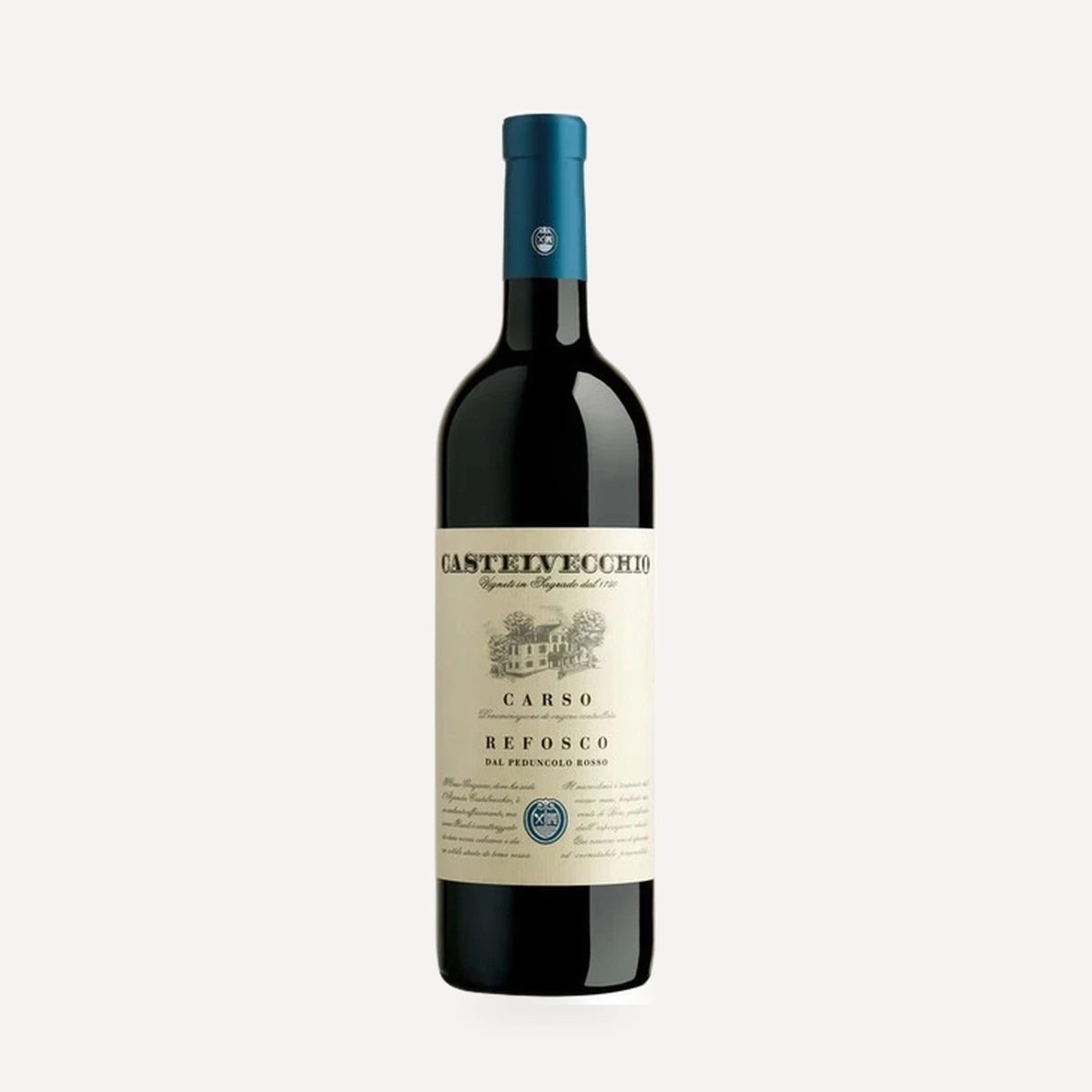
Refosco dal Peduncolo Rosso Organic – Castelvecchio – Carso DOC
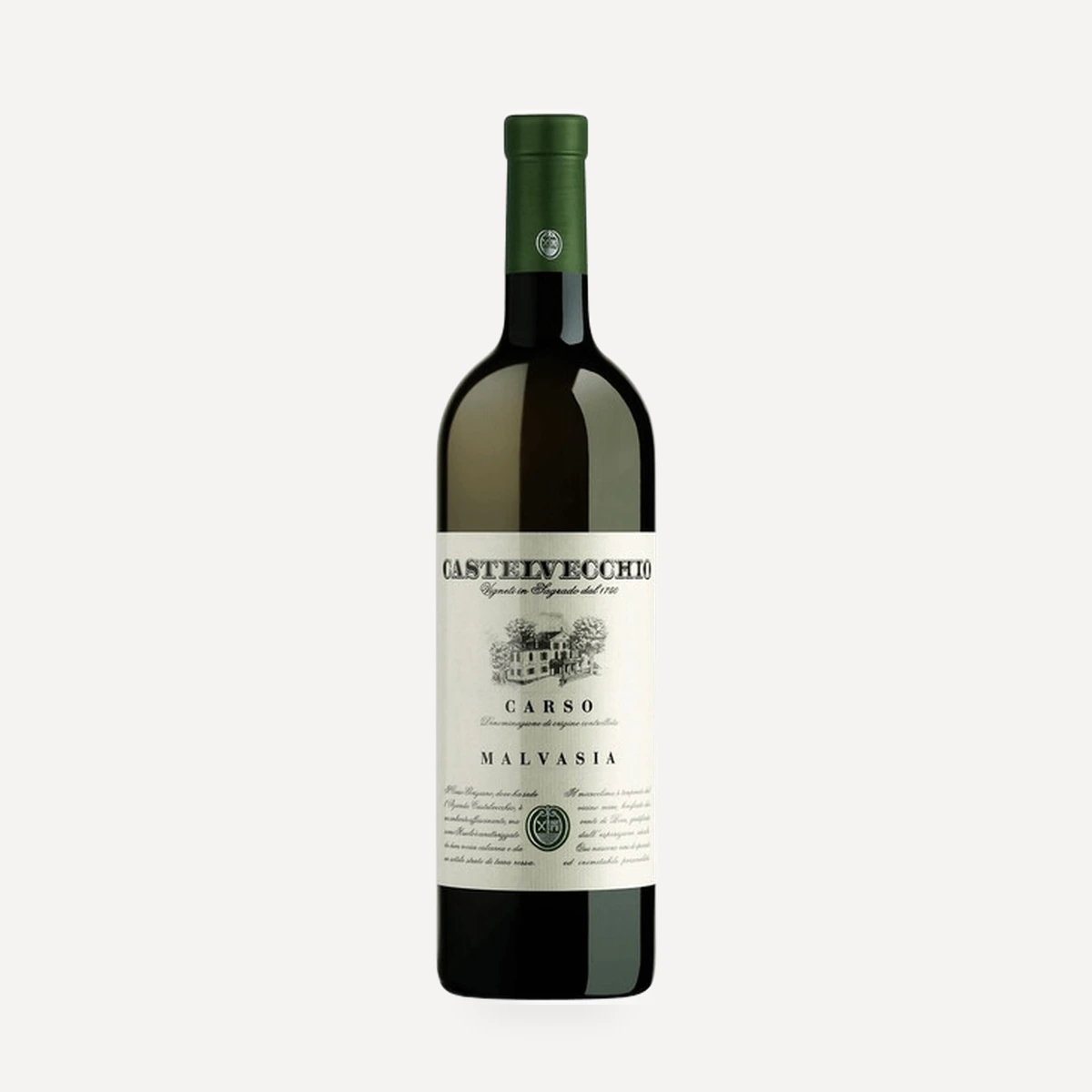
Malvasia Organic – Castelvecchio – White wine – Carso DOC
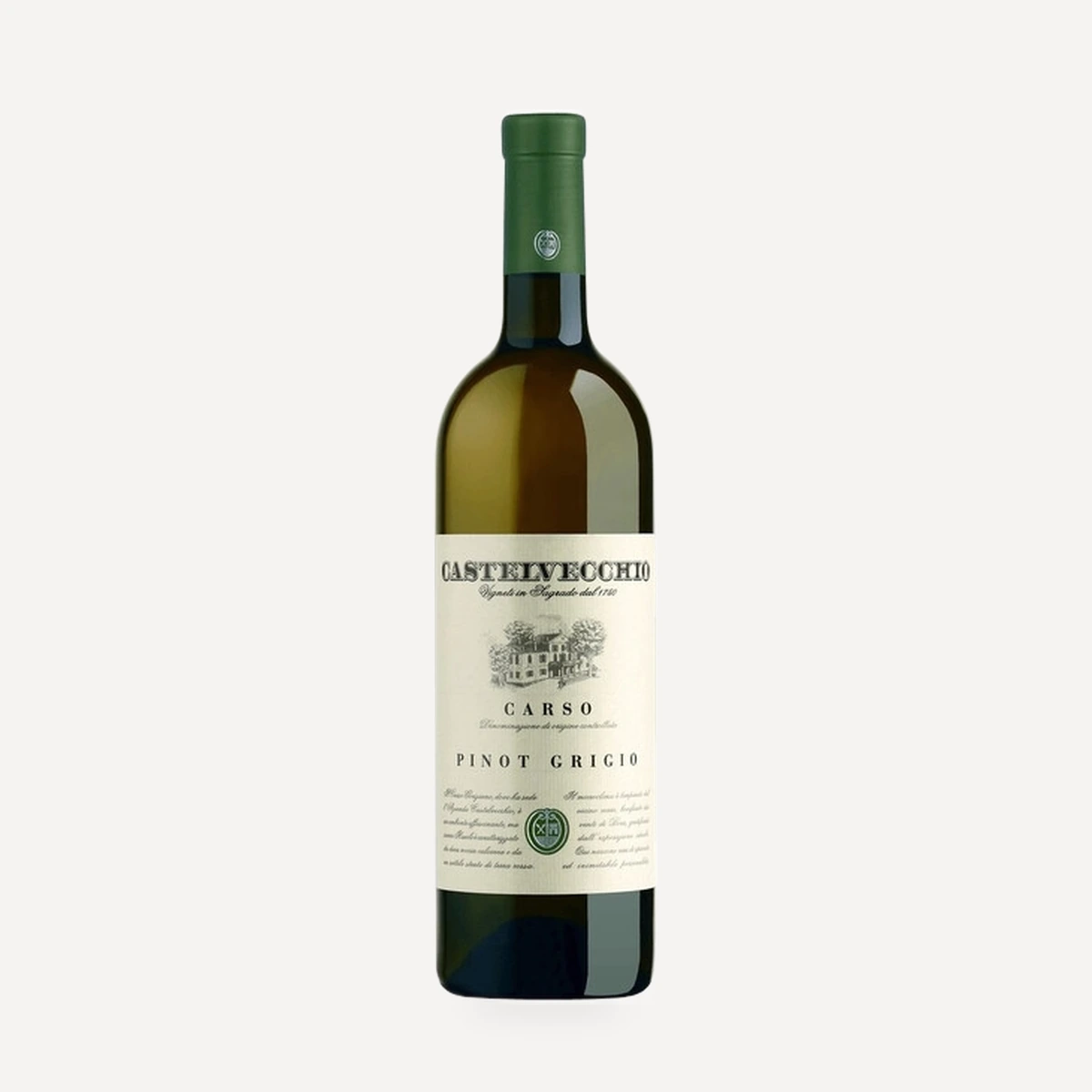
Pinot Grigio Organic – Castelvecchio – White wine – Carso DOC
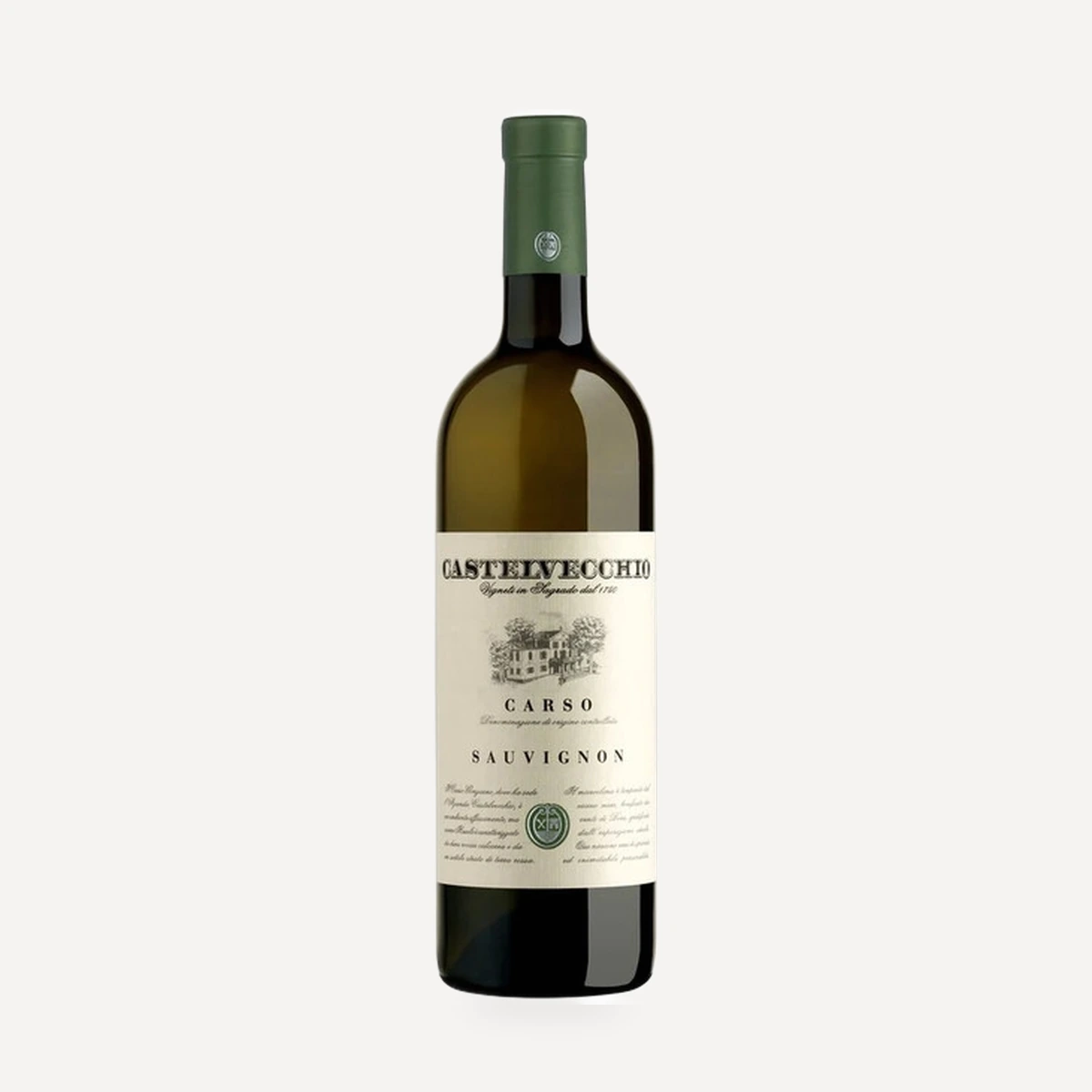
Sauvignon Organic – Castelvecchio – White wine – Carso DOC
Vitovska Organic – Castelvecchio – White wine – Carso DOC
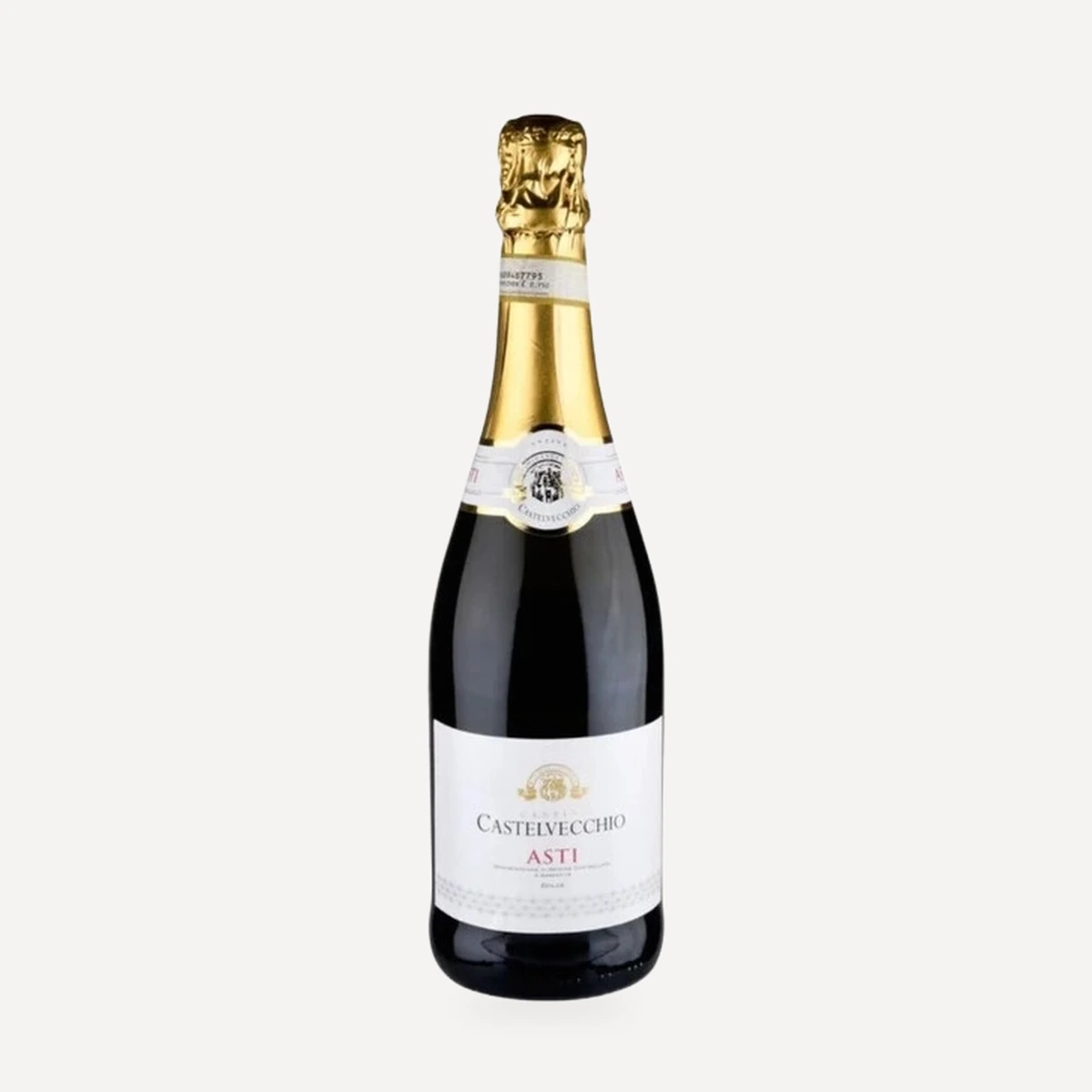
Asti DOCG
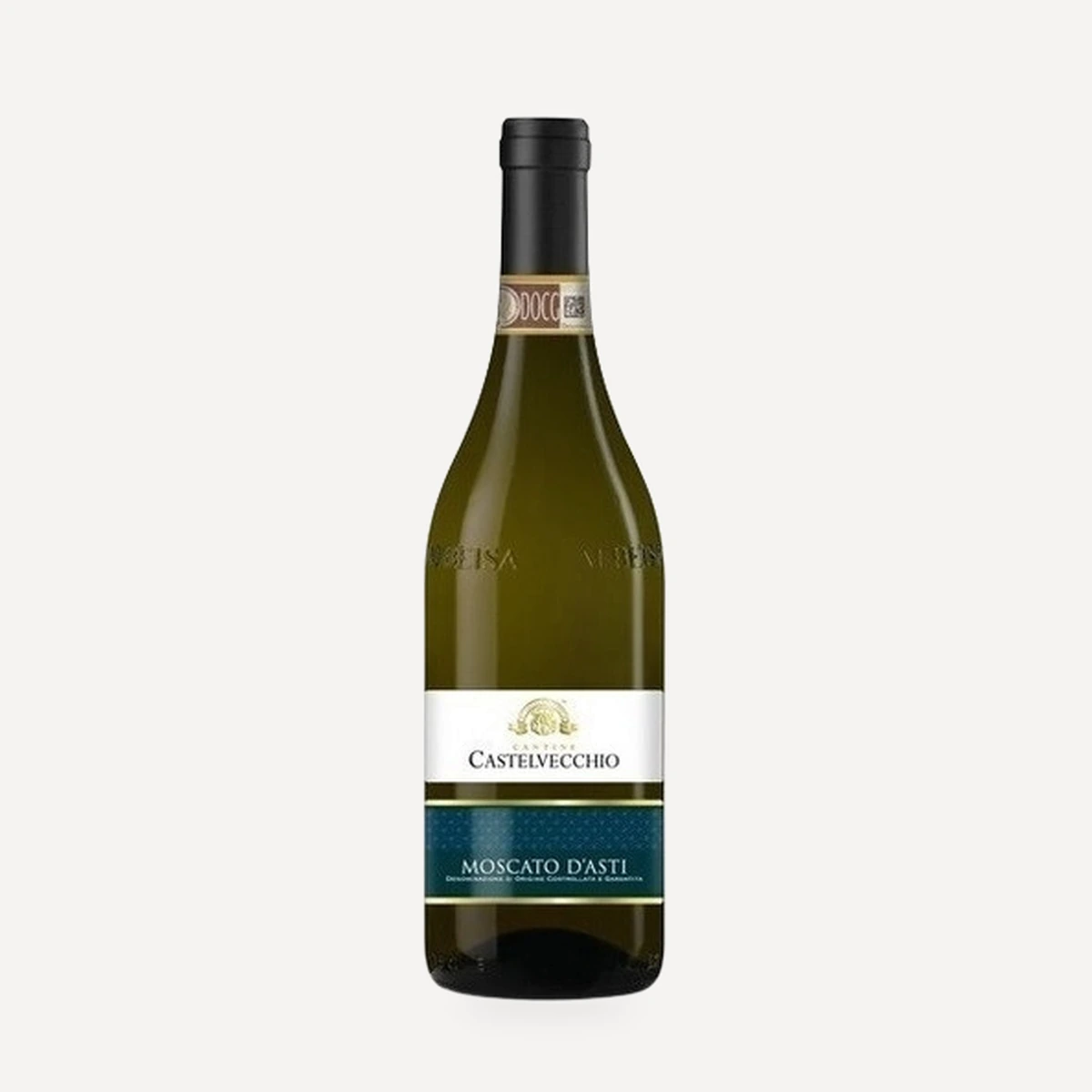
Moscato D'Asti DOCG
Cabernet Franc Organic – Castelvecchio – Red wine – Carso DOC