History
1998: first vintage and transformation
Branko’s first vintage dates to 1998. From that year, qualified oenologist Igor Erzetic began reshaping the agricultural estate, starting with the land and vineyards before turning his attention to the winery and hospitality facilities.
The specialized vineyard surface subsequently grew to more than 7 hectares, planted almost entirely with white-skinned varieties. The vinification and maturation areas were completely renovated and equipped with modern machinery designed to handle bunches and berries without compromising their structure.
Cellar development
The renovated cellar incorporates temperature-controlled, partly underground rooms for medium- and long-term bottle maturation. Following vinification and bottling, the bottles rest horizontally under controlled conditions intended to protect their gradual development.
Twentieth anniversary
The twentieth anniversary of the first vintage was marked by a special limited-edition red from the 2016 vintage. The release comprised 825 bottles and became available on 4 November, coinciding with Igor Branko’s birthday.
Terroir
Branko is based at Località Zegla in Cormòns, within the Collio. Its vineyards occupy both the hills around Cormòns and land at the foot of the hills. The mature Merlot-bearing vineyards extend around the winery itself, while French-origin white varieties have been cultivated in the Cormòns hills for centuries. The estate describes its vineyard landscape as a carefully maintained “vineyard-garden.”
Winemaking
Branko manages its vineyards as a “vineyard-garden,” combining functional cultivation with a deliberately ordered landscape. Training systems include the traditional capovolto or double-arched cane and the French Guyot system. Wooden stakes are used to make work among the rows more practical.
Plant protection follows integrated management protocols, with priority given to organic formulations. The specialized vineyard area now exceeds 7 ha and is devoted almost entirely to white-skinned varieties. Low yields also form part of the approach used for the estate’s structured white blend.
Branko’s vinification and maturation rooms have been completely renovated. The cellar employs modern equipment selected to preserve the physical integrity of bunches and individual berries during processing.
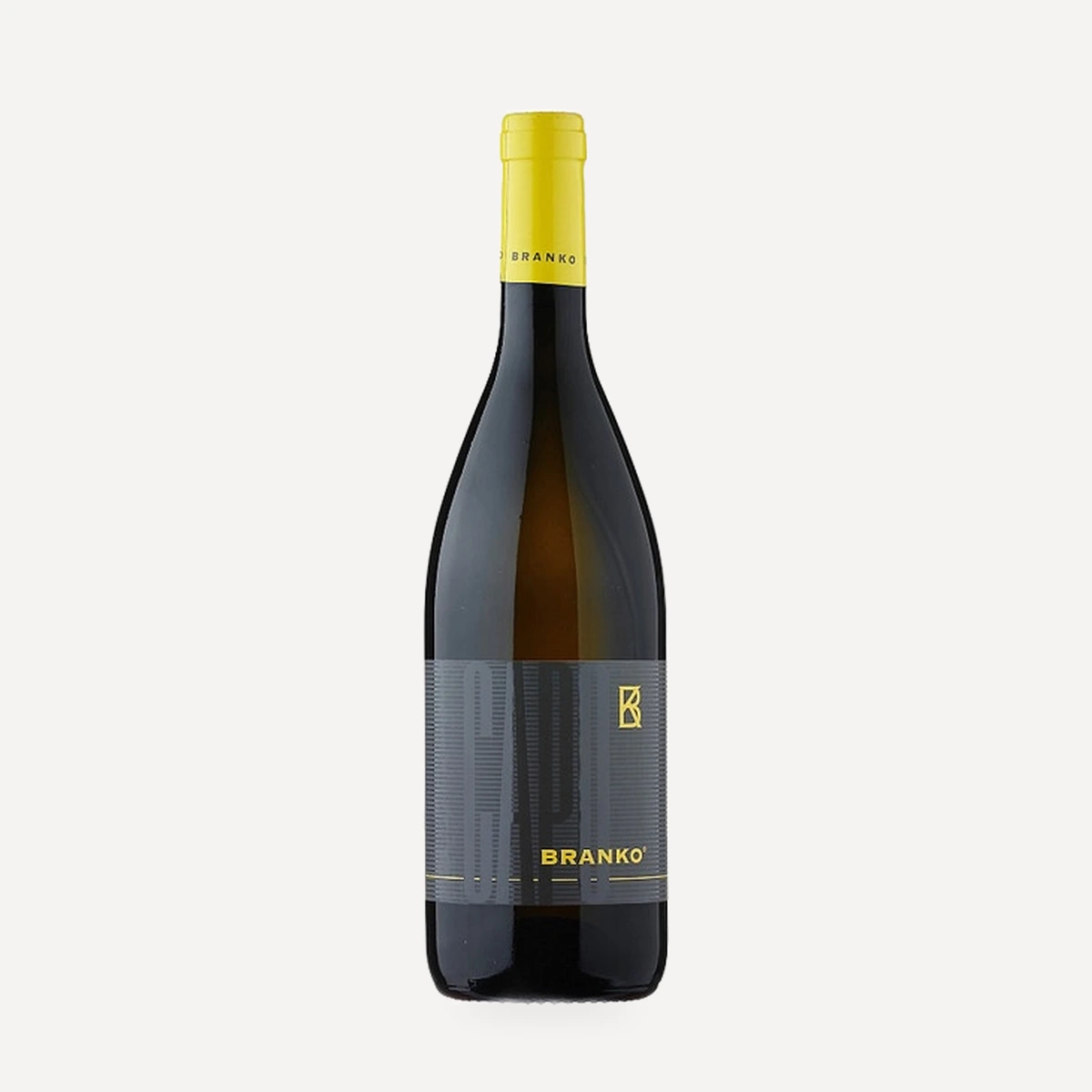
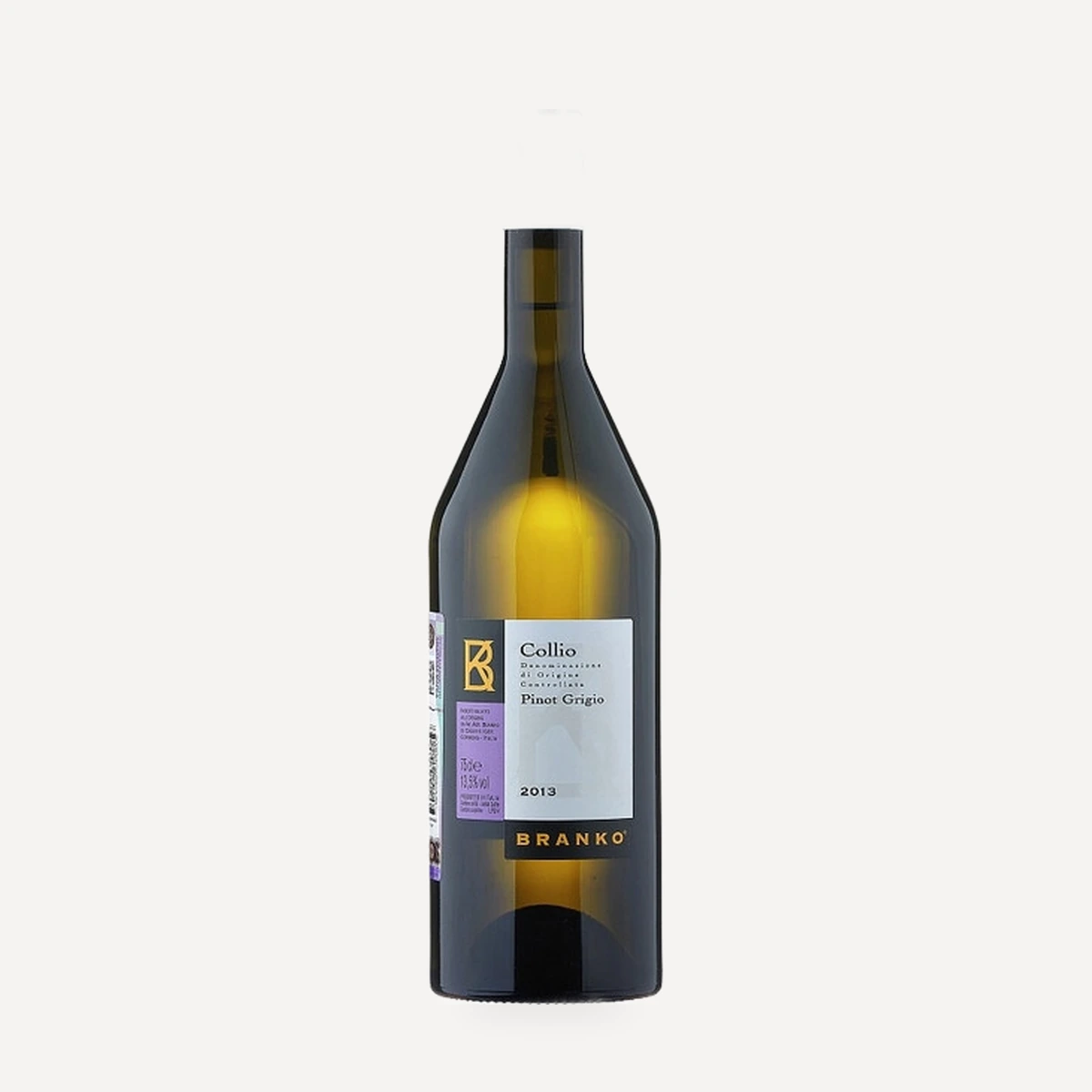
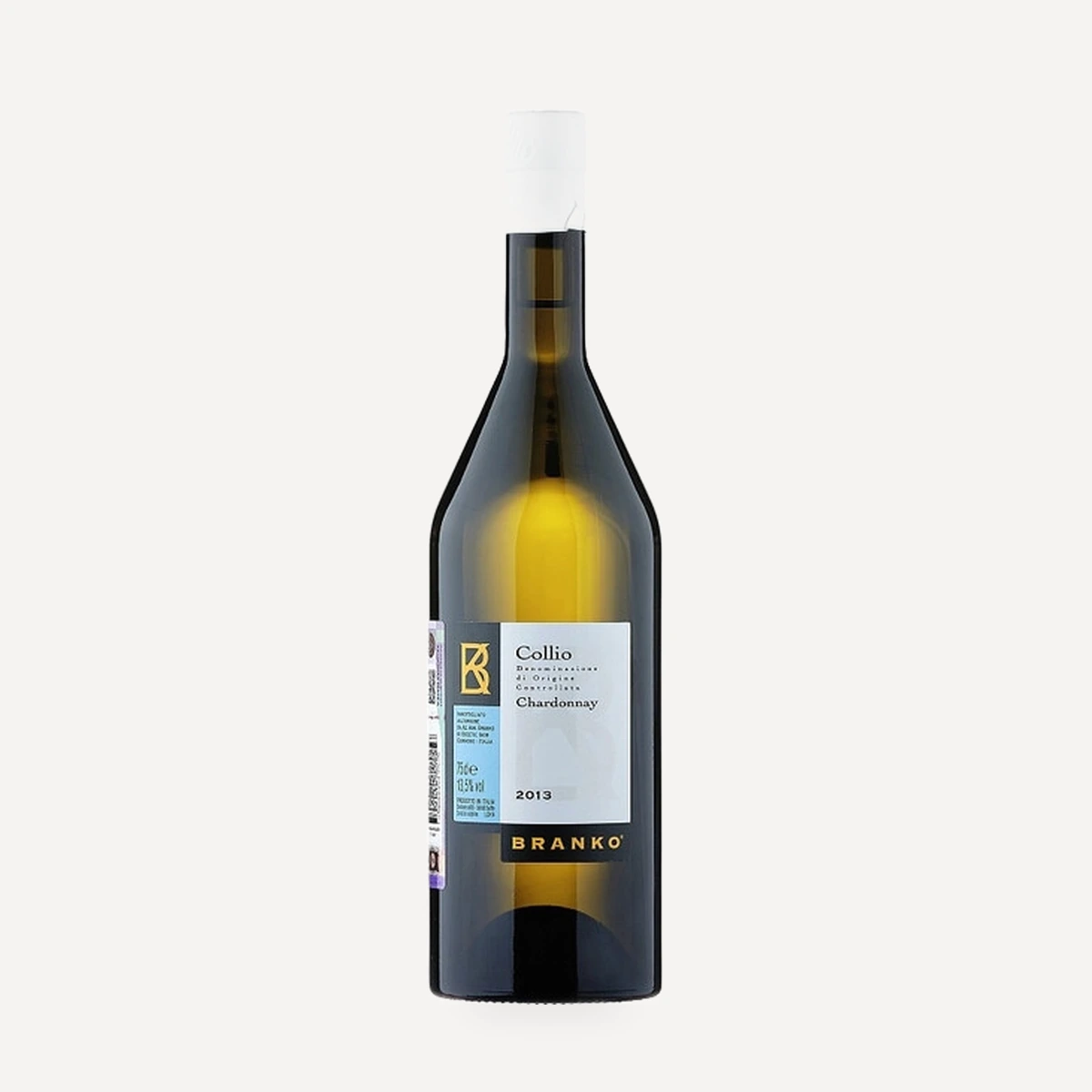
The cellar works with both stainless steel and wood. Stainless steel is used where freshness is the objective, while 400-litre tonneaux are employed for fermentation or maturation of selected components. French oak is used for part of the Sauvignon Blanc maturation. For Chardonnay, both fermentation and maturation can take place in tonneaux, with the proportion adjusted from vintage to vintage. Friulano is matured principally in stainless steel with a small tonneau-aged component, while at least 10% of Pinot Grigio is conditioned in wood. Capo Branko undergoes controlled fermentation in 400-litre tonneaux, and its blend is recalibrated annually in response to agricultural conditions, climate and winemaking decisions.
After vinification and bottling, bottles are laid horizontally in temperature-controlled rooms that are sufficiently underground to protect their medium- and long-term evolution. Bottle maturation is also used to develop the estate’s more structured wines.
Philosophy
Branko’s approach centers on careful treatment of fruit from vineyard to cellar. Modern equipment is used to preserve the structure of bunches and berries, while integrated vineyard management favors organic formulations.
The estate combines local tradition with French viticultural and cellar practices: traditional capovolto training stands alongside Guyot, while stainless steel and 400-litre tonneaux are used selectively rather than according to one fixed formula. The proportion of wood used for Chardonnay changes with the vintage, and the composition of Capo Branko is reconsidered annually in response to farming conditions, climate and winemaking objectives.
A long-running focus on single-variety wines is complemented by Capo Branko, a project intended to give renewed prominence to historical local white varieties while incorporating French-origin varieties that have long adapted to the hills of Cormòns. The estate presents care, dedication and respect for the fruit as principles connecting its work since the 1998 first vintage.
Wines
Pinot Grigio
Chardonnay