History
Franciacorta before Contadi Castaldi
The name Contadi Castaldi draws on the long agricultural history of Franciacorta and its nineteen municipalities. In medieval usage, the contadi were the small counties into which the territory was divided, while the castaldi were the lords entrusted with governing those lands. During the sixteenth century, at the height of the Venetian Republic, Franciacorta supplied food and wine for the tables of princes, kings and wealthy merchants. Venice was the territory’s principal market for introducing its wines.
Adro’s connection with viticulture is presented as especially old. Two proposed roots for its name are Ader, interpreted as a bright, serene, sun-filled place, and Adrusco, meaning a village rich in vineyards. Three bunches of grapes on the municipal coat of arms reflect this association with vine cultivation.
From quarry to Fornace Biasca
One of the area’s numerous quarries led to the establishment of Fornace Biasca, the brickworks whose historic building now houses Contadi Castaldi. The brick and cement industries drew on the local sedimentary materials associated with Monte Alto.
The brickworks ceased operating during the second half of the twentieth century. Vittorio Moretti acquired it principally because of its importance in the childhood memories of his wife, Mariella Moretti. The plant had belonged to Mariella’s godmother, and Mariella had spent afternoons there after school.
The 1980s: creation of the winery
During the 1980s, when Franciacorta was experiencing a period of strong development, Vittorio and Mariella Moretti decided together to transform Fornace Biasca into a winery. Its generous internal volumes and long brick-firing tunnels proved well suited both to ageing Franciacorta and to receiving visitors.
The conversion preserved the building’s original design through a conservative restoration of the central structure. The former industrial workplace was redirected toward vineyards and wine while retaining the restrained architectural character associated with Lombard agricultural buildings.
Development of the vineyard model
Contadi Castaldi subsequently built its identity around a broad network of vineyards and winegrowers throughout Franciacorta. Its vineyard patrimony reached 175 ha distributed among the denomination’s nineteen municipalities and extended across all six viticultural units identified by the territory’s zoning study. Geological, microclimatic and cultivation differences became central to the house’s blending model: components of distinct origins are assembled so that each contributes its individual qualities to the final cuvée.
Contemporary direction
The winery operates as Contadi Castaldi Srl within Terra Moretti Vino. Vittorio Moretti is identified as president of Terra Moretti Vino, Francesca Moretti as its chief executive, and Gianluca Uccelli as Contadi Castaldi’s oenologist. The estate’s contemporary presentation combines this territorial and blending focus with an explicitly youthful, unconventional identity.
Contadi Castaldi also became the official wine partner of Ducati Corse. For the partnership cuvée, Francesca Moretti and Gianluca Uccelli selected three proposals; Vittorio Moretti, Ducati chief executive Claudio Domenicali and Ducati general manager Luigi Dall’Igna then jointly chose the version intended to embody the character shared by the two brands.
Terroir
A vineyard network across Franciacorta
Contadi Castaldi works with 175 ha of vineyards distributed among all nineteen municipalities of Franciacorta. The vineyards encompass all six viticultural units defined through analysis of the territory’s geology, soils, morphology, climate and agronomy. Each unit produces a different expression in both vine and wine, furnishing the contrasting components used in the house’s cuvées.
Adro and Monte Alto
The winery is based at Adro. Monte Alto shelters the area from northern winds and from fog rising out of the Po Valley. During the glacial period, this long, isolated mountain divided Lake Iseo into two neighbouring gulfs: Iseo on the Brescia side and Sarnico on the Bergamo side.
Monte Alto consists of marine sedimentary rocks—limestone, marl and sandstone. These materials are associated both with viticulture and with the brick and cement quarries formerly worked in the area. Adro has a mild, temperate climate and a longstanding association with vines, represented by three grape bunches on its municipal coat of arms.
Six viticultural units
The zoning study distinguishes six units, each associated with a different aromatic and structural potential:
- Fine deposits: very high floral potential and olfactory persistence; modest spice-vegetal and dried-fruit expression; low complexity.
- Fluvioglacial: very high dried-fruit potential; moderate floral, spice-vegetal and persistent qualities; medium complexity.
- Distal colluvial: high floral potential; medium values for the remaining descriptive variables; medium-low complexity.
- Deep morainic: very high dried-fruit potential; high spice-vegetal character and persistence; low floral expression; medium-high complexity.
- Graded colluvial: very high persistence; high spice-vegetal and dried-fruit potential; low floral expression; very high complexity.
- Thin morainic: very high spice-vegetal potential; medium dried-fruit expression and persistence; low floral character; high complexity.
This range of geological and microclimatic conditions is treated as a source of blending components rather than reduced to a single site profile. Wines of different origins retain their individual attributes before being combined into cuvées intended to achieve complete, complex balance and greater harmony with time.
Winemaking
Contadi Castaldi’s viticultural approach is based on close attention to differences among vineyards, growers, geology, microclimates and cultivation systems. The house cultivates vineyards in all six viticultural units of Franciacorta and seeks out growers with particular expertise in Chardonnay, Pinot nero or Pinot bianco and in specific training and canopy-management practices.
The common operating principle is meticulous manual care, with the objective of maintaining healthy, long-lived vineyards. Green pruning is specifically referenced as an area of detailed discussion with growers, while some training systems encountered in the vineyard appear innovative but derive from older agricultural knowledge.
The three principal varieties have distinct roles. Chardonnay is valued for ripening while preserving freshness and balance. It has been present in Franciacorta since the 1950s and is associated with regular production, well-formed bunches, relatively high sugar levels and golden berries. Pinot nero is treated as a demanding and behaviourally variable variety whose interaction with its environment can be unpredictable; it contributes character, structure, complexity and longevity. Pinot bianco is considered an outsider that responds to seasonal and climatic conditions in its own way. Its vines are vigorous, with deep-green leaves and compact bunches that become less golden than Chardonnay.
A winery adapted from Fornace Biasca
The winery occupies the restored Fornace Biasca and covers 7,000 m². The central body of the former brickworks underwent conservative restoration that respected the original design. Production functions are arranged vertically: the ground floor is used for vinification and ageing, the first floor stores finished products, and the second floor contains hospitality and event spaces with seating for more than 300 people.
The brickworks’ long firing tunnels provide the setting for bottle ageing. Bottles rest in stacks while the slow, natural development of carbon dioxide produces the perlage associated with Franciacorta.
Blending as the central production act
Creating the cuvée is fundamental to the house style. Each harvest supplies base wines from vineyards of different geographical origins, geological settings, microclimates and cultivation methods. Blending is conceived as an ensemble in which the identity of each component remains valuable while contributing to complete and complex equilibrium. The intended result is harmony that continues to develop over time.
Purpose-designed bottle
Contadi Castaldi uses a bottle whose proportions depart from the conventional form. It has a wider curvature, a shorter neck and a reduced neck diameter. These dimensions substantially enlarge the surface on which yeast settles during bottle ageing, creating a contact area comparable to that in Magnum or Jeroboam formats. The enlarged interface between wine and deposited yeast is intended to increase the transfer of compounds involved in the development of a cuvée’s aromatic and flavour expression.
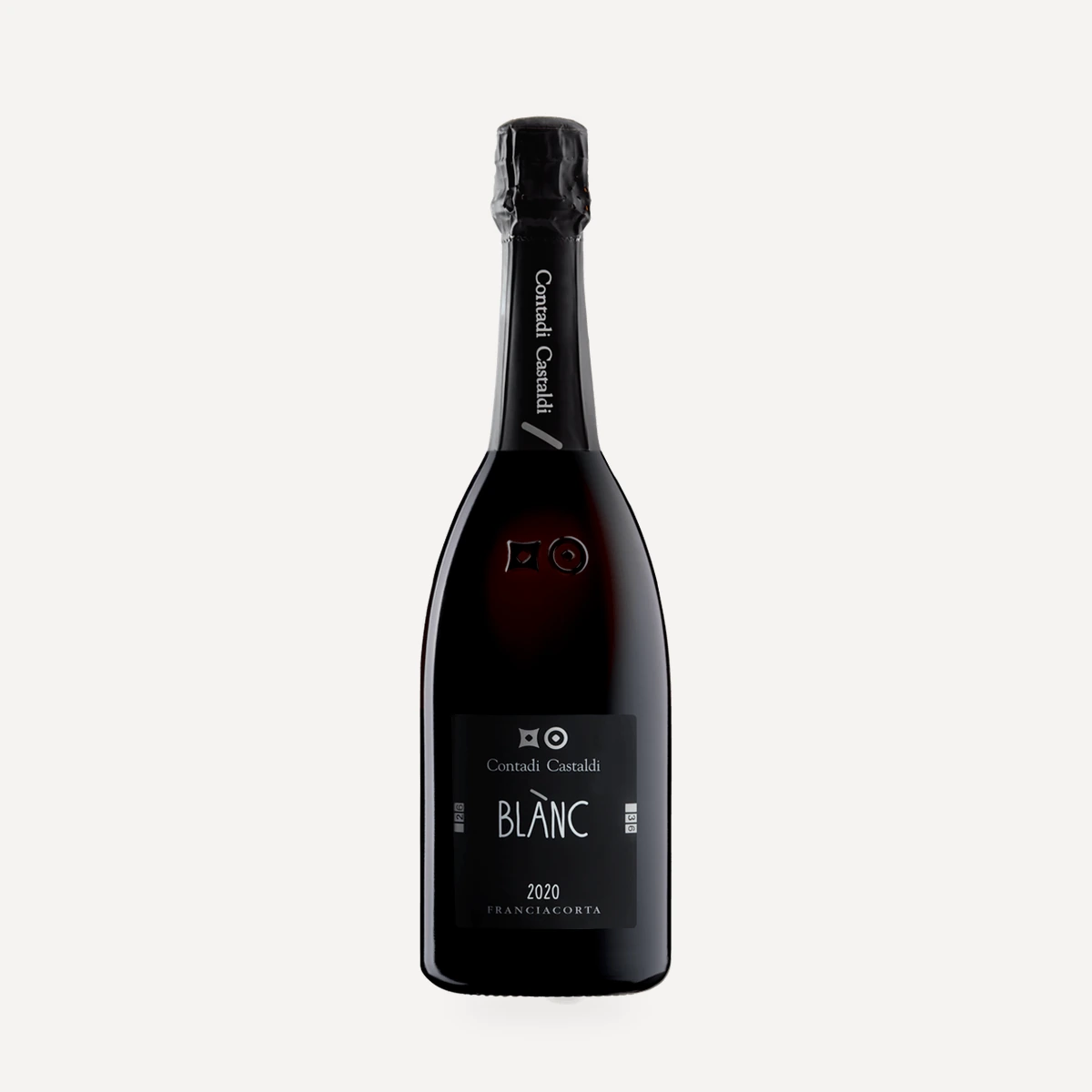
The house pictogram also derives from production. Its round element represents the base of a Franciacorta bottle viewed while resting in the tunnels; the second element reproduces the negative space formed between bottles in a stack.
Philosophy
Diversity as a resource
Contadi Castaldi’s guiding idea is that neither vineyards nor winegrowers are interchangeable. Individual growers may be specialists in Pinot nero, Chardonnay, Pinot bianco, vine training or green pruning, while each of Franciacorta’s six viticultural units supplies a distinct expression. The house seeks to understand and preserve those differences rather than impose a uniform vineyard identity.
The unifying standard is meticulous manual care directed toward healthy, long-lived vines. Geological variation, microclimatic diversity and differing cultivation methods form the raw material for the house style.
The cuvée as interpretation
Blending is presented as the decisive act for interpreting each harvest. Components from different origins carry their individual character into a cuvée, where completeness and complexity are expected to develop into harmony over time. Innovation therefore lies in studying and combining the territory’s differences rather than severing the connection with established vineyard knowledge.
An unconventional identity
The house describes itself as youthful, free from constraint and addressed to rebels, free spirits and people who wish to be themselves. Its contemporary identity combines freshness, experimentation and freedom of expression with a production model grounded in Franciacorta’s vineyards, growers and long bottle-ageing tradition.
Wines
Zèro
Brùt
Satèn
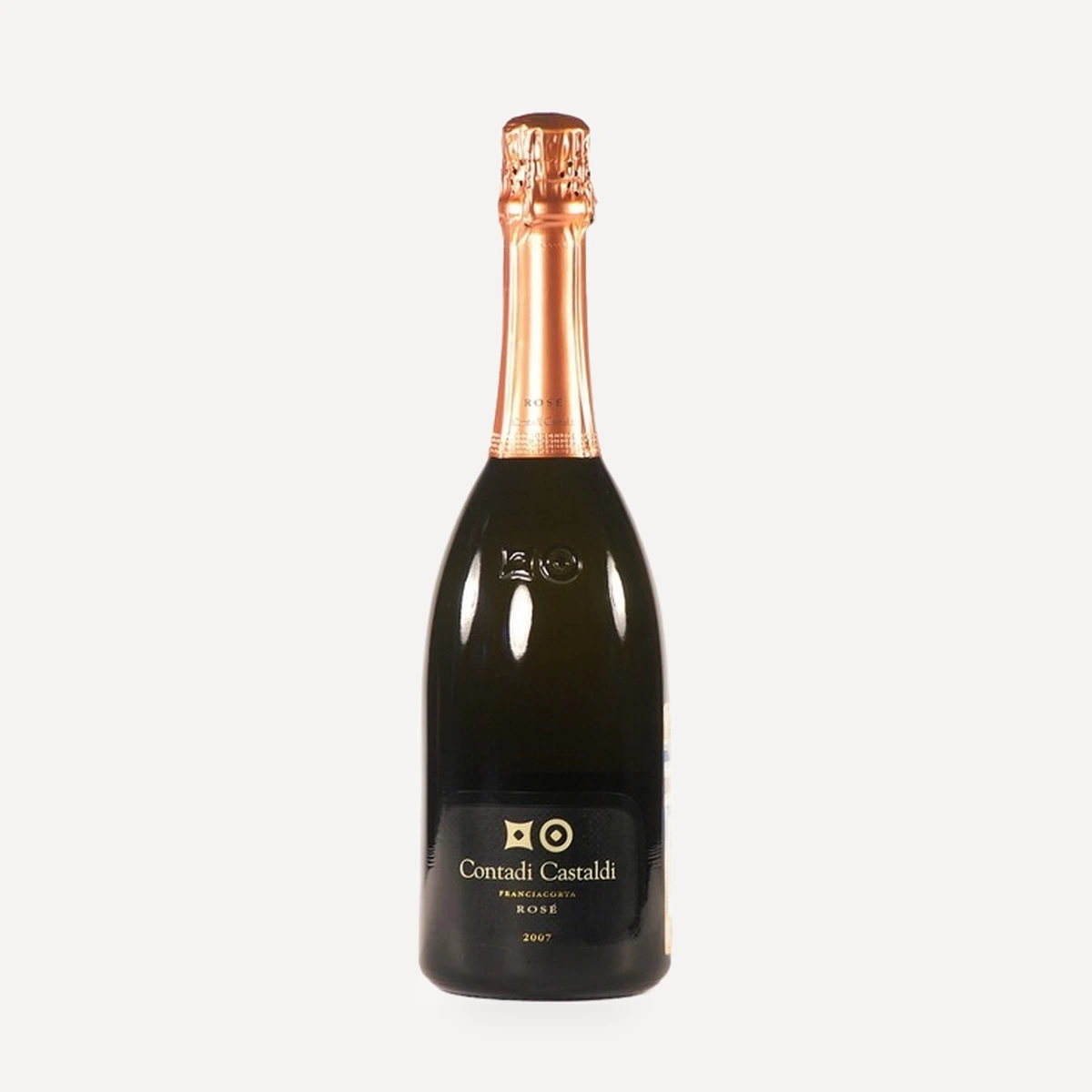
Rosé
Brut Race Ducati Corse
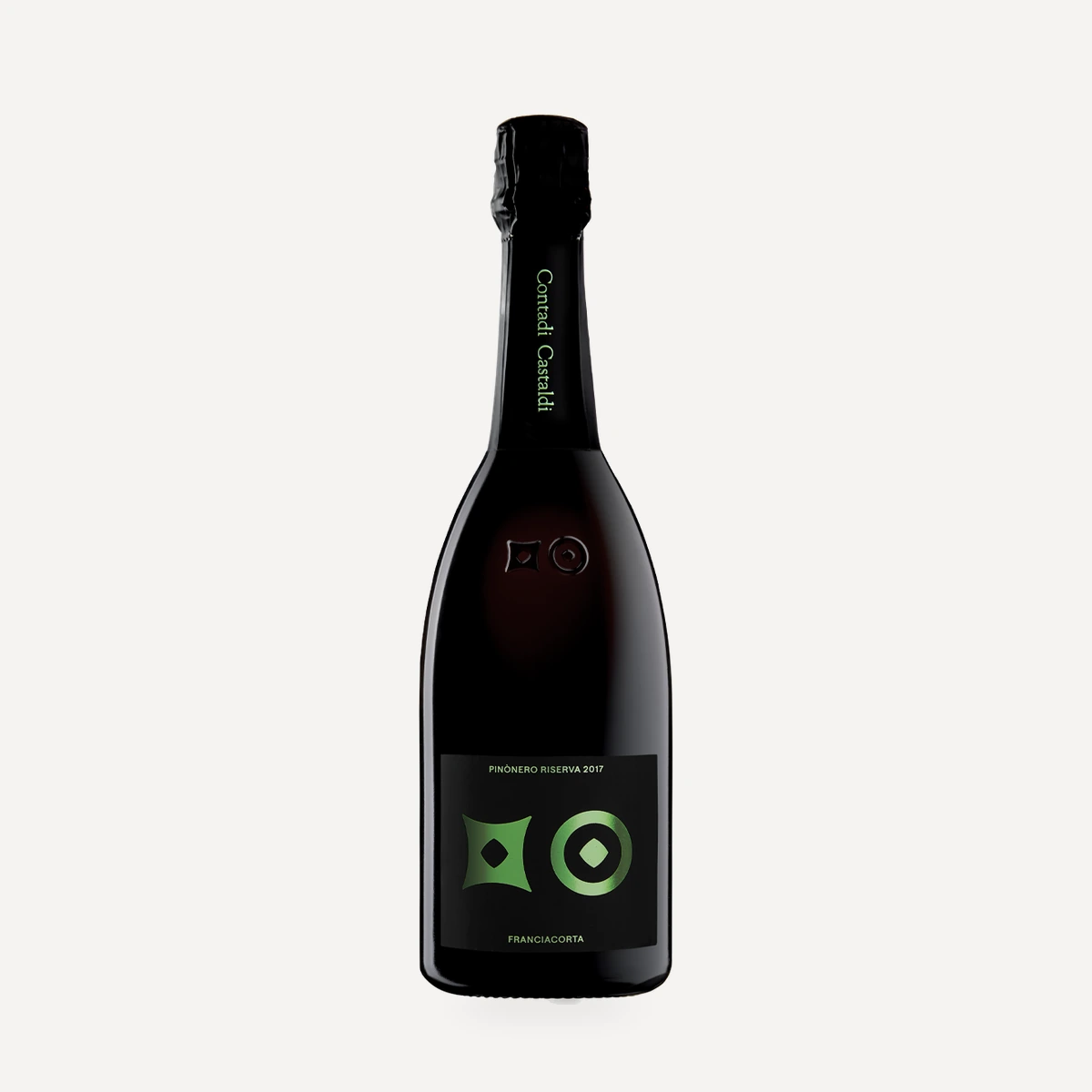
Pinònero