Dionysus.
ExploreWines
Est. 1979Franciacorta DOCG

Antica Fratta

History

Earlier origins

The property’s architectural origins reach back to a rural building believed to date from the sixteenth century. By the middle of the nineteenth century, the cellar established in the Fratta district of Monticelli Brusati was already regarded with admiration.

In the second half of the nineteenth century, Cavaliere Luigi Rossetti, a prosperous local wine merchant, transformed the old farmhouse into an elegant residence and the headquarters of his wine trade. For that business he created extensive underground cellars by excavating the living rock of the hill descending behind the villa. The surviving cellars are dated to 1850 and lie beneath the nineteenth-century residence.

The 1979 renewal

In 1979, the villa was renovated and restored to its earlier splendour. The same year marked the beginning of Antica Fratta’s modern wine project: Franco Ziliani conceived a cuvée intended to express the distinctive contribution of individual parcels and began a methodical selection of the most suitable sites. That vineyard-selection programme eventually grew to 30 ha under management.

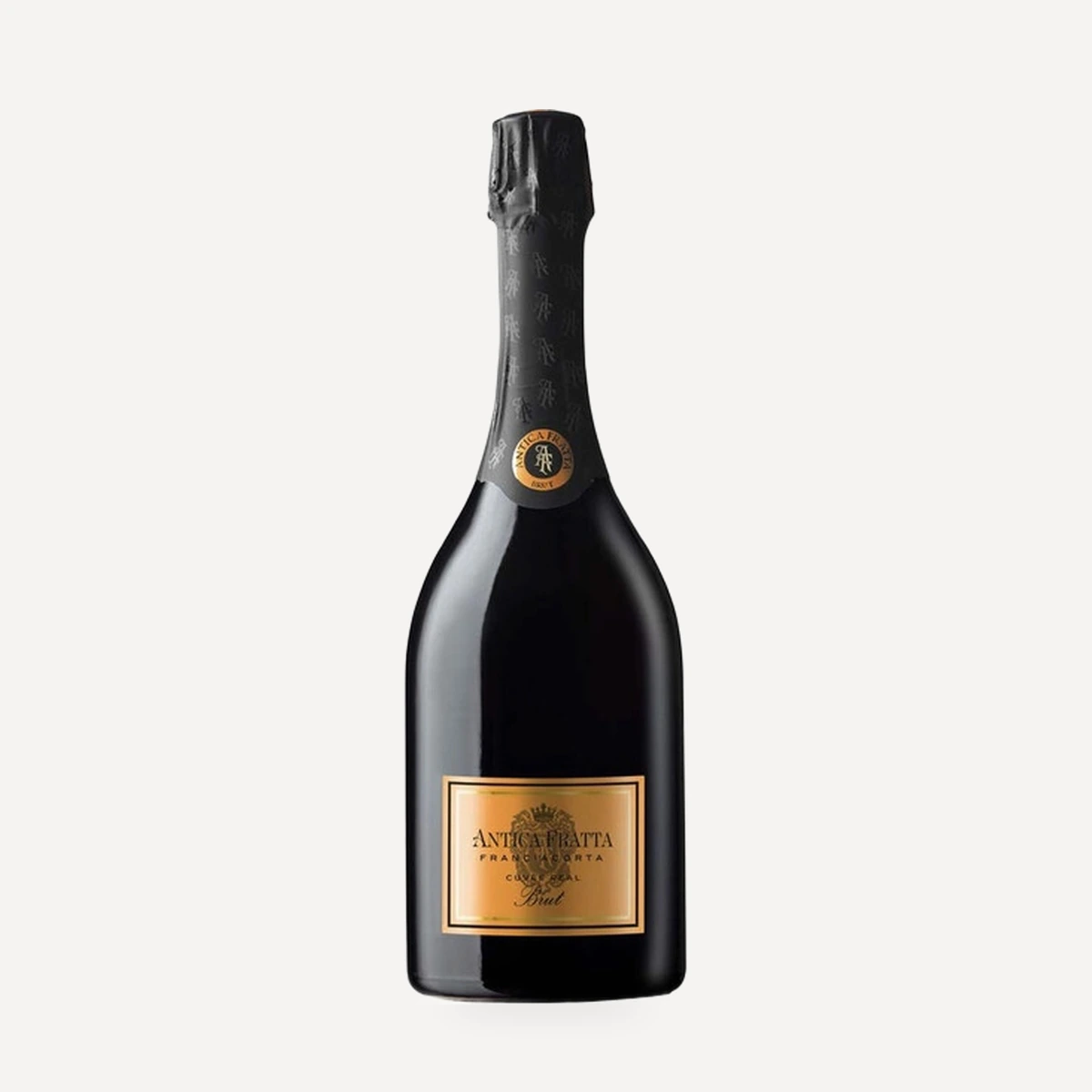
The first vintage listed for Cuvée Real is 1980. Its sequence of produced vintages continues without interruption through 2024, documenting the long continuity of the cuvée initiated by Ziliani.

Development of the range

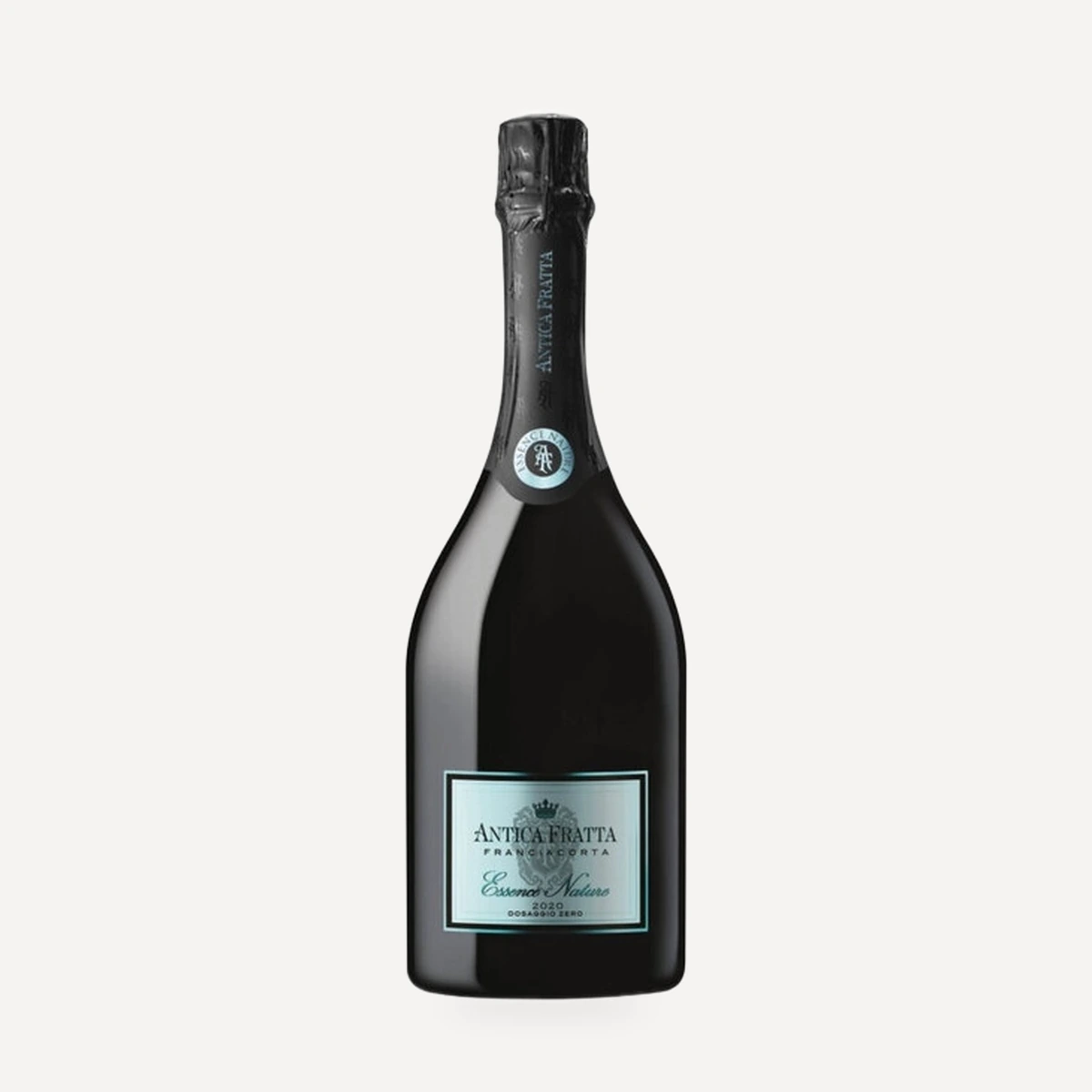
The first recorded vintage of Essence Brut was 1998, followed by Essence Satèn in 1999. Essence Rosé and the long-aged Quintessence Riserva both begin with the 2005 vintage. Essence Nature starts with 2009, while Essence Noir begins with 2014. Together these releases broadened the project from its original cuvée into a range exploring different blends, varieties, dosages and periods of lees maturation.

Antica Fratta today

The historic residence, centuries-old garden, underground galleries and rock-cut tunnels remain central to the estate. Antica Fratta presents this heritage as something entrusted from one generation to the next, while its wines continue to be based on a varied mosaic of Chardonnay, Pinot Nero and Pinot Bianco vineyards across several parts of Franciacorta.

Presumed 16th centuryThe rural building later transformed into the Antica Fratta residence was probably constructed.
1850The historic cellars were created in the living rock beneath the residence.
Mid-19th centuryThe cellar in the Fratta district of Monticelli Brusati was already attracting admiration.
Second half of the 19th centuryCavaliere Luigi Rossetti converted the old farmhouse into his residence and wine-trading headquarters and developed the rock-cut cellars behind the villa.
1979The villa was renovated and restored to its former splendour.
1979Franco Ziliani conceived a cuvée designed to bring the character of individual parcels into a harmonious whole and began selecting suitable vineyard sites.
1980First listed vintage of Cuvée Real.
1998First listed vintage of Essence Brut.
1999First listed vintage of Essence Satèn.
2005First listed vintages of Essence Rosé and Quintessence Riserva.
2009First listed vintage of Essence Nature.
2014First listed vintage of Essence Noir.
29 July 2026Antica Cantina Fratta S.p.A.’s board adopted its current Ethical Code.

Terroir

Geographic setting

Antica Fratta is based in Monticelli Brusati within Franciacorta. The wider growing area covers approximately 320 km² between Brescia, the Rhaetian Prealps, Lake Iseo and the Oglio River. It is gently hilly, with alluvial terrain rich in pebbles and limestone. Cool air descending from the pre-Alpine valleys produces useful temperature variation, while good sunlight and well-distributed rainfall support the production of base wines for bottle refermentation. Lake Iseo contributes a mild climatic influence.

Vineyard mosaic

The 30 ha under management are distributed among contrasting sectors. Fifteen plots lie in the hills of Monticelli Brusati and Ome at 200–400 m above sea level, with eastern, southern and western exposures. Their fine-deposit soils carry 11 ha of Chardonnay, 4 ha of Pinot Nero and 1 ha of Pinot Bianco.

Farther along the morainic amphitheatre, five vineyards in Paderno Franciacorta, Passirano and Provaglio d’Iseo occupy more compact, gravelly terrain rich in coarse mineral material and clay. These sites comprise 5 ha of Pinot Nero and 3 ha of Chardonnay.

A further 6 ha of Chardonnay are situated at Calino, where the deep morainic subsoil favours the variety’s fruit expression. The hills immediately behind the winery contain sedimentary limestone rock, associated with a saline character. The morainic hills of Monterotondo and the steep slopes of Monticelli Brusati supply contrasting components, while the limestone and marl of Monticelli Brusati are associated with pronounced aromatic character and sapidity.

Winemaking

Hand harvestGrapes are picked by hand, placed in crates and transported to the cellar.
Separate vineyard lotsThe harvest from each vineyard is vinified separately before selection and blending.
Gentle fractional pressingDelicate pressing separates must fractions; selected bases use maximum must yields of 30% or 45%.
Varied maturation vesselsBase wines mature in steel, French-oak tonneaux or barrels, and stoneware amphorae.
Bottle refermentationSugar and yeast initiate the second fermentation in bottle, followed by extended lees ageing.
Traditional finishingRemuage on pupitres precedes neck freezing, disgorgement, dosage and final corking.

Harvesting is carried out by hand, as required for Franciacorta production. Depending on the season, picking takes place from the first ten days of August to the first ten days of September. Bunches are placed in crates and transported to the cellar, where each vineyard’s crop is kept separate for vinification.

The Franciacorta rules presented by Antica Fratta set a maximum vineyard yield of 120 quintals of grapes per hectare. Selection continues at pressing: depending on the intended base wine, Antica Fratta works with maximum must yields of 30% or 45%, using the earliest and most delicate pressing fractions for several cuvées.

Pressing and base wines

Hand-harvested bunches arrive in crates and are processed separately by vineyard. Pressing is deliberately gentle and divides the must into fractions. Across the range, the selected fractions have maximum must yields of either 30% or 45%, depending on the intended cuvée.

Base wines are principally vinified in steel to retain freshness, aromatic clarity and varietal character. Selected components are also matured in French-oak tonneaux or barrels and in stoneware amphorae. Reserve wines used in the non-vintage blend may spend about a year in French oak and stoneware. Other selected bases receive at least nine months in steel and French-oak tonneaux, while some Pinot Nero parcels mature for six months in tonneaux after alcoholic fermentation in steel. Pinot Nero may be pressed without skin contact for white base wines; a portion intended for rosé undergoes cold maceration, while another portion is vinified white.

Assemblage and tirage

Base wines are assessed and blended in the spring after harvest. The blends may unite Chardonnay’s elegance and ripe fruit with the structure, freshness and savoury character of Pinot Nero. The non-vintage approach combines the latest harvest with selected reserve wines from earlier years, using the diversity of sites, varieties, vintages and maturation vessels to build continuity and balance.

At tirage, sugar and yeast are added to the assembled base wine before bottling. The sealed bottles undergo a slow second fermentation, or prise de mousse, which produces carbon dioxide and raises pressure to approximately 6–7 atmospheres.

Lees ageing

The bottles remain horizontal in the underground cellar while the wine matures on its lees. Antica Fratta uses several ageing regimes: at least 24 months for its non-vintage cuvée; at least 30 months for several vintage wines; at least 50 months for a long-aged Pinot Nero expression; and at least five years for its Riserva. The Riserva receives a further year of maturation after disgorgement.

Remuage, disgorgement and finishing

After lees ageing, bottles are placed on pupitres, turned daily by one-eighth of a rotation and gradually inclined so that the sediment moves toward the neck. This remuage process takes approximately three to four weeks. The bottle neck is then immersed in a refrigerating solution, freezing the yeast deposit. Removal of the crown cap allows the internal pressure to expel the frozen sediment with minimal loss of wine.

Undosed wines are topped up with wine alone; other cuvées receive a dosage syrup composed of Franciacorta base wine and sugar. Bottles are closed with mushroom-shaped corks secured by wire cages. Before release, each bottle bears the Italian state strip certifying Franciacorta DOCG after chemical, physical and sensory controls.

Philosophy

Antica Fratta defines its identity through the meeting of people and nature, time and matter, darkness and light. Its approach treats Franciacorta as something that must be awaited, observed and carefully preserved. The range moves from younger cuvées to prolonged lees maturation, allowing different expressions of time and depth.

Continuity is built through attention to individual parcels and the use of contrasting base wines as complementary elements rather than variations to be erased. The original 1979 project sought harmony while preserving the identity of each site; the current non-vintage blend continues that principle by combining the latest harvest with selected reserve wines. Vintage and Riserva wines explore phenolic ripeness, varietal character and long maturation, while steel, French oak and stoneware are chosen according to the role of each component.

The company’s Ethical Code places legality, responsibility, product quality and adherence to DOCG, DOC and IGT production rules at the centre of operations. It commits the company to documented monitoring, truthful communication of origin and product characteristics, and transparent reporting of sustainability impacts.

Its environmental commitments include using suitable available technologies to reduce direct and indirect impacts, optimising natural-resource use, adopting eco-efficient technology, reducing and separating waste, promoting recovery and recycling, seeking environmentally preferable materials with suppliers, reducing the impact of freight transport and investing in continuing environmental improvement. The code also recognises protection of historic, artistic, archaeological and landscape heritage as part of the company’s social responsibility.