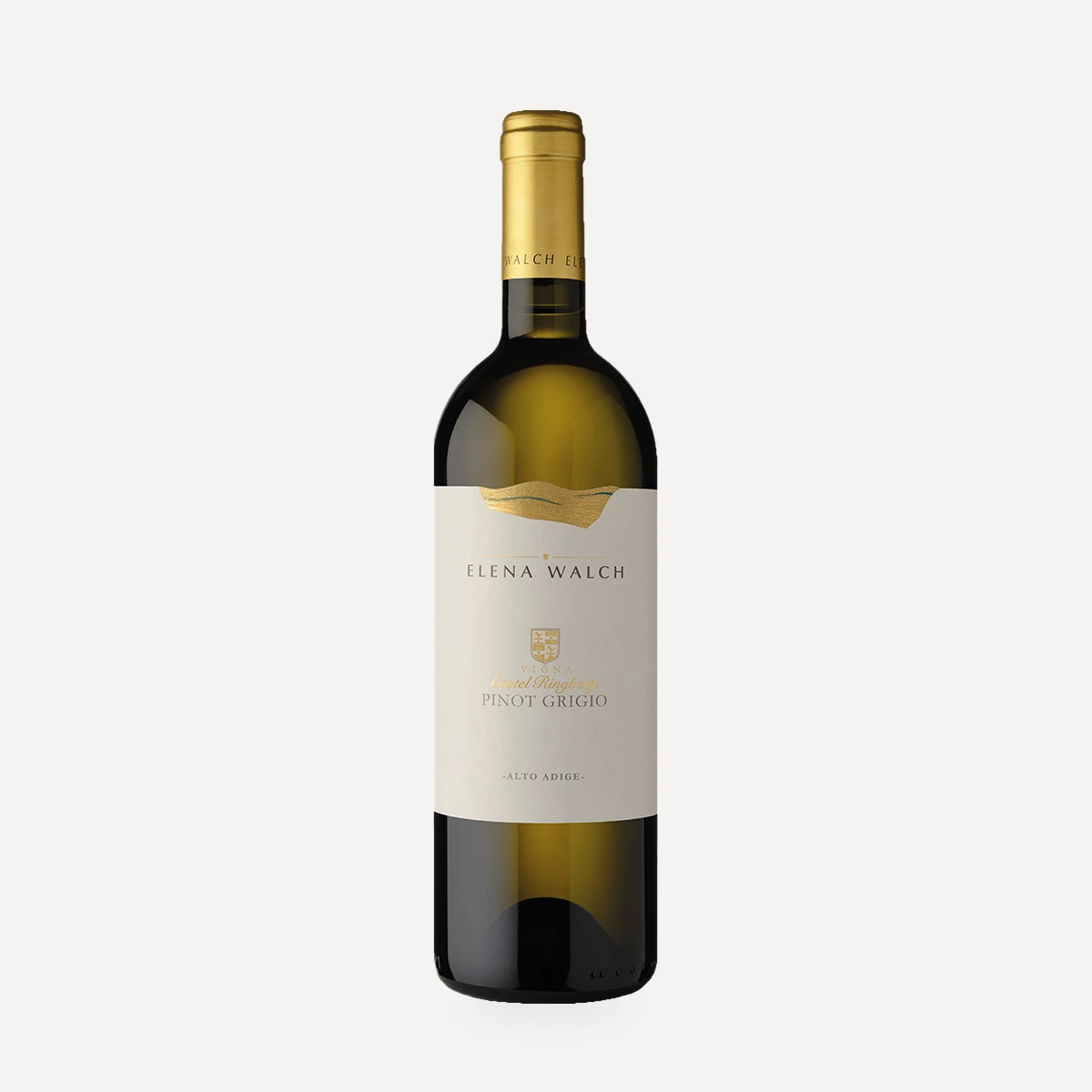
About this wine
Vineyard and terroir
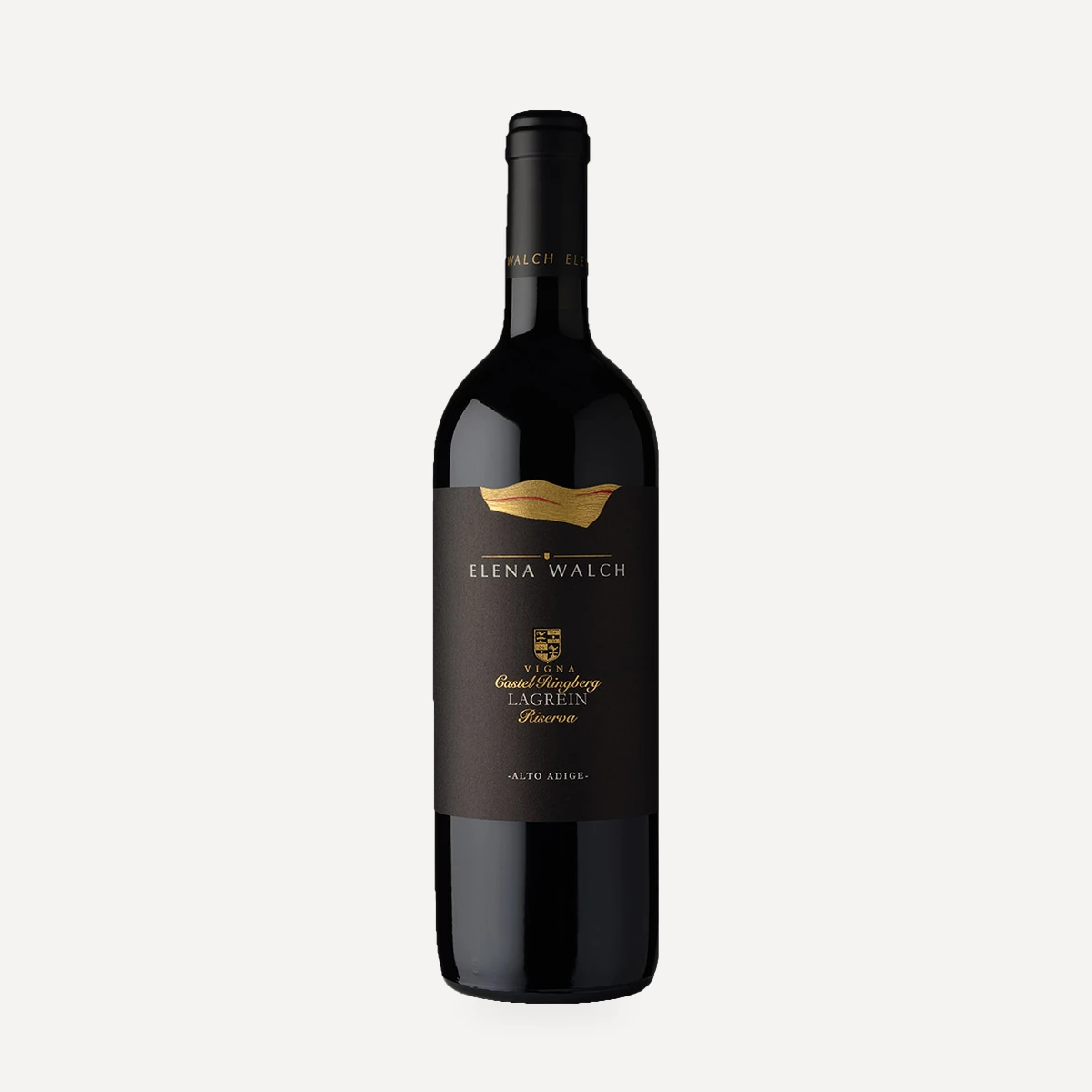
Vigna Castel Ringberg is a monopole vineyard named for the Renaissance castle built by the Habsburgs in 1620. It rises from Lake Caldaro toward the Mendel ridge across moderate and steep slopes at 330–400 m. Higher sections contain roughly 30,000-year-old glacial gravel deposited by the Adige River; lower sectors combine calcareous soils over morainic substrata with loose limestone. Lake Caldaro moderates the climate, while cool nights and the dry southerly Ora wind refresh the vines. Yields are deliberately kept low.
Grapes
100% Pinot Grigio.
Vinification
The grapes are picked entirely by hand and pressed gently, followed by static clarification. Part of the must ferments in stainless steel at a controlled 20 °C. Another 40% ferments in large oak barrels and Allier barriques and undergoes partial malolactic fermentation. The components are blended shortly before bottling in the spring following harvest.
Ageing
The product description also specifies a small wood-fermented portion in 25 hL barrels with ten months of maturation, followed by bottle maturation.
Technical data
The 2024 has 14.0% alcohol, 5.6 g/L total acidity and 1.0 g/L residual sugar. Bottle format is 0.75 L, and the stated ageing potential is 3–5 years.
Tasting profile
Clear, strong straw yellow. Ripe pear, lime blossom, sage and other spices form a layered bouquet. The palate combines structure and elegance, power and harmony, with creamy richness and density. Fresh acidity and an integrated range of aromas make it versatile at the table.
Serving and pairing
Serve at 12–14 °C. Suitable as an aperitif and with vegetable or fish-based main courses.
Vintage notes
The 2024 season began with an unsettled, rainy spring during flowering, followed by a cool start to summer that required extra vineyard work. July and August were dry, warm and sunny, allowing even ripening and balanced pH, acidity and sugar levels. The crop was smaller in volume but considered excellent in quality.
Label / history
Castel Ringberg takes its name from the Renaissance castle erected there by the Habsburgs in 1620.