History
The origins: early 1900s
Decio Fongoli founded the family enterprise in the early twentieth century after taking over a property composed of several farms at the top of the hill in S. Marco, within the Montefalco wine-growing area. It was a mixed agricultural holding typical of its period: the farms made wine and olive oil, raised pigs and cattle, and cultivated arable crops.
The first bottled wines: 1940s
Decio’s son Angelo Fongoli began bottling wine during the 1940s. The early labels included Bianco S. Marco, Rosso di Montefalco and Vino Sagrantino Pregiato. All three were then legally classified as table wines.
Recognition of Sagrantino: 1977
Angelo’s commitment to Sagrantino continued through the period leading to the recognition of Sagrantino di Montefalco as a DOC in 1977. Fongoli was the only producer under the denomination in that year.
Early competition successes: 1981 and 1983
Montefalco Rosso received the Dujia d’Or in both 1981 and 1983. Other local distinctions followed during the same period.
The third generation: late 1980s–1999
From the end of the 1980s until 1999, management passed to Decio Fongoli, a grandson of the founder and nephew of Angelo. He continued the established approach: fruit came exclusively from the estate, fermentations relied on indigenous yeasts, wines intended for maturation were kept in large oak casks, and bottling remained entirely in-house.
The fourth generation: since 1999
Angelo Fongoli, the founder’s great-grandson, assumed management in 1999. The estate retained its long-standing cellar practices while progressively returning its farming to natural methods. This shift had begun at the end of the twentieth century and developed into the biodynamic management now applied across the whole property.
The present holding forms a single block of about 35 hectares. Vineyards account for 23 hectares and woodland for 6 hectares; the remaining land comprises meadows and ground where truffles grow. Olive groves and arable fields are also part of the farm.
The historical cellar and archive
The cellar preserves an archive of labels and winemaking and bottling artefacts documenting the estate’s development and the wider evolution of bottled wine in Montefalco. Changes in paper, background colours and legal terminology register successive political, social, cultural and generational periods. Despite these changes, visual restraint has remained a recurring Fongoli family convention.
Terroir
The estate occupies the top of a hill at S. Marco in Montefalco. Its 35 hectares form one contiguous block, with the winery centrally positioned among 23 hectares of vines. The vineyards are interspersed with and surrounded by woodland, olive groves, arable fields, meadows, an oak stand with naturally occurring truffles, spontaneous tall trees, shrubs and wild grasses.
The vineyard soils are consistently described as clay and silt with a meaningful skeletal component. They contain substantial organic matter, have a favourable nitrogen-to-carbon balance and show high active-limestone content. The vineyard blocks face south, south-west, or a combination of the two.
Seasonal records show that the hill’s exposure and position normally make damaging spring frost unusual, although frost caused losses in 2017 and 2021. Older, widely spaced vines proved especially resilient during the dry seasons of 2007, 2021 and 2022 because their roots could explore deeper soil layers. Deep cultivation, flexible cover-crop management and protection of the soil surface have been used to respond to drought, heat and concentrated rainfall. Cool autumn conditions and Tramontana winds aided late-ripening fruit in 2008, while warm, dry autumn periods repeatedly enabled the long ripening season required by the estate’s later-harvested red varieties.
Winemaking
All 35 hectares are managed according to biodynamic methods. The family’s more radical return to natural cultivation began at the end of the twentieth century, building on a longstanding concern for the surrounding environment.
Soil management
Very deep autumn ploughing is used to improve soil oxygenation and permeability. In spring, soil is turned and green material is either incorporated or managed as surface cover. Wild and deliberately sown grasses and crops are cultivated in alternating vine rows. No conventional fertiliser or manure is applied. Horn manure is sprayed twice annually, while predominantly plant-derived material produced within the farm is returned to the land.
Rotary cultivation has been abandoned. Traditional drawn implements are favoured because they preserve soil stratification and microbial life. Mechanical weed management changed from milling the whole row to disc cultivation beneath the vine only, allowing spontaneous grasses to remain elsewhere. Mowing frequency and height are adjusted to favour native plants. Tractor use is deliberately limited to reduce compaction.
Green manure and biodynamic soil preparations are used to build humus. Seasonal decisions are flexible: in wet years, deep cultivation helps excess water drain and limits runoff on steep ground; in drought years, green manure may be rolled or laid down without chopping and incorporation to shade the soil. In 2022 the farm adopted minimal tillage—surface management of the cover crop followed by a single autumn harrowing—after extreme water scarcity.
Vine protection and biodiversity
No synthetic chemical crop-protection products are used. Vine protection relies on sulphur, micro-doses of copper sulphate and lime, and biodynamic preparations. Copper and sulphur use follows VinNatur production specifications, which limit both materials.
Tall spontaneous trees, shrubs and grasses alternate with and surround the cultivated areas. Since 2019, the estate has monitored insect populations together with native and non-native plant species to measure biodiversity and assess the effects of its farming choices.
The olive grove serves as a self-regulating trial area: freely grazing horses manage grass, contribute natural fertility and encourage biodiversity. Green manure is the only additional fertility input there.
Harvest
All identified vineyard harvests are manual. Timing is determined block by block and variety by variety, ranging from the second half of August for sparkling bases and early white or rosé fruit to late October for old-vine Sagrantino. Selected bunches are used where required. Some white and rosé grapes are picked from first light until no later than 11:00 so that they reach the cellar cool. The winery’s central position within the contiguous vineyard block shortens picking and transport times and permits harvesting each parcel in response to ripeness and immediate cellar capacity.
The winery stands at the centre of the 23-hectare vineyard block. Short transport times allow most fruit to be processed without an initial sulphur addition and let the harvest proceed in small, ripeness-led passes.
There is no fixed cellar protocol. Decisions respond to the must’s colour, aroma and flavour and to the conditions of each season. The approach combines nearly a century of estate practice with contemporary equipment and experimentation. Vinification is deliberately oxidative rather than reductive: oxygen is introduced and managed through racking and movement when needed to start or sustain fermentation, prevent reduction and achieve natural clarification.
Fermentations begin spontaneously with indigenous yeasts and without a prepared fermentation starter. Oxygenation of the must encourages yeast activity. White and red fruit may ferment in stainless-steel tanks, open vats or terracotta amphorae. The estate also conducts separate micro-fermentations that can be assembled after completion. Fermentation generally proceeds without temperature control.
Open-vat and amphora work may include manual cap submersion or punch-downs, in some cases three times daily. A horizontal membrane press provides gentle pressing. Depending on the material, the cellar uses direct pressing, free-run or first-pressing must, short skin contact, or extended post-fermentation maceration. Lees contact is used for some whites and rosés, with periodic movement, racking and oxygenation.
Red wines intended for ageing mature in large Slavonian oak casks rather than small new barrels. The cellar maintains casks of seasoned wood ranging from approximately 5 to 80 years old. Montefalco Rosso is matured for roughly two years, while Sagrantino may remain in cask for as long as five years. Racking and controlled oxygenation progressively clarify the wine.
No fining or filtration is used. Sediment is removed naturally through settling and racking, with cellar operations coordinated with lunar phases. Bottling takes place strictly on the estate. Many bottlings receive no sulphur dioxide at bottling; a small addition may be made earlier for selected fermentations. Bottle-fermented wines are produced by adding retained frozen must once the base wine is stable, allowing a second fermentation in bottle without filtration.
Philosophy
Fongoli’s philosophy treats the farm as a single agricultural ecosystem rather than a vineyard isolated from its woodland, fields, animals and uncultivated vegetation. The stated objective is a complete return to natural methodology, pursued persistently since the end of the twentieth century through biodynamic cultivation, farm-derived fertility, reduced tractor traffic and the restoration of traditional soil tools.
The family seeks to protect living soil rather than mechanically standardise it. Deep ploughing, alternate-row cover crops, spontaneous vegetation and season-specific cultivation are intended to maintain permeability, humus, microbial life and biodiversity. Monitoring plants and insects provides a practical check on whether those choices are working.
In the cellar, the family rejects standard recipes. Each vintage and each must determine the work required. Artisan judgement supplements technical knowledge developed specifically from the estate’s own grapes and vineyards. Oxygen is viewed as a tool to be managed consciously, not something to exclude categorically.
Continuity is central to this approach: estate-grown fruit, indigenous yeasts, large old casks and on-site bottling connect present production to the methods carried through four generations. At the same time, micro-fermentations, terracotta vessels, bottle refermentation and ongoing experiments allow the cellar to adapt rather than reproduce a fixed historical model.
Wines
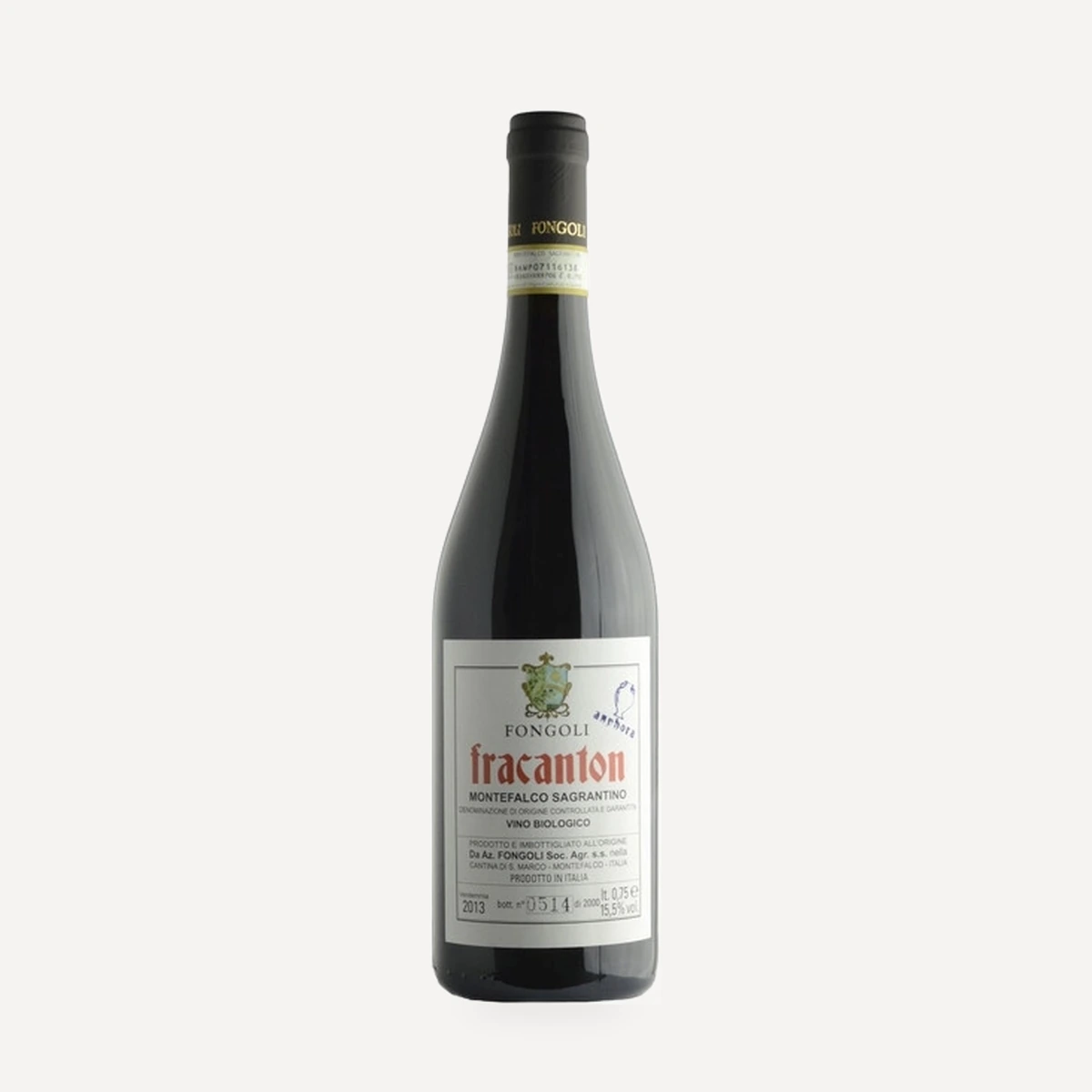
Fracanton
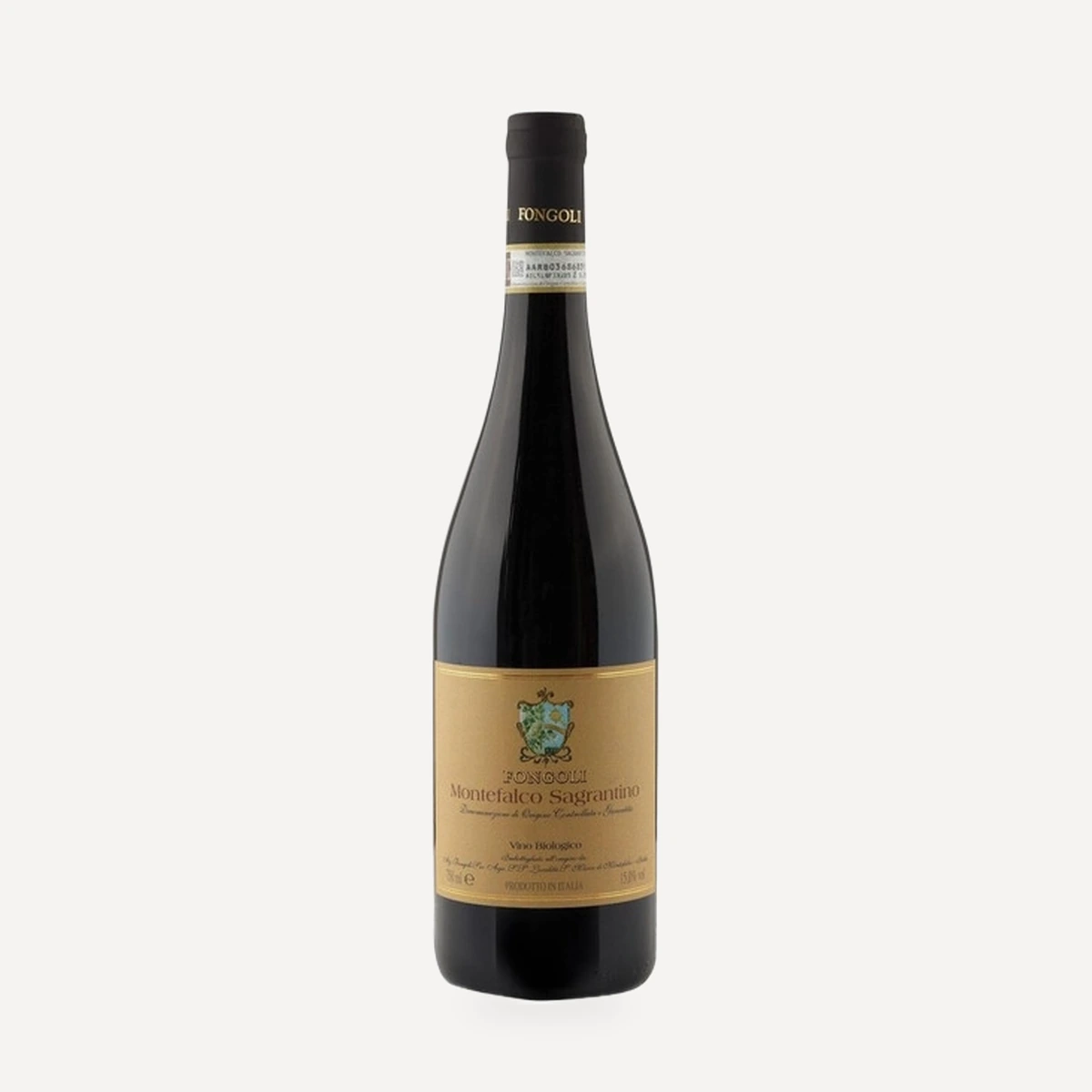
Montefalco Sagrantino