History
Family roots in Montefalco
The Bea family's roots in Montefalco reach back to at least 1500, with evidence preserved in the historical archive of the municipality. Its agricultural knowledge accumulated across approximately five centuries through family practice, oral memory and experience passed between generations.
Paolo Bea learned the craft as a child from his father. The family initially produced food and wine as part of its own agricultural life. Paolo, encouraged by his sons Giuseppe and Giampiero and supported by his wife Marina, later decided to make the products that appeared daily on the family table available to a wider public.
Administrative establishment and bottling
Azienda Agricola Paolo Bea was established administratively in 1973 following the introduction of new Italian regulations. The formal establishment codified an agricultural and winegrowing activity that had already existed for a long time within the family's traditions.
The estate began bottling wine in 1980. As production developed, it invested in strengthening its activities while retaining the identity and typicity of its agricultural products. The family also participated in efforts supporting recognition of the area's DOC and DOCG wines.
Environmental and production commitments
From 1999, the estate adhered to Reg. CEE 1257/99, Measure 212(f), Action A2 and its integrated-agriculture production rules. This formed part of a broader effort to prevent synthetic-chemical contamination of agricultural soils and to restore the balance between natural cycles and human work.
In 2004, Giampiero Bea joined Angiolino Maule of Veneto, Fabrizio Niccolaini of Toscana and Stanislao Radikon of Friuli in founding Gruppo ViniVeri, subsequently known as Consorzio ViniVeri. The initiative brought together growers committed to obtaining wine through natural processes while resisting contamination and standardisation.
By the corporate policy dated 16 January 2009, the estate had adopted management systems based on UNI EN ISO 14001:2004 for environmental management, OHSAS 18001:2007 for occupational health and safety and UNI EN ISO 9001:2008 for quality management. Its stated priorities included soil protection, environmental monitoring, lower treatment use, machinery and plant improvements, energy efficiency, pollution prevention, worker safety and continuous internal assessment.
Terroir
The estate lies within the municipality of Montefalco in Umbria, with its address at Cerrete. Its documented vineyard locations occupy the hills of Montefalco and, in one case, the lower hills between Trevi and Montefalco.
Elevations range from approximately 200 m for the Trebbiano Spoletino site between Trevi and Montefalco to approximately 400–430 m at Cerrete. Pagliaro, San Valentino and Pipparello are described at about 400 m. The documented exposures extend from east through south to west.
Clay is the recurring soil component. Pagliaro includes clay and, in one documented block, alternating gravel layers. Pipparello likewise combines clay with gravel strata. Cerrete has a more varied profile of clay, silt and layers of river pebbles. The family connects the character of its products to the mineral and physical composition of Montefalco's soils, together with climate and topography, treating these elements as the source of the place's distinct taste.
Winemaking
The vineyards are managed through a family-directed approach intended to maintain or restore equilibrium between human work and natural cycles. Synthetic chemicals are excluded, treatments are kept to a minimum, and the estate seeks to avoid synthetic-chemical contamination of agricultural soils.
Since 1999, the estate has recorded adherence to the integrated-production rules connected with Reg. CEE 1257/99, Measure 212(f), Action A2. Its environmental programme gives priority to soil protection, collection and monitoring of environmental and weather data, and experimental reduction of treatments through plant-derived products and techniques related to biodynamics. Vineyard decisions also take seasonal reactions and lunar phases into account.
The stated ecological objective is to preserve the balance of the original flora and fauna while allowing natural cycles to proceed without artificial acceleration. Weather observations are recorded to improve understanding of the territory and its cycles from one season to the next.
All grapes and olives are harvested by hand. Vineyard-specific technical records describe transport of grapes in small stainless-steel containers. Training systems include spur-pruned cordon, wire-trained vines and Trebbiano Spoletino vines associated with maple trees. Recorded densities range from approximately 2,000 to 3,000 vines/ha, while documented yields range from 50 to 100 q/ha depending on site, variety, wine and vintage.
Production is directed and coordinated within the Bea family, with Giampiero Bea responsible for the chain from vineyard to bottle and assisted by personnel selected by the family.
The cellar approach entrusts the transformation of grapes into wine to natural processes. Synthetic chemicals are avoided in both vineyard and cellar, and forced stabilisation is excluded so that wine is not artificially accelerated toward earlier drinkability. The family treats sediment as a normal consequence of this approach rather than removing it through coercive processing.
Technical records document skin fermentation after the stems are separated at crushing, with extended maceration used across both white and red production. Stainless-steel tanks and large oak casks are employed for maturation; documented large casks include 25–30 hl vessels and Slavonian oak. Some lots are matured for extended periods in stainless steel, while others move from stainless steel to large oak and then to bottle. Individual records also document maturation on lees.
Bottling traditionally takes place toward the end of September, before the next harvest begins. Wines then rest in dark, quiet conditions before release. Bottles are individually numbered and identify the total production of the corresponding vintage. Production volume changes from year to year in response to weather and natural conditions.
Philosophy
The Bea family's guiding idea is that nature should be observed, listened to and understood rather than dominated. Wine is regarded as something generated by nature, with human work serving to assist its processes and maintain the best possible balance rather than replacing or forcing them.
The approach combines inherited family knowledge, the memories and experience of older winegrowers, close observation of each season and attention to lunar phases. Modern methods, technology and science are accepted where they support the work, but not where they displace natural properties and processes considered essential to an equilibrium formed over millions of years.
Place-specific diversity is central to this position. The physical structure and minerals of the soil, climate and topography are understood to give agricultural products the taste of their place. Avoiding standardisation is therefore both a cultural and agricultural objective: local traditions, cultivation and flavours are treated as expressions of the identity of their communities.
In practical terms, the philosophy calls for recording seasonal weather, minimising vineyard treatments, trusting natural grape-to-wine transformation, avoiding synthetic chemicals in vineyard and cellar, preserving the balance of native flora and fauna and waiting for natural cycles without haste. The intended result is wholesome agricultural produce that retains the flavour and identity of its land.
Wines
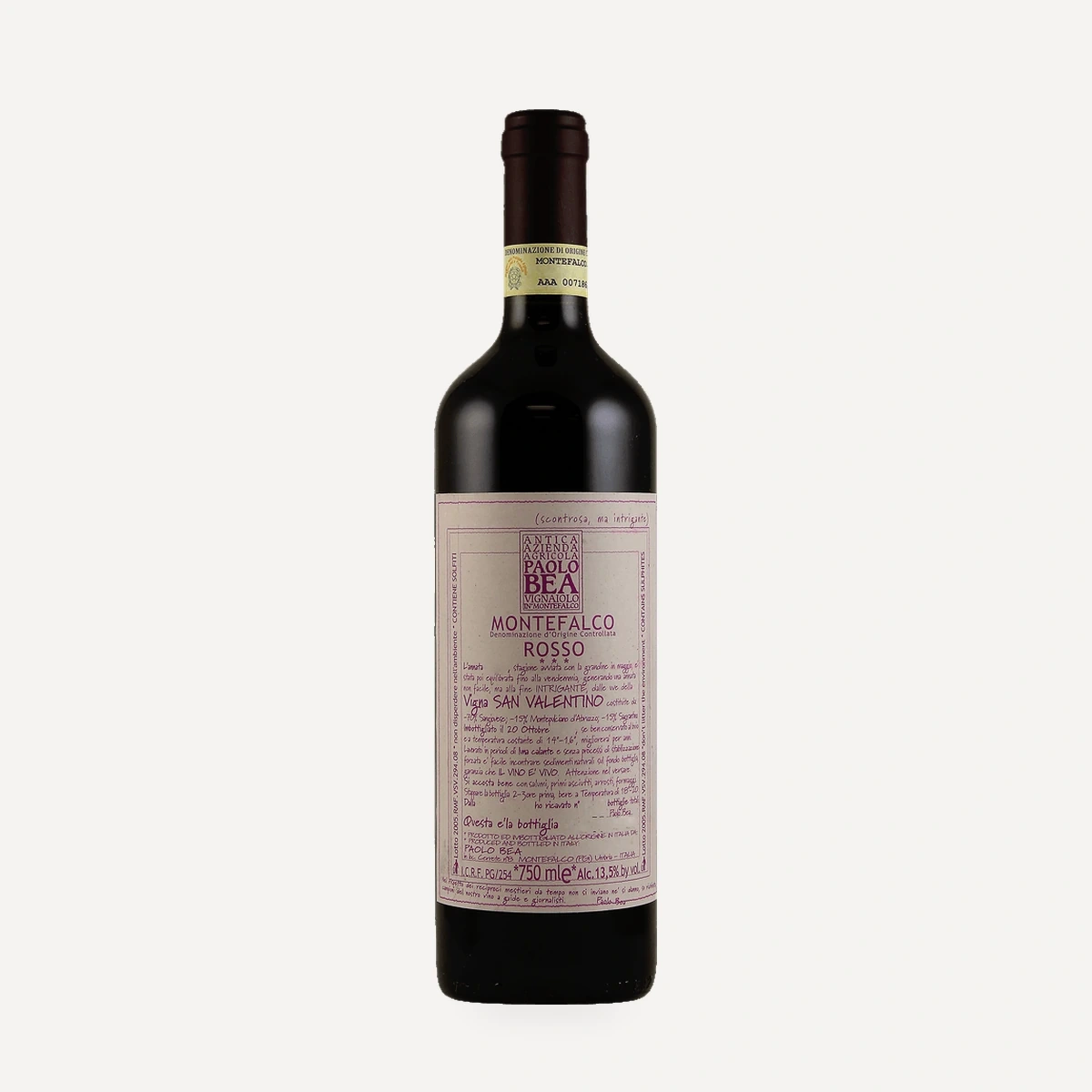
Montefalco Rosso DOC
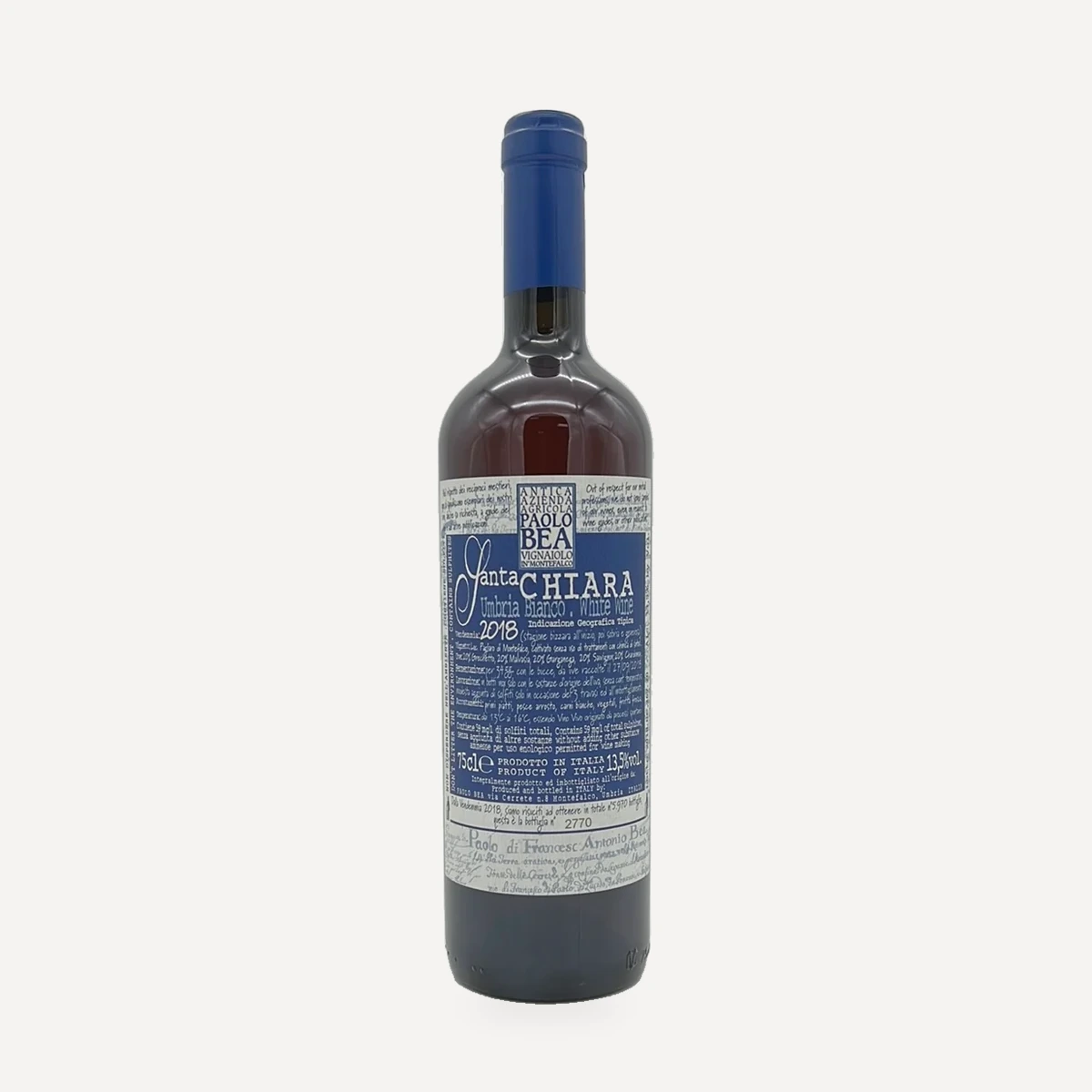
SantaChiara, Umbria Bianco IGT
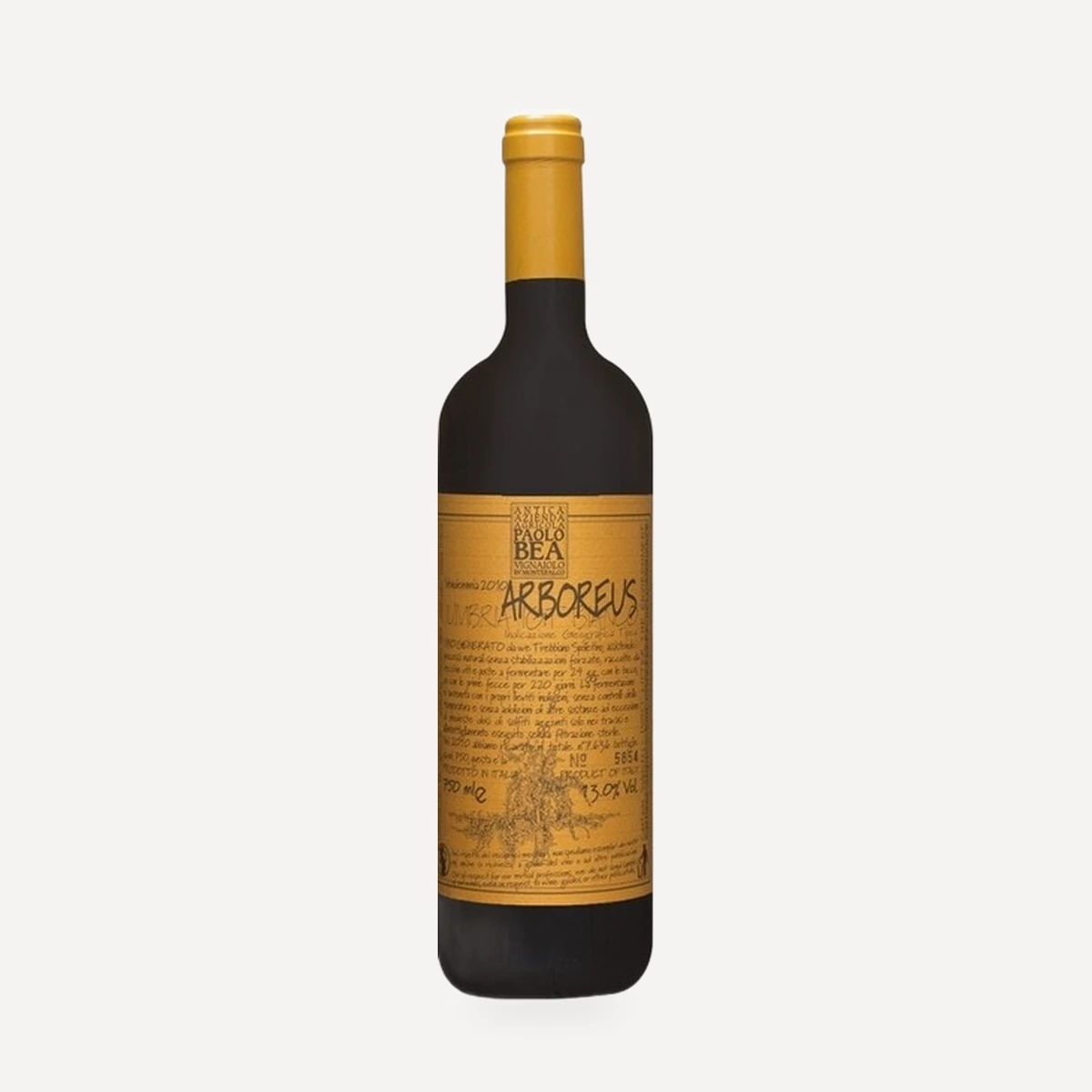
Arboreus Trebbiano Spoletino, Umbria Bianco IGT
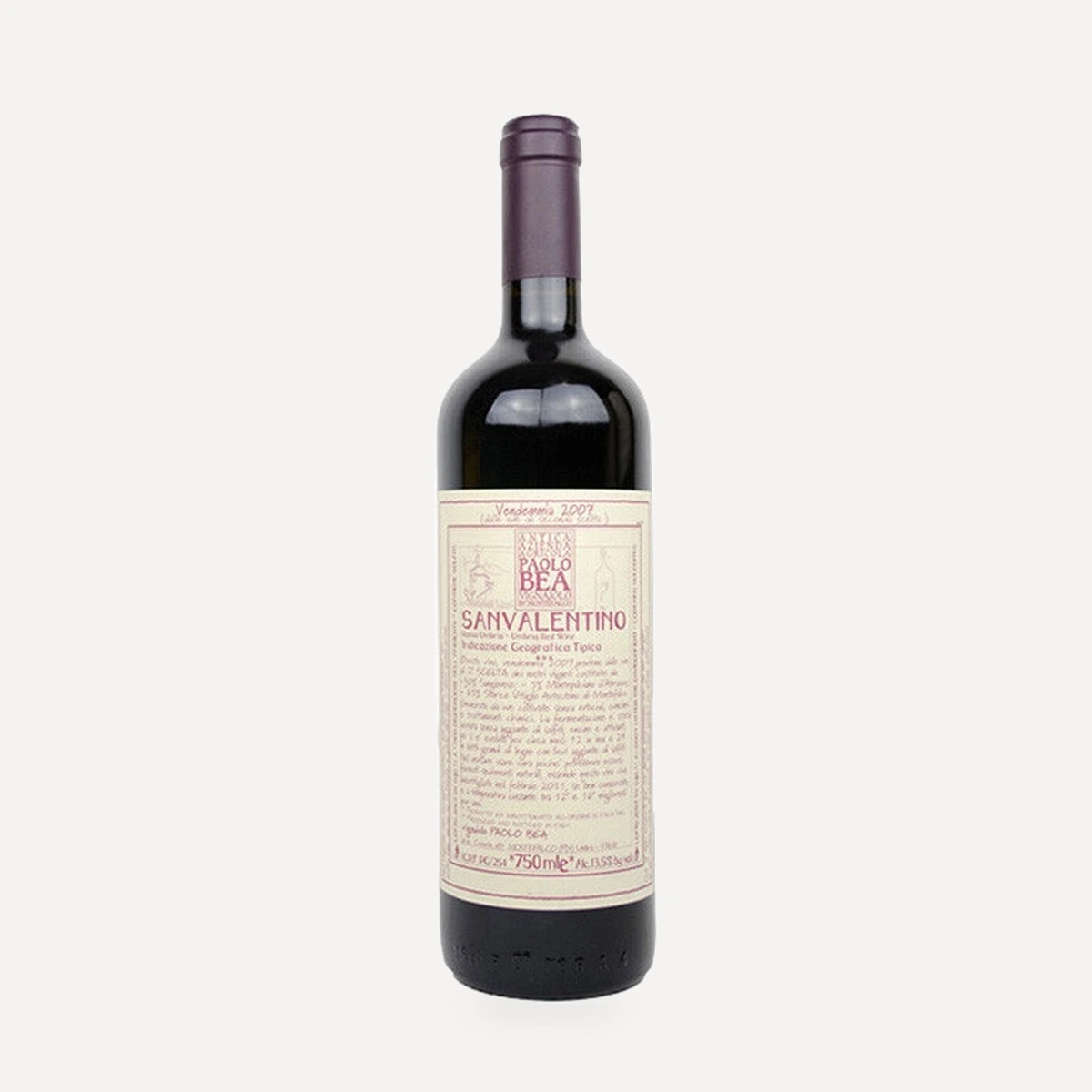
SanValentino Umbria Rosso IGT
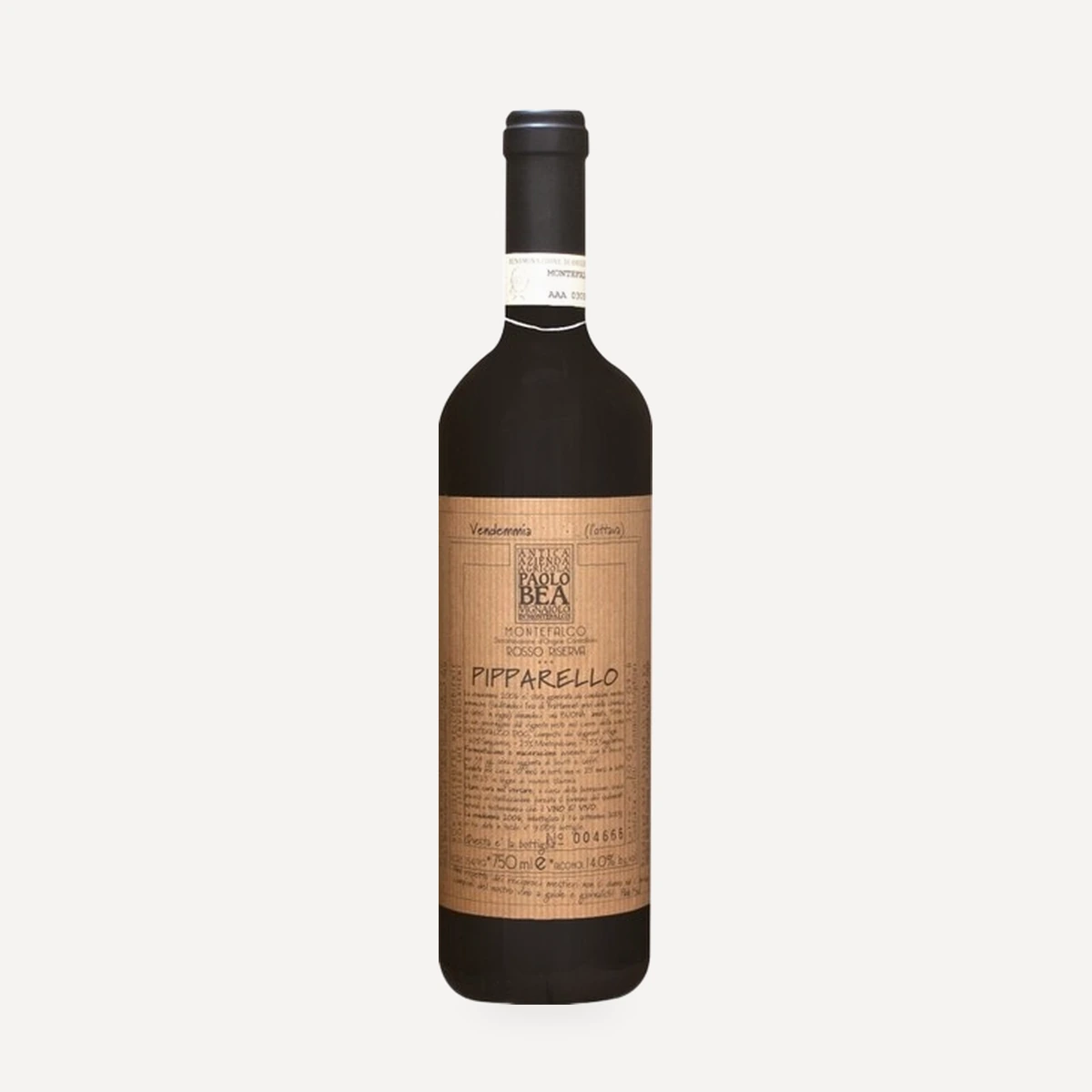
Montefalco Rosso Riserva DOC
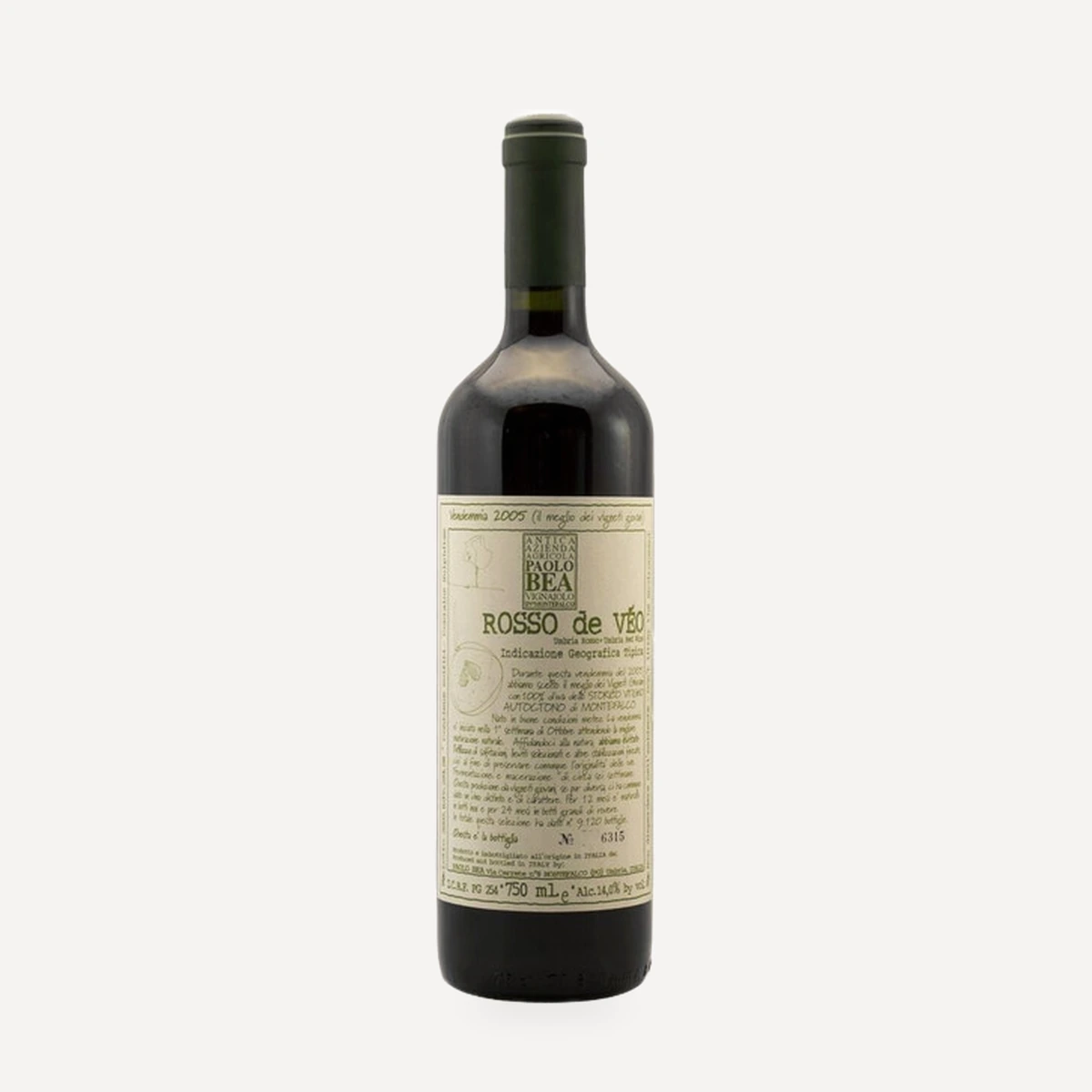
Rosso de Véo, Umbria IGT
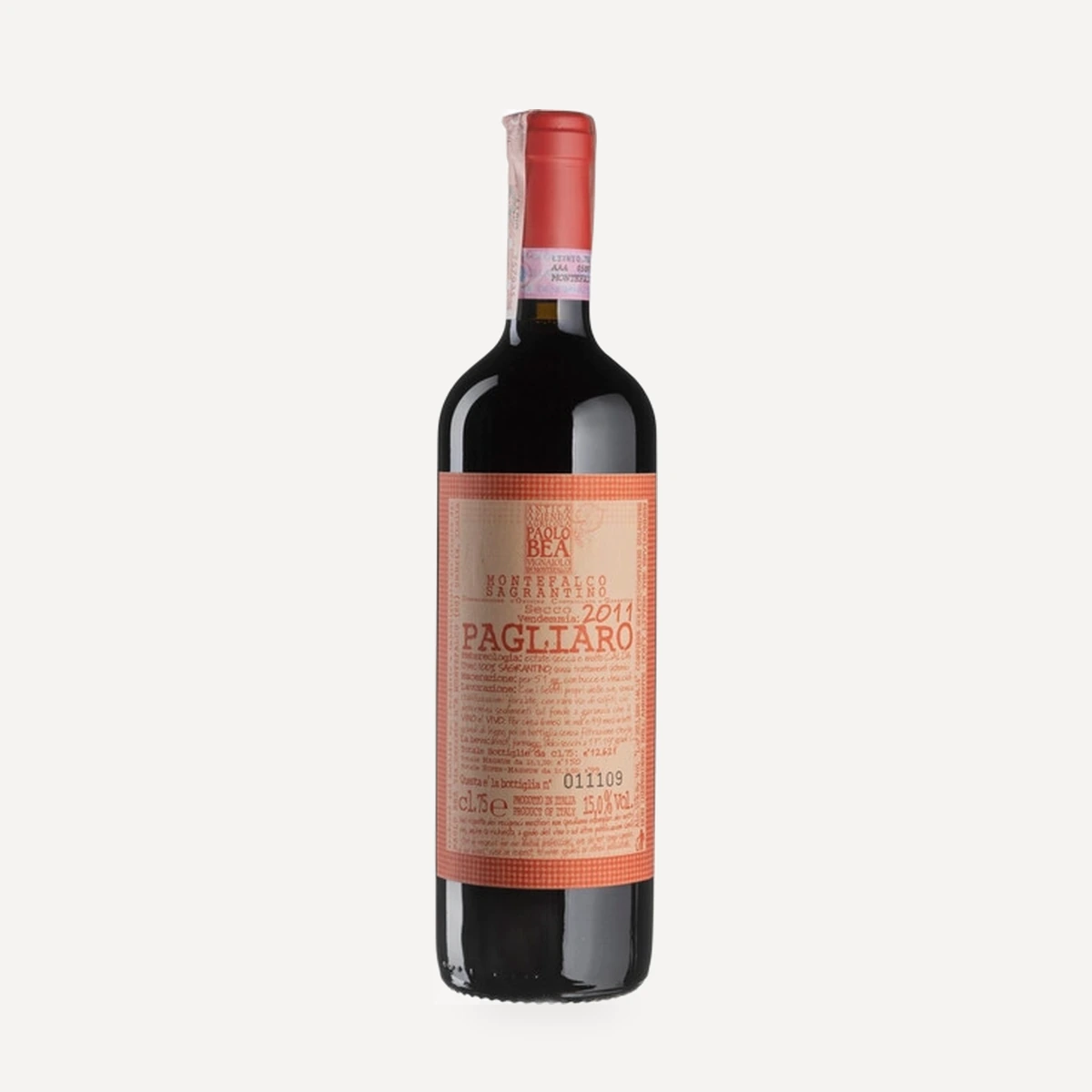
Montefalco Sagrantino, secco DOCG
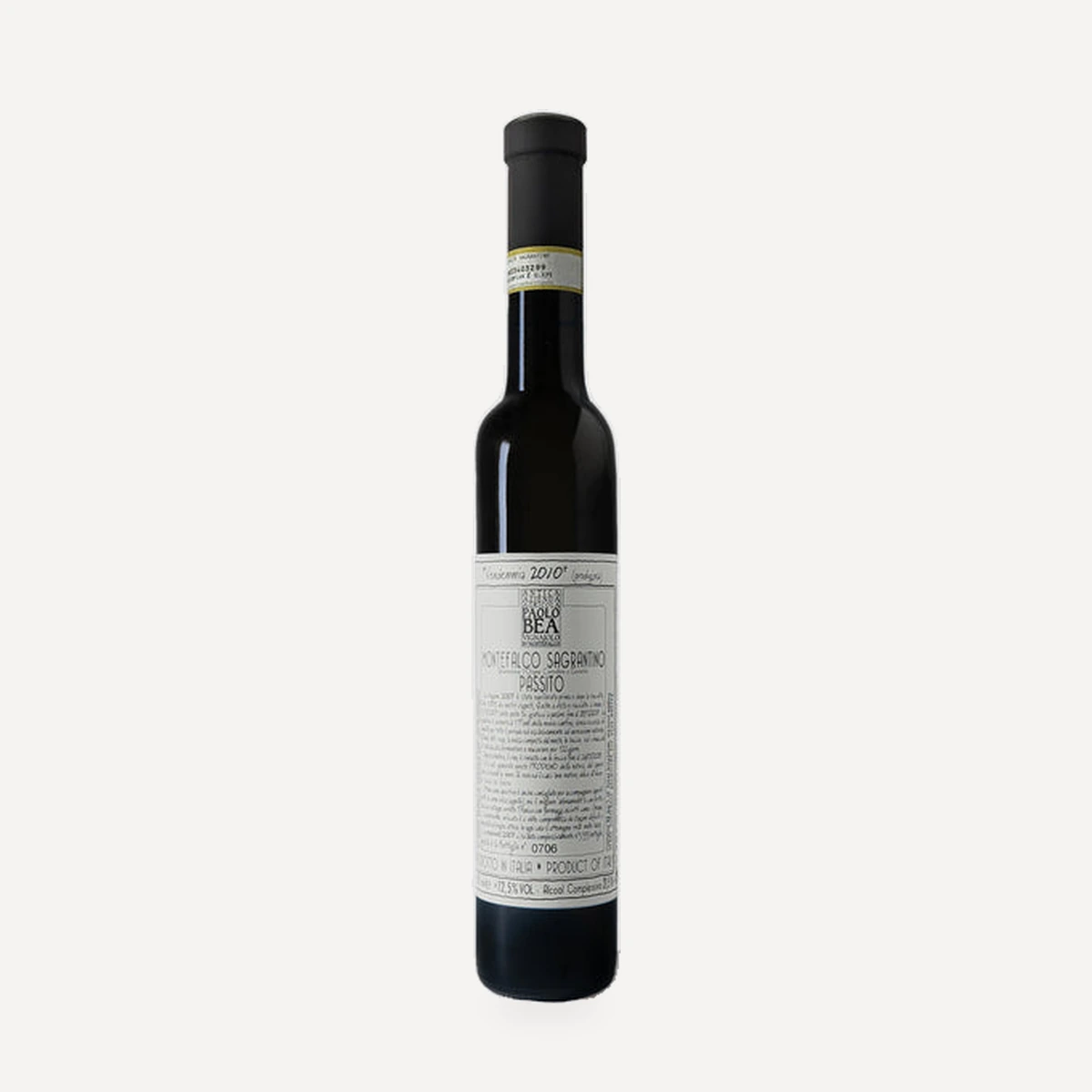
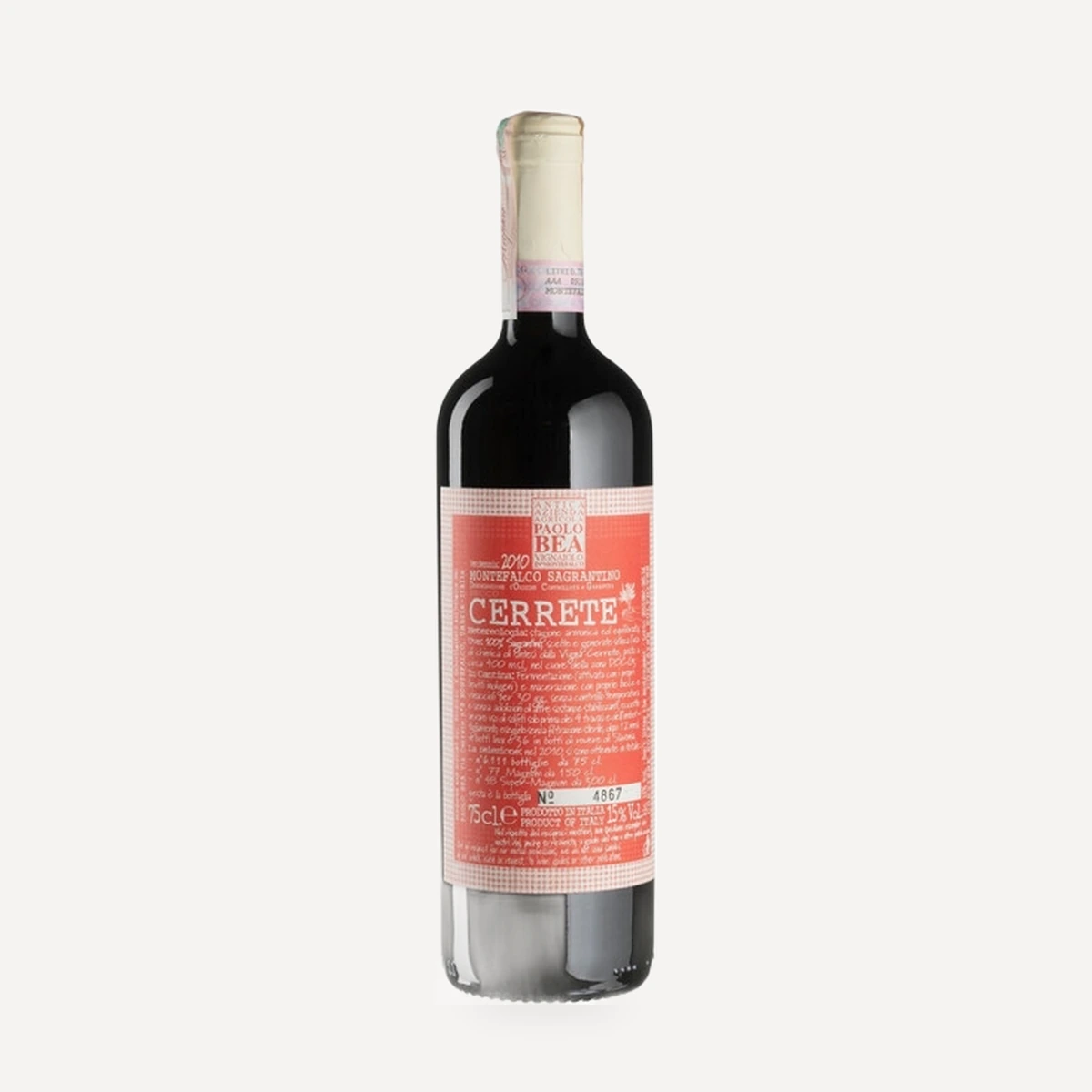
Montefalco Sagrantino, passito DOCG