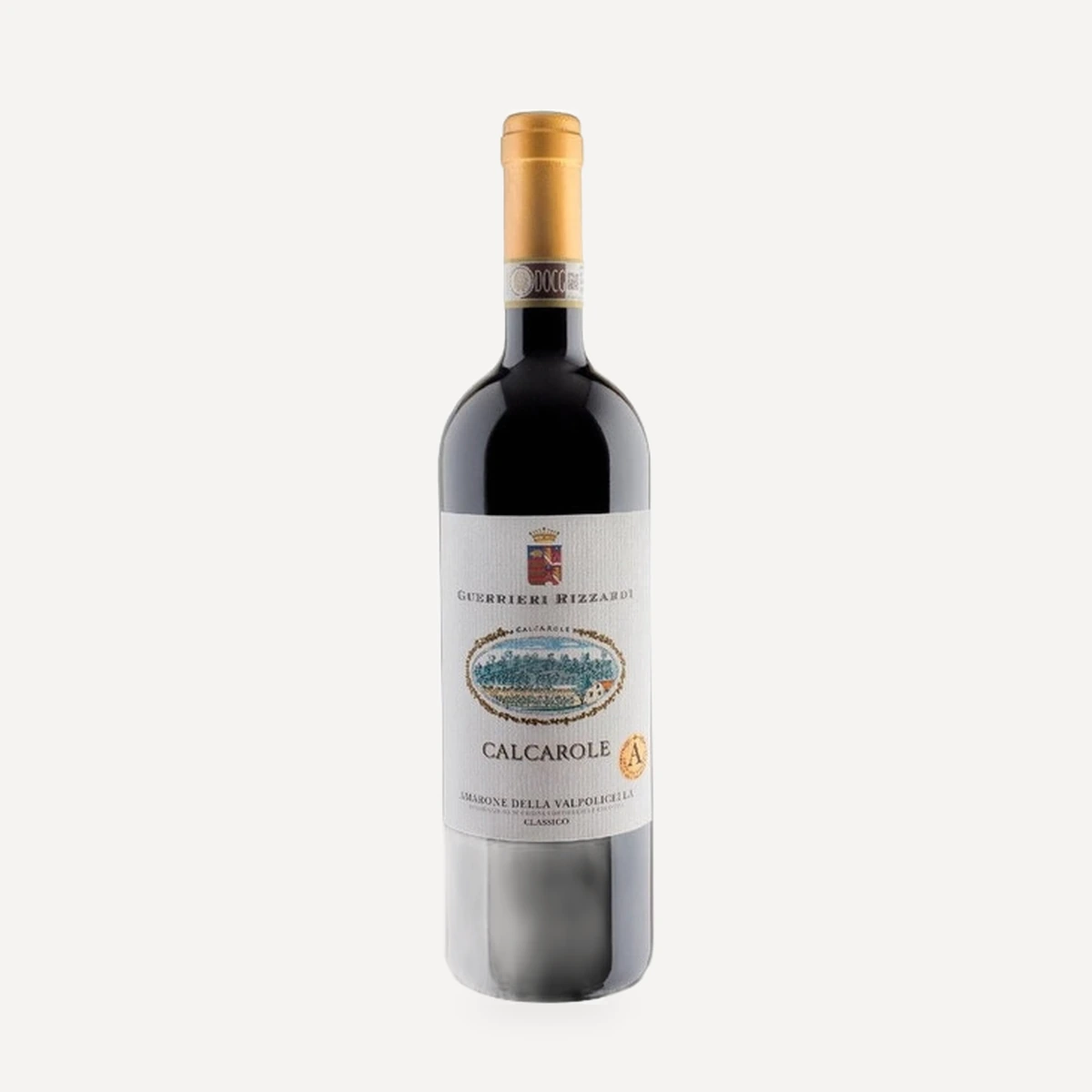
About this wine
Vineyard and terroir
Calcarole is a 5 ha single vineyard on a steep, rocky and terraced hillside in Negrar di Valpolicella, within the Classico zone. The terraces rise to 230 m above sea level and face south to south-west. The warm microclimate and naturally low-yielding mature vines contribute to concentration. Approximately 50 cm of limestone-rich, clay-sandy soil lies over limestone bedrock. The vines are 7–25 years old, trained to simple Guyot and planted at 4,000 vines per hectare on 41B and SO4 rootstocks.
Grapes
The 2019 blend is 80% Corvina, 10% Barbera, 5% Rondinella and 5% Sangiovese. The ripest, loosest bunches are selected by hand in the vineyard.
Vinification
Calcarole is made entirely from naturally dried grapes. The fruit spends three months in drying rooms before crushing; for the 2019 vintage, crushing took place on 3–4 December. Fermentation lasts approximately one month in stainless-steel vats at 20–25°C, followed by malolactic fermentation in oak.
Ageing
The wine matures for approximately 12 months in 225 L oak barriques and another 24 months in 2,500 L oak barrels. The 2019 vintage was bottled on 21 November 2023 and released roughly five years after harvest.
Technical data
2019: 17% alcohol, 6.15 g/L total acidity, pH 3.50 and 2.7 g/L residual sugar. Production was 6,666 bottles.
Tasting profile
Depth and concentration are balanced by freshness and pure, intense fruit. Layers of fine fruit and restrained oak are already generous and open, while additional cellaring can build complexity and finesse.
Serving and pairing
Pair with roast venison or duck, rich vegetarian dishes, beef Stroganoff, aged Grana Padano, Monte Veronese or Pienza pecorino. The recommended drinking window is 5–10+ years from the vintage.
Vintage notes
Produced only in the best vintages and in limited quantities. The current technical information concerns the 2019 vintage.