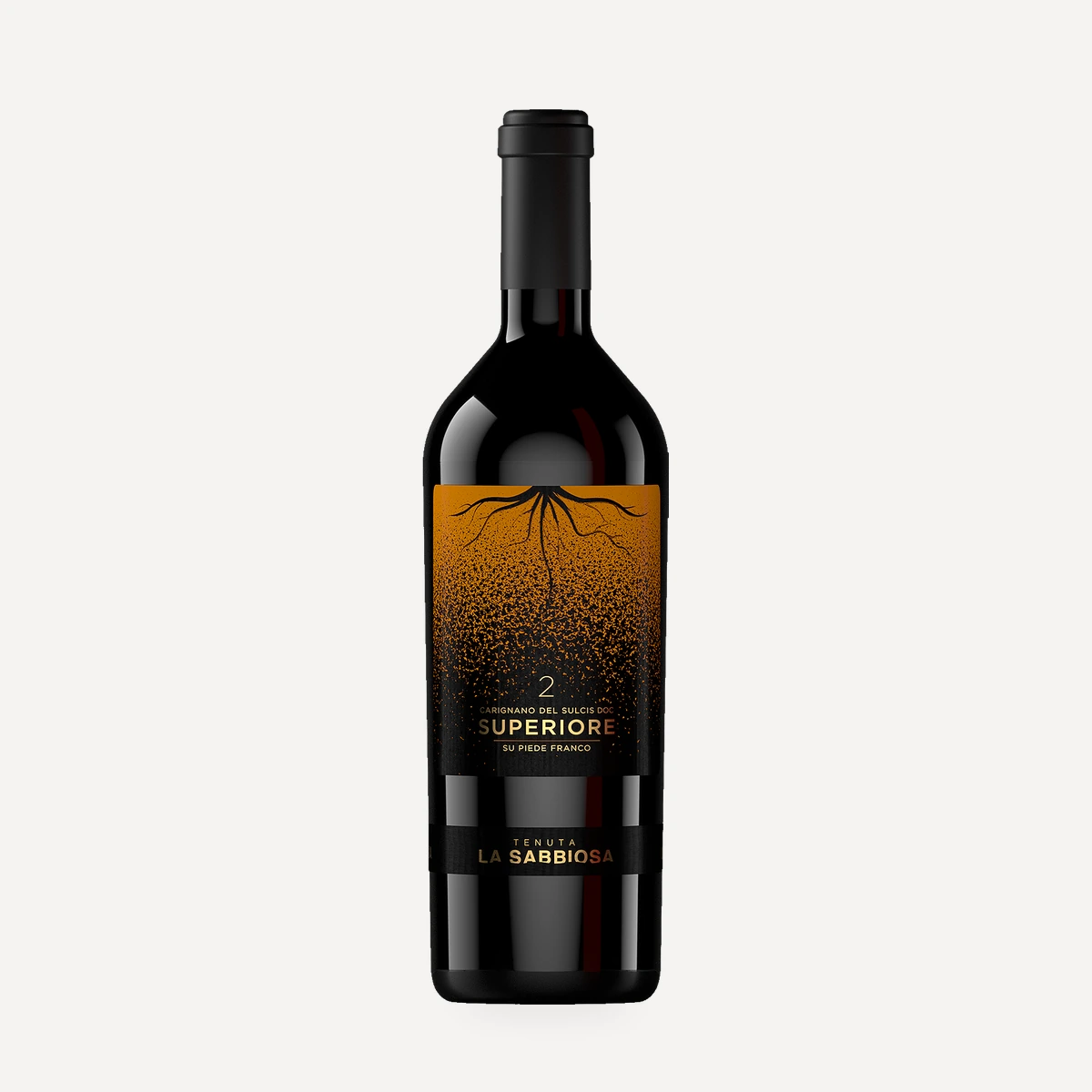
About this wine
Vineyard and terroir
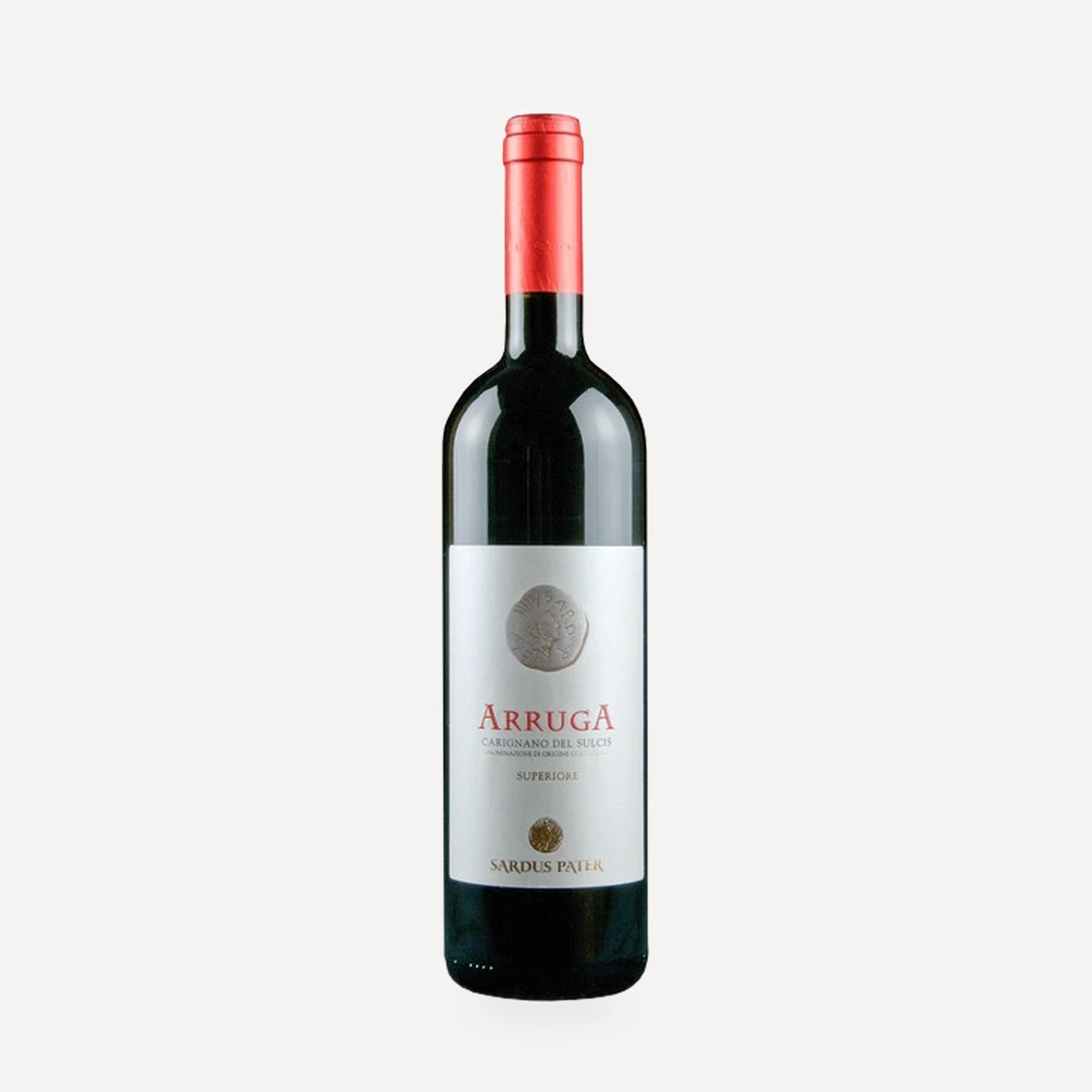
Superiore originates in the sandy dunes of Calasetta, where ungrafted alberello vines grow on marine sand surrounded by myrtle, mastic and juniper. The soil can contain as much as 99% sand. The vines are given as 90–100 years old, although their exact age is considered impossible to determine and some may be considerably older. Traditional propagation by layering helps preserve the old plants.
The vineyards lie only a few hundred metres from the sea. Its moderating influence and the strong, persistent Mistral reduce excessive heat and support gradual ripening. The vines endure drought, heat, nutrient-poor sand and salt-bearing winds. Yields are 0.8–1 kg per vine and 25–30 q/ha; fruit from at least two vines is required for each bottle.
Grapes
100% organically grown Carignano.
Vinification
The best vines and bunches are selected in the vineyard. The fruit travels to the winery in small shaded crates that protect it from the sun, and the best berries are selected before vinification. Bunches are destemmed while preserving whole, intact berries. Fermentation takes place in steel at 27–28°C, incorporating approximately 20% undestemmed whole bunches and 3–5% pied de cuve made one week earlier from the same vines with indigenous yeasts. Maceration lasts 15–20 days, with pump-overs and délestage.
Ageing
The wine matures for 17–18 months in fine-grained, second-use French oak tonneaux, followed by six months in steel and at least six months in bottle.
Technical data
The 2019 has 14% alcohol, total acidity of 5.8 g/L and residual sugar of 0.56 g/L. Production amounted to 1,500 bottles.
Tasting profile
The nose evokes medicinal herbs and the balsamic vegetation of the sandy dunes, including myrtle, mastic, rockrose, rosemary and helichrysum, together with iodine and enveloping ripe red fruit. The palate begins with a silky, soft and warm texture before fresh, savoury energy provides support and recalls the nearby sea.
Serving and pairing
Serve at 16–18°C.