About this wine
Vineyard and terroir
The Picolit vines grow in marl and sandstone soils of Eocene origin and are trained mainly in the Cappuccina system. Partial fertilisation of the variety’s flowers leaves only a few berries on each bunch, concentrating the surviving fruit.
Grapes
Picolit.
Vinification
The 2015 crop was gathered from early October through the end of November. Healthy, fully ripe grapes were selected by ripeness and harvested by hand into small crates to preserve berry integrity. The fruit was carefully destemmed and softly crushed, after which the must was allowed to settle. Fermentation took place at controlled temperature in small French-oak casks.
Ageing
After fermentation, the wine rested on its lees to build savouriness, creaminess and ageing capacity.
Tasting profile
Antique golden yellow. The deep, layered nose opens with dried apricot, candied orange zest and dried fig, followed by chestnut honey, caramelized hazelnut and sweet powdered spices. The palate is enveloping and exceptionally persistent. Date and dried-grape sweetness is energized by discreet acidity, with citrus marmalade and bourbon vanilla leading into black tea and sun-dried fruit on a sumptuous, complex finish.
Serving and pairing
Traditionally presented as a wine for meditation.
Vintage notes
For 2015, harvesting extended from early October until the end of November, with successive hand-picking according to ripeness.
Label / history
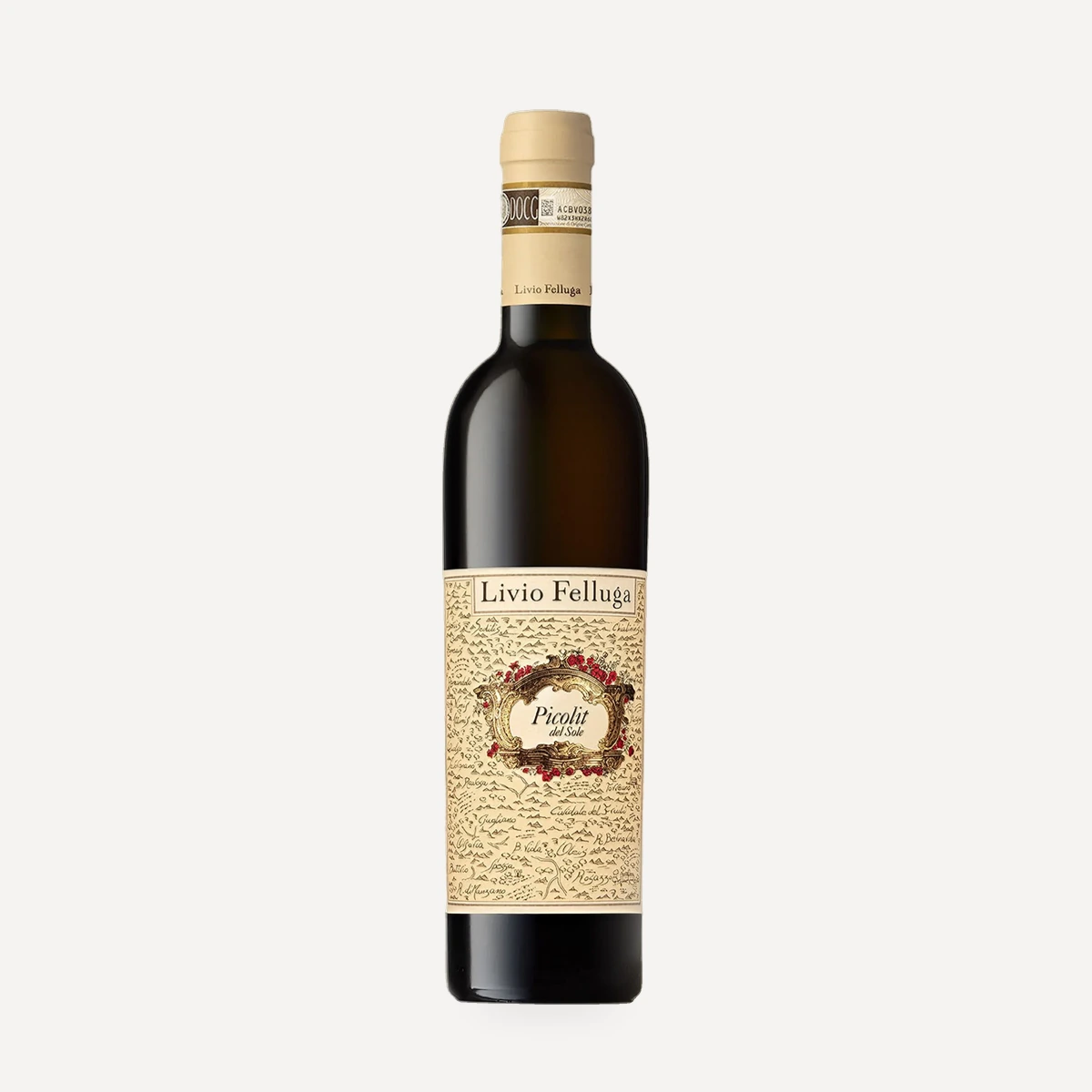
Picolit’s origins remain debated, but Count Fabio Asquini’s writings document the concentrated wine by 1750. Once served to European nobility, it is closely associated with Friuli’s historic wine culture.