About this wine
Vineyard and terroir
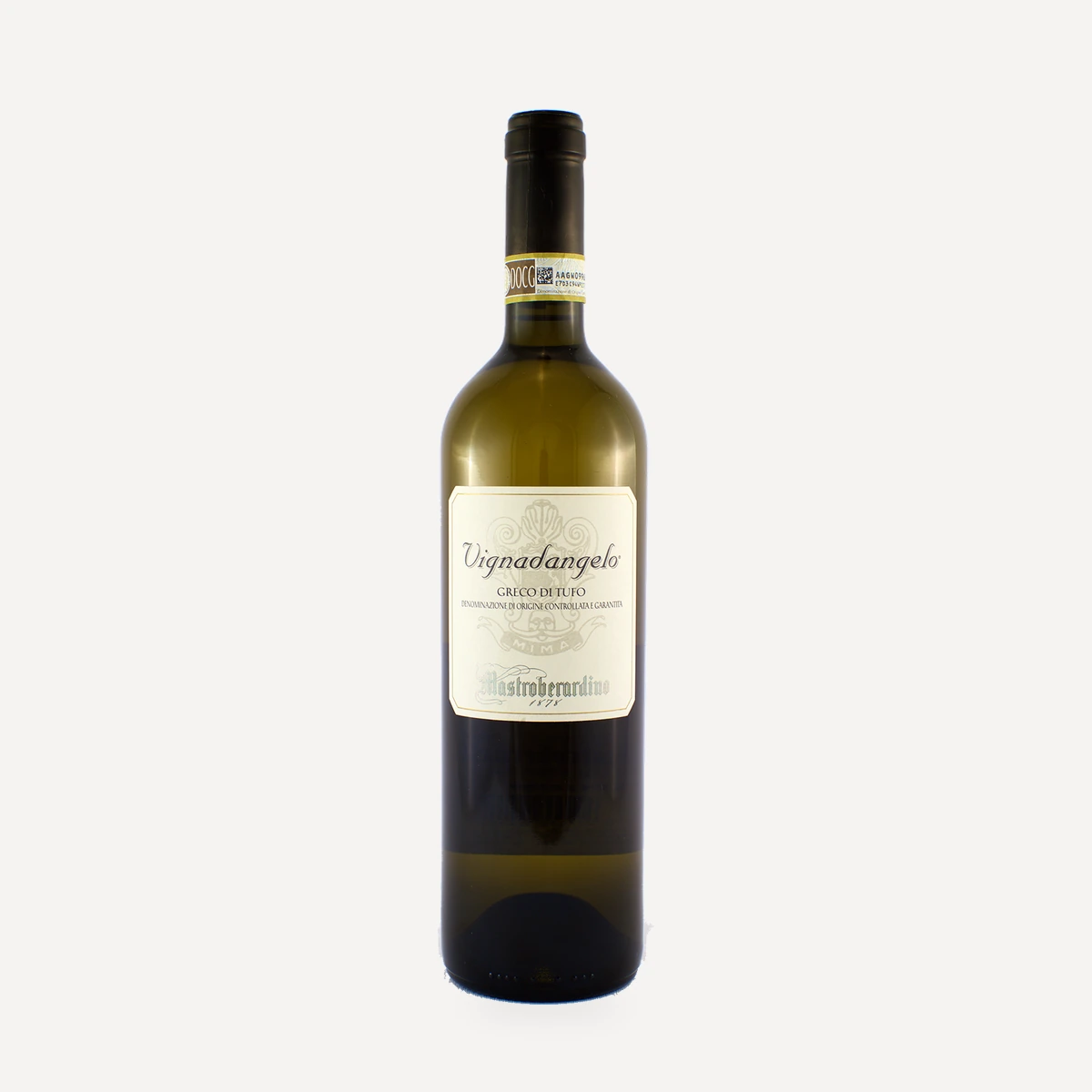
Vignadangelo is produced from Greco grown at Santa Paolina, a seven-hectare estate at 400 metres above sea level. The site faces south-east and has clay-limestone soils. The wine profile gives a planting density of 3,500 vines per hectare and a yield of approximately 70 quintals per hectare, equivalent to 2 kg per vine. The vines are trained on vertical trellises and Guyot-pruned. The broader estate description gives a lower density of 3,000 vines per hectare.
The wine page describes the vineyard as 15 years old, while the brochure gives an age of 20 years.
Grapes
100% Greco di Tufo.
Vinification
The grapes are harvested by hand during the first half of October. Classic white-wine vinification takes place in stainless-steel tanks at a controlled temperature. The brochure specifies a fermentation of approximately 20 days at 16–18°C.
Ageing
The wine page specifies at least one month of bottle ageing; the brochure describes several months in bottle.
Tasting profile
Straw yellow. Aromas recall grapefruit, peach, pear and aromatic herbs. The wine page describes the palate as fresh, strongly mineral, structured and elegant, supported by good acidity. The brochure uses the descriptor savoury and adds a fruity aftertaste.
Serving and pairing
Serve at 12–14°C. Pair with seafood salads and fresh dishes based on vegetables and cheese; risotto or pasta with fish, shellfish and legumes; grilled or fried fish; white meats; and fresh cheeses. Ageing potential is 20 years or more.
Label / history
Vignadangelo emerged from extended research into the nature and composition of local soils, seeking a site capable of expressing Greco at its best. Its story is connected with Antonio Mastroberardino’s post-war work to recover a variety that had been at risk of disappearing.