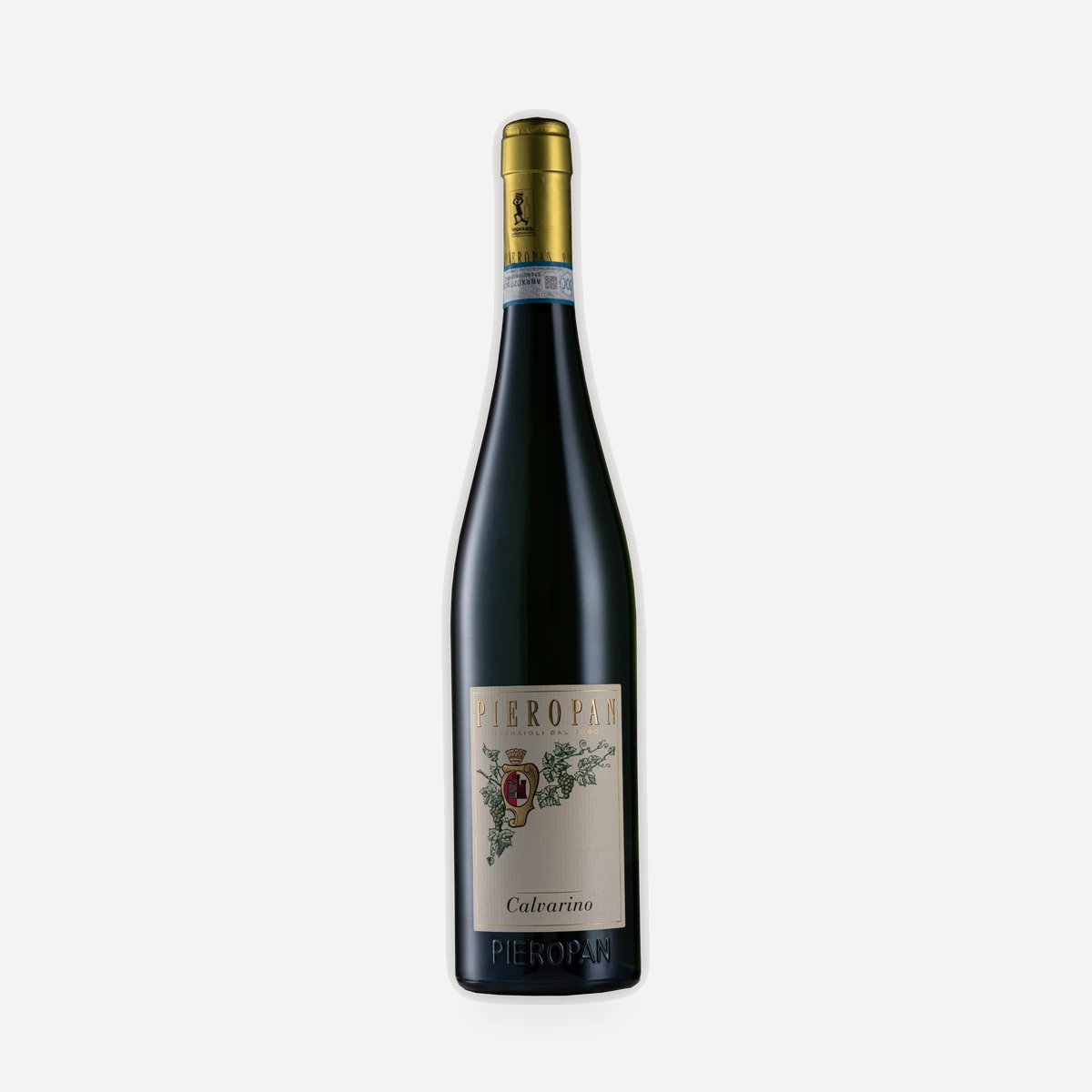
About this wine
Vineyard and terroir
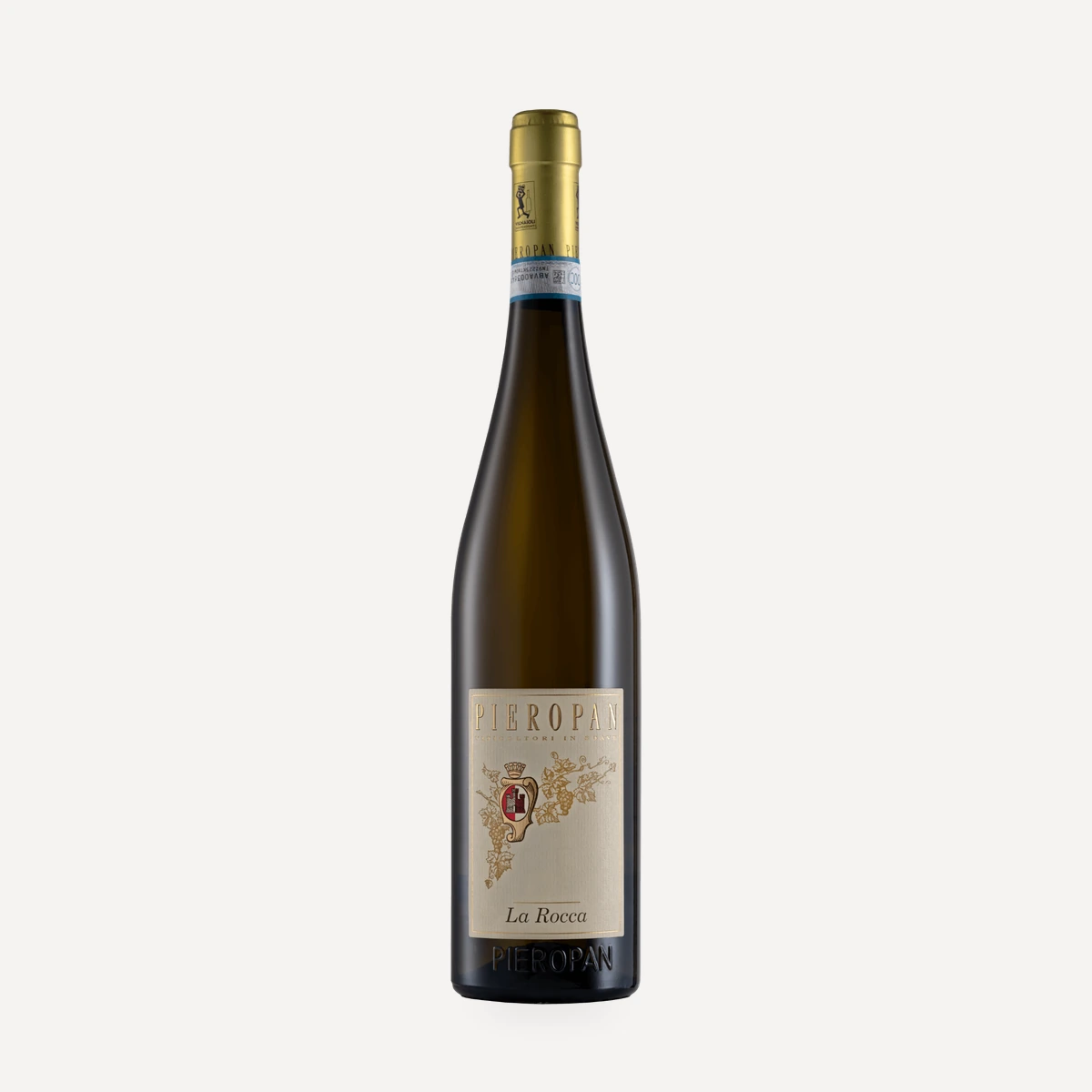
Calvarino lies in the heart of the Soave Classico hills and belongs to the family estate acquired in 1901. The vineyard occupies Eocene volcanic ground rich in basalt; the 2024 technical sheet also identifies tuff. It lies at 95–145 metres. Exposure is described as northwest on the wine page and west in the technical sheet. Vines are 30–60 years old. The page specifies traditional Pergola Veronese at 4,000 vines per hectare, while the technical sheet also includes Guyot. Eight buds are retained per vine. Certified-organic viticulture produces approximately 60 hl/ha, or 2 kg per vine.
Grapes
70% Garganega and 30% Trebbiano di Soave.
Vinification
Harvest is manual and usually involves two passes to select the ripest grapes. Trebbiano di Soave is picked from mid-September, followed by Garganega in October. The grapes are destemmed and gently pressed pneumatically under nitrogen. The musts ferment separately at 14–18°C in glass-lined concrete “tulipe” tanks.
Ageing
Calvarino remains in glass-lined concrete “tulipe” tanks for 12–15 months, in contact with fine lees. Periodic manual bâtonnage builds richness and complexity. Several further months of bottle ageing precede release.
Technical data
Alcohol is 12.5% vol. The 2024 technical sheet records total acidity of 5.80 g/l and pH 3.36. Formats are 0.75 l and 1.5 l.
Tasting profile
Pale straw yellow with green highlights when young, developing golden tones with bottle age. The fresh, complex nose opens with iodine and wet stone, followed by elderflower, jasmine, acacia and narcissus. Yellow peach, limoncella apple and pear mingle with pineapple and ripe citrus, while sage and wild mint lead into fresh almond and fine citrus notes. The palate is direct and vertical, dry, fresh and saline. Tension and structure are balanced with precision, carrying the wine into a long, persistent and harmonious finish.
Serving and pairing
Serve at 10–12°C. Pair with tempura vegetables, battered courgette flowers, fried fish, fresh pasta with delicate sauces, vegetable quiches, fish, shellfish and cheese soufflés. Its freshness also suits rich, gently sweet-edged and creamy dishes, including baccalà mantecato served with a crisp charcoal wafer and lime zest.
Label / history
The family acquired Calvarino in 1901. The name means “Little Calvary” and refers both to the difficulty of working its basaltic terrain and to the steep, winding route into the vineyard. First produced in 1971, it is described as Italy’s first white wine identified with a single vineyard.