History
Ancient origins
The land surrounding Castello Romitorio was once formed by the fields and woods of the Etruscans. Murlo, a few kilometres north of Romitorio, preserves a major Etruscan archaeological area with buildings dating to the seventh century BC.
The castle’s foundations probably date from the Roman period. One proposed early use is as a prison for Christian soldiers who had deserted. The wider Val d’Orcia was then an expanding commercial area crossed by the navigable Ombrone, Arbia and Orcia rivers. Archaeological remains attest to agriculture and the production of wine and honey, which underpinned the local economy.
Monastery and fortified castle
The building was subsequently transformed into a monastery, a function it retained at least until the 12th century. When conflict developed between Florence and Siena, the site’s command of routes connecting the coast with central Italy and the north with the south of the peninsula led to its fortification.
The present monumental building, standing beside a small chapel, was constructed in the 14th century. Castello Romitorio formed part of Montalcino’s defensive system. Montalcino retained its autonomy until 1559, when it surrendered to the Medici as the last free comune in Italy. The earliest written references to Brunello are associated with this period and with the wine drunk by Montalcino’s defenders.
Manor, abandonment and ruin
During the 19th century, Castello Romitorio was restored as a manor house and patrician villa. It was abandoned during the Second World War and remained uninhabited for many years, serving for a time as a refuge for shepherds and their flocks.
In the 1970s the property passed to Baron Giorgio Franchetti, an art collector and restorer of historic buildings. He was unable to complete his intended restoration and development and sold the ruined castle to Sandro Chia in 1984.
Rebirth under Sandro Chia
Artist Sandro Chia acquired Castello Romitorio in 1984 and converted the old manor into his residence and studio. The acquisition included existing vineyards, holm-oak woods and uncultivated heathland. Restoration of the building was paired with a revival of the property’s winegrowing vocation.
Castello Romitorio was established as a wine estate that year. Sandro planted old selections of Montalcino’s native Sangiovese. Those early plantings still account for approximately half of the vineyards around Romitorio and preserve substantial vine biodiversity.
Between 1985 and 1990, the estate participated in a period of experimentation in Montalcino, combining innovation with local tradition as the area renewed its focus on Brunello and the capacity of Sangiovese to express its place of origin. Sandro Chia pursued classically styled, representative wines.
Romito, the first wine created at Castello Romitorio, appeared in 1987. Conceived as a Super Tuscan capable of expressing Tuscan quality through both native and non-native varieties, it was initially sold as Vino da Tavola. Between 1987 and 2018 its principal components were Cabernet Sauvignon, Canaiolo and Sangiovese, while its designation evolved from Vino da Tavola to Sant’Antimo DOC and ultimately Toscana IGT. Its vineyard origin also changed over time before the wine became rooted in Maremma.
The first Chardonnay vineyard was planted in the early 1990s. When the original location proved unsuitable, the Chia family moved and replanted it. The resulting small, northwest-facing plot grows on Galestro-rich soil.
New cellar and second generation
A new cellar was inaugurated in 2005. In the same year, Sandro’s son Filippo Chia joined the business and initiated a substantial renewal of the wines and winemaking style, concentrating on elegant varietal Sangiovese capable of conveying the estate’s terroir. Works by Sandro Chia were installed throughout the 14th-century manor to connect contemporary art with the ancient architecture.
In 2006 Filippo began what the estate presents as its second chapter, combining the new cellar with the gradual establishment of additional Sangiovese vineyards. These plantings now extend down the hill across elevations of 200–400 metres.
During the 2010 harvest, Filippo identified the potential to bottle the Filo di Seta site separately. He named it for the small stream flowing through the unspoiled woods of the Castello Romitorio hill.
The 2016 vintage became the first release of Filo di Seta Brunello di Montalcino Riserva, selected from the best barrels of the corresponding Filo di Seta harvest.
Following years of work with younger Sangiovese vineyards planted within the woods of northwestern Montalcino, the estate introduced Colto from the 2020 vintage.
In 2021 the acquisition of an old Trebbiano Toscano, or Procanico, vineyard at Località Case Sparse in Scansano brought the variety into the estate’s white-wine project.
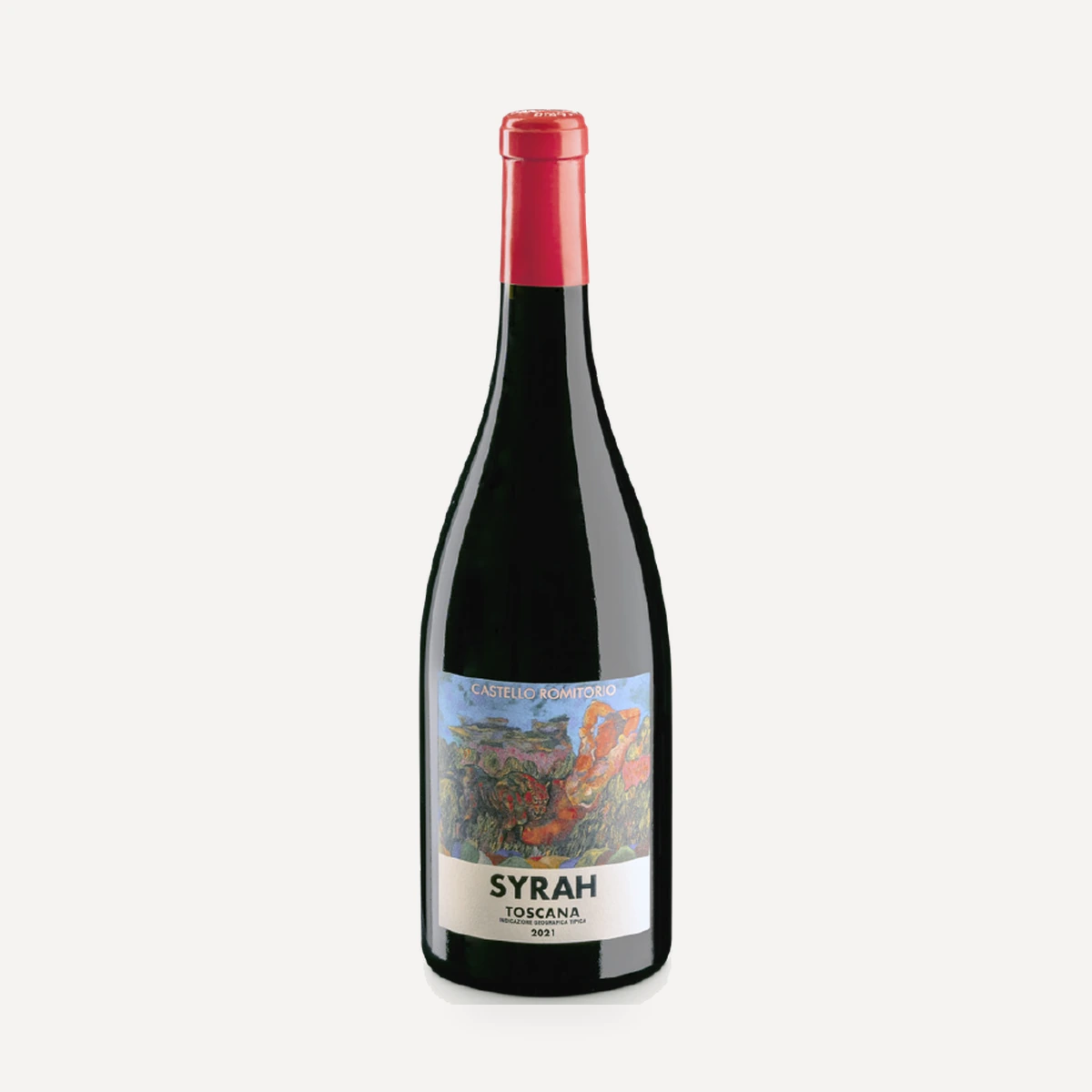
The family’s Maremma research also produced dedicated Petit Verdot and Syrah plantings. The Syrah project emerged after approximately twenty years of work involving new varieties, clones and vineyard plantings.
Present direction
Castello Romitorio now specializes in Sangiovese and Brunello di Montalcino while also cultivating varieties in Maremma. Filippo Chia’s direction joins a classical approach and local tradition with continued vineyard research, experimentation and stylistic refinement.
Terroir
Northwestern Montalcino
Castello Romitorio occupies the northwestern side of the Montalcino hill, where its old and young Sangiovese vineyards lie among woods at elevations ranging from 200 to 400 metres. The vineyards extend from the upper to the lower reaches of the hill. This sector is characterized as cooler than other parts of the area, with an ancient, wild, mountainous landscape.
Filo di Seta comes from the darker, wooded part of the northwestern hill. A small stream runs through the undisturbed forest surrounding the site. Other young Sangiovese vineyards are planted deep within these woods, while the estate’s oldest northern vineyards provide fruit for its most selective expressions.
A small northwest-facing Chardonnay plot grows in Galestro-rich soil. Its present position was selected only after the family concluded that the original early-1990s site did not suit the variety.
Maremma
The Petit Verdot terrain is of Pliocene origin, combining red clay and gravel. Its maritime daytime climate is moderated by the Mediterranean Sea, while cooler continental air descends from Monte Amiata at night. The vineyard is positioned between the marine and volcanic influences of Maremma.
The Syrah vineyard occupies a river plateau within a natural canyon linking Monte Amiata with the Tuscan archipelago. Red clay forms the surface soil, with a deeper layer of rounded stones. Air currents alternate between sea and mountain according to the time of day: sea breezes temper the warm daytime conditions, followed in the evening by cool, humid air descending from the hills. These shifts allow the grapes to ripen while retaining natural acidity.
Mediterranean scrub surrounds the Syrah vines. Its aromatic and medicinal flora includes thyme, wild sage, plum, wild pear, Etruscan santolina, broom and wildflowers.
At Località Case Sparse in Scansano, an old vineyard of Trebbiano Toscano, locally identified with Procanico, supplies the estate’s white-wine project.
Winemaking
Viticulture is organized around close observation of individual plots and their differing characteristics and needs. The original Sangiovese vineyards were planted with old local selections, and their continued presence—approximately half of the vineyards around Romitorio—maintains a broad inheritance of vine biodiversity.
Old and young Sangiovese vineyards are cultivated across the northwestern Montalcino hillside. The oldest northern blocks are monitored throughout the vegetative cycle. Blocks are selected individually, and clusters are tended to achieve consistent, optimal ripeness. In Filo di Seta, care is directed toward balanced yields from each old vine; Colto originates from younger vineyards established within the surrounding woods.
Harvesting is performed by hand where specified for Sangiovese, Petit Verdot and Syrah. Sangiovese destined for the most selective cellar lots undergoes manual selection before and after destemming.
The family’s response to vineyard performance is empirical. When the original Chardonnay location proved unsuitable, the vineyard was moved and replanted on a northwest-facing, Galestro-rich site. Work in Maremma has included the introduction of new varieties and clones, new plantings and long-term trials, with the Syrah project developing over approximately twenty years.
The vineyards coexist with woodland, Mediterranean scrub and diverse aromatic and medicinal plants. The Syrah site is surrounded by thyme, wild sage, plum, wild pear, Etruscan santolina, broom and wildflowers.
Castello Romitorio inaugurated its modern cellar in 2005 within the setting of the restored 14th-century manor. Grapes from both Montalcino and the estate’s Maremma sites are vinified at Montalcino, with maturation and bottle aging carried out in temperature-controlled cellars.
Red grapes are sorted in the winery, with the most rigorous Sangiovese selections checked both before and after destemming. Depending on the lot, fermentation takes place in stainless-steel tanks or cement vats. The Sangiovese protocol can include a short initial cold maceration followed by skin maceration at a higher controlled temperature. Other lots undergo temperature-controlled skin maceration directly in cement. Malolactic fermentation begins naturally or spontaneously, after which the wine rests so that the liquid can separate from its natural sediment.
Oak is used for extended maturation of the estate’s Brunello lots, while other reds may combine wood and concrete or mature in concrete before bottling. Bottle aging takes place under temperature-controlled conditions.
White grapes from the individual micro-plots are processed separately from fermentation through maturation. The juice receives brief skin contact, followed by gentle pressing and cooling. After natural settling, fermentation begins; the wine subsequently rests on its lees and completes a period of bottle aging in the temperature-controlled cellar.
Philosophy
Castello Romitorio defines its work through the relationships between wine and art, nature and terroir, and tradition and research. Its central objective is to study and express Montalcino through Sangiovese and Brunello while respecting the characteristics and needs of each vineyard plot.
The Chia family treats classical style and experimentation as complementary. Sandro Chia’s first phase pursued representative wines during a period of change in Montalcino. Filippo Chia’s renewal retained that classical foundation while concentrating more sharply on varietal Sangiovese, elegance and the expression of individual places.
The estate presents cultivation and winemaking as a process of giving considered form to nature without erasing its complexity. Vineyard choices include the selection of plants, clones, training decisions and careful tending of each vine. Long-term trials with sites and varieties—including relocating Chardonnay and developing Syrah over approximately twenty years—reflect a willingness to revise decisions when the vineyard response calls for it.
Art is not treated as decoration alone. The castle functions simultaneously as historical architecture, a working winery and a setting for Sandro Chia’s work. Paintings and wine are connected through ideas of time, nature, discipline, imagination and the creation of a unified work from many distinct elements.
Wines
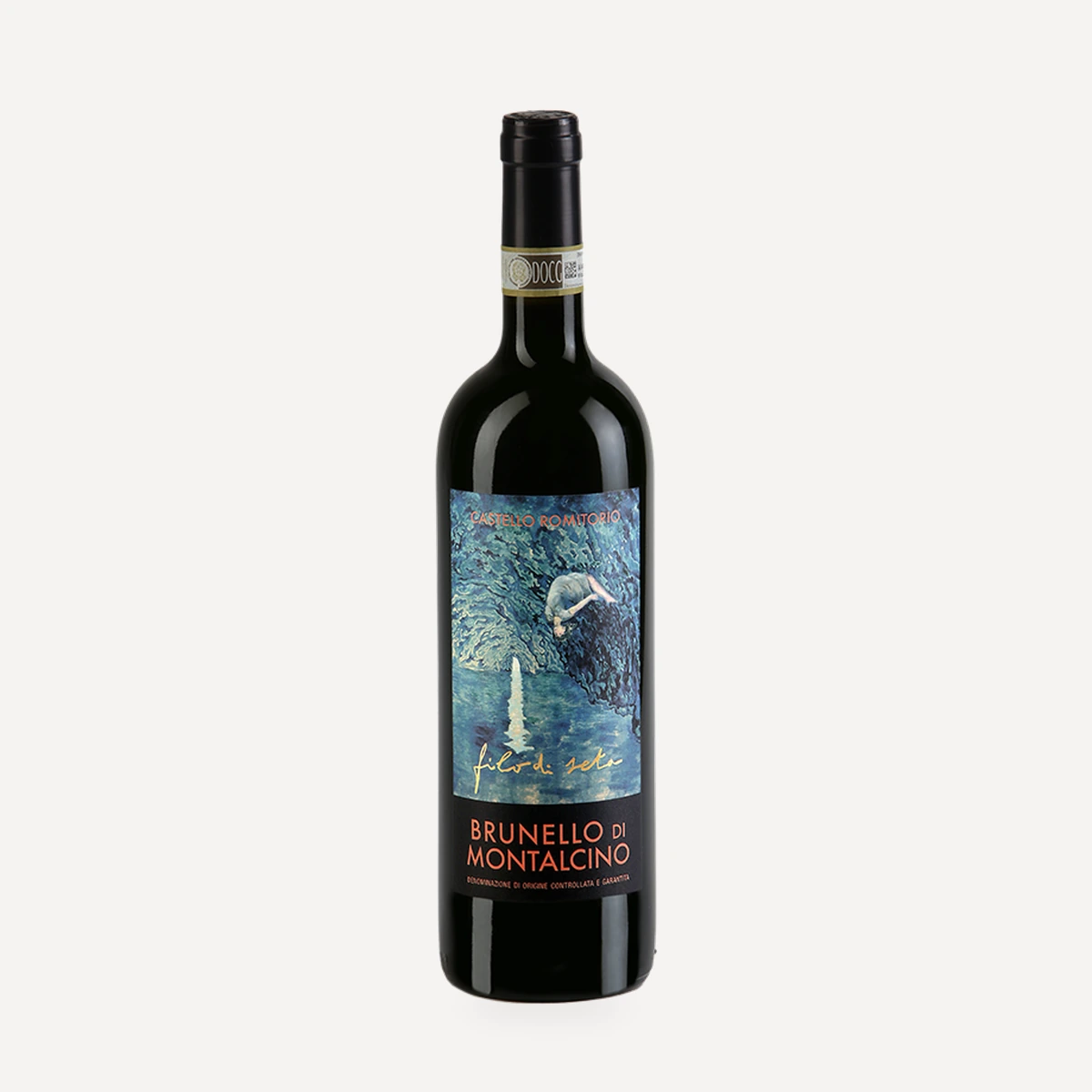
Filo di Seta Brunello di Montalcino DOCG
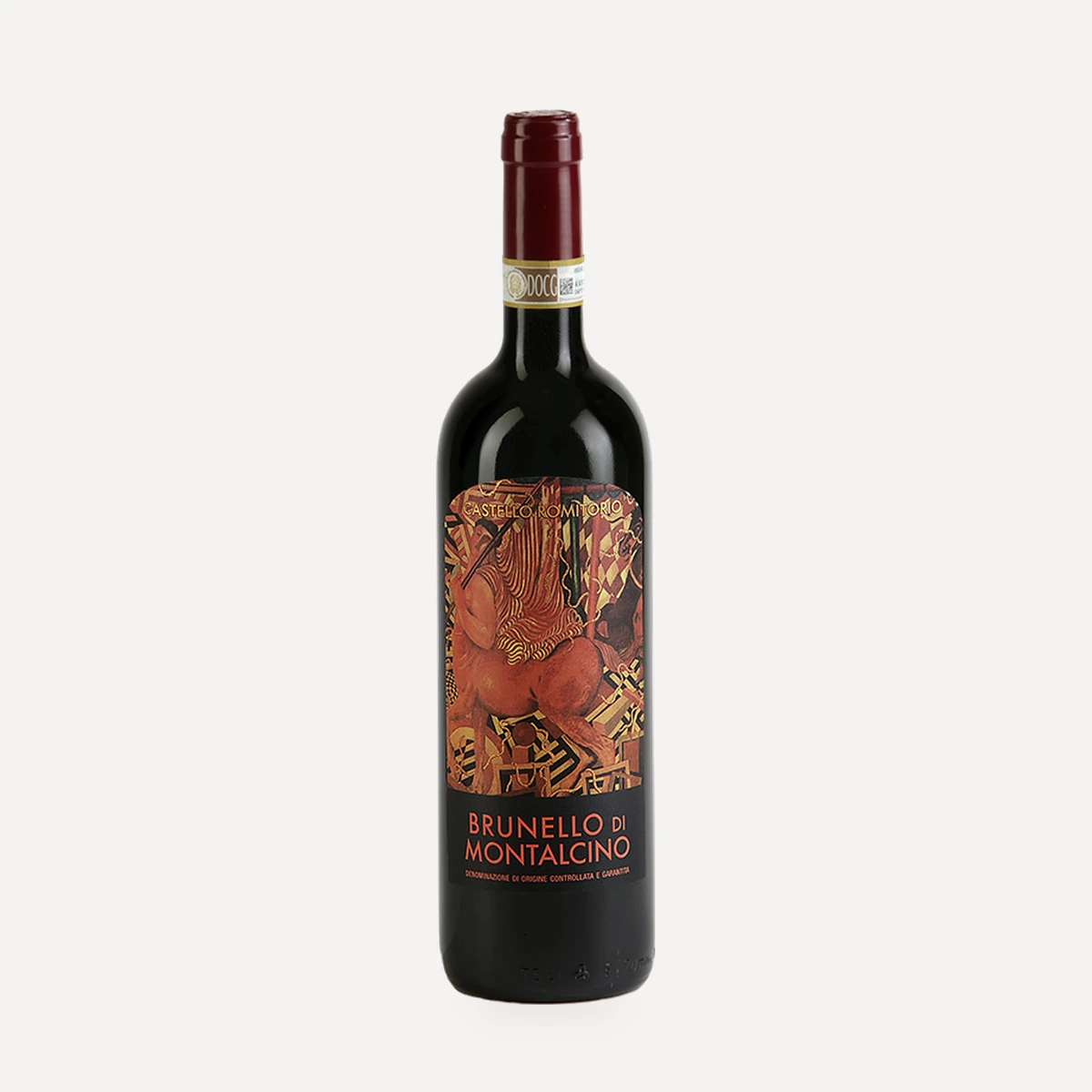
Brunello di Montalcino DOCG
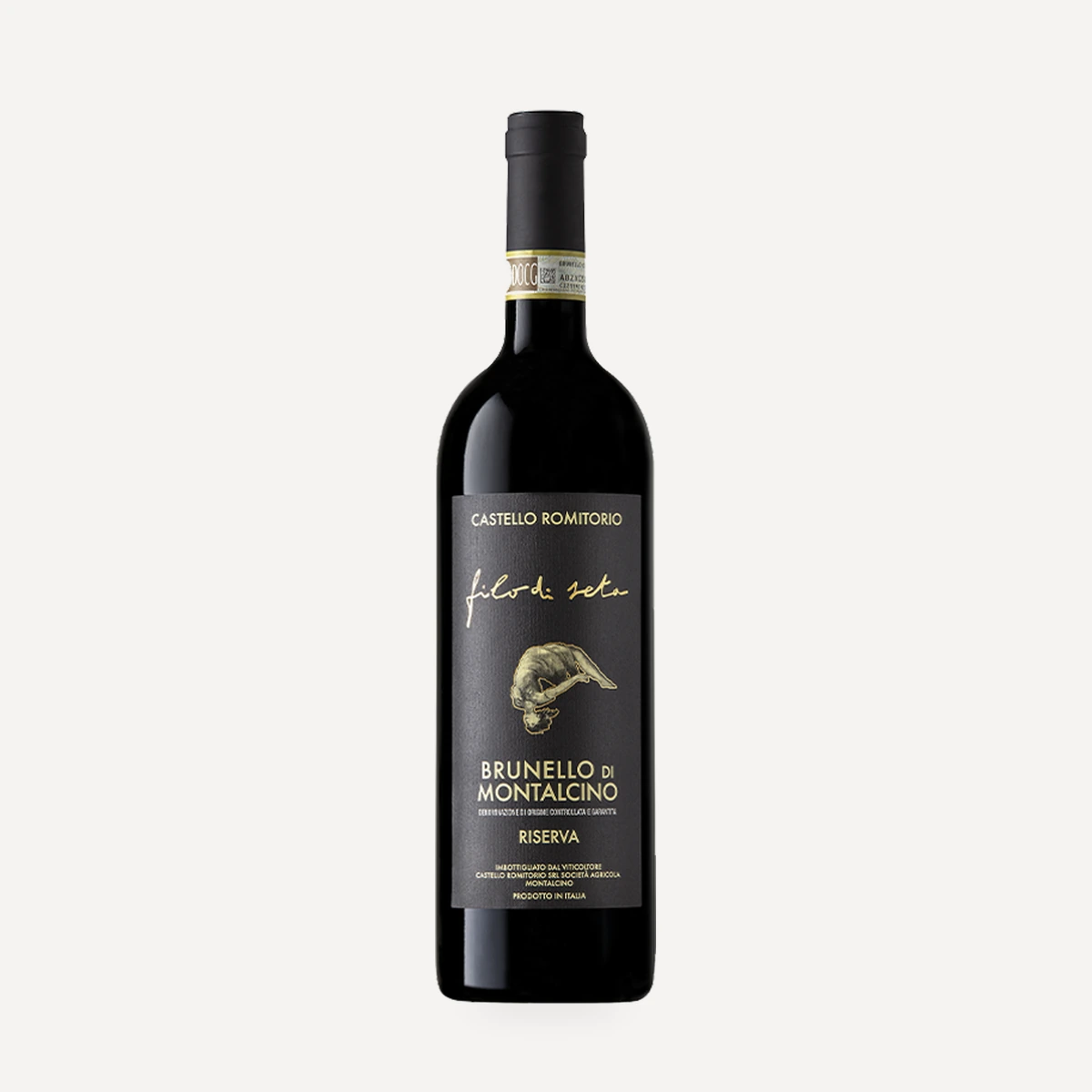
Filo di Seta Brunello di Montalcino Riserva DOCG
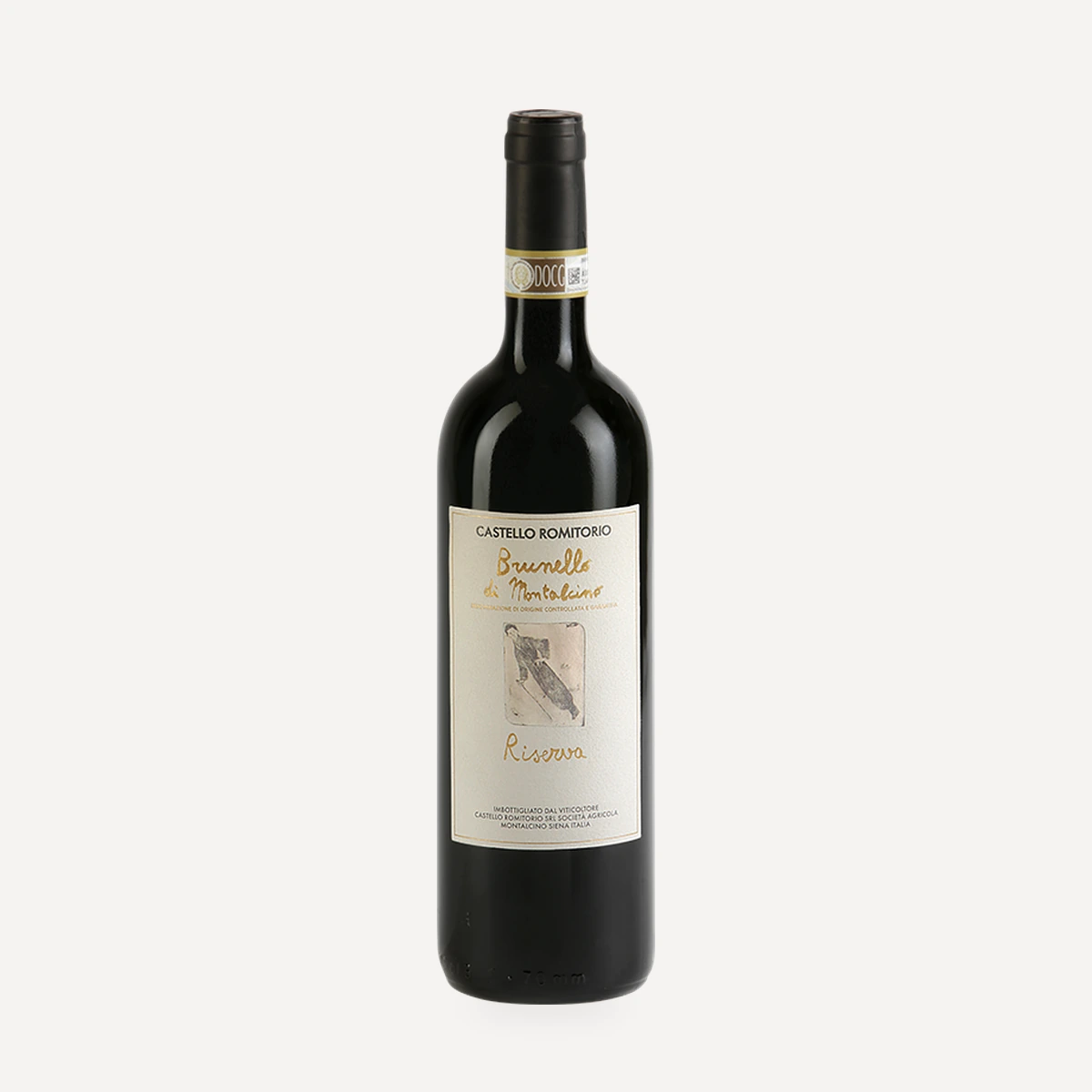
Brunello di Montalcino Riserva DOCG
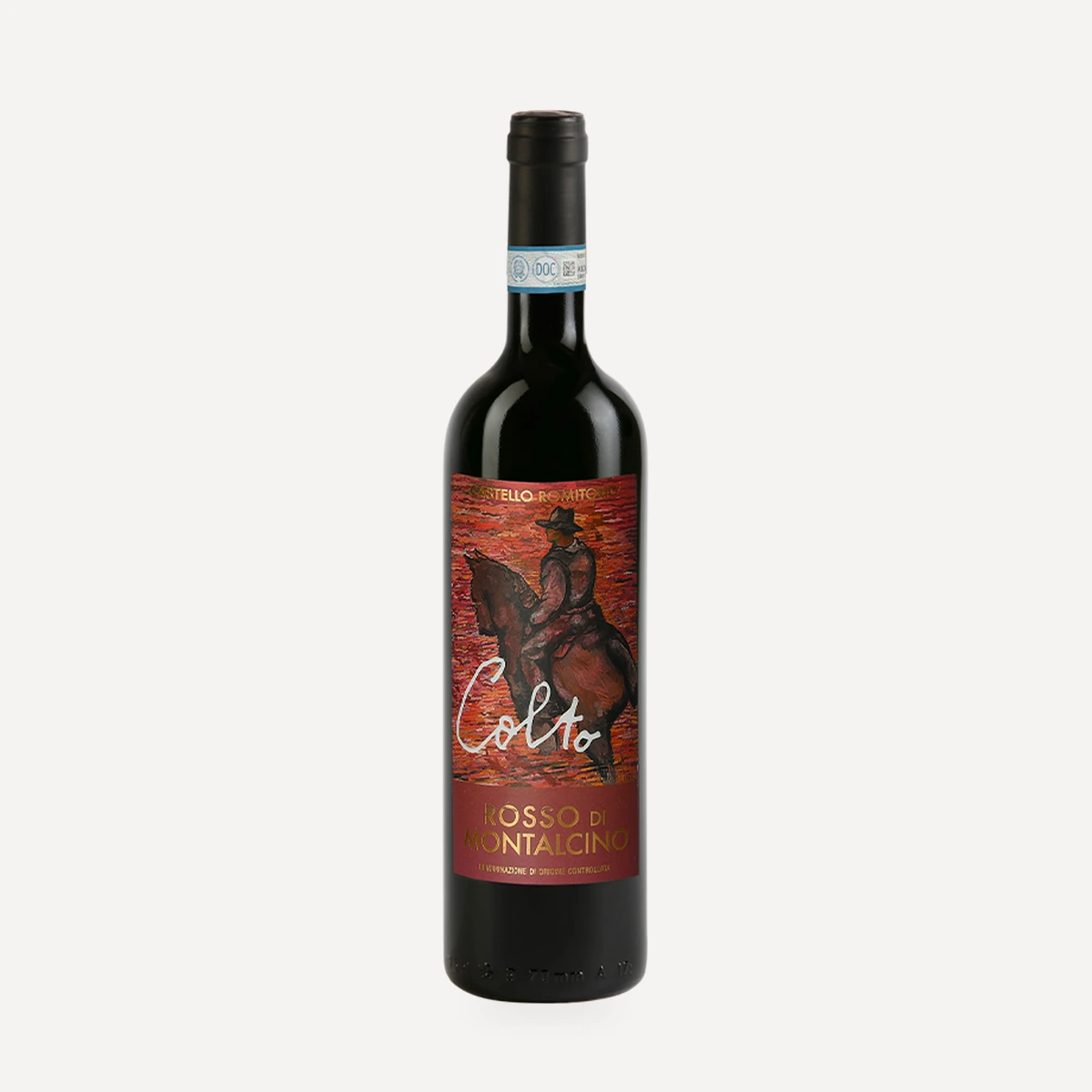
Colto Rosso di Montalcino DOC
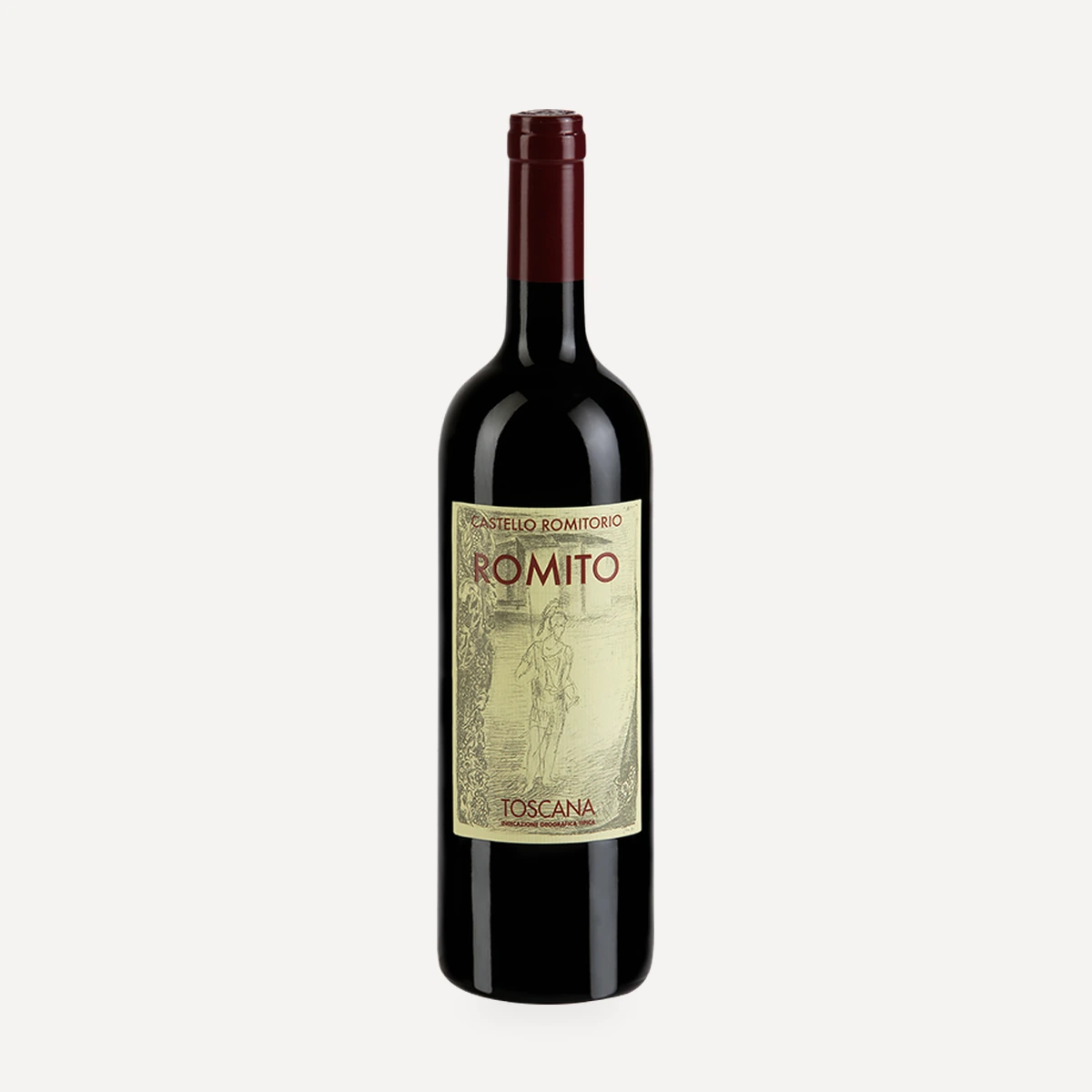
Romito Toscana IGT
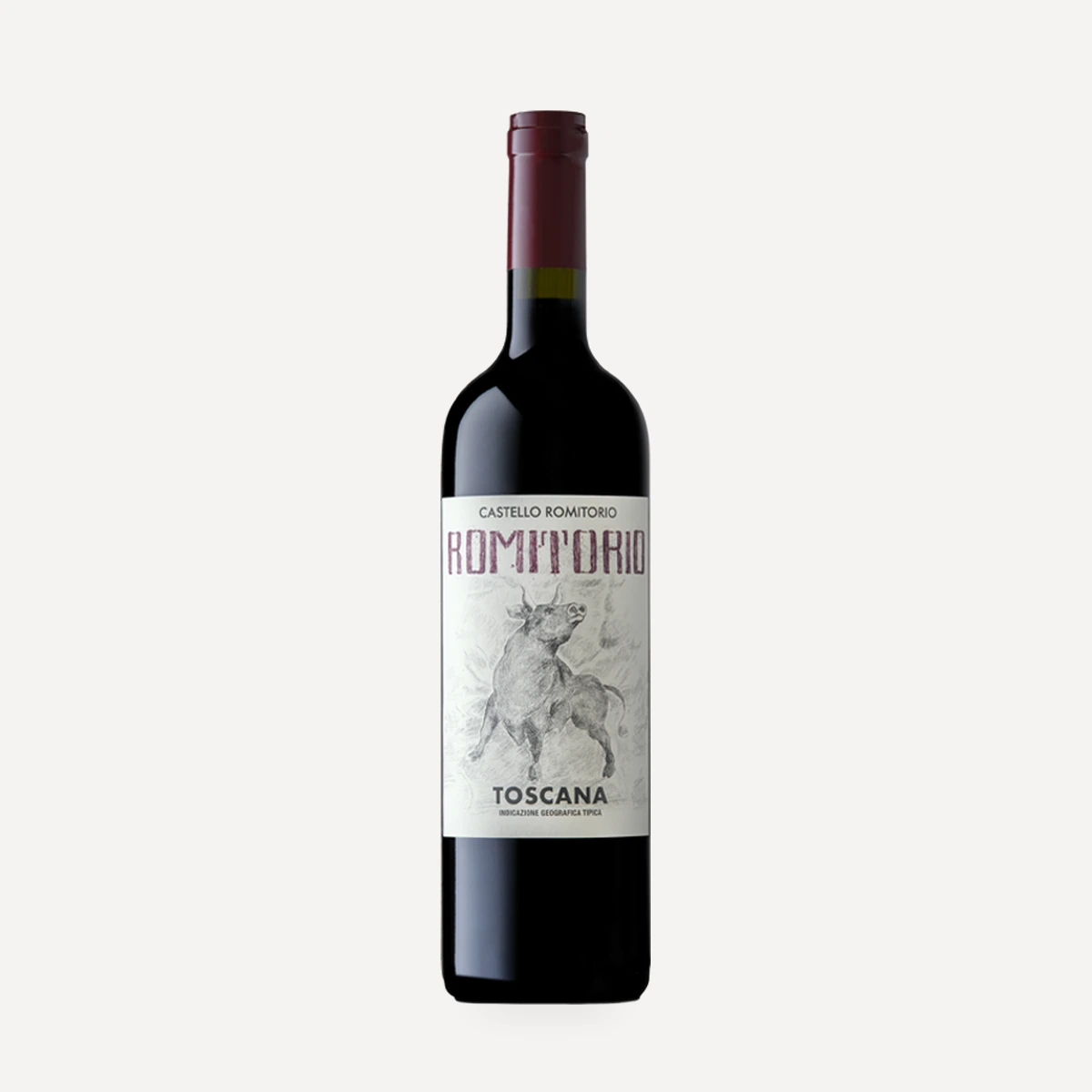
Romitorio Toscana IGT
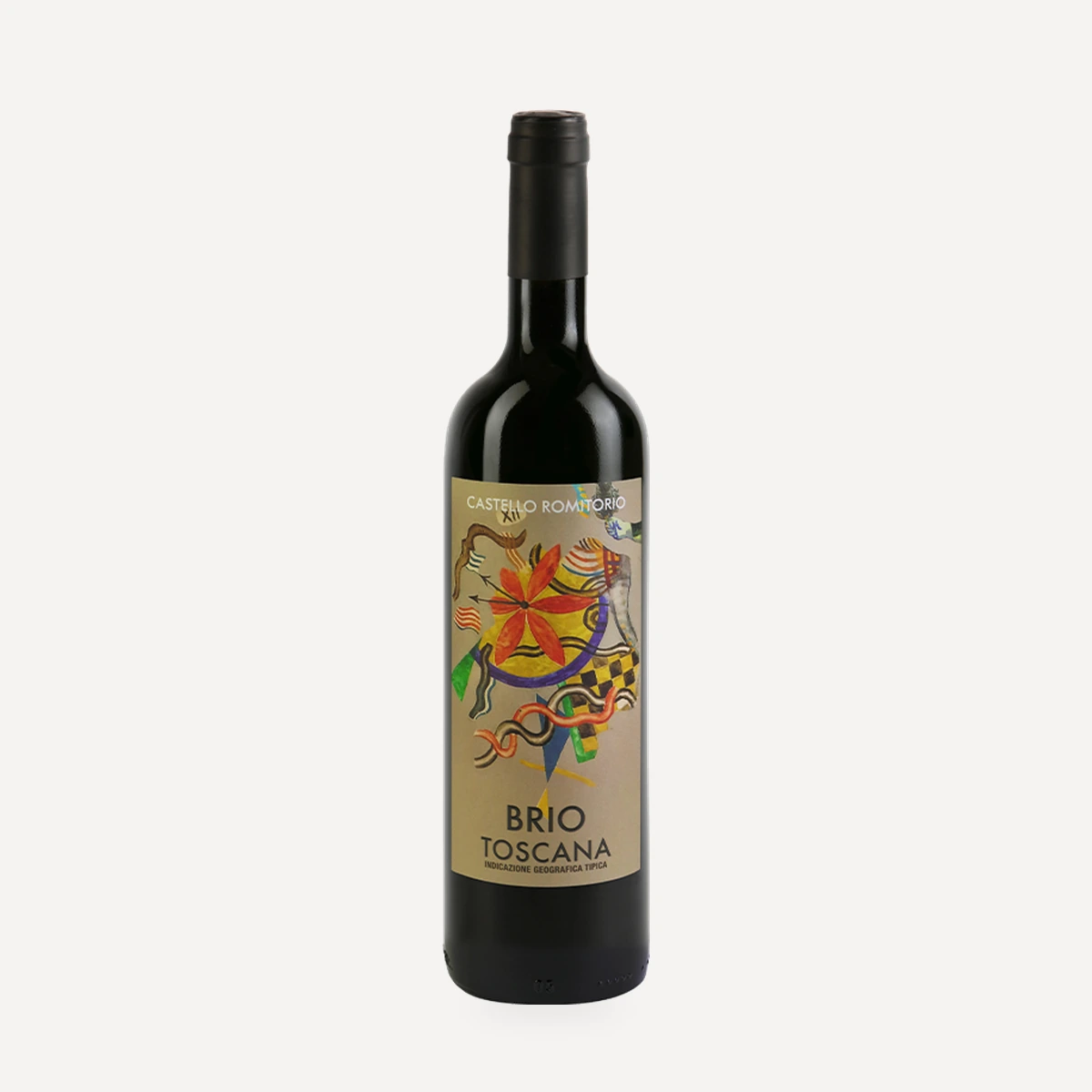
Brio Toscana Rosso IGT
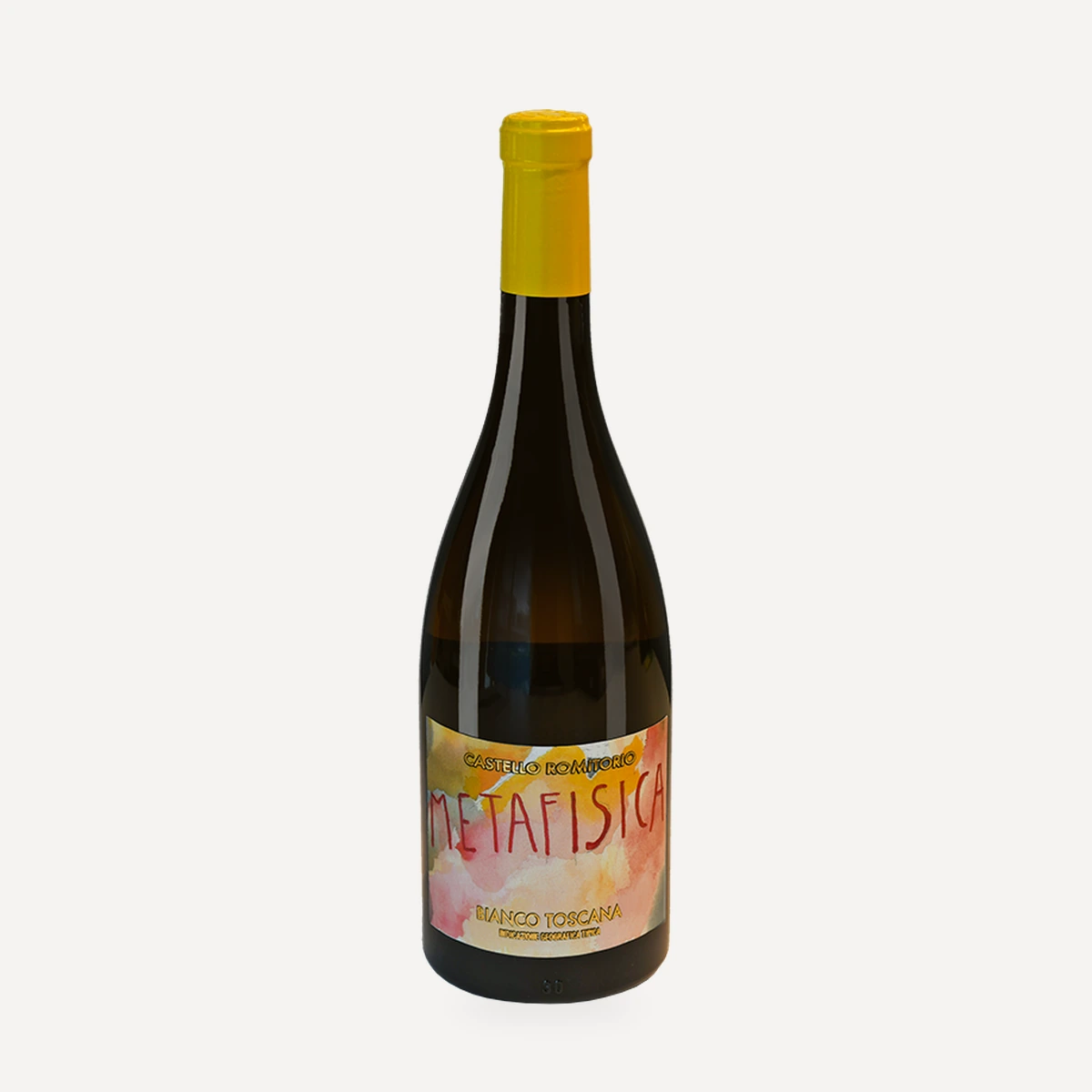
Metafisica Toscana Bianco IGT