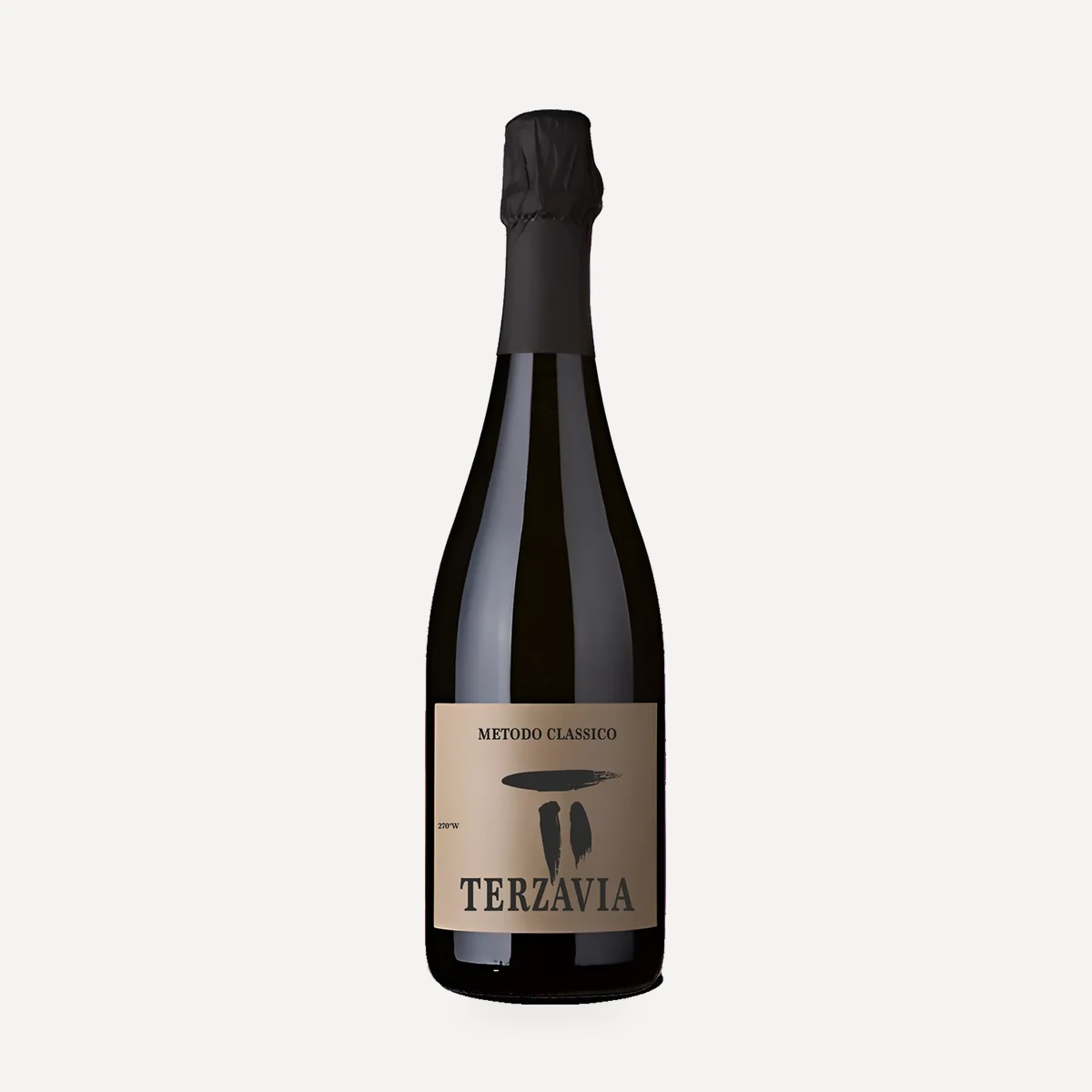
About this wine
Vineyard and terroir
The 2022 vintage comes from 9 ha in Contrada Samperi, Marsala. The 30-year-old Grillo vines grow on level, medium-textured calcareous soil tending toward sandy and are trained on Guyot trellises at 3,500 vines per hectare. Yield is 60 q/ha.
Grapes
100% Grillo.
Vinification
Harvest is manual in small crates from late August. The grapes are cooled and the clusters selected before direct gentle pressing as whole bunches. After spontaneous settling, fermentation begins in stainless steel and continues in French-oak vessels for 20% of the grapes. Indigenous yeasts and minimal sulfites are used, with temperature controlled indirectly by conditioning the room.
For the August 2024 tirage, fresh must from the following Grillo vintage, grown in the same vineyard and vinified in the same way, was added to the base wine. The must both lowers the alcohol level and supplies the natural sugar required for secondary fermentation. Its share does not exceed 15%, preserving the wine’s vintage classification. The finished wine is not dosage-adjusted.
Ageing
Half of the base wine ages for 12 months in stainless steel; the other half matures in French-oak vessels on its lees. After tirage, the wine spends at least 18 months in bottle on its lees.
Technical data
2022 vintage: alcohol 11.5% vol.; acidity 7.40 g/l; reducing sugars 1.5 g/l; total SO₂ 20 mg/l. Production is 32,000 bottles.
Serving and pairing
Serve at 8 °C. Pair with seafood starters, traditional Sicilian dishes throughout a meal, or fish tartare—particularly Mediterranean bluefin tuna seasoned with black pepper, Trapani sea salt and fresh thyme.
Vintage notes
Terzavia changes with the climate of each year. Mistral-dominated seasons give a tauter, more vertical expression; when the Sirocco prevails, the wine becomes softer and broader.
Label / history
Created in 2008, Terzavia began as an experiment for sharing among friends. Its “third way” is a Sicilian response to traditional-method sparkling wine, designed to express Marsala’s Grillo rather than imitate an outside model. Fresh must replaces refined sugar for bottle refermentation, keeping the wine connected to its vineyard and vintage. The modern geometric label represents this unconventional route.