About this wine
Vineyard and terroir
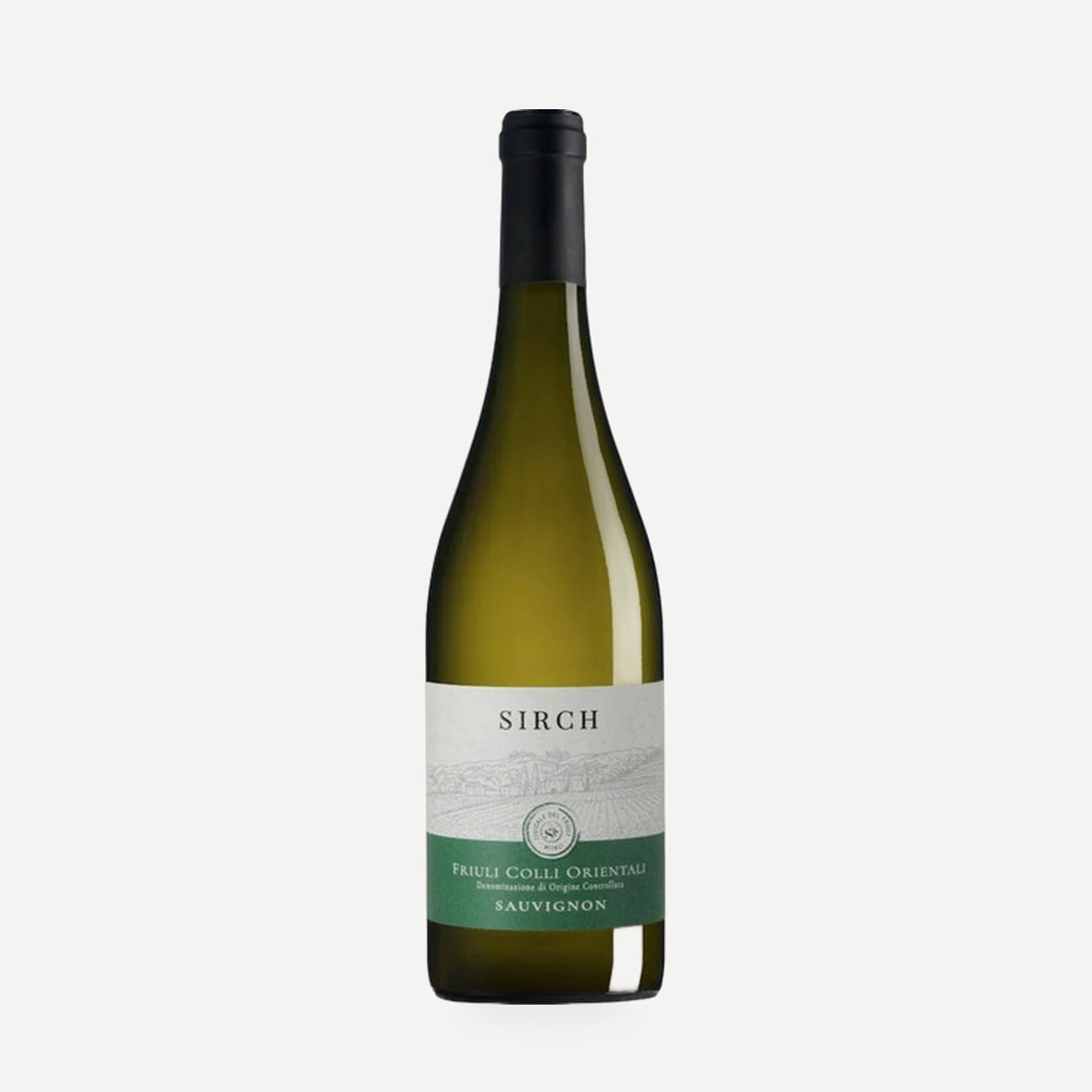
The soils have a mineral, saline character. Friuli’s local sandstone and marl soils are known as ponca.
Vinification
The grapes are harvested in the first week of September, partly by hand and partly by machine. They are destemmed and gently pressed, and the must is clarified by static settling at low temperature. Fermentation takes place in stainless-steel tanks at a controlled 16–18 °C.
Ageing
The wine remains in the fermentation tanks on its fine lees for six months, with frequent bâtonnage. After bottling, it rests in the cellar for an unspecified period before release.
Tasting profile
Youthful, fresh and easy-drinking, the wine is generous and well balanced, with a saline character. Its varietal nose combines layered fruit and mint aromas.
Label / history
The name Sauvignon derives from a word meaning “wild”. The variety, originally from France’s Loire Valley, was introduced to Friuli-Venezia Giulia during Habsburg rule in the 1880s and became part of the region’s winemaking tradition. In 1891, Sauvignon Blanc cultivated on ponca was documented as vigorous, with modest but consistent and reliable yields. The resulting wines were noted for finesse, harmonious and generous flavours and aromas, and a distinctive character.