Rosso della Val di Cornia/Val di Cornia Rosso
Detto anche Val di Cornia Rosso
1 cantina e 1 vino. The Val di Cornia runs inland from Piombino on the southern Etruscan Coast, and its red DOCG draws on the communes of Suvereto, Sassetta and Monteverdi Marittimo and parts of Piombino, San Vincenzo and Campiglia Marittima, across the provinces of Livorno and Pisa. The hills are built of Triassic cavernous and black limestones, cut through by magmatic intrusions rich in metal sulphides — the minerals that made this a mining country — while the flatter ground is younger sediment. Farm soils are medium loams, sandy or clayey, slightly alkaline, low in organic matter and rich in potassium. Continua a leggere ↓
- Livello
- DOCG
- Regione
- Toscana
- Uve
- Sangiovese
- Tipologie
- Rossi
- Produttori
- 1
Cantine che producono Rosso della Val di Cornia
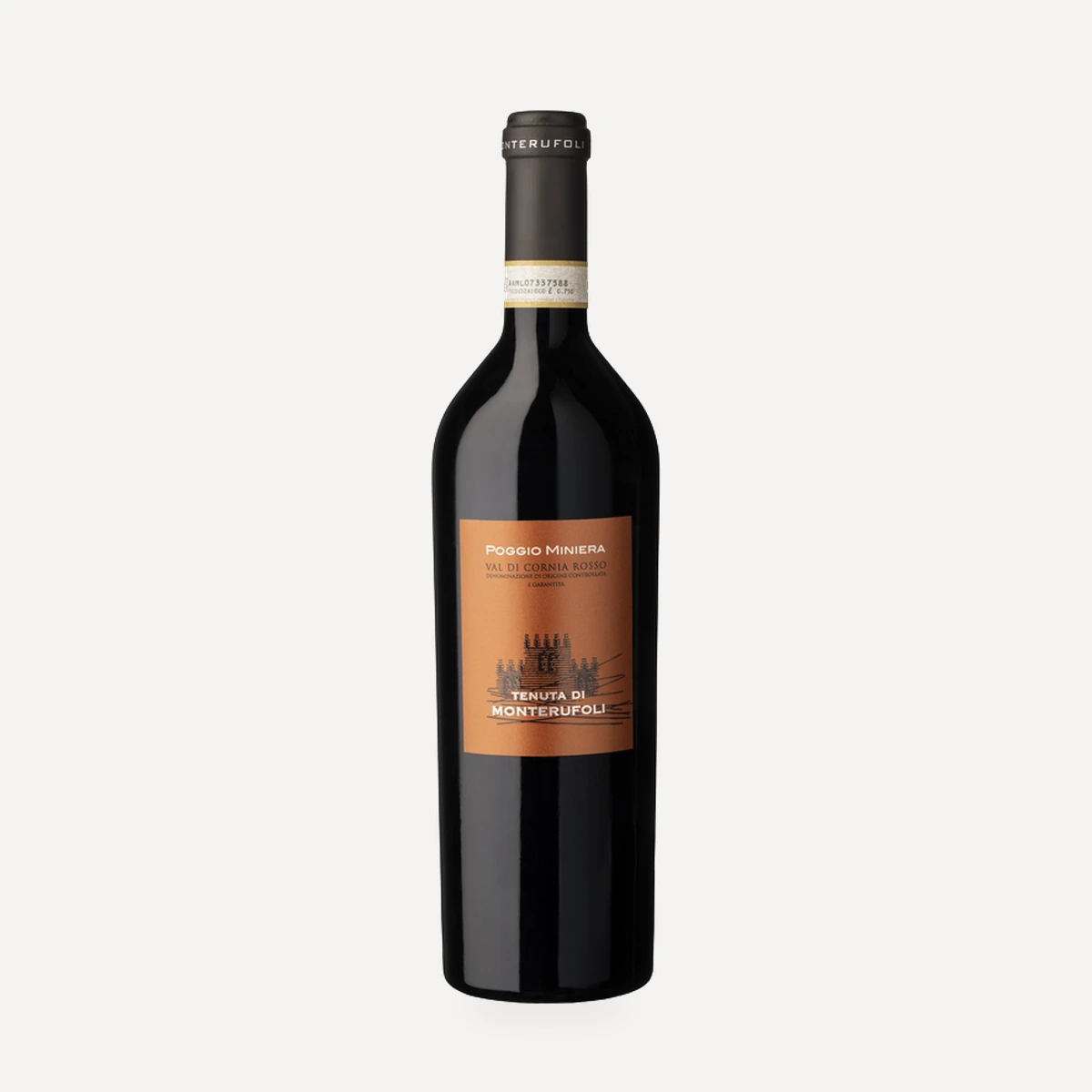
Vini di Rosso della Val di Cornia
Rosso della Val di Cornia in breve
The weather is kind to vines: mild springs for flowering and fruit set, warm, bright summers for ripening, and rain mostly in early spring and autumn, with damaging frosts and long droughts rare.
Where neighbouring Suvereto leans to Bordeaux varieties, Val di Cornia Rosso is a blend built on Sangiovese: at least 40 per cent, with Cabernet Sauvignon and Merlot up to 60 and other red grapes up to 20, Aleatico excluded. It may not be sold before the first of May of the second year after the harvest; a Riserva waits until the first of January of the third, after at least eighteen months in wood and six in bottle. The DOCG was carved out of the Val di Cornia DOC, created in 1989, in 2011.