Storia
The beginning in 1999
Altura Vigneto began in 1999 as a Carfagna family project on Isola del Giglio. The family describes itself as the first contemporary initiative on the island to undertake this kind of vineyard recovery. Its purpose extended beyond making wine: abandoned agricultural land would be returned to cultivation while safeguarding the island landscape, biodiversity, native varieties and the knowledge associated with them.
The family acquired approximately three hectares of abandoned vineyard. Restoration began by clearing brambles and uprooting invasive shrubs. The ground was worked while thousands of metres of dry-stone walls and vineyard water channels were reconstructed. Rootstocks were planted and then field-grafted with native germplasm. The vines were established as low, head-trained bush vines suited to the exposed terraces.
All of this work had to be performed manually. The vineyards occupy very small, steep seaside terraces without roads or paths, so vineyard operations, harvesting and the movement of grapes and materials rely on human labour. Altura adopted the description “heroic viticulture” for this arduous approach.
Recovery, continuity and recognition
Altura’s long-term work has combined the recovery of the terraced landscape with the preservation of old agricultural material and indigenous varieties. Ansonaco—the traditional Giglio name for Ansonica—became central to the project. The family links the variety’s island identity to centuries of natural selection and to the experience of earlier generations of growers who retained plant material able to endure the island’s severe conditions.
The recognition chronology records the Salone Internazionale del Gusto and Premio Vinitaly in 2008, the Prix CERVIM Futur in 2012, Wine Without Walls in 2014 and Bandiera Verde Agricoltura in 2020. In 2021, Emtivì, originally made for household consumption, was bottled commercially for the first time.
2025: Winemaker of the Year
On 12 October 2025, at the Roma Convention Center La Nuvola, Francesco Carfagna received the Winemaker of the Year title from Gambero Rosso’s Vini d’Italia 2026 guide. The family presented the award as recognition of a collective undertaking shaped by terrace restoration, persistent manual labour and the support of earlier Giglio growers, collaborators, customers and wine communities. The accolade marked twenty-six years from the project’s 1999 beginning.
Terroir
Altura’s vineyards lie by the sea on Isola del Giglio in the Tuscan Archipelago. They occupy small and extremely small terraces on pronounced slopes, among massive exposed rocks. There are no roads or paths through the vineyard terrain.
The growing environment is defined by drought, powerful winds and intense sunshine in every season, together with salt-laden maritime air. The soil is generally sandy and acidic and contains mineral material. Vines are kept low, and their roots descend beneath rocks or penetrate fissures in search of moisture, coolness and nutrients. Yields are low.
Ansonaco’s local identity developed through centuries of natural selection and the work of earlier Giglio growers, who retained varieties capable of prospering under the island’s severe combination of exposed terraces, rock, drought, wind, sun and salinity.
Vinificazione
The family’s first task was to reclaim abandoned terraces by clearing brambles and removing invasive shrubs. Vineyard restoration proceeded alongside cultivation of the ground, reconstruction of thousands of metres of dry-stone walls and repair or rebuilding of water channels.
Rootstocks were planted and grafted in place with native germplasm. Vines are maintained in a low, head-trained bush form among the terraces and rocks. This low-growing system accompanies naturally low yields in an environment marked by drought, wind, intense sun and salt-laden air.
The vineyards have neither roads nor paths. Every vineyard operation is performed manually, including harvest and the transport of grapes and materials. Grapes are hand-picked into crates; for the estate Ansonaco, harvest generally takes place around the second half of September before the fruit is carried into the village. Altura describes this demanding, fully manual system as heroic viticulture.
The work is also conceived as landscape stewardship: restoring terraces, maintaining dry-stone structures, preserving biodiversity and keeping native and old varieties in cultivation rather than allowing agricultural abandonment to continue.
Winemaking follows a low-intervention approach centred on spontaneous fermentation at ambient cellar temperature. Estate-grown Ansonaco is hand-harvested into crates, transported to the village and fermented with its skins in stainless-steel vessels. It is drawn off at the end of fermentation and subsequently racked, generally about three times, before bottling ahead of the following harvest. It is neither filtered nor subjected to chemical, thermal or mechanical treatment.
For other bottlings, the cellar also works with grapes purchased from trusted growers on the mainland. These grapes are brought to Giglio and processed immediately. Short skin contact followed by completion of fermentation off the skins is used for some wines, while the traditional mixed red is co-fermented with skins and stems after grapes of differing ripeness have been collected in stages and rested in the shade for slight dehydration. That red can remain with its skins for several months after fermentation.
Across the processes described, the recurring principles are spontaneous fermentation, cellar-temperature vinification, racking rather than filtration and the avoidance of corrective chemical, thermal or mechanical treatments. La Frasca dell’Altura in Giglio Castello serves as the maturation cellar and direct-sales point.
Filosofia
Altura presents vineyard recovery as an agricultural, environmental and social undertaking rather than simply a commercial enterprise. The family’s stated purpose is to cultivate in opposition to monoculture, short-term market logic, real-estate and tourism speculation, emotional disconnection and depopulation.
This philosophy is expressed through practical commitments: restoring abandoned terraces, rebuilding dry-stone walls and water channels, maintaining the landscape, preserving biodiversity, retaining ancient and native plant material and keeping demanding manual work alive on the island. The family associates its work with gratitude for living on Giglio and with responsibility toward the vine, the island and the growers whose selection shaped its local varieties.
In the cellar, the same outlook favours spontaneous fermentation, ambient cellar temperatures, racking instead of filtration and the avoidance of chemical, thermal or mechanical treatments. Vintage character is allowed to remain visible: the exceptional drought and intense sun of 2020, for example, produced scarce, concentrated fruit and a fermentation that continued for more than three years in the wine released as Ansonaco Sole.
Vini
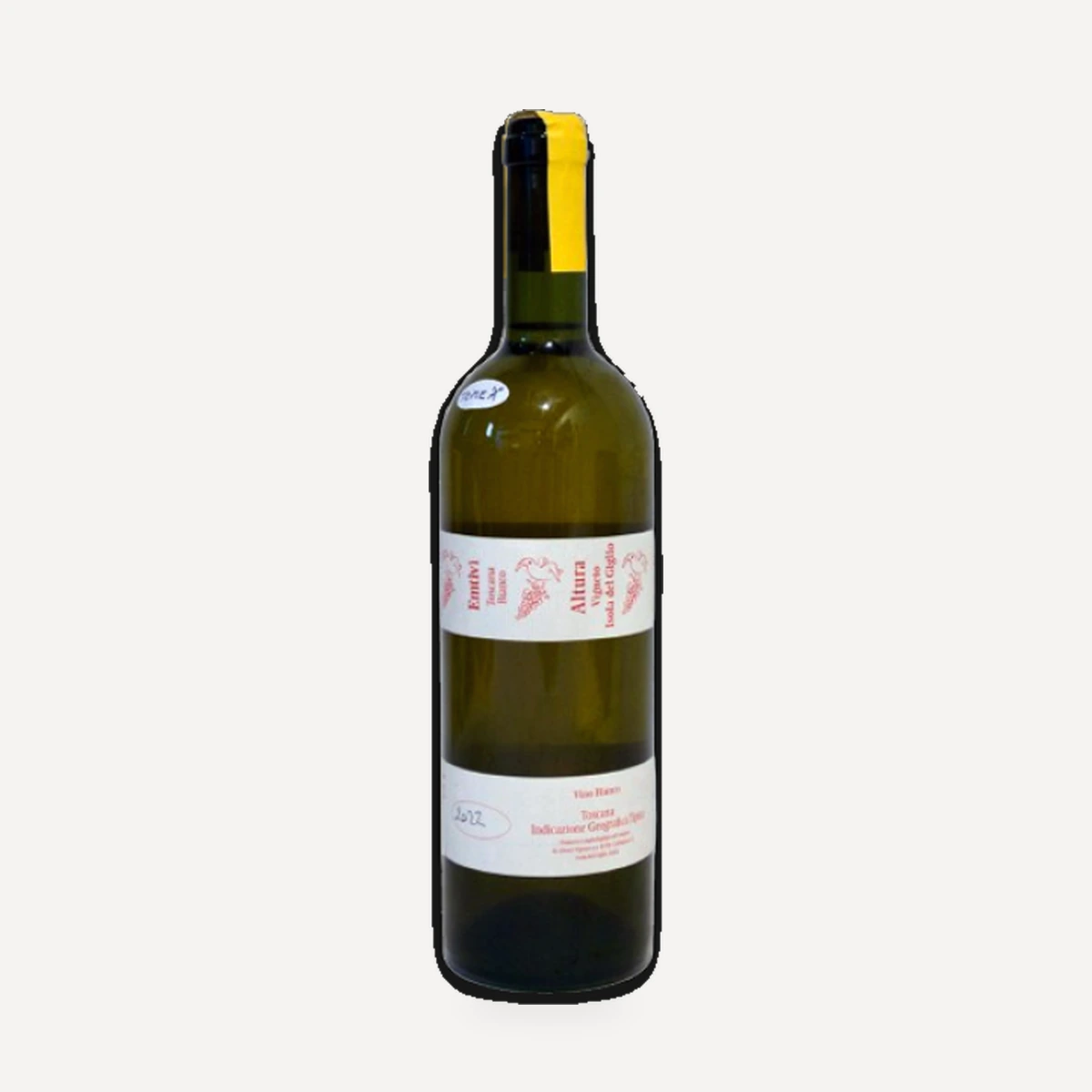
Altura Emtvì
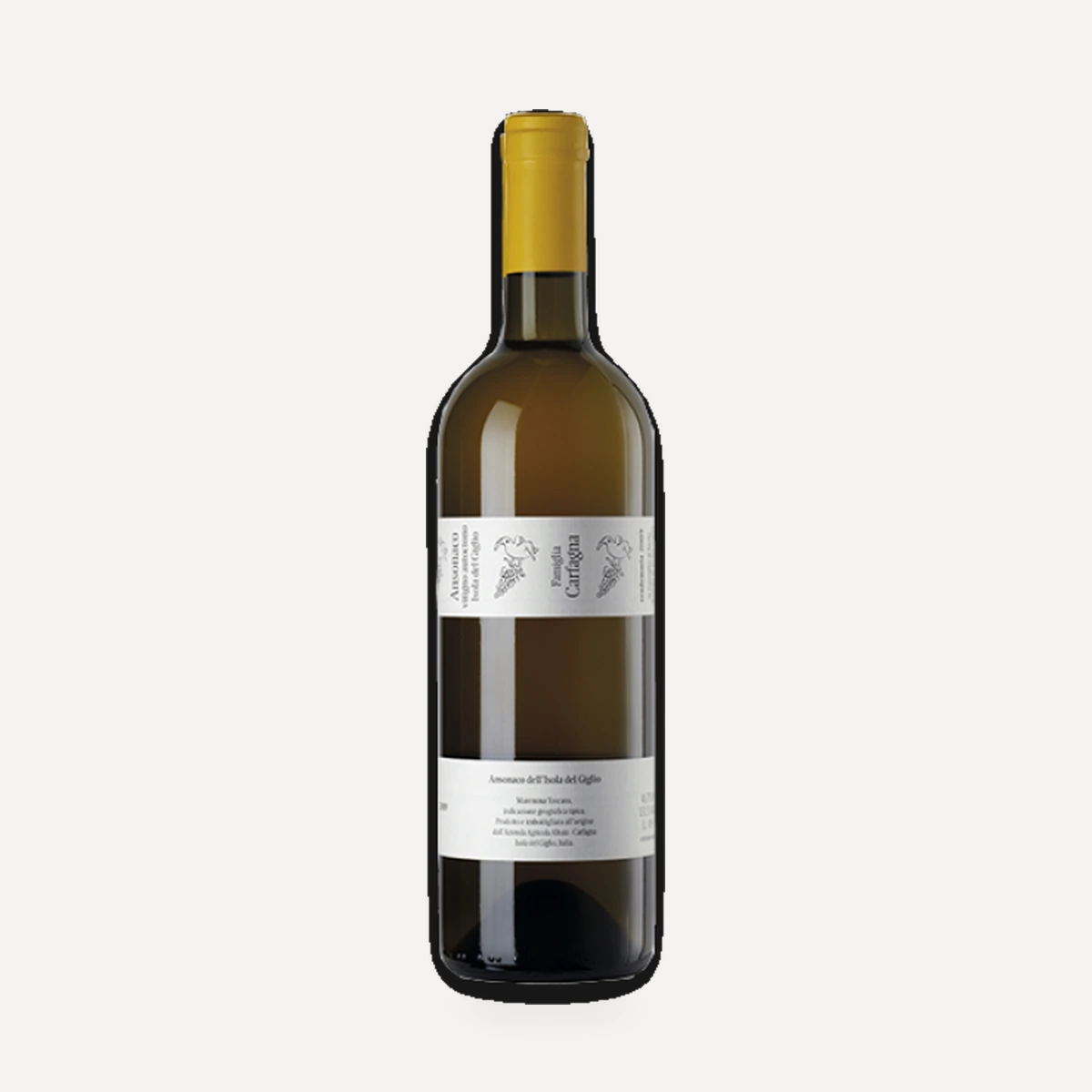
Altura Ansonaco
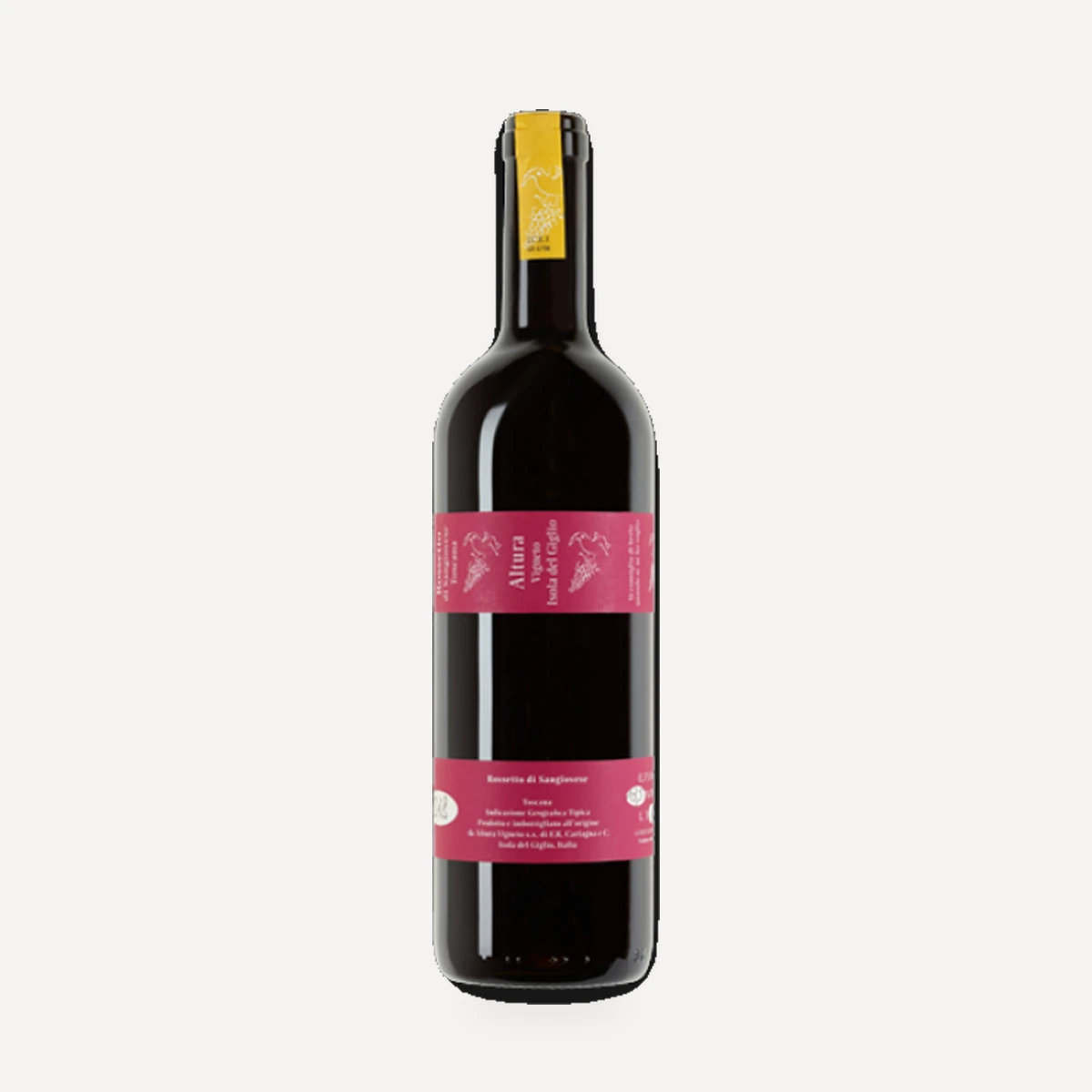
Altura Rossetto