Storia
The Da Ponte background and foundation
The family’s association with distillation predates the company. Lorenzo Da Ponte—Mozart’s librettist and a relative of the founder—was among the first people to open a distillery in Philadelphia. The family narrative also connects Lorenzo with Clement Clarke Moore: Lorenzo visited him in New York on Christmas Eve 1822, an encounter credited with inspiring Moore’s ’Twas the Night Before Christmas.
Andrea Da Ponte founded the distillery in Conegliano in 1892. He also recognized the potential of ageing grappa at a time when maturation was principally associated with Cognac. His brother Matteo supplied the technical foundation for the business. In 1896 Matteo published the first scientifically documented manual devoted to the techniques and art of distillation. Hoepli of Milan subsequently issued four further editions.
Matteo’s manual illustrated his patented stills, improvements to existing equipment and new columns for concentrating alcoholic vapours. It also codified the Metodo Da Ponte, devised to refine a spirit that had traditionally been rough and to preserve the varietal fragrances and aromas of the grapes. One of Matteo’s early direct-fired distillation systems and a direct-steam battery for fermented pomace dated 1947 form part of the company’s historical record.
From the Da Ponte family to the Fabris family
The two dynasties were joined when Andrea’s daughter Bruna Da Ponte married Pietro—also rendered as Piero—Fabris, a descendant of a noble Cadore family. Pietro brought the Fabris family’s interest in art and culture into the distillery’s story. His enthusiasm for cinema culminated in the opening of a multiplex dedicated to director Georges Méliès. As artistic director of the Teatro Accademia di Conegliano, he also helped make it an important centre for theatre in north-eastern Italy.
Family photographs record Andrea Da Ponte and Liberale Fabris hunting in October 1920, Pietro Fabris winning the 1925 Vittorio Veneto–Cansiglio motor race in a Bugatti Type 35, and Andrea at the Fabris home on Corso Mazzini in Conegliano in 1947. Later images document Pier Liberale Fabris working in the distillery in 1955 and barrel maintenance at the Via Matteotti premises in Conegliano in 1963.
Pier Liberale Fabris and single-varietal Prosecco grappa
Pier Liberale Fabris was born in Conegliano on 8 February 1925. Meticulous, inventive and respectful of the past, he applied Matteo’s Method to a new idea: a grappa distilled solely from Prosecco pomace and matured in Limousin-oak barriques.
In 1969 he distilled the first single-varietal grappa from the white pomace of Prosecco grown in the Conegliano and Valdobbiadene hills. The resulting Vecchia Grappa di Prosecco was aged for eight years in Limousin oak and introduced to the market at the end of the 1970s. Its creation joined technical experimentation, varietal identity and maturation in a single product, and became a reference point for the subsequent range.
Pier Liberale’s interests extended to nature and ornithology. In the late 1950s he created the Roccolo di Arfanta on Poggio Bello as a habitat and station for observing and studying migrating birds. During the 1970s, collaboration with the Province of Treviso, the Veneto regional authorities and the National Wildlife Institute in Bologna transformed it into an official scientific ornithological observatory.
The move to Corbanese di Tarzo
Growing production required larger premises. In 1979 operations began moving from Conegliano to the basin of Corbanese di Tarzo, at the foot of the Tarzo hills. The location placed the distillery closer to the Prosecco vineyards, allowing freshly drawn pomace to be processed quickly as required by the Metodo Da Ponte. The area’s cold water also assisted the condensation of aromas during distillation.
The facility was conceived from the outset as a low-impact distillery. The production site and its offices were completed in the early 1980s; the more recent family account dates completion to 1983. The site includes tall steel silos and an ageing warehouse described as one of the largest in Italy.
Environmental investments
Biomass boilers were installed in 1983. The biomass consists principally of grape skins and seeds, with the associated process also producing biogas. A heat-recovery plant followed in 1986. In 1989 the company built a water-treatment plant and began producing biogas, while a fume-purification plant was added in 1994.
In 2009 a 110 kWp photovoltaic installation was commissioned. Its 454 polycrystalline-silicon panels cover 740 m² and produce 112,400 kWh of electricity annually. The installation reduces greenhouse-gas emissions by approximately 67,400 kg per year. Together with heat recovery and the purification of water and fumes, these systems have brought production emissions close to zero and made renewable sources the principal energy supply.
Centenary, research and the fourth generation
For the distillery’s centenary in 1992, 4,892 numbered bottles of Libera Prosecco Grappa were selected for Gran Riserva. Distilled by Pier Liberale and matured for 18 years in Limousin oak under his son Francesco, the bottles were authenticated by Francesco Fabris’s signature and presented individually in cases.
Between 2000 and 2004, work with the University of Udine and the University Research Centre of Trento made Andrea Da Ponte one of Italy’s first distilleries equipped with a mass spectrometer capable of mapping the aromatic profile of a spirit and continuously checking its characteristics.
Francesco Fabris represents the fourth generation. He has continued Pier Liberale’s work in distillation, environmental investment and stewardship of the Roccolo di Arfanta. His contributions include creating a ginger liqueur by combining Vecchia Grappa di Prosecco with Asian ginger infusion, developing exclusive Gran Riserva releases and maintaining one of Italy’s largest ageing warehouses. In 2025 he described work toward Green Company certification and anticipated that his children might carry the family into a fifth generation.
The company marked the 50th anniversary of Vecchia Grappa di Prosecco in 2019 and its 130th anniversary in 2022.
Genesi
A three-year development project culminated in 2026 with Genesi, a contemporary reinterpretation of Vecchia Grappa di Prosecco. The project retained the original raw material and identity while seeking a more harmonious profile and a new visual language. It was unveiled at Vinitaly in April 2026. The Genesi design subsequently received the Black Prize, the highest distinction in the Clear Spirits category of the Vinitaly Design Award 2026.
Terroir
Andrea Da Ponte is based between its registered office in Conegliano and its production facility at Corbanese di Tarzo, at the foot of the Tarzo hills. The distillery’s core Prosecco pomace comes exclusively from the protected Conegliano Valdobbiadene Prosecco Superiore DOCG area.
The Corbanese facility was chosen partly for its proximity to the Prosecco vineyards. This reduces the interval between drawing off the wine and processing the pomace, helping preserve the fresh varietal character required by the Metodo Da Ponte. Cold local water assists the condensation of aromas during distillation.
The broader setting is described through the rolling hills of Conegliano and Valdobbiadene. Poggio Bello, the site of the Roccolo di Arfanta, supports hornbeam, oak, chestnut and fruit trees, together with cyclamens, primroses and wildflowers. No individual estate vineyards, soil profiles, elevations, exposures, rainfall figures or vineyard microclimates are identified.
Vinificazione
Raw-material selection and preservation
Grappa production starts with freshly drawn pomace. Prosecco pomace is sourced exclusively from the Conegliano Valdobbiadene Prosecco Superiore DOCG area and normally reaches the distillery in the evening. It is processed immediately at night, when lower air temperatures reduce the risk of deterioration. Grape seeds are separated from the skins, the pomace is carefully checked and then placed in vertical, temperature-controlled tanks so that fermentation proceeds slowly and evenly.
Beginning distillation during harvest is a central rule of the Metodo Da Ponte because it helps preserve fresh varietal characteristics. The distillery has used Matteo Da Ponte’s patented still system for four generations, continually adapting it with vacuum technology and other modern processes.
Double distillation and fractionation
After several days of alcoholic fermentation in the silos, Prosecco pomace undergoes double distillation. During the first stage, the pomace is heated; the alcoholic vapour evaporates and is condensed to produce a liquid of approximately 20% alcohol by volume. During the second stage, vapours enter fractionating columns and are repeatedly fractionated. This purifies the spirit, separates methanol-bearing fractions and removes higher-boiling alcohol fractions.
The cutting of heads and tails remains entrusted to the sensory judgement of the master distillers. High-technology instruments check impurities and aromatic compounds, while analytical controls and organoleptic tastings monitor the entire process. Vacuum batch stills designed by the distillery are also used to preserve and enhance varietal aromas.
Between 2000 and 2004, cooperation with the University of Udine and the University Research Centre of Trento led to the installation of a mass spectrometer capable of producing aromatic maps of spirits and enabling continuous control of their characteristics.
Maturation and preparation for bottling
Batches considered suitable for natural ageing are transferred to Limousin-oak barrels and barriques in the ageing warehouse. Maturation may last from three years to more than 12 years, with individual releases extending to 18 or 20 years. Each spring the development of the ageing spirit is assessed. Once maturation and quality targets have been met, the grappa is diluted to the required alcoholic strength, filtered, bottled and packaged.
The broader ageing programme also uses old Slavonian-oak casks, port barrels and cherry-wood barriques for selected spirits. Limousin oak remains the defining maturation vessel for the principal aged Prosecco grappas.
Sparkling-wine production
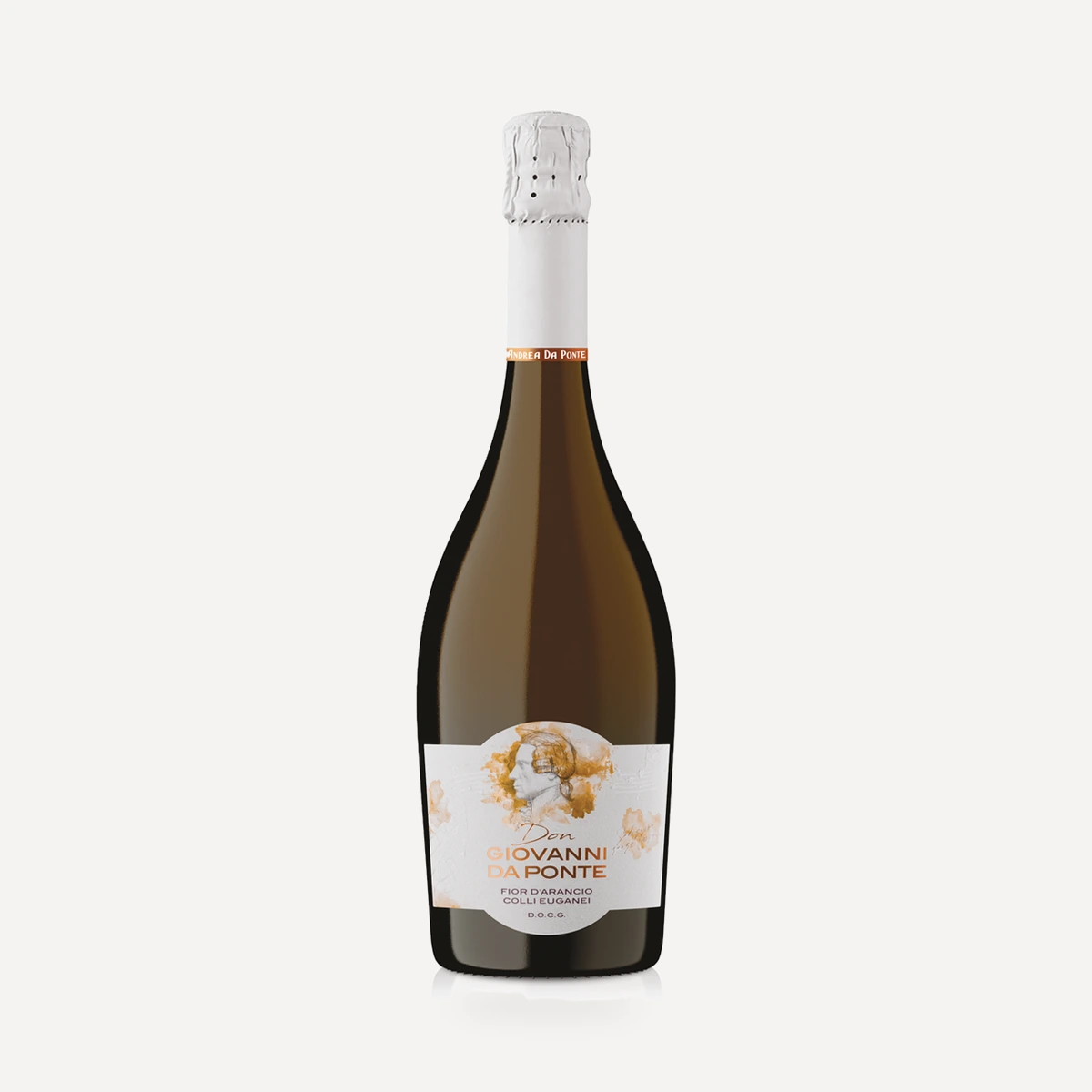
Don Giovanni Conegliano Valdobbiadene Prosecco Superiore DOCG is produced by the Italian or Charmat method, with a long secondary fermentation and maturation in pressurized steel tanks. The natural prise de mousse creates the line’s fine bead. The wines are based on selected Prosecco grapes from the Conegliano Valdobbiadene hills; the rosé expression combines Glera and Pinot Nero.
Environmental plant
Production is supported by biomass boilers fuelled principally by grape skins and seeds, heat-recovery equipment, biogas production, water- and fume-purification systems and a 110 kWp photovoltaic installation. The 454 photovoltaic panels cover 740 m², produce 112,400 kWh annually and reduce greenhouse-gas emissions by about 67.4 tonnes per year. Renewable sources supply most of the energy and overall emissions are close to zero.
Filosofia
Andrea Da Ponte presents the Metodo Da Ponte as a meeting point between tradition, research, accumulated experience and continuing technical development. Its central quality principle is the preservation of the grape’s varietal aromas from fresh pomace through distillation and maturation.
Manual sensory skill remains important—especially when separating heads and tails—but it is paired with analytical instruments, vacuum technology, aromatic mapping and academic research. Innovation is treated as a continuation of Matteo Da Ponte’s method rather than a departure from it.
The Da Ponte–Fabris family frames respect for nature and raw materials as an inherited responsibility. Francesco Fabris summarizes this attitude as the heart following what nature commands. Environmental investment, monitoring of air, water and energy, renewable power and near-zero emissions are intended to align production with the surrounding landscape and preserve it for later generations.
Family continuity is another stated principle. Knowledge is passed from one generation to the next, while each generation is expected to contribute new ideas. The 2026 Genesi project expresses this balance by revisiting an established product without abandoning its identity, connecting memory and origins with contemporary technical and visual language.
Vini
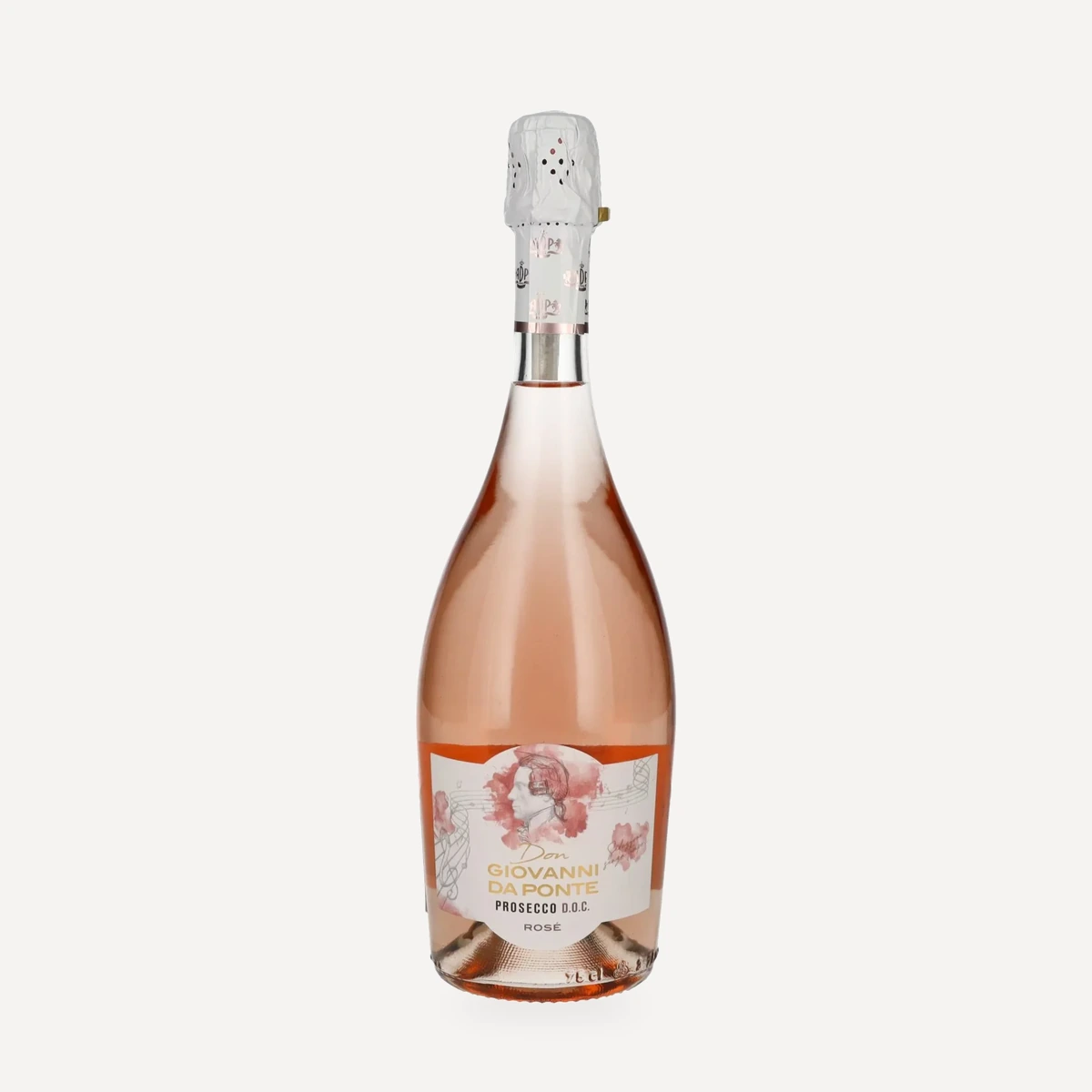
Don Giovanni Rosé Prosecco D.O.C. Spumante Brut Millesimato
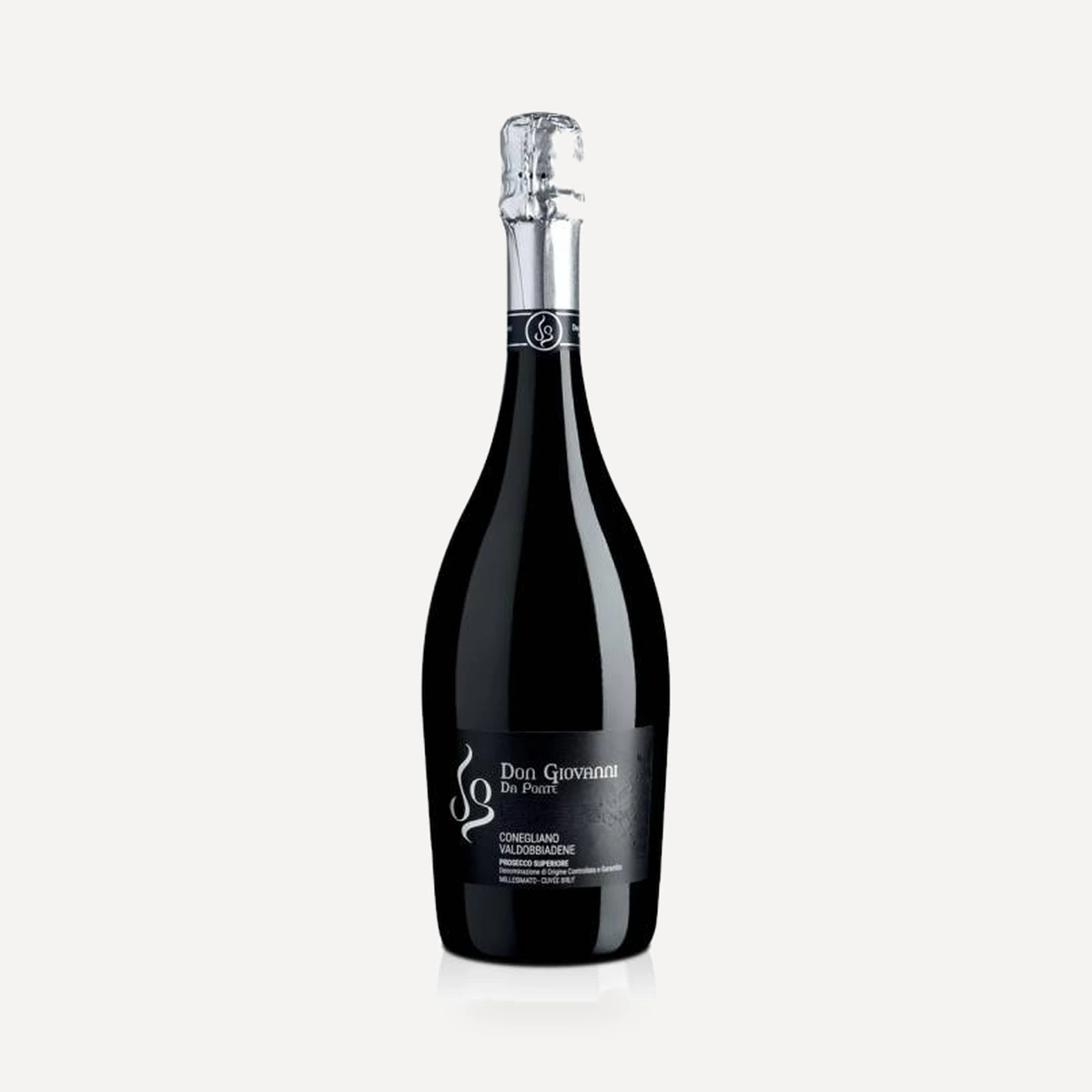
Don Giovanni Brut Conegliano Valdobbiadene Prosecco Sup. D.O.C.G.
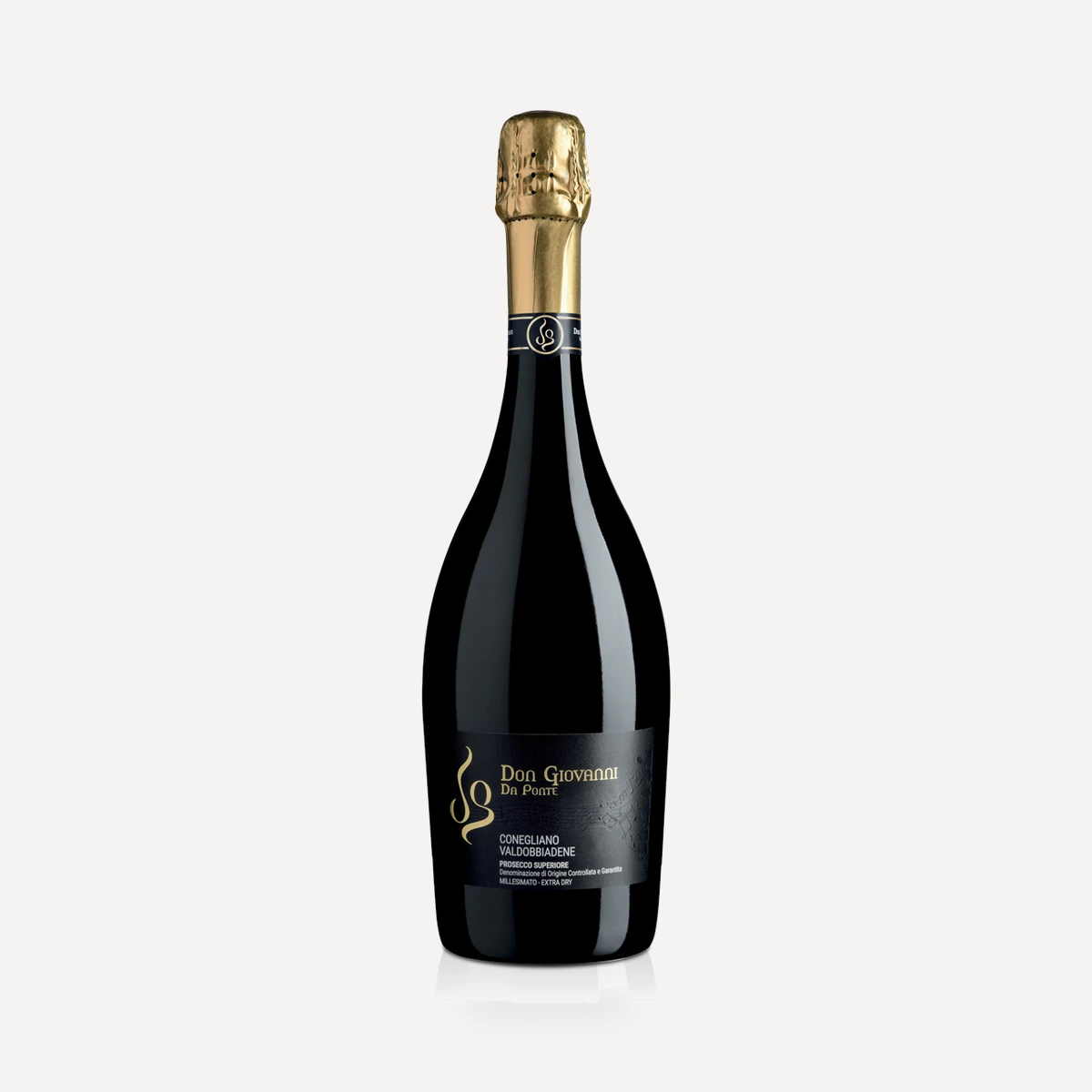
Don Giovanni Extra Dry Conegliano Valdobbiadene Prosecco Sup. D.O.C.G.
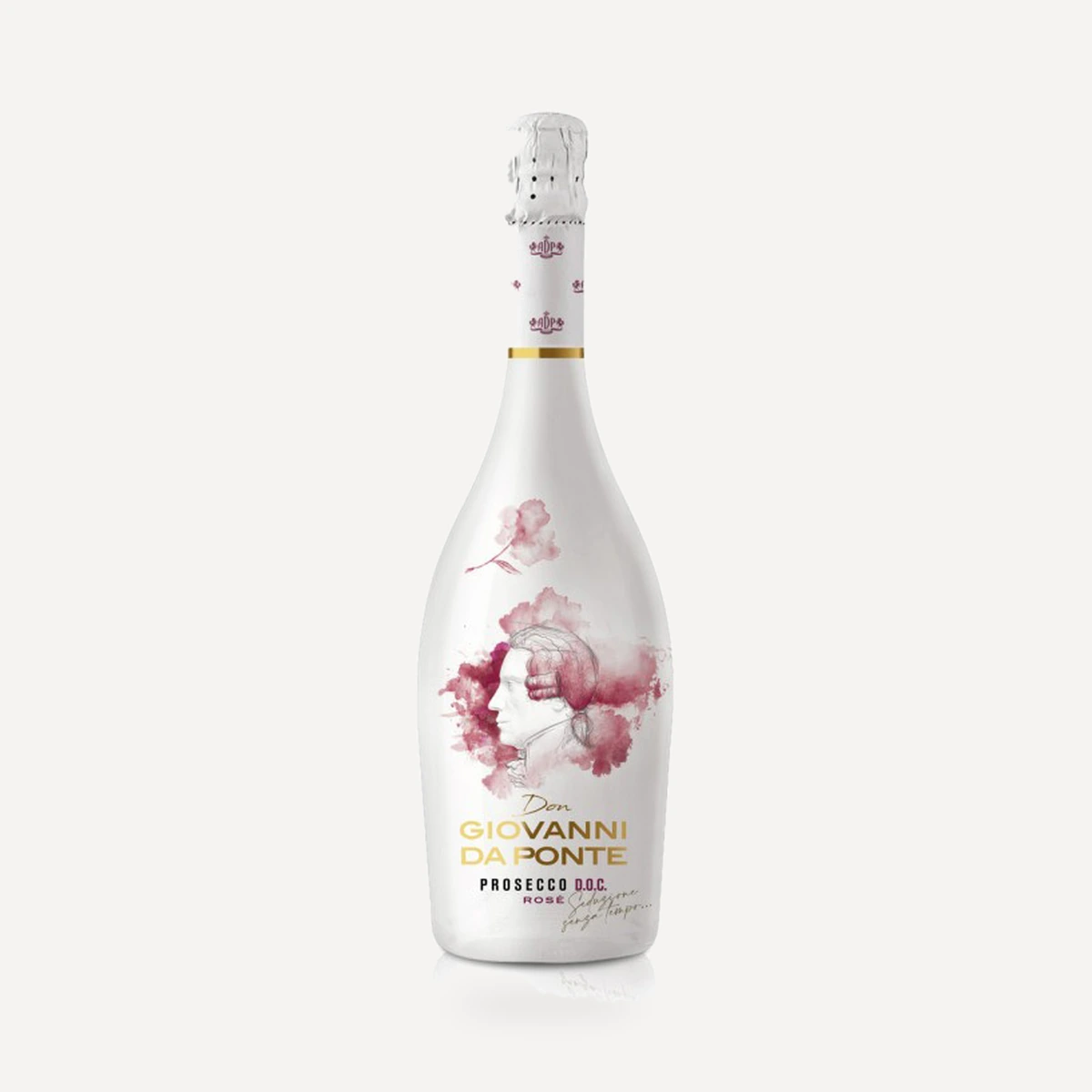
Don Giovanni Da Ponte Venezia D.O.C. ROSÉ Spumante Brut