Questo vino
Vineyard and terroir
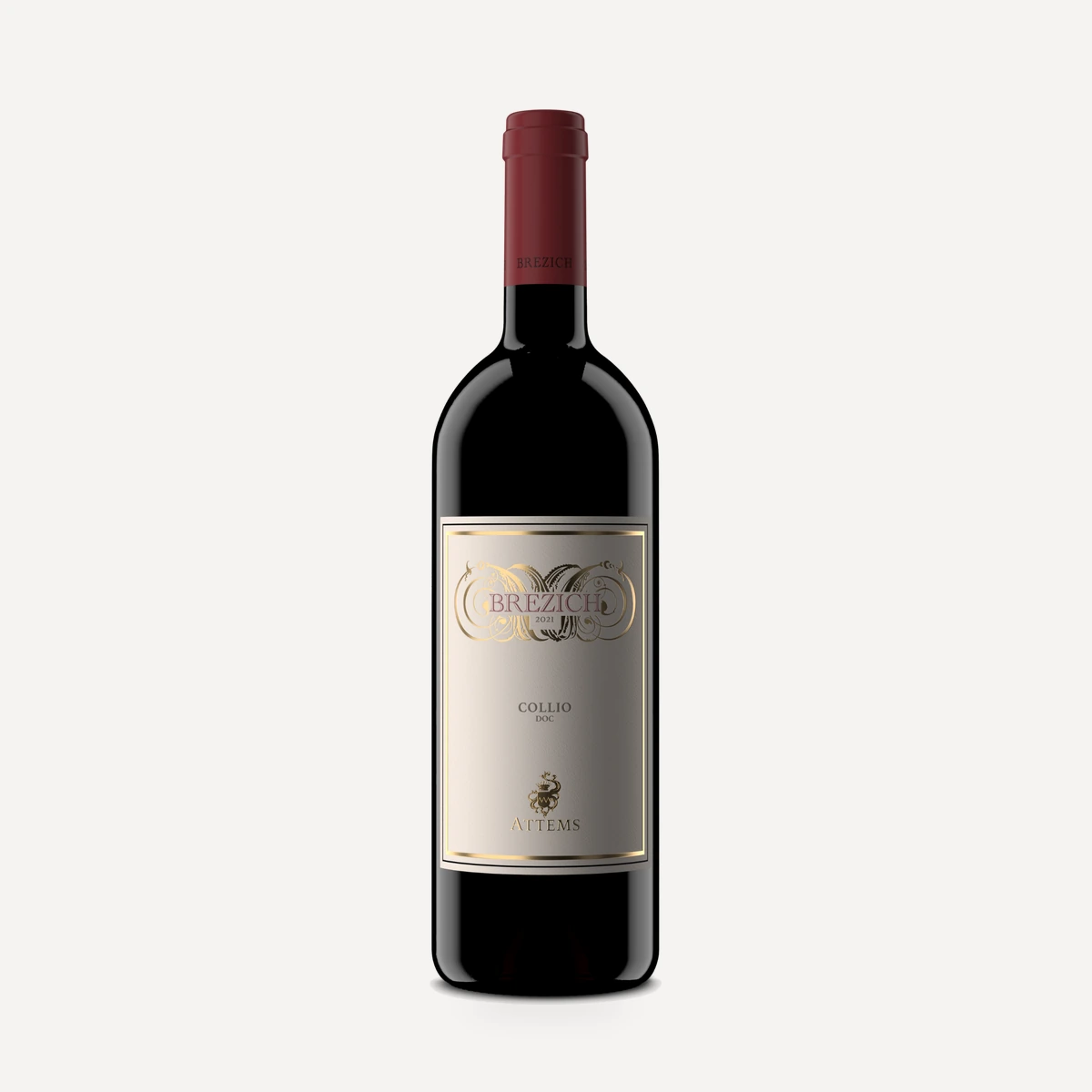
Brezich is a Riserva from dedicated vineyards planted to 85% Cabernet Franc and 15% Carmenère. The vines are Guyot-trained at 5,555 plants per hectare on Ponca, a stratification of Eocene marine marl and sandstone. The 2021 yield was 60 q/ha (6 t/ha).
Grapes
2021: 85% Cabernet Franc and 15% Carmenère. Collio DOC Cabernet Riserva.
Vinification
The grapes were harvested manually into crates during the second ten days of September. In the cellar they were destemmed and lightly crushed, then transferred to stainless-steel tanks for temperature-controlled alcoholic fermentation and maceration. Pump-overs and punch-downs kept the skins wet and promoted the desired extraction of colour and phenolic material. After approximately two weeks of alcoholic fermentation, the wine was separated from the skins and rested for several months in stainless steel, where malolactic fermentation occurred naturally.
Ageing
The wine matured for 24 months in first- and second-use French-oak barriques, followed by another 24 months in bottle.
Technical data
2021 alcohol: 13.5% vol.
Tasting profile
The 2021 is deep ruby red with garnet highlights. Its broad, complex bouquet ranges from ripe fruit, red woodland berries, pepper and violet to a persistent herbaceous and balsamic undertone. French-oak maturation contributes liquorice, chocolate, leather and refined spice. The palate is enveloping, warm, rounded and well structured, balanced by notable freshness. Its finish is long, persistent, velvety and elegant.
Serving and pairing
Pair with lamb or moderately lean red meats, including roast beef, sliced beef steak and fillet with green peppercorn sauce. It also suits medium-aged cheeses, mature Montasio, Frico and herb-filled Cjarsons.
Vintage notes
The 2021 winter included two periods in January and February when minimum temperatures remained below 0°C. A mild March followed, and Cabernet Franc budbreak began one week later than the historical average. Cold, rainy conditions in May slowed early growth, while June encouraged rapid canopy development. Pronounced day–night temperature variation in July and August, together with sufficient rain, supported balanced vine and fruit development. The black grapes combined aromatic, structural and phenolic maturity at harvest.