Questo vino
Vineyard and terroir
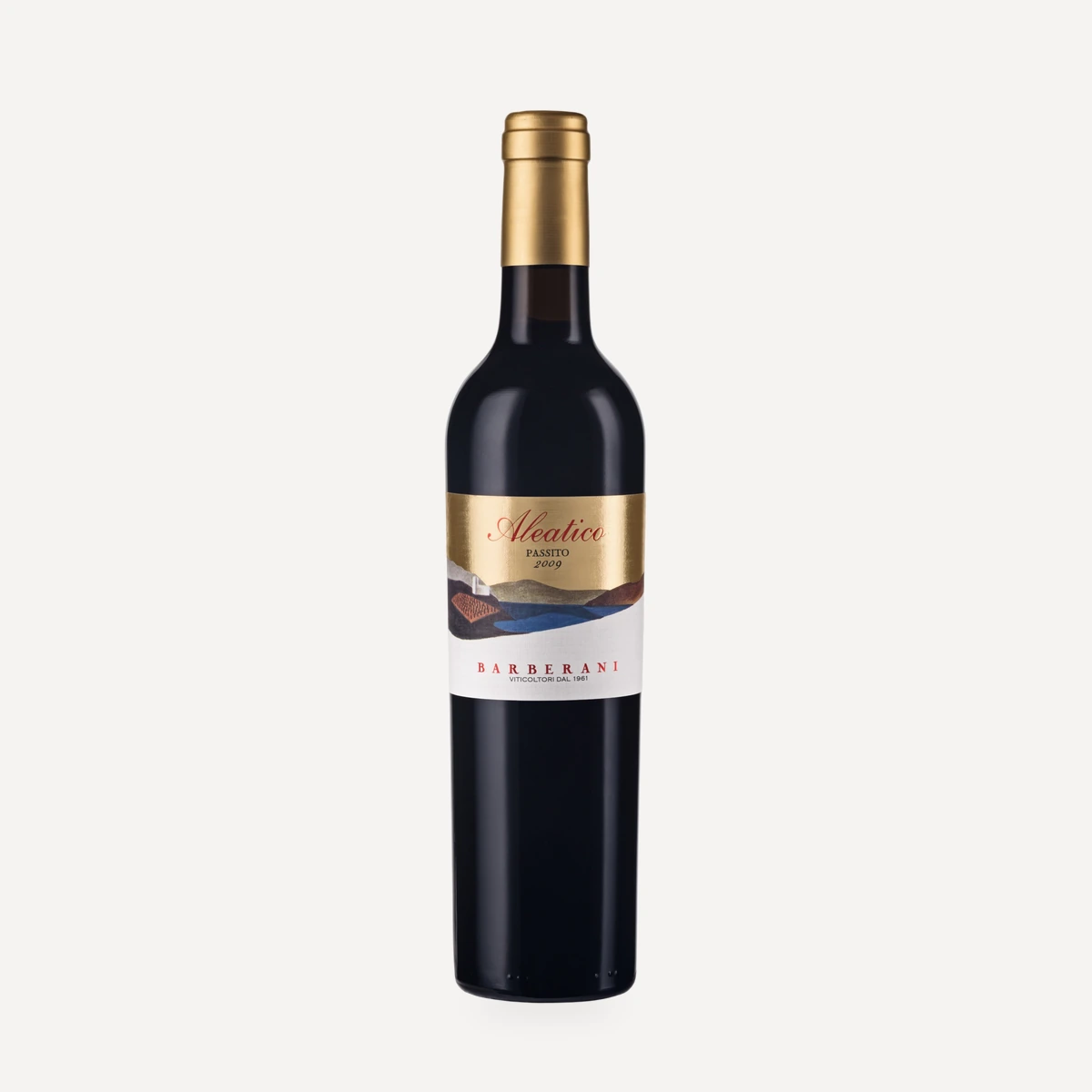
Aleatico is a traditional variety of the hills surrounding Lake Corbara. Approximately 1.5 ha are planted on the highest hill, with North-East exposure at 200–300 m above sea level. The site was selected and planted to encourage ventilation. Its sedimentary soils contain marine fossils, pebbles and calcareous agglomerations.
The vines are trained to Double Guyot at a density of 4,500 plants per hectare, with a yield of approximately 30 quintals per hectare. Their stated age is 30 years.
Viticulture is biodynamic-inspired. Herbicides and pesticides are not used; biodynamic preparations, shredded pruning material and green manure from grasses and legumes provide fertility.
Grapes
Aleatico. The variety is associated with ancient Etruscan origins in the Lake Corbara hills. Its bright-red, thick-skinned berries have fragrant pulp and dry slowly on the vine during the windy days of September.
Vinification
The grapes are harvested manually in September. Fermentation lasts 20 days in stainless steel with indigenous yeasts at 25–30 °C. Malolactic fermentation occurs spontaneously through indigenous bacteria.
Ageing
Ageing brings additional complexity and develops a sweet, intense perfume.
Tasting profile
Intense ruby-red. The fruity aroma recalls red berries and preserves. Full, warm and harmonious on the palate, with persistent tannins balancing the sweetness and contributing finesse and elegance.
Serving and pairing
Serve at 12–14 °C. Pair with pastries or tarts made with jam and nuts. It can also be enjoyed after a meal, by itself or with chocolate, cigars or a pipe.
Label / history
Research into the evolution of old bottles from the estate's red-wine production inspired an experimental Aleatico project in 2000. Following clonal selection intended to preserve traditional vine material, the vineyard was planted in 2002.