Storia
The creation of Bellafonte
Tenuta Bellafonte was established in 2007 as a project devoted to a new interpretation of Montefalco and its long-established grape varieties. The estate describes its creation as the gradual realization of a dream: the idea took shape over time and developed into a defined approach to viticulture and cellar work.
The name Bellafonte was devised by breaking down the German family name Heilbron. “Heil” was associated with well-being and beauty in a broad sense, while “Bron” meant a spring or source.
2008: the estate residence
A residence was created in 2008 as a secluded place immersed in the Umbrian landscape, combining the surrounding greenery with contemporary residential comforts.
Development of the vineyards and winery
The agricultural holding developed into a 30-hectare estate comprising approximately 11 hectares of vines, woodland, a small orchard and 2,500 olive trees. Its vineyards combine older rows with more recent plantings. The underground cellar was designed to use the surrounding rock and naturally circulating air to regulate temperature and humidity.
The production model centers on careful manual work, spontaneous fermentation with indigenous yeasts, large Slavonian-oak casks, natural malolactic fermentation and clarification by settling rather than filtration. Environmental infrastructure includes photovoltaic panels and a biomass boiler capable of using plant residues from the vineyards.
Terroir
Tenuta Bellafonte lies in Umbria at Bevagna, close to the small village of Torre del Colle. The surrounding landscape is composed of alternating hills, knolls and woodland, interspersed with vineyards and olive groves.
The estate vineyards generally stand between 260 and 320 metres above sea level; the production-area specifications for individual estate wines extend the lower limit to 250 metres. The sites are sunny, with firm, rocky ground. Clay alternates with marl and sandstone formations. The estate also characterizes the vineyards as fresh and ventilated, conditions that can moderate pressure during hot, humid periods.
Older rows and more recent plantings coexist within approximately 11 hectares of vineyard. The wider 30-hectare property includes woodland, a small orchard and an olive grove, creating a mixed agricultural and natural setting around the vines.
Vinificazione
The vines are fertilized with manure sourced from selected stables. This supplies nutrients naturally while improving soil structure and vitality.
Mechanical cultivation is used regularly to aerate the soil and root zone and to avoid chemical herbicides. The more delicate operations are performed manually, including pruning, leaf removal and crop thinning or green harvesting. Harvesting is also manual: selected grapes are collected in small crates.
Planting densities range from 4,000 to 5,000 vines per hectare, depending on the vineyard and grape variety. Spurred cordon and Guyot are the stated training systems. Published grape yields range from 40 to 80 quintals per hectare according to variety and intended production.
The estate’s environmental system includes photovoltaic panels and a biomass boiler that can use plant residues generated in the vineyards. The property’s woodland, orchard and olive grove form part of the broader agricultural ecosystem. No formal organic, biodynamic or other farming certification is claimed.
Cellar design
The winery is completely underground. Its steel-and-stone load-bearing structure is in direct contact with the surrounding rock. Outside air circulates continuously through underground ducts, naturally influencing cellar temperature and humidity.
Reception and fermentation
Grapes undergo careful selection. Bunches are destemmed without crushing the berries, preserving whole, unpressed fruit for fermentation. Fermentation begins spontaneously through indigenous yeasts carried on the grapes.
Across the range, cellar work includes whole-berry vinification, and selected production may also retain a small proportion of whole bunches. White-wine methods include direct use of free-run juice for some lots and cold pre-fermentation skin contact for others. Fermentation vessels include large Slavonian-oak casks and temperature-controlled stainless-steel tanks, according to the intended style.
Malolactic fermentation and maturation
Malolactic fermentation develops naturally, activated by the cellar’s temperature. Large Slavonian-oak casks are the principal maturation vessels for the estate’s oak-aged wines; the largest casks described exceed 30 hl. Stainless steel is also used for settling, fermentation and maturation in parts of the range. Lees ageing is employed for both oak- and steel-matured white production.
Clarification and bottling
Wines clarify naturally by settling. Filtration is avoided in order to retain their vitality, and sediment in the bottle is treated as a possible consequence of this choice. Bottle ageing forms an additional stage before release for the cellar-aged wines.
Filosofia
Bellafonte was conceived as a new interpretation of Montefalco and its grape varieties with ancient roots. The project’s stated aim is not scale for its own sake but the highest attainable quality from a relatively small vineyard area.
Its vineyard philosophy combines a clearly defined production approach with continual refinement. The guiding attitude is one of humility toward nature: established principles are accompanied by numerous small agronomic measures and a willingness to improve through observation.
Naturalness is pursued through manure fertilization, the avoidance of chemical herbicides, spontaneous fermentations driven by indigenous yeasts, naturally initiated malolactic fermentation and clarification by settling without filtration. Technology is concentrated where it can reduce environmental impact or allow the site itself to perform useful work, as seen in the underground cellar, natural air circulation, photovoltaic system and biomass heating.
The estate seeks to preserve the vitality of the finished wine rather than make it visually uniform through filtration. Its approach to Sagrantino is presented as a more refined, contemporary interpretation of a variety traditionally associated with intensity, concentration and substantial polyphenolic structure.
Vini
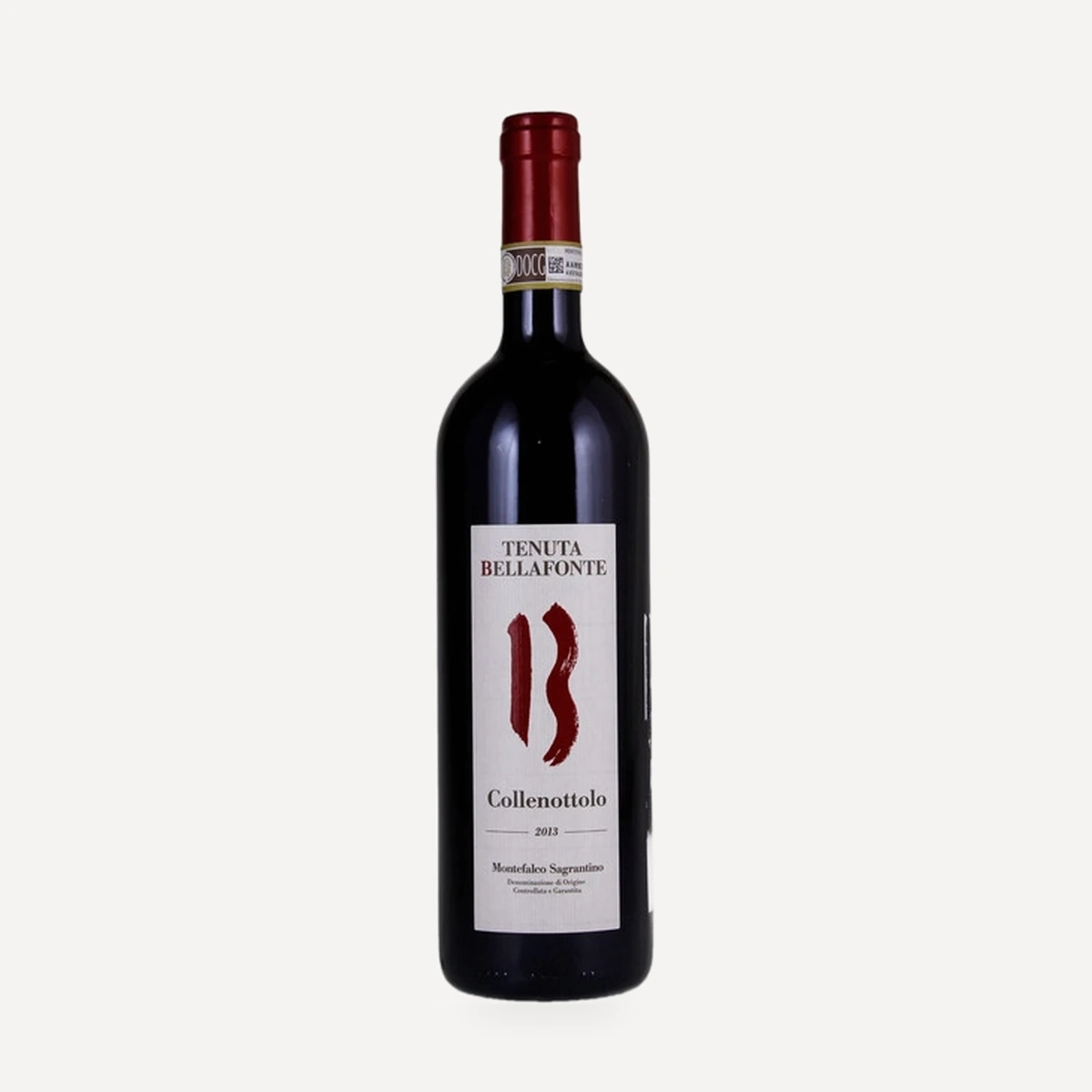
Collenottolo Montefalco Sagrantino DOCG
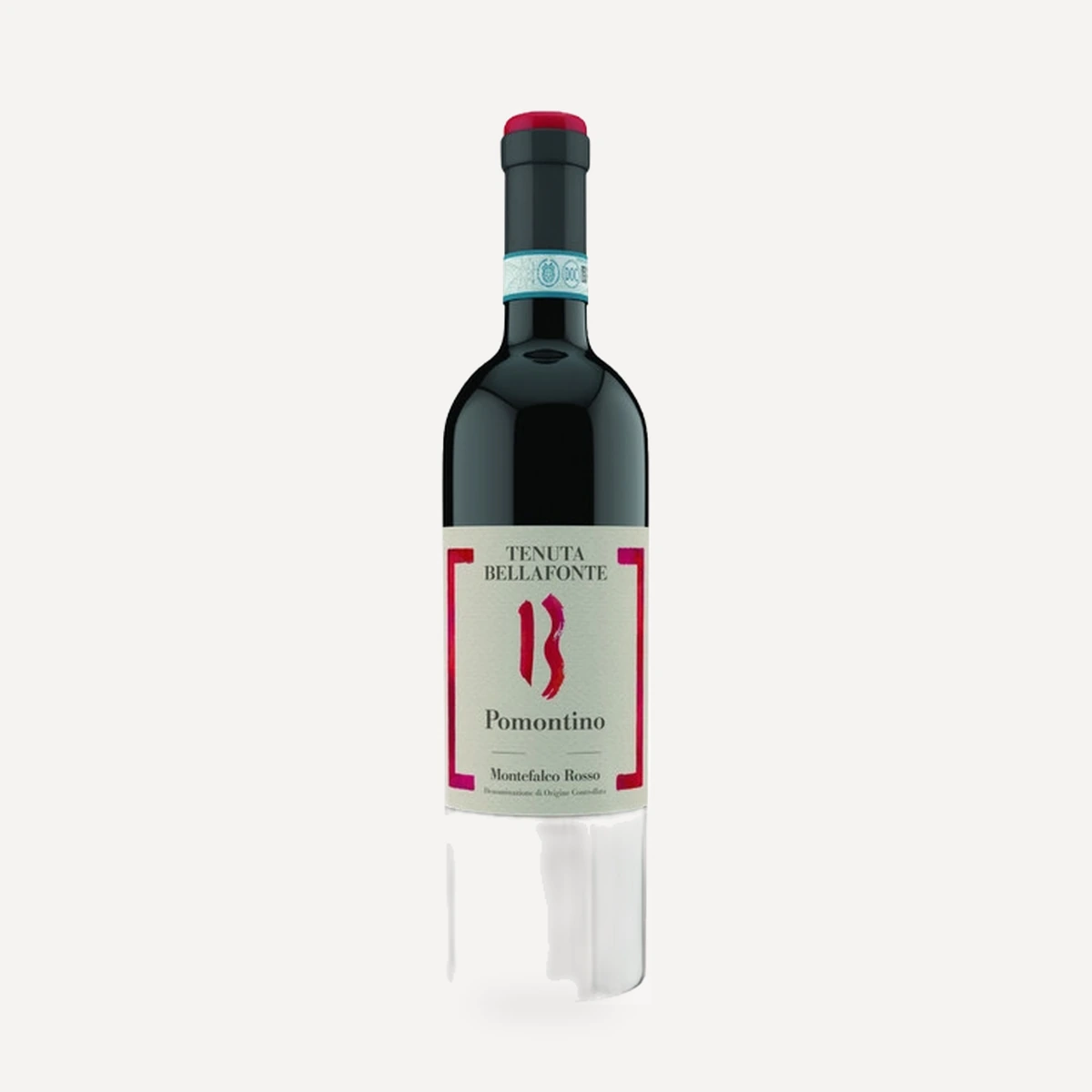
Pomontino Rosso di Montefalco DOC